La Gira

Reading history – slowly and in large steps

beMemorials are important as we are only by remembering, i.e.

consciously re-(-sur-)-facing

enables us visioning the future, needed to act today. All this is much more demanding than behaving.

Memorials are important, and perhaps even more so if they remind us and allow us questioning – as it happened recently, the second day, coming after a long time to Munich again. The first day I actually met a friend – a nice surprise call:

Time for a coffee?

I was sitting in the coffee shop at the Amalienstrasse anyway, so not much could have been nicer. We had been chatting – amongst others about the fame of places, and for Munich it unfortunately means not least that it is famous for the beer festival and the German dark ages of the last century …

The next day I strolled a bit around. Though I thought I would know those places, actually visited some with a group of students from Ireland, several years ago, I saw one that I passed as frequent as it remained unrecognised by me, all the times ignored. Was it because moving along Briennerstrasse/Maximilian Strasse did not make me expect much, just outrageous wealth?

“Im gedenken an die opfer der nationalsozialistischen gewaltherrschaft   –   verfolgt aus politischen gründen   verfolgt aus rassistischen gründen   verfolgt aus religiösen gründen   verfolgt wegen ihrer sexuellen identität   verfolgt wegen ihrer behinderung”

In my own translation

“In memory of the victims of the national-socialist tyranny persecuted for political reasons, persecuted for racist reasons, persecutedr for religious reasons, persecuted because of their sexual identity, because of their disability[1]


Written in the wall behind the pillar, accommodating the eternal fire

– all part of the monument which has been launched on November 8th, 1985 by the then Lord Major, Georg Kronawitter.

I was alerted by the words

BECAUSE …

Then I looked again, reading the entire text.

FOR political, racist, religious REASONS….

Indeed, for the German fascists it had been “sufficient”: being gay, being Jew …, all this has been a sufficient ‘reason’ to terminate the life of people, ‘arguments’ in a state which seemingly did not need arguments. A state that used its power arbitrarily – Max Weber comes to mind, speaking of the

“state” insofar as its administrative staff successfully upholds the claim to the monopoly of the legitimate use of physical force in the enforcement of its order.[2]

Memorial – in German language the term carries some ambiguity with it. It simply means memorial, but can also be read as: “hang on, think!”

Had people really been killed because they were Jews, disabled ….?

Were they killed for political and the other names reasons?

Doesn’t this easily make us overlook the real reasons? What seemed to be arbitrary violence, was in fact a sophisticated system of an authoritarian state which was needed as backing of an economic system that was fatally wounded: a capitalism that was not really capitalism anymore but a system in which profit-making was not linked to profitable accumulation (which is a bad enough system anyway) but on the violent securitisation of profits made in a system in which finance is not about money but about the permanent reaffirmation of power.

******

This reminds us of what the quarterly view said, quoted in volume one of Marx’ The Capital; and it reminds us of what Saskia Sassen presented:

So I sort of want to throw out the notion that finance is a capability. And so when you look at some of the measures of its value today, for instance outstanding derivatives, a basic measure—a quadrillion…that money doesn’t exist, you know. Global GDP is something like sixty trillion. There is no— Quadrillion is many many zeros. I know that in Europe you have different designations. It’s more zeros than you’re used to in your average figures that you see with lots of zeros—it’s more than a trillion, let’s put it that way.

So I think one first step is to distinguish between traditional banking, which sells money it has (or it can borrow very quickly, whatever) and finance, which sells something it does not have. And in that selling what it does not have lies its creativity. It has to invent instruments. And secondly—and they go together—it has to invade other sectors. Because it itself does not have what it needs to produce.

******

And we may feel reminded when reading the manager magazine, as I did that day – in some way one may call it the gossip-journal of parts of the upper classes.

Finance not being equal to money, as much as life does not equal living. It is frequently suggested that there are two options, the one being about working to live, the other living to work. In this case there may be a third way, saying that life is work and work is living. Sure, this opens to a broad discussion. One point that can be made is that put forward by the old idealist, bit of a dream-dancer, Schiller, demanding

Reason also utters the decision that man shall only play with beauty, and he shall only play with beauty.

For, to speak out once for all, man only plays when in the full meaning of the word he is a man, and he is only completely a man when he plays.

While this comes along as a nice suggestion, it urgently needs a material foundation that allows play of that kind. It requires a material situation that is marked not by resources that are merely enough to survive but is in need of amounts that are surely enough to live from.

The material side of ‘playing’ is surely not a problem for perverted highflyers, but they have problems, mental problem of lost grounding. So to the gossip-journal then, and really going into its going to the gossip section means to dive into the article on Ibiza,

as life-style island an international brand[3]

We see them removed from living not because of the need to merely secure life, but because their life needs to be stylised and branded – I am not really into any of it, I supposed it is like people who lost their hair, replacing it by a wig: artificial and more beautiful than reality is. And of course, it has to be a wig with brand-name – interesting by the way: assuming something, I checked Leo’s dictionaries. I see the following


Yes, brand – the trademark – is the also the term of the mark by which horses had been classified and ‘proprietised’ …: Oh glory, may be we should not think only of refeudalisation – see also here – but also about animalisation: the return to instincts as foundation and guideline. What makes it worse, more weird than it is anyway: we press the burning iron against our own skin and instead of feeling the pain we turn it into pleasure …

Oh,

Fuck me, I’m famous[4]

This is the new stoned of leisure society, as Tired Is The New Stoned of the postmodern work society, tired suggesting that one is extremely busy, even too busy to be really busy when it comes to working life – presence everywhere and anytime. It is like being too tired to actually sleep. And all this is also the illusion of singularity: be it singularity in the understanding of the Big Bang, or as claimed hyper-individuality.

Sure,

[t]he spreading luxury begins to be a problem for accommodation – for those who lack privileges. Because the personnel cannot commute between mainland and island and the rents are exorbitant, many spend the nights in the cars or on the balconies, let by enterprising Ibizians. For having a shower a membership In one of the gyms s recommended.[5]

And paradoxes, as usual, are included as the highflyers search for seclusion …, and of course it is not a problem as a

concierge service … offering any service to his moneyed customers, around the clock. The most have only one: anonymity.[6]

Also no problem as

It is easy on Ibiza to dive away, …, [in both ways:] hiding from the media and escaping from reality.[7]

Not being famous, not being rich and powerful? The solution may be found in another world

Yaşamak bir ağaç gibi

tek ve hür ve bir orman gibi

kardeşçesine,

bu hasret bizim.

Nâzım Hikmet

Translated into English

To live in solitude and free

like a tree but on the same time

like a forest in solidarity

this yearning is ours.

Nâzım Hikmet

******

But that solution is somewhat a paradox in its own terms – the going together with others and the withdrawal. The danger of escapism – actionism, saving life, searching tranquility of living, and in both respects depending eon others and the own personality.

As I wrote later those days to a friend back in China

I was reading the ‘manager magazine’ yesterday – only reading such stuff when I get it for free. Amazing to read about fascinating careers and enterprises … – most successful … and when I allowed myself a closer look I was thinking about ‘for what’? People doing things, making a huge fortune and that was it: no purpose, just following some ‘instinct’, struggling without knowing for what … – not sure if I can explain it well. But I thought: well, may be not so bad lacking that kind of wealth but being ‘content’ in some ways.

Again and again I feel obliged – in different contexts and different times, addressing different people – to mark the difference between living, life and now in addition the life style as stylised life – products changing their character, being commodities; it translates into the human being commodities: in the one case the human labour power, in the other case the stylisation of life – two ways of terminating living.

And as I wrote – as PS – to the colleagues with whom I share the responsibility in the Joerg-Huffschmid-Award.[8]

PS: Being now in the ‘rich city of Munich’ I cannot refrain from writing the following yesterday: Yesterday I arrived here I Munich, and with this, after living more than two years in China, in Germany. Piece, and especially joyfulness: In all the shops the window displays for the Oktoberfest, Munich’s beer festival, because ‘casual wear’ as dress code means in this case it should be authentic-colourful costume-like garb. There is bit of a problem with the pancake [well, ‘those years’ it was a kind of teasing trinity: piece, joyfulness, pancakes]: I will not mention the rent I have to pay for my tiny flat. One impression from today, early in the morning I want to mention: an elderly lady moved with her bike from waste bin to waste bin [well even at this stage not everything is completely privatised] … – it is probably her proactive approach to life, avoiding ending up as beggar – that is part of the first impressions, arriving in the rich city of Munich, the impression after teaching two years in China, where – under the leadership of a university with a supposedly high ranking – young, curious personalities are encouraged to ‘seize the world’ … , and seizing it according to which rules? Here you may get an impression.

And I remembered the headlines I red some time ago – also impressions, anecdotal ….

Die besten jobs für Renter – the best jobs for retirees

the other

Wiesn – die bittere Wahrheit – Munich Beerfestival, the bitter truth

Yes, once upon a time, in 1986, the Christian Democrats promised:

„Denn eins ist sicher: Die Rente“ – But there is one thing you can rely on: the pension.

You can rely on, you hardly make a living, you may just stay alive, and even for that you may need a job, and even then ‘living’, by way of going out for a pint,  having fun is limited – well, sure, there are surely also other ways of having fun, most likely equally liked; and it does not play a role that of indigenous Bavarians it is not about a pint but a Mass, but they also say:

“Ah geh weida, dees is doo mia wurschd, wia ma dees iatz auf Houchdeidsch schreibd, Haubdsach, schmegga duads ma, mei Mass Bier”

And I remembered a paragraph, taken from Freeland’s book on The Rise of the New Global Super Rich and the Fall of Everyone Else:[9]

If you traveled to Mountain View to visit Eric Schmidt when he was CEO of Google, you would have found him in a narrow office barely big enough to hold three people. The equations on the whiteboard may well have been scribbled by one of the engineers who works next door and is welcome to use the chief’s office whenever he’s not in. And while it is okay to have a private jet in the Valley, employing a chauffeur is frowned upon. “Whereas in other cultures, you can drive your Rolls-Royce around and just sort of look rich and have a really good time, in technology it’s not socially okay to have a driver who drives you to work every day,” Schmidt told me. “I don’t know why, but you’ll notice nobody does it.”

This egalitarian style can clash with the Valley’s reality of extreme income polarization. “Many tech companies solved this problem by having the lowest-paid workers not actually be employees. They’re contracted out,” Schmidt explained. “We can treat them differently, because we don’t really hire them. The person who’s cleaning the bathroom is not exactly the same sort of person. Which I find sort of offensive, but it is the way it’s done.”

******

Back to square one of these reflections on antifascist memorials, reasons and the reasoning about life, living and branding lifestyles and the implied animalisation. Doesn’t all this show n an excellent way the real because and rationales: What happened:

  • the holocaust which was also a system of exploiting humans down to the bones
  • in a nutshell: the war of one country against the rest of the world, a slightly extended interpretation: the new division of the world amongst different political and economic powers
  • the establishment of a ‘culture of animalisation’, artificially breeding destructive and even self-destructive instincts
  • the breeding of culture of fear, emerging from the fear of complete disempowerment

are surely a frightening development – and the need of remembering, i.e.

consciously re-(-sur-)-facing

enabling us to vision the future, being needed to act today surely should also look at capitalism today. The meaning of the words of Brecht’s Epilogue from the parable play The Resistible Rise of Arturo Ui [written in 1941) have to be taken very seriously, even and because of Arturo Ui today changed names, wears different clothes and my be found on Ibiza, stylizing animalistic non-sense, i.e. dangerously breeding senseless instincts against human kind

Therefore learn how to see and not to gape.

To act instead of talking all day long.

…

The womb he crawled from still is going strong.

******

[1] https://de.wikipedia.org/wiki/Denkmal_für_die_Opfer_der_NS-Gewaltherrschaft_(München)

[2] Weber, Economy and Society; page 54

[3] Ifrom the manager magazin; August 2017 – print edition; https://heft.manager-magazin.de/MM/2017/8/152235337/; 05/09/17

[4] Ifrom the manager magazin; August 2017 – print edition; https://heft.manager-magazin.de/MM/2017/8/152235337/; 05/09/17

[5] Ifrom the manager magazin; August 2017 – print edition; https://heft.manager-magazin.de/MM/2017/8/152235337/; 05/09/17

[6] Ifrom the manager magazin; August 2017 – print edition; https://heft.manager-magazin.de/MM/2017/8/152235337/; 05/09/17

[7] Ifrom the manager magazin; August 2017 – print edition; https://heft.manager-magazin.de/MM/2017/8/152235337/; 05/09/17

[8] On the 6th of December there will be a public event, taking place in Berlin, handing over the two awards

[9] Freeland, Chrystia, 2012: Plutocrats: The Rise of the New Global Super Rich and the Fall of Everyone Else; New York: The Penguin Press: 123


Elite or Common Sense?

It is, sometimes, difficult to draw a line between elitism and common sense. Especially when the elite is just a pretension, a claim that has no legitimate foundation in reality but is established on the pillars of imagined rules of which the validity is only …, the claim of their legitimacy, presumed to be unquestionable. those are claims of conventional wisdom, of which J.K, Galbraith writes

Because familiarity is such an important test of acceptability, the acceptable ideas have great stability. They are highly predictable. It will be convenient to have a name for the ideas which are esteemed at any time for their acceptability, and it should be a term that emphasizes this predictability. I shall refer to these ideas henceforth as the conventional wisdom.

(Galbraith, J.K., 1958: The Affluent Society; London: Hamish Hamilton:6)

‘Religious rites’ as he calls them a page later.

And they could also be seen as rules or hegemonic setting – we believe in them because …, we believe in them as all believe in them. And they are used to misguide the future generations.

The paradox: the elite turns into an ‘un-elite’, not knowing what they are doing but just doing what they don’t know. some time ago I read in an interview with the conductor Philippe Herreweghe the following lines, making me thinking about a strange reversal of elite and common sense we face in today’s algorithm society.

Ich bin beispielsweise der Ansicht, dass Beethoven seine Musik für eine kleine, hochgradig künstlerisch veranlagte Elite komponierte – diese Zuhörerschaft war mit seinen Werken vertraut. Fast alle spielten selbst ein Instrument, häufig auch im kammermusikalischen Rahmen, oder gehörten sogar einem Orchester an, welches diese neue Musik interpretierte. Und genau aus diesem Grund konnten seine Zeitgenossen den etwas später so genannten »armen Beethoven, der von niemandem verstanden wurde«, durchaus sehr gut verstehen. Das Niveau seiner Zuhörerschaft war schlicht und einfach um ein Vielfaches höher, als wir es heutzutage erleben. Heute kann es vorkommen, dass manche Zuschauer begeistert ein Tennismatch verfolgen, ohne dabei die Spielregeln genau zu kennen …

 translated:

For example, I think that Beethoven composed his music for a small, highly artistic elite – this audience was familiar with his works. Almost all played an instrument, often in a chamber music setting, or even belonged to an orchestra, which interpreted this new music. And precisely for this reason, his contemporaries could quite well understand the so-called “poor Beethoven, which was later understood by nobody.” The level of his or her audience was simply a lot higher than we do today. Today it can happen that some spectators enthusiastically follow a Tennismatch without knowing the rules of the game …

(Ich habe mir meine Neugierde bewahrt. Philippe Herreweghe im Gespräch mit Louvres Langevoort/
I kept my curiosity. Philippe Herreweghe in conversation with Louvres Langevoort; in:
Kölner Philharmonie; Das Magazin. Nr. 3; Jul/Aug 2017: page 19; 18/08/2017)
Time to get back then to another common sense – that of asking what the rules are about, demanding to understand and not simply accepting acceptability.

precarity and digitisation – it is not just about jobs

This is the title of a presentation of which the recording is online now.

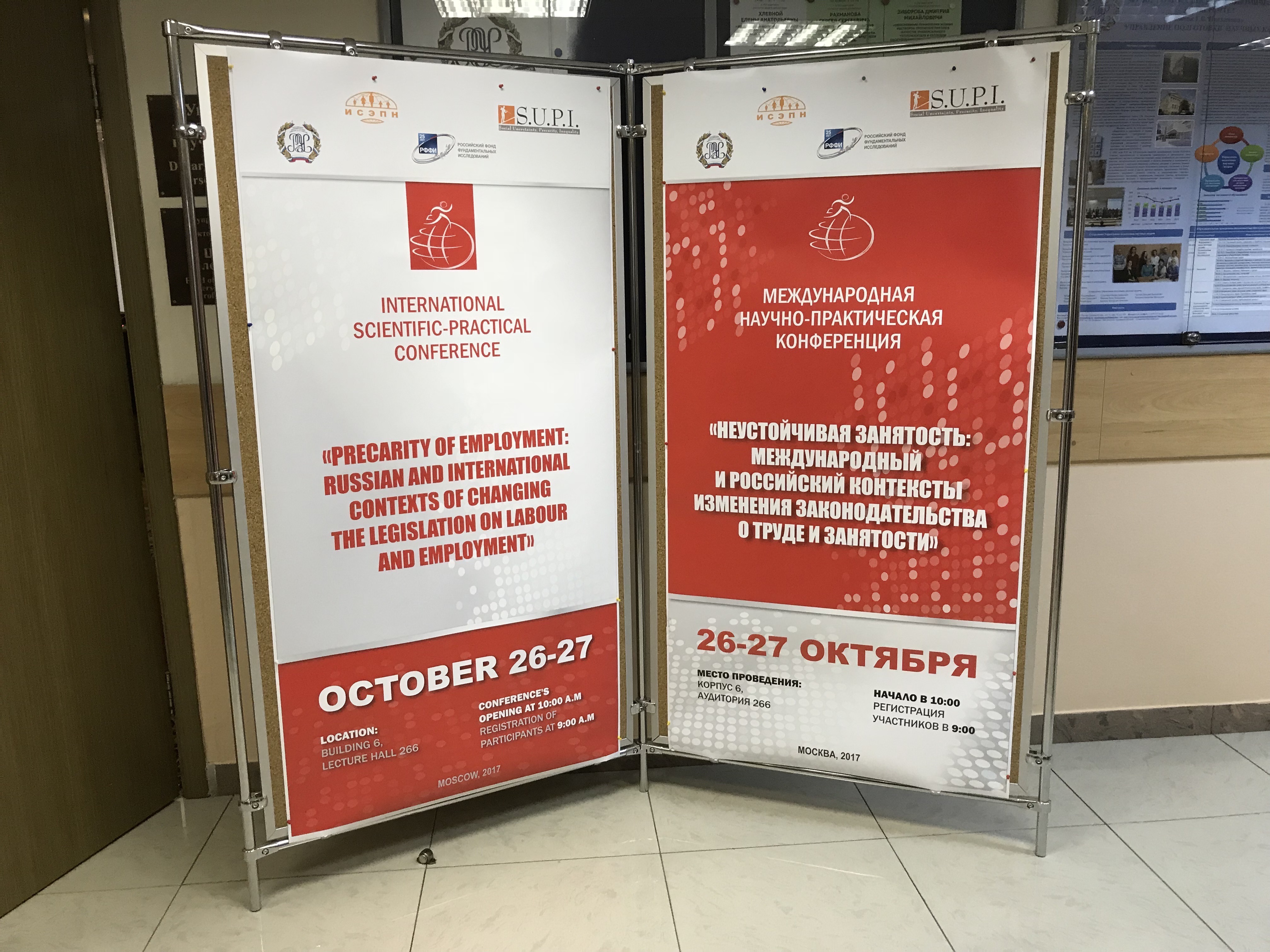
It had been given during the

INTERNATIONAL SCIENTIFIC-PRACTICAL CONFERENCE on INSTABILITY OF EMPLOYMENT: RUSSIAN AND INTERNATIONAL CONTEXTS OF CHANGING THE LEGISLATION ON LABOUR AND EMPLOYMENT in Moscow at the Plekhanov Russian University of Economics [October 26-27 2017]


Overwiew:

The presentation is more in search of the question, not pretending to know answers.
The contribution is crosscutting, mainly offering a theoretical and global in orientation. The aim is to contribute against the background of digitisation to the discussion of  the changing world of the organisation of work and underlying process of accumulation.
During the era of ‘industrial capitalism’ the tension between market and society was by and large processed and channelled via the firm – a conclusion we can draw from reading R.H. Coase and Karl Polanyi. However, looking at some of the current trends as they are tied up under keywords of gig-economy, sharing economy, collaborative consumption, collaborative production, on-demand-economy and the like, we are facing at least in some areas of the economy some changes which can be captured by two keywords:
  • de-firmisation of working frameworks
  • hybridisation of work or to be more precise employment

What are and what can be the answers? We see precarisation as one route, not suggested but actually taken. But it is a route based on two questionable presumptions: the first is that work has to be organised as labour and the second is that society has to and can bear and even accept major inequalities.

[Part of] The discussion is also recorded and focuses on issues of developments in China..

The Particular and the Universal – Indigenous Sports for the Integrity of the Global Village

A short presentation during the

2017 国际体育历史与文化学术大会/2017 International Conference on Sports History and Culture:
全球化与民族化:亚洲民族传统体育文化的传承与发展/Globalization and Nationalization: Inheritance and Development of Indigenous Sports Culture in Asia

is now online.

Abstract:

Can we speak of a tension between particular andreflections that shed some light on the relationship. The reference is not primarily the analysis of the status quo. Reference is made to the potentiality in the understanding of a ‘Marxist existentialism’, searching for what is possible, i.e. what is inherent in the reality. Four strands of contemporary debates on societal development are taken as lines of reference:

· Commons as social process
· Commons as non-commodifiable goods
· Commons as right
· Commons as constitutive factor of shared space

Indigenous sports can be seen as one elementary dimension of such constitutive constellation – also presenting the tension between conflict and harmony.

Conclusions will concern the perspectives for societal action for developing emancipative strategies around indigenous sports.

Looking back in order to enhance looking forward

There is no intention on my side to engage in a wider or deeper debate on Chinese issues – it would require volumes, acknowledging successes, failures and contradictions now and then. And there is surely no intention to deny one or the other, be it in absolute terms or in the light of comparative reflections.

Still, having arrived in Moscow, I dare looking briefly back. The 19th CPC National Congress, having taken place the recent days, marks a shift in the orientation of which the meaning will be seen in the future. The congress suggested as main, i.e. ‘principal contradiction’ the country faces now is the society being

between unbalanced and inadequate development and the people’s ever-growing need for a better life.

Previously – for 36 years – the maxim was seen as being caught between

the ever-growing material and cultural needs of the people and backward social production.

Sure, even commenting on this can only be an attempt to make us thinking about what is at stake – actually far beyond China.[1] And any commenting is of course facing the danger of ‘loosing due to translation’. A bit of comfort for me is looking back at some experience in daily life, the glimpses into Chinese life and perhaps a bit of the mentality – glimpses, surely not more.

Well, then, isn’t there potentially a ‘mental’ or ‘intellectual typo’? Shouldn’t it read peoples’ instead of people’s. In the second case there is an individualist undertone while the challenge is really the life of the people, not people.

Sure the resolution of the congress has inscribed this new project:

addressing the development’s imbalances and inadequacies, and push[ing] hard to improve the quality and effect of development

into the party’s constitution. Important is now to see emphasis that constitutions are about processes, not structures. We are dealing with the constitutive process, the formation. And with this it remains to be seen if the apostrophe will be shifted into the right position, to promote a course that is worth to be carried on by a party that claims to be left. At stake is indeed the peoples’ life as foundation of people’s life – seemingly a tiny difference though remarkably one that is decisive for the meaning of the social.

Looking back at the experience of teaching in the PRC up to recently there is the tension not just in the party’s document and in reflecting on it. Surely, some of my students would go for moving the apostrophe into the right place. And surely, this means not least confronting an Americanised and Europeanised orientations of the educational system.[2]

Sure, there is the wider question, looking back much further. Here we have to ask if Deng had actually been right – or completely wrong. First we have to eat, that stands before any moral considerations are made – well known from Brecht’s Three-Penny Opera. The ‘Deng-question’ remains, better to say, the question Deng did not sufficiently consider: ‘What kind of moral will those, being well fed, while others receive little more then the bread crumbs, develop?’

There is no reason to question successes – over the last years more than breadcrumbs had been made available for many. Equally, as appalling as developments in Higher Education is in ‘the West’ are, there are exceptions and there are increasingly counter movements: claims for higher quality, for

an education … [that] will teach you how to think, not what to think

to use the words of Jazreel Goh, education marketing director of the British Council in China. More than glimpses of hope?

The hopes I personally have, and it means to take up on and support the excitement I see in the eyes, I hear in the voices, I read in the words of so many students; the hope that they withstand the strangulation that is still going on.

Looking back … – or looking forward? There is no real need for marketing directors but there is a need for academics being aware that they are and will always be students and for students that are aware of being academics, not future bean counters or Wall Street-pedestrians [follow the links for the interviews that are in these articles] – I found it striking that the congress paid a lot of attention to the economy and its development, while it neglected by and large many of the questions that are ore fundamental, namely those dealing with the actual processes of production and its ‘what and how’.

*****

[1]            This far beyond may well be taken as part of the interpretation of the outspoken claim to be a global payer.

[2]            I dare to say that the congress was apparently clear on the question of education – but in a very unfortunate direction towards competitiveness, undermining ‘deep quality development’.

where legal scholars and economist (should) sit at the same table

And of course, they should be joined by political scientists and politicians …

As usual, i am working on different projects, the one being the preparation of the workshop on The political economy of right wing populism, the other the question of digitisation and, of not anything else: continuing the work we started in February as part of the International scientific and practical seminar: “Occupation: Russian practice and international experience”: the book I am editing together with Vyacheslav Bobkov – we will discuss this further during the International Scientific-Practical Conference

“Instability Of Employment: Russian And International Contexts Of Changing The Legislation On Labour And Employment”

commencing tomorrow at the ФГБОУ ВПО “РЭУ им. Г.В. Плеханова” in Moscow

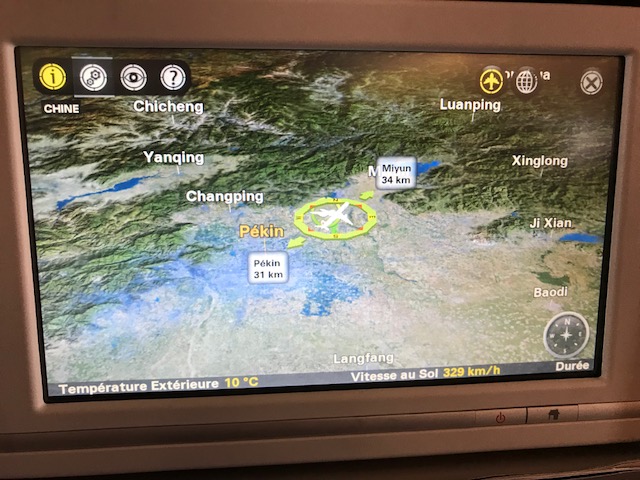
where I arrived a few minutes ago, coming from Anhui.

The following paragraph – the draft of a co-written contribution, that links to the different projects mentioned – may be worthwhile to be published here – taken out of its original context, valid in various contexts that characterise in my view much of the current situation in which economic greediness and acquisitiveness, political populism, and so-called hedonism alike are finding futile ground. So the para is the following:

… this is about the ‘major conflicts’ but also about the small print. One example may do suffice – in fact it is one that also shows that we are facing a thorough interpenetration, already going on for a long time, reaching seemingly unrecognised into the mentality: the common law tradition is increasingly eroding for a simple reason: “modern business” needs reliable frameworks for “mathematised rationalities” and “protestant ethics” – something that common law does not guarantee to the same extent as civil law (Romano-Germanic tradition). This is a particularly interesting example as it clearly shows the way in which accumulation regime and mode of regulation are entangled. This is expressed not only expressed in the fact of the legal regulations ‘for business’ as a system of systematic compilation and deductions (Leges Duodecim Tabularum or Duodecim Tabulae) but also in the regulatory system itself establishing the tradition of the “constitutional state” (Rechtsstaat).

Interestingly, this comes right now under pressure and is in different ways qualified, hollowing out the scope and degree of liability of the state,[1] the emphasis of individuality (including corporate social responsibility) and the accentuation of ‘governance’ as systematic deregulation of government. Such shifts can be found by way of “Global Governance”, characterised by different strands, entangled like the threats of a rope: (i) international and global organisations play increasingly a role and in tendency even openly contesting state power; (ii) not strictly “statutory” in character, there is a tendency of strong think tanks developing power positions that go far beyond the traditional role of opinion leaders: the World Economic Forum, The Bilderberg Conference and the Club de Madrid are examples, all characterised by the fact that leading representatives of big business, [former] members of governments and some mainstream ‘trendy’ academics are part of these undertakings; (iii) the traditional lines of division and distinction are frequently blurred and contested – here it is about socio-economic strata but also about boundaries of states, regions etc.; (iv) non-binding, often “think-tank-like” left-intellectual-liberal proposals; (v) critical and clientelist claims (iv) new ethics also being brought forward in organisations as the WEF, IMF, WB and Bilderberg. – It has to be said that all this does not replace objective societal structures and division; much of the effect can probably be seen as reflection of changing processes of politisation: the trend of a flattening can be seen on the one hand, establishing mechanisms of ‘presentationalism’ as dominant feature, supporting the emergence of a post-factual; on the other hand we find the push and pull effects when it comes to redefining politics as administrative issues, solely bound to factuality and rules.[2]

[1] This is still relevant even if we accept that even the Rechtsstaats-traditon strongly emphasised “The Limits of State Action” as the title of the work by Wilhelm von Humboldt suggested (see Humboldt, Wilhelm von, 1792: The Sphere and Duties of Government (The Limits of State Action); London: John Chapman, 1854)

[2] one has to acknowledge that there is ontologically and epistemologically a close kinship between post-truth and evidence based politics and policies, both dissecting complex truth.

Between Worlds – Between Times

It is some time ago now, I made a trip which was a bit like time travel – France – Catalonia – France and going on from there …
Well, I can say I escaped those days that massacre of Barcelona, though having been very close to the crime scene. At stake is, however, not spatial closeness – what makes me still trembling, and at times near to crying, is something else – it is the same shock that followed me for some time, after having left the French embassy in Rome on the 7th of January 2015, the day of the ‘Charlie Hebdo shooting’. It is a bit like history condensing, being forced into a nutshell, feeling the need to discard the fetters that are lurking around the corners of uneven development.
****
Indeed, it is some time ago now,I made that trip which was a bit like time travel, leaving the massacre for a while aside …
Two days or so after what happened …  sitting in the TGV, the Train à Grande Vitesse, … everything went according to plan, and I am sitting on the prenotated seat, looking a bit out of the window, trying to accommodate myself in the passing life … – again and again startled by the rattling, caused by some parts of the train. I remember the first trip I made with a TGV, many years ago: fast, not mentioning the slightest movement – and those days not the noise of neighbours playing with or loudly speaking over their phone: pling .., announcing arriving — swoosh …, accompanying the sending of a message. Then it had been a brand new train, with all comfort, cleanness and newness [today’s TGVs had been inaugurated in 1981]. I remember a friend, while looking out of the window, asking:
And when will it be driving with this amazing speed?
I replied
Don’t look out of the window, look at the speed-announcement over the door.
Yes, it had been over 300 km/h.

A few days later: the Thalys from Brussels to Amsterdam, later again, the ICE bringing me to Munich …: all of them smooth trips, comfortable actually, as they had been launched later than the TGV, a bit cleaner, still a bit more comfortable … Still, using now the CRH in China – very clean, the train seems to ‘stand still’ while driving its constant 307 km; quiet – though one has to cope with phone …. announcements of food for sale, the latter standing a bit in the way of the claimed  和谐号 – harmony, as the name of these trains suggests. – The new generation, i heard, is now moving smoothly with 400 km/h …

Possibly I will remember at some stage, several years ahead, a train trip between Wuhu and Najning, everything going according to plan, while I will be sitting on the prenotated seat, looking out of the window, trying to accommodate myself in the passing life … – frequently startled by the rattling, caused by some parts of the train when it will then be a somewhat old train, old as in some parts of the world already completely other means of transport will be in place … – or it may be more likely that I do not remember it anymore, actually it may take long enough that I do not remember anything anymore and only some people remember me, while now sitting there, thinking about the old 和谐号 – harmony, perhaps then sitting relaxed in a train called 超验 – transcendence … – seemingly transcending time and space, rarely being aware of the fact that the time we live in is already past time as soon as we are getting are of this worldly dimension if transcendence.

***

Isn’t part of being between worlds also about being between times, experiencing the accords and discords that are at the centre of globalisation that depends on unevenness, of which contradictions are permanent and necessary part – where welcome is supposed to be a threat. Yes,

we in the West need to think about a whole new relation to the so-called “Third World” if we want to prevent hate, hostility and attacks. This can also effectively contribute to fighting the reasons for flight and escape.

But even more so, we, who are ready to take globalisation seriously on the agenda, have to think about a whole new relation between the real people of the real world if we want to prevent hate, hostility and attacks. It must be a world where fighting the reasons for flight and escape equals fighting for the freedom to explore the real variety that is emerging from unity and commonality. Not simply as matter of being together but by accepting being one in time – which then also means overcoming claims towards superiority of ‘some time’. Leaving the many facets aside that stand behind massacres, some calling their own massacres unconvincingly ‘war against terror’, there is one thing that strikes me: the difficulty of historising issues. One of the explicit arguments of the murderers of Barcelona was about reclaiming part of the old Islam empire – and indeed, the Islam plaid a major role in Spain – but can that serve as foundation of any claim today? A similar notion had been put forward in Paris, rejecting the touching of the untouchable – while Charlie Hebdo claimed the right to touch, even if only with the stroke of the pencil of a cartoonist; and the various wars against terror following very much the same idea of defending a world order that is historically obsolete and moreover: of which the underlying criteria of nationality, economic growth, private property, hegemonic rights, charity etc. definitely lost their foundation [if they ever have had a stable foundation]. The good old times did not exist anywhere and need to be confronted with a world that has open eyes and ears.
Il silenzio mi aiuterà a smettere di pensare a te che sei fatto di vento.- Silence will help me to stop thinking about yourself as being made of wind. – Something cultures have to accept when looking at their history …, something that is valid and where the new generation of TGV-trains changes only very little.
L’oscurità chiude gli occhi, non mi permette di vedere e di apprezzare che le lettere di oggi saranno presto le lettere dei tempi antichi. – Darkness closes the eyes, not allowing me seeing and appreciating that the lettering of today will soon be the lettering from ancient times.
… Come together, real and close – that is what time needs – everytime …, also in order to find a way that allows dealing with the fact that some of the perpetrators are simply victims themselves, requiring to overcome the terrible pain at least I carry with me again; and even being ready at least to ask if and to which extent we as victims may be perpetrators … – we, the good-doers, teachers, administrators, opinion leaders …, not least we, who easily hastily come to conclusions and easily forget …
having difficulties to act in a genuine way …
Reflections made just before leaving the PRC, while waiting to move on to Moscow, theФГБОУ ВПО “РЭУ им. Г.В. Плеханова”
The short presentation, I made on occasion of the
International Conference of Indigenous Sports Culture in Asia Wuhu, Anhui Province, China
under the heading
The Particular and the Universal – Indigenous Sports for the Integrity of the Global Village
will soon be announced on this blog as recording should be available.

hunter and gatherer

Towards the end of chapter 42 of Montaigne’s essays we read

In Anacharsis’ opinion, the happiest state of government would be where, all other things being equal, precedence should be measured out by the virtues, and repulses by the vices of men.

When King Pyrrhus prepared for his expedition into Italy, his wise counsellor Cyneas, to make him sensible of the vanity of his ambition: “Well, sir,” said he, “to what end do you make all this mighty preparation?”—“To make myself master of Italy,” replied the king. “And what after that is done?” said Cyneas. “I will pass over into Gaul and Spain,” said the other. “And what then?”—“I will then go to subdue Africa; and lastly, when I have brought the whole world to my subjection, I will sit down and rest content at my own ease.”

“For God sake, sir,” replied Cyneas, “tell me what hinders that you may not, if you please, be now in the condition you speak of? Why do you not now at this instant settle yourself in the state you seem to aim at, and spare all the labour and hazard you interpose?”

“Nimirum, quia non cognovit, qux esset habendi           Finis, et omnino quoad crescat vera voluptas.”       [“Forsooth because he does not know what should be the limit of     acquisition, and altogether how far real pleasure should increase.”       —Lucretius, v. 1431]

Reading it, I remembered the story explaining the Irony of the Rat: the Mexican fisherman, who was approached by the highly business-qualified American tourist who knows all about how one gets rich by working enduringly hard over many years …, finally accumulating enough wealth to relax … at the beach of a small Mexican village.

And today? The Measuring the World takes new forms again, it is about data, the collection of everything that can be counted, and the deformation of everything in order to make it countable …. entire libraries, galleries, landscapes and cities, people alone and in their encounters … all is just a mouse-click away.

*****

It was Sunday morning, when I read Montaigne, remembered the Mexican fisherman’s story and thought about the new turn of human-kind’s perpetuated existence as hunter&gatherer to data-obsessed beings …

… it was the very same Sunday in the tenth month of the year, well deserving the name golden October, when I met later the day a friend, should I even say: a golden encounter, ‘autumnous spring’** – not counting minutes or hours, going to the gallery, taking account of the non-digitalised treasures of the gallery, the original paintings and joining the special exhibition that brought music and the magnificent painter Botticelli together

– an encounter of people, bringing centuries and continents together.

*****

Well, when it comes to numbers and accounting, there are surely Limits to Cheating History and there is surely the need for Changing the Reference. Check for a revised and edited version of the article the International Journal of Social Quality.


**

Botticelli’s painting reproduced below is titled Primavera

Off, perhaps some mooncake left just after the Chinese holidays

But in any case there is something when it comes to the moon …

… Is it perversity – or a dormant and clandestine wisdom? I was recently listening on YouTube to Carl Orff’s Carmina Burana, seeing the German advertisement link to a game: manufacture your own tank – the screenshot from the youtube-site

Digitisation … Perversity? Wisdom? Strange coincidence? ….- Knowing the text of O Fortuna and seeing this ad connected to it one wonders …
There is much to the entirety of the texts found in the Benedictine monastery of Benediktbeuern in Bavaria. And part of it is surely the tension in the ‘O Fortuna’ of which the text reads as follows – below in English, Italian and German – always posing the challenge to live a veritable life, even if it is often against the odds:

O Fortune

O Fortune,
like the moon
you are changeable,
always waxing
or waning;
hateful life
first oppresses
and then soothes
as fancy takes it;
poverty
and power
it melts them like ice

Fate – monstrous
and empty,
you whirling wheel,
stand malevolent,
well-being is vain
and always fades to nothing,
shadowed
and veiled
you plague me too;
now through trickery,
I bring my bare back
to your villainy.

Fate, in health
and in virtue,
is against me,
driven on
and weighted down,
always enslaved.
So at this hour
without delay
pluck the vibrating string;
since Fate
strikes down the strong man,
everyone weep with me!

O fortuna,
A guisa della luna
Nell’atteggiamento dell’incostante
Sempre tu cresci
O vai diminuendo
La vita detestabile
Ora perdura salda
E proprio ora (la fortuna)
Occupa l’ingegno con un gioco:
La miseria
Il potere
Dissolve come ghiaccio.La fortuna immane
E vuota
Tu ruota che giri
Funesto stato
Futile benessere
Sempre dissolubile
Oscura
E velata
E su di me chi più si appoggerà,
Ora che per un gioco
Il dorso nudo
Porto per la tua cattiveria?La fortuna del benessere
E della virtù
Ora a me contraria
È un desiderio,
È una debolezza.
Sempre in corsa obbligata
Ora per di qua
Senza sosta
Sentite il battito nel cuore
Poiché a causa della fortuna
(Egli) acquieta la forza
Piangete tutti con me!
Oh Schicksal,

wie der Mond
von veränderlicher Position,
immer wächst du
oder schwindest;
das grässliche Leben
ist jetzt hart
und heilt dann
die Geisteskraft spielend,
die Armut,
die Macht
löst es auf wie Eis.

Monströses und
leeres Los,
du sich drehendes Rad,
üble Position,
unzuverlässige Gesundheit
immer auflösbar,
überschattet
und bedeckt
Du stützt dich auch auf mich;
jetzt trage ich
deinen Schandtaten zum Spiel
den Rücken bloß.

Los der Gesundheit
und Tugend
jetzt gegen mich,
es ist beeinflusst
und beeinträchtig
immer im Frondienst.
In dieser Stunde,
ohne Verzug,
kommet zu jenem, der im Herzen geschlagen wurde4;
denn durch das Los
breitet es den Zufall aus,
klagt alle mit mir!