La Gira

STRAIGHTFORWARDNESS ….

straightforwardness – it could well mean not to follow the straight line …

Taking the words from Keynes’ General Theory we have to see:

The classical theorists resemble Euclidean geometers in a non-Euclidean world who, discovering that in experience straight lines apparently parallel often meet, rebuke the lines for not keeping straight—as the only remedy for the unfortunate collisions which are occurring. Yet, in truth, there is no remedy except to throw over the axiom of parallels and to work out a non-Euclidean geometry. Something similar is required to-day in economics.

And even beyond geometry and economics, the seemingly simple solutions, bringing us forward ling the straight lines, may be fatal, especially while standing next to the abyss.


… another time to say good-bye …

Saying good-bye as permanent state of living?
Moving to one place, just to Say Good-bye again?
… and again it is time to leave …, or to move on … because …, well, it is simple, ‘it is me‘.

And for the others?

You do look, my son, in a moved sort,
As if you were dismay’d: be cheerful, sir.
Our revels now are ended. These our actors,
As I foretold you, were all spirits and
Are melted into air, into thin air:
And, like the baseless fabric of this vision,
The cloud-capp’d towers, the gorgeous palaces,
The solemn temples, the great globe itself,
Ye all which it inherit, shall dissolve
And, like this insubstantial pageant faded,
Leave not a rack behind. We are such stuff
As dreams are made on, and our little life
Is rounded with a sleep. Sir, I am vex’d;
Bear with my weakness; my, brain is troubled:
Be not disturb’d with my infirmity:
If you be pleased, retire into my cell
And there repose: a turn or two I’ll walk,
To still my beating mind.

(From: Shakespeare, 1611/12: The Tempest; Act 4. Scene 1. Before Prospero’s cell)

… the way to go …. – from where, to where, with whom?


.., along the river, though against its stream ….  va, pensiero, sull’ali dorate …

[I will soon publish a link from here to some replique, looking back on two years, trying to draw some conclusions for the two-hundred years to come …]

Digitisation – some general questions

A presentation under the title

‘Gig Sharing Economy’: Value Chains or Poverty Chains – Challenges posed by Digitisation in the Context of Globalisation

is now published. The presentation does not go into much details but aims on ventilating some general issues of a specific strand of digitisation, namely sharing economy, gig and cooperative economy and the like.


The presentation [i] explores a little bit the context of globalisaiton, [ii] considers the wider framework of reshaping capitalism and the composition of capital and [iii] looks at different classificatory aspects of the ‘new economies’.

It is part of my work at the moment, and further information may be found for instance via the following links:

‘BEING ECONOMIST’ – AN INTERVIEW

[to the recording]

[see also here for some reflections on academic work]

Peter Herrmann教授,班戈学院金融学专业教师

2015年夏,曾任中国浙江大学公共事务学院高级外国专家

2015年春季,俄罗斯普列汉诺夫经济大学(Plekhanov Rusian University of Economics)客座教授

2012年起 匈牙利布达佩斯考文纽斯大学(Corvinus Univesity经济学院访问学者

Peter Herrmann教授曾在世界多个国家任教,包括俄罗斯、匈牙利、德国等,主要研究领域为宏观经济学,微观经济学,政治与社会学。

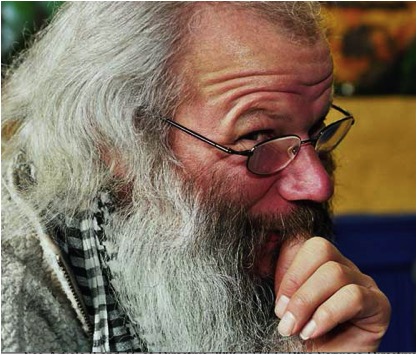
读万卷书,行万里路。Peter Herrmann教授给我的第一印象是,一个高挑的学者,脖子上随性地搭着一条意大利风格的围巾,手里握着一把雨伞,一举一动都让我觉得有一种“大师”的风范。


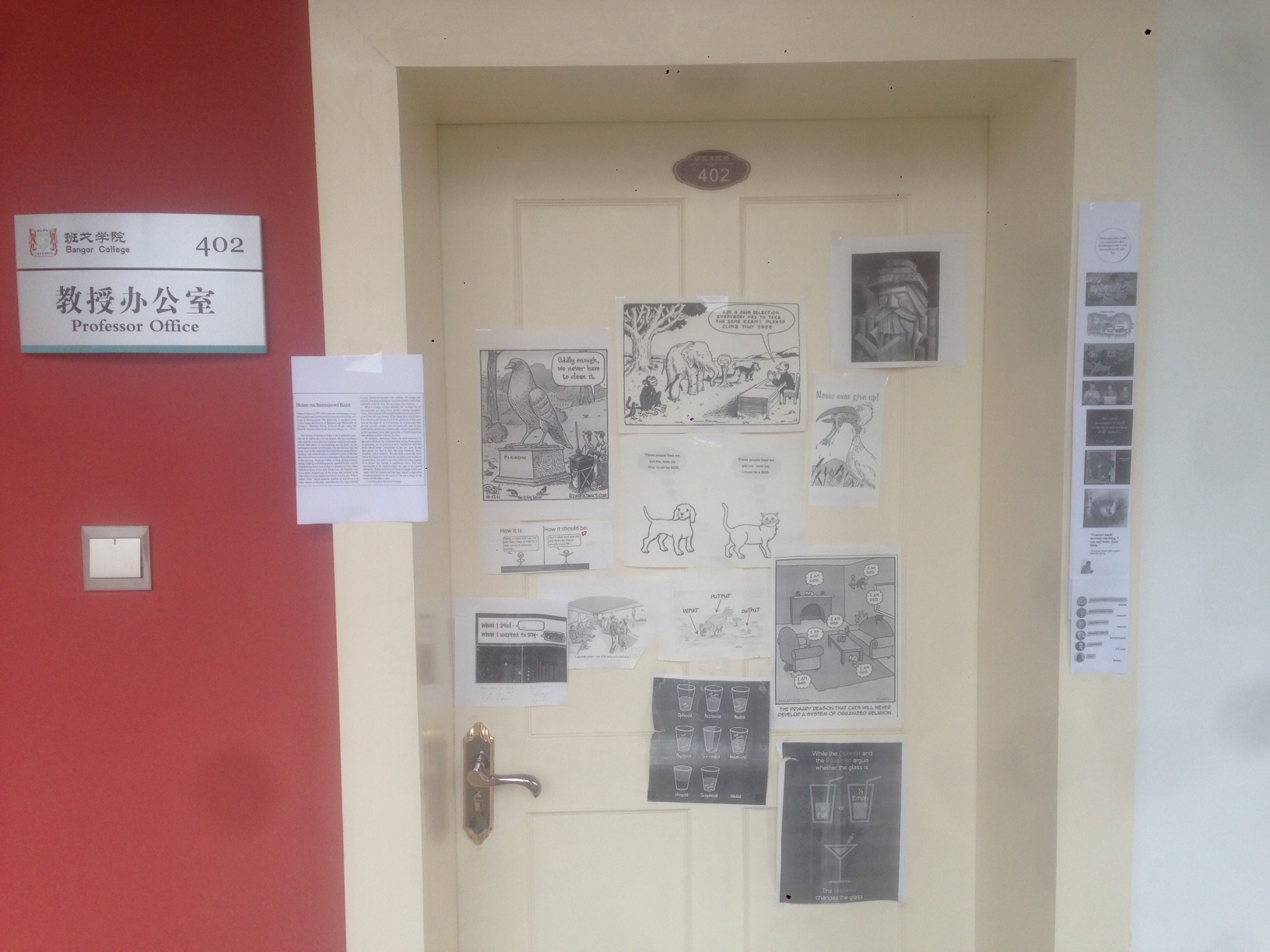
这次,Herrmann教授接受了小编的采访。小编一行人来到Herrmann教授的办公室,发现整个办公室都被悠悠轻放着的意大利音乐所包围,配着门上贴着的经济学卡通画像。就这样,一位教授把自己的办公处变成了一处带有艺术气息的地方。


Q

请问教授当初是怎么想到以后都要从事经济学领域研究的呢?总体上来说认为经济学是一门什么样的学科呢?

A

我当初做这个选择是很多因素的结合,可以说是我的热情所在与当时的政治动机相结合。

我认为经济学是一门研究组织关系的学科。关于经济学的作用,我认为可以从两个方面来概括。一个是形成经济价值观,另一个是研究隐藏在世界背后的逻辑,明白世间万物都是相互联系的。

Q

经济学学习,您对班戈学院的学生有什么好的建议吗?

A:

我有两条建议:第一,多阅读世界历史;第二,努力去探索人们的价值观是什么,人们所创造的万物中什么是美。

第二,不仅要阅读,而且要思考、要学会去观察世界并且将自身投入其中。要擅于抓住机会去做许多的尝试,而不是被父母推着向前走。此外,不要害怕犯错,因为你可以从错误中汲取经验,而且经济与我们的生活是息息相关的。

Herrmann教授也谈到了自己女儿小时候的故事。有一天当女儿走在路上看到了一只蜗牛,不是选择绕开,而是理解女儿的好奇心。让她静静地看着那只蜗牛,去观察它。去看那只蜗牛在做什么,去体会它怎么动的,之后当你有了好奇心你便会有更多的动力去学更多去了解更多。


之后,采访小组成员还与Herrmann教授一起讨论了当今中国的热点话题“共享经济”。

Herrmann教授分享了一个他对共享的认识。他向我们介绍在国外有一个网站,可以联系到其他国家的人来share accommodation,当你外出旅行不需要住在家里的时候。这是他对“共享”的认识。

采访尾声,Herrmann教授对班戈学院学生的评价比较高,他认为班戈学院的学生都非常努力,但希望学生们能够把理论与实践相结合;他相信,在老师们的教导下,在同学们的努力下,一定能够取得好的成绩。

****

看完今天的推送,大家是否对我们亲爱的Herrmann教授有了更多的了解呢?

在班戈学院,你有喜欢的老师吗?

TA们在你们眼中又是怎样的呢?

欢迎留言哟(*^__^*)

THE TRUE G 20 SUMMIT

Talking yesterday in ChangSha about academia, and a life committed to it also in terms of a political obligation, it is today about contributing to the

Summit for Global Solidarity

you may also see it as real G20-meeting – real as it is reality that we need alternative approaches to the worlds pressing problems and great opportunities.

Attac’s Academic Council contributes with various workshops, one of them looking the Digital Platforms.

In German language my contribution during a workshop – and below some more detailed description. In a few days, a more extensive, and more academic presentation will be posted in English language.

follow also the two projects

Is it really about Industry 4.0.?

Wandel des Wirtschaftens – Wandel des Rechts. Forschungsskizze zu Sozialrecht und Sozialpolitik

BEITRAG zum WIRKLICHEN G20-Treffen, dem

GIPFEL FUER GLOBALE SOLIDARITAET

[Aus der Programmankuendigung]

„Digitale Plattformen“, „sharing economy“, „crowd working“ sind neue Begriffe, an die sich Hoffnungen, aber auch Sorgen knüpfen. Laptops, Tablets und Smartphones revolutionieren die Arbeitswelt – tun sie das, und wenn ja, wie? Im Workshop soll unter Beteiligung von Prof. Peter Herrmann diskutiert werden, ob und wie sich unser (nicht nur Arbeits-) Alltag durch diese Digitalisierung verändern könnte und wie wir darauf reagieren.

Dieser Beitrag speziell versucht, die Änderungen der Kapitalstruktur herauszuarbeiten – die Schlussfolgerung ist einfach: Vergesellschaften anstatt Teilen.

Living in and for academia – an international[ist] perspective

Published is a presentation given on the 4th of July in ChangSha, PRC, looking against the personal background from an academic perspective at the topic of international and global education. While sociology, economics, political science, law and arts are explicitly mentioned, philosophy remains as companion of all in the background. Highlighted is the need to regain and maintain academic integrity.

The video-recording, in some respect an extension to the interview published recently, can be found here.

Learned from the time I lived in Australia, and altered all this is not least about the statement that

I fully acknowledge the Right and Duty of the students to learn in a way that allows not only to administer their own life and land in a globally respectful way, to study the possibilities to work and connect with the world that is respectful against themselves, against their fellow beings past, present and emerging.

human beings or markets, products and services?

Do we really need markets everywhere, protecting products and services, instead of humans?

At least this is the impression while reading the [Guardian]report, titled

Israeli airline can’t make women move seats for religious reasons, court rules

El Al loses case brought by Holocaust survivor asked to move after ultra-orthodox man refused to sit next to her

Seeing there the remark on the background of the judgement:

Cohen-Lekah said the policy was a “direct transgression” of the Israeli discrimination laws relating to products and services.
So easy to be satisfied as such appalling behaviour is rebuked to result in overlooking a tiny, though fundamentally important point:
I suppose it would have been enough, simply saying: 82-year-old Holocaust survivor and a former lawyer, Renee Rabinowitz is a human being.
I suppose It would have been enough to simply take being a human as point of departure for a a judgment that is humane …
legal syllogism has two dimensions
* the formal:
  • legal norm/rule
  • case at hand
  • judgement as conclusio
* the substantial
  • humanity as socio-natural being
  • being member of a ‘social group’
  • claim of human rights

On studying, teaching, responsibility … and a bit on economy and economics

Students at Bangor College China asked me for an interview – some would say it is about god and the world – but that is not really an appropriate wording when it comes to talking with an atheist about studying, teaching and responsibility, is it?

It may well be of interests to a wider audience — trying to make sense of studying today. And it surely links to many other statements made on various occasions of looking for firm grounds in a world of flux.

The students:

采访:李雨欣 彭博 龚佳亮 刘佳浩

文字:李雨欣

编辑:章孛

translating from the past II

Perhaps the contemporary version of it would read like this:

… I do not blame personally the administrators and the suicidal colleagues who consider academic work and life as focused on ranking journals, ‘top-universities’ where leading academics are not available as they are writing for those journals or travelling around to give presentations or are working as advisors in ‘Commissions’ to gain some additional money … – they should not be blamed for following the rules, though they surely have to be blamed for elevating these into the status of holy grail, as standard others have to follow.

In this light I would ask them for one favour: Criticise and reject those of the scholars with whom I spent time and spaces in academia – friends, colleagues, students who see me as hojam, as lǎoshī …, those with whom I spend time and work without anybody thinking in utils of the togetherness – in the same way as I reject those who criticise me on wrong grounds, while drinking out of the grail, leaving the plastic cups, or just the hands to others … criticise and reject them if you see them striving for money instead for truth, if you find them being interested in others as ‘tools for themselves’, if you sense that they are interested in power to control others instead of power to improve people’s life in society. And criticise and reject them if they plagiarise and make life and work a plagiarism.

It is time to go know, all the work I could do here is done, the academic year clearly concluding, the next step changed – and I may have to move on in insecurity, facing precarity as it is the one norm in academia today. Others will stay, will settle, being secure – in what they say after the ‘wings of free speech’ had been truncated … – …, looking at the many careers of the giants, on the shoulders of whom we stand, it cannot be immediately clear who is going to the better place.

***

Those triumphant at the moment while others sit down and cry?

***

  • just in plain text: this is not [necessarily and completely] a direct reflection  of current experiences and moves – more a matter of ventilating generally ‘academia today’ – and without denial: yes it is as such also about personal experience of somebody who may be seen as ‘globally active academian and academician. And somebody who …, well I said the other day to Yi ‘I think I’m getting old, increasingly not really being able to link to many of these developments, feeling positioned outside …’ – she smiled though I am not sure if in affirmatin or joining in part into the claim …
    – In any case we should stay alert, never forget: many of those issues we complain about today, have their roots in the academic world of science [here understood as ‘natural science’] and geographically in the United States of America. – All this will also be soon published in another format, as talk you may listen to, before then diving into todays real world of the G20-debates on digitisation …. . Well, yes, life is full of contradictions, as is the world which I live …

translating from the past I …

At the moment, I am asking myself what one could say – imagining ‘being Socrates today’? While looking for he answer, quote here his last thoughts, as we know them from Plato’s Apology.


[souce: http://www.liberliber.it/online/wp-content/uploads/2015/04/apologia_di_socate.jpg%5D

… io personalmente non provo nessun rancore verso chi mi ha votato contro e chi mi ha accusato. A dire il vero, non mi hanno votato contro ed accusato con questa intenzione, ma pensando di danneggiarmi, [41e] e perciò meritano di essere biasimati. Tuttavia, a loro faccio questa preghiera: i miei figli, una volta cresciuti, puniteli, cittadini, tormentandoli come io tormentavo voi, se vi sembra che si preoccupino dei soldi e d’altro prima che delle virtù; e se fanno finta di essere qualcosa ma non sono nulla, svergognateli come io facevo con voi, perché non si prendono cura di ciò di cui occorre curarsi e pensano di essere qualcosa senza valer nulla. E se [42a] farete così, io sarò trattato giustamente da voi, ed anche i miei figli.

Ma è già l’ora di andarsene, io a morire, voi a vivere; chi di noi però vada verso il meglio, è cosa oscura a tutti, meno che al dio.

And I invite you to explore a bit what I wrote and read …

e.g.;  and alsoas well as here