Elite or Common Sense?

It is, sometimes, difficult to draw a line between elitism and common sense. Especially when the elite is just a pretension, a claim that has no legitimate foundation in reality but is established on the pillars of imagined rules of which the validity is only …, the claim of their legitimacy, presumed to be unquestionable. those are claims of conventional wisdom, of which J.K, Galbraith writes

Because familiarity is such an important test of acceptability, the acceptable ideas have great stability. They are highly predictable. It will be convenient to have a name for the ideas which are esteemed at any time for their acceptability, and it should be a term that emphasizes this predictability. I shall refer to these ideas henceforth as the conventional wisdom.

(Galbraith, J.K., 1958: The Affluent Society; London: Hamish Hamilton:6)

‘Religious rites’ as he calls them a page later.

And they could also be seen as rules or hegemonic setting – we believe in them because …, we believe in them as all believe in them. And they are used to misguide the future generations.

The paradox: the elite turns into an ‘un-elite’, not knowing what they are doing but just doing what they don’t know. some time ago I read in an interview with the conductor Philippe Herreweghe the following lines, making me thinking about a strange reversal of elite and common sense we face in today’s algorithm society.

Ich bin beispielsweise der Ansicht, dass Beethoven seine Musik für eine kleine, hochgradig künstlerisch veranlagte Elite komponierte – diese Zuhörerschaft war mit seinen Werken vertraut. Fast alle spielten selbst ein Instrument, häufig auch im kammermusikalischen Rahmen, oder gehörten sogar einem Orchester an, welches diese neue Musik interpretierte. Und genau aus diesem Grund konnten seine Zeitgenossen den etwas später so genannten »armen Beethoven, der von niemandem verstanden wurde«, durchaus sehr gut verstehen. Das Niveau seiner Zuhörerschaft war schlicht und einfach um ein Vielfaches höher, als wir es heutzutage erleben. Heute kann es vorkommen, dass manche Zuschauer begeistert ein Tennismatch verfolgen, ohne dabei die Spielregeln genau zu kennen …

 translated:

For example, I think that Beethoven composed his music for a small, highly artistic elite – this audience was familiar with his works. Almost all played an instrument, often in a chamber music setting, or even belonged to an orchestra, which interpreted this new music. And precisely for this reason, his contemporaries could quite well understand the so-called “poor Beethoven, which was later understood by nobody.” The level of his or her audience was simply a lot higher than we do today. Today it can happen that some spectators enthusiastically follow a Tennismatch without knowing the rules of the game …

(Ich habe mir meine Neugierde bewahrt. Philippe Herreweghe im Gespräch mit Louvres Langevoort/
I kept my curiosity. Philippe Herreweghe in conversation with Louvres Langevoort; in:
Kölner Philharmonie; Das Magazin. Nr. 3; Jul/Aug 2017: page 19; 18/08/2017)
Time to get back then to another common sense – that of asking what the rules are about, demanding to understand and not simply accepting acceptability.

where legal scholars and economist (should) sit at the same table

And of course, they should be joined by political scientists and politicians …

As usual, i am working on different projects, the one being the preparation of the workshop on The political economy of right wing populism, the other the question of digitisation and, of not anything else: continuing the work we started in February as part of the International scientific and practical seminar: “Occupation: Russian practice and international experience”: the book I am editing together with Vyacheslav Bobkov – we will discuss this further during the International Scientific-Practical Conference

“Instability Of Employment: Russian And International Contexts Of Changing The Legislation On Labour And Employment”

commencing tomorrow at the ФГБОУ ВПО “РЭУ им. Г.В. Плеханова” in Moscow

where I arrived a few minutes ago, coming from Anhui.

The following paragraph – the draft of a co-written contribution, that links to the different projects mentioned – may be worthwhile to be published here – taken out of its original context, valid in various contexts that characterise in my view much of the current situation in which economic greediness and acquisitiveness, political populism, and so-called hedonism alike are finding futile ground. So the para is the following:

… this is about the ‘major conflicts’ but also about the small print. One example may do suffice – in fact it is one that also shows that we are facing a thorough interpenetration, already going on for a long time, reaching seemingly unrecognised into the mentality: the common law tradition is increasingly eroding for a simple reason: “modern business” needs reliable frameworks for “mathematised rationalities” and “protestant ethics” – something that common law does not guarantee to the same extent as civil law (Romano-Germanic tradition). This is a particularly interesting example as it clearly shows the way in which accumulation regime and mode of regulation are entangled. This is expressed not only expressed in the fact of the legal regulations ‘for business’ as a system of systematic compilation and deductions (Leges Duodecim Tabularum or Duodecim Tabulae) but also in the regulatory system itself establishing the tradition of the “constitutional state” (Rechtsstaat).

Interestingly, this comes right now under pressure and is in different ways qualified, hollowing out the scope and degree of liability of the state,[1] the emphasis of individuality (including corporate social responsibility) and the accentuation of ‘governance’ as systematic deregulation of government. Such shifts can be found by way of “Global Governance”, characterised by different strands, entangled like the threats of a rope: (i) international and global organisations play increasingly a role and in tendency even openly contesting state power; (ii) not strictly “statutory” in character, there is a tendency of strong think tanks developing power positions that go far beyond the traditional role of opinion leaders: the World Economic Forum, The Bilderberg Conference and the Club de Madrid are examples, all characterised by the fact that leading representatives of big business, [former] members of governments and some mainstream ‘trendy’ academics are part of these undertakings; (iii) the traditional lines of division and distinction are frequently blurred and contested – here it is about socio-economic strata but also about boundaries of states, regions etc.; (iv) non-binding, often “think-tank-like” left-intellectual-liberal proposals; (v) critical and clientelist claims (iv) new ethics also being brought forward in organisations as the WEF, IMF, WB and Bilderberg. – It has to be said that all this does not replace objective societal structures and division; much of the effect can probably be seen as reflection of changing processes of politisation: the trend of a flattening can be seen on the one hand, establishing mechanisms of ‘presentationalism’ as dominant feature, supporting the emergence of a post-factual; on the other hand we find the push and pull effects when it comes to redefining politics as administrative issues, solely bound to factuality and rules.[2]

[1] This is still relevant even if we accept that even the Rechtsstaats-traditon strongly emphasised “The Limits of State Action” as the title of the work by Wilhelm von Humboldt suggested (see Humboldt, Wilhelm von, 1792: The Sphere and Duties of Government (The Limits of State Action); London: John Chapman, 1854)

[2] one has to acknowledge that there is ontologically and epistemologically a close kinship between post-truth and evidence based politics and policies, both dissecting complex truth.

The need to search for what we cannot know

Wittgenstein once wrote:

For that would appear to presuppose that we were excluding certain possibilities, and this cannot be the case, since it would require that logic should go beyond the limits of the world; for only in that way could it view those limits from the other side as well.

We cannot think what we cannot think; so what we cannot think we cannot say either.[1]


And later he concludes his tractatus with the words

6.54 My propositions serve as elucidations in the following way: anyone who understands me eventually recognizes them as nonsensical, when he has used them—as steps—to climb up beyond them. (He must, so to speak, throw away the ladder after he has climbed up it.)

He must transcend these propositions, and then he will see the world alright.

7 What we cannot speak about we must pass over in silence.[2]

And Bertrand Russell summarises in his Introduction that

What we cannot think we cannot think, therefore we also cannot say what we cannot think.[3]

This may leave us in a state of paralysis when it comes to the need of change; but it may also lead us to use the mistakes we make as some form of beauty: as challenge and opportunity to work on unknown paths – not simply as path we did not know before but going beyond this, at path we did not even imagine that they would exist. Paradoxically it means to start from what is really given, unveiled from abstract thoughts and political-economic frameworks, starting from real reality as fundamental truth, and develop things from there.

Talking about economics, as we did end of September in Athens on occasion of the annual Euromemo-conference, we may see this as special challenge to move further with what is today called heterodox economics. Some reflections, trying to radicalise approaches, made at the end of the conference can be found here.

********************

[1]            Wittgenstein, Ludwig, 1921: Tractatus Logico-Philosophicus; Translated by D. F. Pears and B. F. McGuinness With an introduction by Bertrand Russell; London/New York: Routledge, 1974: 68

[2]            ibid.: 89

[3]            Russell, Bertrand, 1922: Introduction; in: Ludwig Wittgenstein, 1921: Tractatus Logico-Philosophicus; Translated by D. F. Pears and B. F. McGuinness With an introduction by Bertrand Russell; London/New York: Routledge, 1974: XX

Who is Nobody?

Being now in the capital of Greece, a recent communication with a student comes to my mind again – it had been about her not having time to follow up on a mail I sent in connection with a reference letter I wrote for her because she was busy with urgent preparations of some exams. I frankly replied that I hate exams and reviews, receiving the reply

Nobody likes assessments …
Isn’t it amazing what nobody manages to do, how nobody develops power, being able to control us and the way we relate to each other.
There is surely a serious problem with personalising issues but at times it helps to give nobody a face – and that helps going beyond, instead of simply following rules.
It is well known from ancient times, that leaving decisions and power to nobody, just following rules defined by nobody, is fatal – as we read in Homer’s Odyssey in book nine:
So he declared. I poured him another fiery bowl –
three bowls I brimmed and three he drank to the last drop,
the fool, and then, when tile wine was swirling round his brain, I approached my host with a cordial. winning word:
‘So, you ask me the name I’m known by, Cyclops? I will tell you. But you must give me a guest-gift

as you’ve promised. Nobody-that’s my name. Nobody – so my mother and father call me, all my friends.’

But he boomed back at me from his ruthless heart, ‘Nobody? I’ll eat Nobody last of all his friends-
I’ll eat the others first! That’s my gift to you!’ …

Later then, after Polyphemus talked later about his failure to his peers, they replied
‘If you’re alone: his friends boomed back at once,
‘and nobody’s trying to overpower you now-look,
it must be a plague sent here by mighty Zeus
and there’s no escape from that.
You’d better pray to your father. Lord Poseidon
Never leave anything to blinding rules, nobody always has a name – everybody who followed the recent politics against, about and  in this beautiful country in which I am now, knows the names of the relevant people and the deciding institutions.
And we may add a bit political philosophy, going some steps with Rawls, looking at the proceduralisation of the categorial imperative. Shouldn’t then all the nobodies be coerced to think of themselves as everybody? The danger that everybody is becoming nobody would surely be reversed then.

Frogs and Humans — who is the more intelligent species?

Frogs – possibly they are more intelligent than humans?

In a nutshell, frogs, if thrown into boiling water, will jump out, thus saving their life. On the other hand, being in water that is gradually heated, they will at some stage be boiled to death. The argument is that gradual changes lets them overlook the danger – too big to fail [overlooking the different], too small to hail [mentioning and acknowledging the relevance] — of far we may say: frogs are very much the same as human beings.
However, that story was – according to Wikipedia –  evidenced by 19th century experiments, while, as it is suggested there too – with some reference and supposed evidence as can be found here and here – 
according to contemporary biologists the premise is false: a frog that is gradually heated will jump out.
Now, there may be another explanation, of course: it is not that the original premise was wrong, but that frogs today learned from frogs who lived – and died – during the nineteenth century, changing their behaviour and becoming more alert. This would suggest, of course, that frogs are more intelligent than humans are, right?

Ho Paura

Or:

Weird-alternative analysis of the results of the German elections

Yes, it is five minutes before midnight …

… here in Germany had been elections [without me, I temporarily lost voting rights as I lived too long outside of the country – actually I think it is justified]. Anyway ‘I took part’, not least seeing the various posters – it least those by Aldi, highlighting that there is no Aldi-native

Consumo ergo sum – I wrote this slogan many, many years ago –a ctually in the last century. With such posters it reaches a new stage: the political citizen now even closer to the consumer … . Wolfgang Streeck also speaking since some time of the market citizen.

Well, I am admittedly more or less good in losing ground – leaving my thoughts to seemingly abstract levels …, but perhaps it is not so abstract at all: all the independence and populism …, isn’t that very much about this: having lost ground – transparency being closed behind the door, the only ground on which we can stand and move is consuming and individually struggling to survive = to manage life as the space for real living is limited.

There is a paradox I cannot solve for myself – it is in some way linked to the experience I made while being in China: the experience of living there, and also the experience of looking from there back: to Italy, Ireland etc. We struggle for life, to survive and apparently the only way and place of and for living is very much the wee space we have with other individuals. Initially nothing wrong with it, of course: we are individuals and being together with other individuals – camminare insieme, perhaps also in honest disputes with those near to us, is indeed also some kind of satisfaction of the social instincts – or less profane: the social being that is reflected upon by Aristotle and the many who followed him. But coming back to the sentence ‘Initially nothing wrong with it …’ suggests that there may be something wrong with it: isn’t it also potentially the futile ground for small seedbeds of hedonism and communitarian ideologies of seclusion, NIBY-ideas? Isn’t it in this way the ground on which populism finds its roots? If so, it is not so much abbot charismatics leaders but about the search for the private being political and the political being a matter in which every individual needs to have a say. The alienation of Aldi-nativlos, the alienation of a society that offers identity only by consumption shouting for a solution – offered by communitarian self-love and the loving those who are next to you. It is about the age-old recommendation as we know it from Mark, 12:30-31

30 And thou shalt love the Lord thy God with all thy heart, and with all thy soul, and with all thy mind, and with all thy strength;’ this is the first commandment.
31 And the second is like, namely this: ‘Thou shalt love thy neighbor as thyself.’ There is no other commandment greater than these.”

Admittedly there may be other interpretations of this, but at least it allows a populist version’: it is only the one who is above you and those who are immediately around you. This is of further relevance, of course, at times where identity-building via consumption faces the limits – increasing inequality and increasing poverty are much more than they seem to be at first glance: it is not ‘only’ about loosing control over life [basic socio-economic security], but even more the loss of control over living beyond the    immediate  neighbours: the [fear of the] loss of social inclusion, social cohesion and social empowerment, the loss of personal (human) security; social recognition; social responsiveness; personal (human) capacity as elaborated in Social Quality Thinking. It is the economy, but on the surface it appears to be the community.

…, and in this weird constellation of competitive, hedonist consumers we loose the control not just over our individual behaviour [well fortunately not everybody turns to Buddhism, Catholicism, Islam and its political-populist variations … though too many do]. But we have these difficulties of ‘emphatically socialising’: call it controlled, rational empathy if something like it can exist. Many [not all for sure] my of the students throughout the years – really young people or youngish as myself – wanted to escape this individualism. And seemingly they could not – that was my impression: they did not want this consumerism, this ‘success’, this ‘ranked education’ – they were modest, curious, open but always faced those walls of our times. One of the walls: not being taken serious, pushed into the world of ranked competition …, and even young lecturers, just having entered that world, still verbally remembering their lovings from ten years or so ago, pushing and pulling those who are young now, into that direction. I tried to get closer to some, tried to organise a jour fixe to get known to each other, went for class trips to other countries, yes admittedly to incite them a bit: YOU HAVE RIGHTS – YOU AS STUDENTS [mind the plural], MAKE THEM KNOWN, CHALLENGE US … very limited success. There are many small and large case-studies to it, I should have written the third volume of my bio … , following up on the Briefe zwischen Welten and the Diary from a Journey into another World

Anyway, there is a wider perspective on it I will later engage with this and you can read it in a bloge-entry under the title

where legal scholars and economist (should) sit at the same table

[Pianificato il: 25 Ott, 2017 @ 17:40] It is about the changes I see – and that brings me closer to my take on the results of the elections but also on the independence question in Catalonia and the like: really looking from outside, though knowing a bit from inside: having been active in political struggles and canvassing in Germany, being member of a party in one of the neighbouring countries [where we have had elections to the senate], also looking back at ‘my Irish years’, but also looking at the time I spent in Australia [there the question of aborigines and PNG played a major role], there is something that goes for me MUCH beyond the current issues: populism, independence, the helplessness of being ‘voll muttiviert’[1] as one of the celebratory banners of the CDU suggests…; the … can one even say dictatorial behaviour of Madrid, the mal-functionings in Catalonia … the aggressiveness and ignorance of Trumpism, shown another time and also shown as part-defeat  … all these are serious issues but when we look at this as an attack against democratic institutions, I am wondering: did they ever really exist? Do we really have anywhere REALLY democratic institutions? The problem I see more and more is: how can we bring together the Rechtstaat, equality and direct peoples’ saying and rule. This trinagle may be a bit of an extension of Rodrik’s ‘inescapable trilemma of the world economy’ …

And it is a triangular tension that we easily put aside, simplifying things, finding answers before we really think about what the questions are.

Yes, a better government for Germany – one that is not a minority government with a highly problematic turnout, independence for Catalonia and others. But how can we guarantee that such democracies – small and large – are respecting the rights of others AND how can we ensure that such democratic entities respect ‘equality within it’s the borders’. Looking at independent and democratic Germany speaks volumes, if not libraries.

– Well, but for me: more philosopher than politician, more economist than lawyer: the crucial questions are the following two: how to overcome inequality on the different levels, i.e. from the local to the global, and how can we guarantee that by tackling the core = production, not the distribution — that the latter does not work had been shown often enough: e.g. by the Bill and Melinda Gates Foundation and the Pope’s appeals of the camminare insieme. Walking together is fine – if it is on the same layer; if it is about sitting in one and the same boat, the one giving the orders and the others still pulling the oared, there is something wrong.

Well, whatever happens in the near future – in Catalonia, Bavaria, Germany, Europe – I am afraid here remains much to be done to reach at real change.

And this is also something I brought with me from China: name it deep respect for the students and distaste of this system that keeps us in its fetters …; it makes me a bit sad, jaundiced, hurt …. somewhat feeling ashamed and afraid: with so many moves, the tiny moves against accepting these fetters and the fear of just forcing fetters on others, not being able to fully respect and support the students’ modesty, curiosity, openness … All the walls that surround them, while being forced to walk like cattle to the trough of competitive success may be for a tiny number pointers on the way success, for many it may well be the harness of the live that makes real living difficult and for another and increasingly large number it may well be wall they duplicate as wall against a fortress Europe, closure towards Mexico and the like …

Well, much could be added – also about ‘The enjoyable lightness of being’ that we can still find – a phrase linking to the title of a book, a Chinese friend made me aware of: Kundera’s ‘Unbearable Lightness of Being’ – an amazing book we still did not digest. A book that still employs our mind. Actually reading it, and talking about it brought many things back to me: all the stuff that moved me and my generation so many years ago: existentialism, Marxism, communism, anarchism – there was for me much of that ‘in the air’ during the more than two years; and the air here, being back in Europe now, is soaked by it too.

****************

[1]            A pun: merging Mutti Merkel and motivation.

What we See – What we sometimes think – and What we have to learn

A Dedication to my Students, Around the World

The first impression on one of the the websites of my previous position was yesterday that of the

in its own way a very pleasing tune, matching the mood of the nicety of the previous Friday – for me much more than a beautiful autumn day

A day proving  the enjoyable lightness of being …

I scrolled down the site, saw the old photo showing me during the Shanghai Forum and was getting a bit curious, started the decipher …, wearisome …, to find out that all this is about the media centre and the ‘hyper-modern way of the networked world’ – where the global and the village come together …, perhaps not bad at all, if handled with care. Perhaps this is more important: the way to control the handling, not the instruments …

It surely means not least to be there for students – real, not virtual, and respecting …, no, accepting that we as teachers and as students have more in common than there are differences – where differences and arrogance, where delay and ‘servant-attitudes’ prevail, we have lost already our ingenuity.

speed …

… the way we seem to live today.

From Alice, Through the looking glass: page 32 f:

Alice looked round her in great surprise. ‘Why, I do believe we’ve been under this tree the whole time! Everything’s just as it was!’

‘Of course it is,’ said the Queen, ‘what would you have it?’

‘Well, in our country,’ said Alice, still panting a little, ‘you’d generally get to somewhere else—if  you ran very fast for a long time, as we’ve been doing.’

‘A slow sort of country!’ said the Queen. ‘Now, here, you see, it takes all the running you can do, to keep in the same place. If you want to get some- where else, you must run at least twice as fast as that!’

To where do we go from here?

From teaching economics at Bangor College China, in Changsha, China – some reflections had been published here earlier, and also here – I arrived now – after some interim work in France and The Netherlands – in Munich, Bavaria, a generous grant from the Max-Planck-Institute for Social Law and Social Policy allows me occupying from today a research position for the next twelve month, looking at issues around digitisation – some books I asked for are already at my disposal on my new desk. And right at the beginning, after having been giving out against orthodox economics [not so much from a heterodox, but from an unorthodox position (or was it more from an alternative orthodoxy?)], I am now wondering if – cum grano salis – heterodox thinking is needed also when it comes to law?

[scan from: Johann Wolfgang Goethe, Faust – Der Tragödie Erster Teil, mit Illustrationen aus drei Jahrhunderten, ed. by Hans Hanning, Berlin: Rütting & Loening, 1982, 2nd ed., p. 123
Teufelspakt_Faust-Mephisto, by Julius Nisle]

And much as Marx did not ‘invent communism out of the blue’, but based it in historical analysis [see in particular Engels’ Work on ‘The Origin of the Family, Private Property, and the State’] , such historical review is also most valuable in jurisprudence. A nice passage I found – in a book by St Germain, writing  on the Dialogues between a doctor of divinity and a student in the laws of England –  and surely not suggesting that we find the alternatives in divinity …

And so it appeareth, that equity taketh not away the very right, but only that that seemeth to be right by the general words of the law. Nor it is not ordained against the cruelness of the law, for the law in such case generally taken is good in himself; but equity followeth the law in all particular cases where right and justice requireth, notwithstanding the general rule of the law be to the contrary. Wherefore it appeareth., that if any law were made by man without any such exception expressed or implied, it were manifestly unreasonable, and were not to be suffered …

Reading this on page 45, we read already a page earlier as definition:

Equity is a right wiseness that considereth all the particular circumstances of the deed, the which also is tempered with the sweetness of mercy. And such an equity must always be observed in every law of man, and in every general rule thereof: and that knew he well that said thus, Laws covet to be ruled by equity. And the wise man saith, Be not overmuch right wise; for the extreme right wiseness is extreme wrong: as who saith, If thou take all that the words of the law giveth thee thou shalt sometime do against the law.

Sorrows of Young Werther – not only

It had not been just the young Werther plagued by sorrows, and among the many concerned are academics – some old, some young; some knowing, some innocent; some forced and some voluntarily … .

[scan from: Johann Wolfgang Goethe, Faust – Der Tragödie Erster Teil, mit Illustrationen aus drei Jahrhunderten, ed. by Hans Hanning, Berlin: Rütting & Loening, 1982, 2nd ed., p. 123
Teufelspakt_Faust-Mephisto, by Julius Nisle]

All this is by no means new, the fine-tuning changed while the symphony itself is still the old lyre …

Career settings – career is a nice word actually: ‘a person really made a career’, we say it is somebody reached ‘high ranks’, and to get to the heights one has to make a career, i.e. move along a given path. Going back to Latin and Italian it is about the via cararia – the carriage road, the path on and along which the car – carrus – chariot moves. And it is about carrying, of course.

A brief outline then, if one gets an important part of the picture – surely not the complete one:

First step, getting the weight that needs to be carried – well prepared, and well wrapped:

Influence and manipulation in Teaching Economics – Backgrounds and Examples[1]

– There is at least an abstract in English language – and there is also an article on the topic[2]

Next step, prostitution[3] – it is not about what one says but how and where one says something.

And mind, see the progress: from the wrapped being presented, it is now about oneself, the young academic, wrapping.

Well, the end of the career? For some … the eternal wrappers, stepping higher and higher, the chariot being increasingly beautiful, the golden grids appearing as louvre – is it by accident that this is also the name of the great galleries in Paris?

For others the story ends …, well one may say Wertherian, i.e. by suicide – the way that social science goes too often[4] – actually the other side of prostitution – or its other side.

And indeed, there is some cunning of reason in the fact that this obituary on the academic freedom is published in a journal with access-by-payment-only … – Well, the Goethe, in his Faust, was clearer than Hegel with his hope for the cunning of reason, writing

To nonsense reason turns,

and benefit to worry.

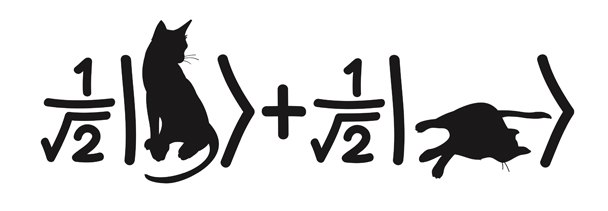
And we basically have to fail if we maintain reasoning by simple reason, accepting that we are not quantum mechanic beings but real ones.

And still, exactly therefore we have to look where and how exactly the cat moves – accepting also that it cannot be understood if we use those concepts that are hidden behind the eclipsed reason.

Sure, some leave the wrapping post and move on as rapper – against the rapists.

The answer history will give ????   – well, it may be that you have to go for it …

******

******

[1]            Silja Graupe: Beeinflussung und Manipulation in der ökonomischen Bildung Hintergründe und Beispiele; Duesseldorf: FGW – Forschungsinstitut für gesellschaftliche Weiterentwicklung e.V.

[2]            Silja Graupe. The Power of Ideas. The Teaching of Economics and its Image of Man; in: Volume 11, Number 2, © JSSE 2012 ISSN 1618-5293

[3]            Frey: PUBLISHING AS PROSTITUTION? Choosing Between One’s Own Ideas and Academic Failure; http://www.econ.uzh.ch/static/wp_iew/iewwp117.pdf

[4]            Holmquist, Carin and Sundin, Elisabeth(2010) ‘The suicide of the social sciences: causes and effects’, Innovation: The European Journal of Social Science Research, 23: 1, 13 — 23