The need to search for what we cannot know

Wittgenstein once wrote:

For that would appear to presuppose that we were excluding certain possibilities, and this cannot be the case, since it would require that logic should go beyond the limits of the world; for only in that way could it view those limits from the other side as well.

We cannot think what we cannot think; so what we cannot think we cannot say either.[1]


And later he concludes his tractatus with the words

6.54 My propositions serve as elucidations in the following way: anyone who understands me eventually recognizes them as nonsensical, when he has used them—as steps—to climb up beyond them. (He must, so to speak, throw away the ladder after he has climbed up it.)

He must transcend these propositions, and then he will see the world alright.

7 What we cannot speak about we must pass over in silence.[2]

And Bertrand Russell summarises in his Introduction that

What we cannot think we cannot think, therefore we also cannot say what we cannot think.[3]

This may leave us in a state of paralysis when it comes to the need of change; but it may also lead us to use the mistakes we make as some form of beauty: as challenge and opportunity to work on unknown paths – not simply as path we did not know before but going beyond this, at path we did not even imagine that they would exist. Paradoxically it means to start from what is really given, unveiled from abstract thoughts and political-economic frameworks, starting from real reality as fundamental truth, and develop things from there.

Talking about economics, as we did end of September in Athens on occasion of the annual Euromemo-conference, we may see this as special challenge to move further with what is today called heterodox economics. Some reflections, trying to radicalise approaches, made at the end of the conference can be found here.

********************

[1]            Wittgenstein, Ludwig, 1921: Tractatus Logico-Philosophicus; Translated by D. F. Pears and B. F. McGuinness With an introduction by Bertrand Russell; London/New York: Routledge, 1974: 68

[2]            ibid.: 89

[3]            Russell, Bertrand, 1922: Introduction; in: Ludwig Wittgenstein, 1921: Tractatus Logico-Philosophicus; Translated by D. F. Pears and B. F. McGuinness With an introduction by Bertrand Russell; London/New York: Routledge, 1974: XX

Who is Nobody?

Being now in the capital of Greece, a recent communication with a student comes to my mind again – it had been about her not having time to follow up on a mail I sent in connection with a reference letter I wrote for her because she was busy with urgent preparations of some exams. I frankly replied that I hate exams and reviews, receiving the reply

Nobody likes assessments …
Isn’t it amazing what nobody manages to do, how nobody develops power, being able to control us and the way we relate to each other.
There is surely a serious problem with personalising issues but at times it helps to give nobody a face – and that helps going beyond, instead of simply following rules.
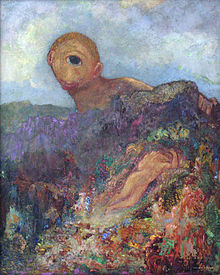
It is well known from ancient times, that leaving decisions and power to nobody, just following rules defined by nobody, is fatal – as we read in Homer’s Odyssey in book nine:
So he declared. I poured him another fiery bowl –
three bowls I brimmed and three he drank to the last drop,
the fool, and then, when tile wine was swirling round his brain, I approached my host with a cordial. winning word:
‘So, you ask me the name I’m known by, Cyclops? I will tell you. But you must give me a guest-gift

as you’ve promised. Nobody-that’s my name. Nobody – so my mother and father call me, all my friends.’

But he boomed back at me from his ruthless heart, ‘Nobody? I’ll eat Nobody last of all his friends-
I’ll eat the others first! That’s my gift to you!’ …

Later then, after Polyphemus talked later about his failure to his peers, they replied
‘If you’re alone: his friends boomed back at once,
‘and nobody’s trying to overpower you now-look,
it must be a plague sent here by mighty Zeus
and there’s no escape from that.
You’d better pray to your father. Lord Poseidon
Never leave anything to blinding rules, nobody always has a name – everybody who followed the recent politics against, about and  in this beautiful country in which I am now, knows the names of the relevant people and the deciding institutions.
And we may add a bit political philosophy, going some steps with Rawls, looking at the proceduralisation of the categorial imperative. Shouldn’t then all the nobodies be coerced to think of themselves as everybody? The danger that everybody is becoming nobody would surely be reversed then.

Frogs and Humans — who is the more intelligent species?

Frogs – possibly they are more intelligent than humans?

In a nutshell, frogs, if thrown into boiling water, will jump out, thus saving their life. On the other hand, being in water that is gradually heated, they will at some stage be boiled to death. The argument is that gradual changes lets them overlook the danger – too big to fail [overlooking the different], too small to hail [mentioning and acknowledging the relevance] — of far we may say: frogs are very much the same as human beings.
However, that story was – according to Wikipedia –  evidenced by 19th century experiments, while, as it is suggested there too – with some reference and supposed evidence as can be found here and here – 
according to contemporary biologists the premise is false: a frog that is gradually heated will jump out.
Now, there may be another explanation, of course: it is not that the original premise was wrong, but that frogs today learned from frogs who lived – and died – during the nineteenth century, changing their behaviour and becoming more alert. This would suggest, of course, that frogs are more intelligent than humans are, right?

Ho Paura

Or:

Weird-alternative analysis of the results of the German elections

Yes, it is five minutes before midnight …

… here in Germany had been elections [without me, I temporarily lost voting rights as I lived too long outside of the country – actually I think it is justified]. Anyway ‘I took part’, not least seeing the various posters – it least those by Aldi, highlighting that there is no Aldi-native

Consumo ergo sum – I wrote this slogan many, many years ago –a ctually in the last century. With such posters it reaches a new stage: the political citizen now even closer to the consumer … . Wolfgang Streeck also speaking since some time of the market citizen.

Well, I am admittedly more or less good in losing ground – leaving my thoughts to seemingly abstract levels …, but perhaps it is not so abstract at all: all the independence and populism …, isn’t that very much about this: having lost ground – transparency being closed behind the door, the only ground on which we can stand and move is consuming and individually struggling to survive = to manage life as the space for real living is limited.

There is a paradox I cannot solve for myself – it is in some way linked to the experience I made while being in China: the experience of living there, and also the experience of looking from there back: to Italy, Ireland etc. We struggle for life, to survive and apparently the only way and place of and for living is very much the wee space we have with other individuals. Initially nothing wrong with it, of course: we are individuals and being together with other individuals – camminare insieme, perhaps also in honest disputes with those near to us, is indeed also some kind of satisfaction of the social instincts – or less profane: the social being that is reflected upon by Aristotle and the many who followed him. But coming back to the sentence ‘Initially nothing wrong with it …’ suggests that there may be something wrong with it: isn’t it also potentially the futile ground for small seedbeds of hedonism and communitarian ideologies of seclusion, NIBY-ideas? Isn’t it in this way the ground on which populism finds its roots? If so, it is not so much abbot charismatics leaders but about the search for the private being political and the political being a matter in which every individual needs to have a say. The alienation of Aldi-nativlos, the alienation of a society that offers identity only by consumption shouting for a solution – offered by communitarian self-love and the loving those who are next to you. It is about the age-old recommendation as we know it from Mark, 12:30-31

30 And thou shalt love the Lord thy God with all thy heart, and with all thy soul, and with all thy mind, and with all thy strength;’ this is the first commandment.
31 And the second is like, namely this: ‘Thou shalt love thy neighbor as thyself.’ There is no other commandment greater than these.”

Admittedly there may be other interpretations of this, but at least it allows a populist version’: it is only the one who is above you and those who are immediately around you. This is of further relevance, of course, at times where identity-building via consumption faces the limits – increasing inequality and increasing poverty are much more than they seem to be at first glance: it is not ‘only’ about loosing control over life [basic socio-economic security], but even more the loss of control over living beyond the    immediate  neighbours: the [fear of the] loss of social inclusion, social cohesion and social empowerment, the loss of personal (human) security; social recognition; social responsiveness; personal (human) capacity as elaborated in Social Quality Thinking. It is the economy, but on the surface it appears to be the community.

…, and in this weird constellation of competitive, hedonist consumers we loose the control not just over our individual behaviour [well fortunately not everybody turns to Buddhism, Catholicism, Islam and its political-populist variations … though too many do]. But we have these difficulties of ‘emphatically socialising’: call it controlled, rational empathy if something like it can exist. Many [not all for sure] my of the students throughout the years – really young people or youngish as myself – wanted to escape this individualism. And seemingly they could not – that was my impression: they did not want this consumerism, this ‘success’, this ‘ranked education’ – they were modest, curious, open but always faced those walls of our times. One of the walls: not being taken serious, pushed into the world of ranked competition …, and even young lecturers, just having entered that world, still verbally remembering their lovings from ten years or so ago, pushing and pulling those who are young now, into that direction. I tried to get closer to some, tried to organise a jour fixe to get known to each other, went for class trips to other countries, yes admittedly to incite them a bit: YOU HAVE RIGHTS – YOU AS STUDENTS [mind the plural], MAKE THEM KNOWN, CHALLENGE US … very limited success. There are many small and large case-studies to it, I should have written the third volume of my bio … , following up on the Briefe zwischen Welten and the Diary from a Journey into another World

Anyway, there is a wider perspective on it I will later engage with this and you can read it in a bloge-entry under the title

where legal scholars and economist (should) sit at the same table

[Pianificato il: 25 Ott, 2017 @ 17:40] It is about the changes I see – and that brings me closer to my take on the results of the elections but also on the independence question in Catalonia and the like: really looking from outside, though knowing a bit from inside: having been active in political struggles and canvassing in Germany, being member of a party in one of the neighbouring countries [where we have had elections to the senate], also looking back at ‘my Irish years’, but also looking at the time I spent in Australia [there the question of aborigines and PNG played a major role], there is something that goes for me MUCH beyond the current issues: populism, independence, the helplessness of being ‘voll muttiviert’[1] as one of the celebratory banners of the CDU suggests…; the … can one even say dictatorial behaviour of Madrid, the mal-functionings in Catalonia … the aggressiveness and ignorance of Trumpism, shown another time and also shown as part-defeat  … all these are serious issues but when we look at this as an attack against democratic institutions, I am wondering: did they ever really exist? Do we really have anywhere REALLY democratic institutions? The problem I see more and more is: how can we bring together the Rechtstaat, equality and direct peoples’ saying and rule. This trinagle may be a bit of an extension of Rodrik’s ‘inescapable trilemma of the world economy’ …

And it is a triangular tension that we easily put aside, simplifying things, finding answers before we really think about what the questions are.

Yes, a better government for Germany – one that is not a minority government with a highly problematic turnout, independence for Catalonia and others. But how can we guarantee that such democracies – small and large – are respecting the rights of others AND how can we ensure that such democratic entities respect ‘equality within it’s the borders’. Looking at independent and democratic Germany speaks volumes, if not libraries.

– Well, but for me: more philosopher than politician, more economist than lawyer: the crucial questions are the following two: how to overcome inequality on the different levels, i.e. from the local to the global, and how can we guarantee that by tackling the core = production, not the distribution — that the latter does not work had been shown often enough: e.g. by the Bill and Melinda Gates Foundation and the Pope’s appeals of the camminare insieme. Walking together is fine – if it is on the same layer; if it is about sitting in one and the same boat, the one giving the orders and the others still pulling the oared, there is something wrong.

Well, whatever happens in the near future – in Catalonia, Bavaria, Germany, Europe – I am afraid here remains much to be done to reach at real change.

And this is also something I brought with me from China: name it deep respect for the students and distaste of this system that keeps us in its fetters …; it makes me a bit sad, jaundiced, hurt …. somewhat feeling ashamed and afraid: with so many moves, the tiny moves against accepting these fetters and the fear of just forcing fetters on others, not being able to fully respect and support the students’ modesty, curiosity, openness … All the walls that surround them, while being forced to walk like cattle to the trough of competitive success may be for a tiny number pointers on the way success, for many it may well be the harness of the live that makes real living difficult and for another and increasingly large number it may well be wall they duplicate as wall against a fortress Europe, closure towards Mexico and the like …

Well, much could be added – also about ‘The enjoyable lightness of being’ that we can still find – a phrase linking to the title of a book, a Chinese friend made me aware of: Kundera’s ‘Unbearable Lightness of Being’ – an amazing book we still did not digest. A book that still employs our mind. Actually reading it, and talking about it brought many things back to me: all the stuff that moved me and my generation so many years ago: existentialism, Marxism, communism, anarchism – there was for me much of that ‘in the air’ during the more than two years; and the air here, being back in Europe now, is soaked by it too.

****************

[1]            A pun: merging Mutti Merkel and motivation.

What we See – What we sometimes think – and What we have to learn

A Dedication to my Students, Around the World

The first impression on one of the the websites of my previous position was yesterday that of the

in its own way a very pleasing tune, matching the mood of the nicety of the previous Friday – for me much more than a beautiful autumn day

A day proving  the enjoyable lightness of being …

I scrolled down the site, saw the old photo showing me during the Shanghai Forum and was getting a bit curious, started the decipher …, wearisome …, to find out that all this is about the media centre and the ‘hyper-modern way of the networked world’ – where the global and the village come together …, perhaps not bad at all, if handled with care. Perhaps this is more important: the way to control the handling, not the instruments …

It surely means not least to be there for students – real, not virtual, and respecting …, no, accepting that we as teachers and as students have more in common than there are differences – where differences and arrogance, where delay and ‘servant-attitudes’ prevail, we have lost already our ingenuity.

speed …

… the way we seem to live today.

From Alice, Through the looking glass: page 32 f:

Alice looked round her in great surprise. ‘Why, I do believe we’ve been under this tree the whole time! Everything’s just as it was!’

‘Of course it is,’ said the Queen, ‘what would you have it?’

‘Well, in our country,’ said Alice, still panting a little, ‘you’d generally get to somewhere else—if  you ran very fast for a long time, as we’ve been doing.’

‘A slow sort of country!’ said the Queen. ‘Now, here, you see, it takes all the running you can do, to keep in the same place. If you want to get some- where else, you must run at least twice as fast as that!’

To where do we go from here?

From teaching economics at Bangor College China, in Changsha, China – some reflections had been published here earlier, and also here – I arrived now – after some interim work in France and The Netherlands – in Munich, Bavaria, a generous grant from the Max-Planck-Institute for Social Law and Social Policy allows me occupying from today a research position for the next twelve month, looking at issues around digitisation – some books I asked for are already at my disposal on my new desk. And right at the beginning, after having been giving out against orthodox economics [not so much from a heterodox, but from an unorthodox position (or was it more from an alternative orthodoxy?)], I am now wondering if – cum grano salis – heterodox thinking is needed also when it comes to law?

[scan from: Johann Wolfgang Goethe, Faust – Der Tragödie Erster Teil, mit Illustrationen aus drei Jahrhunderten, ed. by Hans Hanning, Berlin: Rütting & Loening, 1982, 2nd ed., p. 123
Teufelspakt_Faust-Mephisto, by Julius Nisle]

And much as Marx did not ‘invent communism out of the blue’, but based it in historical analysis [see in particular Engels’ Work on ‘The Origin of the Family, Private Property, and the State’] , such historical review is also most valuable in jurisprudence. A nice passage I found – in a book by St Germain, writing  on the Dialogues between a doctor of divinity and a student in the laws of England –  and surely not suggesting that we find the alternatives in divinity …

And so it appeareth, that equity taketh not away the very right, but only that that seemeth to be right by the general words of the law. Nor it is not ordained against the cruelness of the law, for the law in such case generally taken is good in himself; but equity followeth the law in all particular cases where right and justice requireth, notwithstanding the general rule of the law be to the contrary. Wherefore it appeareth., that if any law were made by man without any such exception expressed or implied, it were manifestly unreasonable, and were not to be suffered …

Reading this on page 45, we read already a page earlier as definition:

Equity is a right wiseness that considereth all the particular circumstances of the deed, the which also is tempered with the sweetness of mercy. And such an equity must always be observed in every law of man, and in every general rule thereof: and that knew he well that said thus, Laws covet to be ruled by equity. And the wise man saith, Be not overmuch right wise; for the extreme right wiseness is extreme wrong: as who saith, If thou take all that the words of the law giveth thee thou shalt sometime do against the law.

Sorrows of Young Werther – not only

It had not been just the young Werther plagued by sorrows, and among the many concerned are academics – some old, some young; some knowing, some innocent; some forced and some voluntarily … .

[scan from: Johann Wolfgang Goethe, Faust – Der Tragödie Erster Teil, mit Illustrationen aus drei Jahrhunderten, ed. by Hans Hanning, Berlin: Rütting & Loening, 1982, 2nd ed., p. 123
Teufelspakt_Faust-Mephisto, by Julius Nisle]

All this is by no means new, the fine-tuning changed while the symphony itself is still the old lyre …

Career settings – career is a nice word actually: ‘a person really made a career’, we say it is somebody reached ‘high ranks’, and to get to the heights one has to make a career, i.e. move along a given path. Going back to Latin and Italian it is about the via cararia – the carriage road, the path on and along which the car – carrus – chariot moves. And it is about carrying, of course.

A brief outline then, if one gets an important part of the picture – surely not the complete one:

First step, getting the weight that needs to be carried – well prepared, and well wrapped:

Influence and manipulation in Teaching Economics – Backgrounds and Examples[1]

– There is at least an abstract in English language – and there is also an article on the topic[2]

Next step, prostitution[3] – it is not about what one says but how and where one says something.

And mind, see the progress: from the wrapped being presented, it is now about oneself, the young academic, wrapping.

Well, the end of the career? For some … the eternal wrappers, stepping higher and higher, the chariot being increasingly beautiful, the golden grids appearing as louvre – is it by accident that this is also the name of the great galleries in Paris?

For others the story ends …, well one may say Wertherian, i.e. by suicide – the way that social science goes too often[4] – actually the other side of prostitution – or its other side.

And indeed, there is some cunning of reason in the fact that this obituary on the academic freedom is published in a journal with access-by-payment-only … – Well, the Goethe, in his Faust, was clearer than Hegel with his hope for the cunning of reason, writing

To nonsense reason turns,

and benefit to worry.

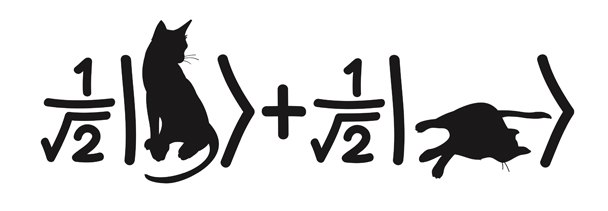
And we basically have to fail if we maintain reasoning by simple reason, accepting that we are not quantum mechanic beings but real ones.

And still, exactly therefore we have to look where and how exactly the cat moves – accepting also that it cannot be understood if we use those concepts that are hidden behind the eclipsed reason.

Sure, some leave the wrapping post and move on as rapper – against the rapists.

The answer history will give ????   – well, it may be that you have to go for it

******

******

[1]            Silja Graupe: Beeinflussung und Manipulation in der ökonomischen Bildung Hintergründe und Beispiele; Duesseldorf: FGW – Forschungsinstitut für gesellschaftliche Weiterentwicklung e.V.

[2]            Silja Graupe. The Power of Ideas. The Teaching of Economics and its Image of Man; in: Volume 11, Number 2, © JSSE 2012 ISSN 1618-5293

[3]            Frey: PUBLISHING AS PROSTITUTION? Choosing Between One’s Own Ideas and Academic Failure; http://www.econ.uzh.ch/static/wp_iew/iewwp117.pdf

[4]            Holmquist, Carin and Sundin, Elisabeth(2010) ‘The suicide of the social sciences: causes and effects’, Innovation: The European Journal of Social Science Research, 23: 1, 13 — 23

Questions of a customer who reads …

There is a poem, written by Brecht:
I recently wrote about academics who may also have some special questions.
Perhaps it could also be ‘re-writtten’, like this … as
Questions of a customer who reads …
What is it one can find in a shop, for instance in a small town like Confolens, FR:
The shop: it is Lidle, German company
a chain soaring across more and more countries
distributing Asian food
produced in Germany
sold in France
with English-language label
– where did they produce the package,
from where did they get the oil for the plastic
from where the truck to transport the stuff to the train
which railway company brought the stuff to …
and from where are the workers who uploaded and unloaded the trains and trucks ..?
Who looks after the kids of the workers – are there creches maintained by the enterprise, public facilities or what solution is there for them?
Where do the owners of the enterprises pay taxes
– if they pay taxes at all
And what do they do with the profits …?
Who prepares the meal for the workers if they have to work all day long?
And what do the boss and the worker talk about
if they meet on the soccer pitch …?
There would be so many more questions to be asked – though Lidle has a shop, not a school, and a school has not time to go to shops, there are too many models to be learned about, not leaving space for reality, the pace not allowing to think too much …

Responsibility versus Success?

“All that glisters is not gold;
Often have you heard that told:
Many a man his life has sold
But my outside to behold:
Gilded tombs do worms enfold
Had you been as wise as bold,
Your in limbs, in judgment old,
Your answer had not been in’scroll’d
Fare you well: your suit is cold.’ Cold, indeed, and labour lost: Then, farewell, heat and welcome, frost!”

― William Shakespeare, The Merchant of Venice

Responsibility and Success, at times and in some cases may stand in contradiction, at least tension to each other … – while the cat is chasing its own tale, not being sure if it is dead or alive.
… It is said of medical doctors that they cannot perform well unless they overcome a certain kind of empathy – some interventions cause instant pain, providing relief in the longer run. Is that the same with doctors in economics and even social science in general?
In any case the question to be asked is more specific as empathy as such is a rather empty and shallow notion as long as it is not specified. And specifying means here as in most of the cases to ask the simple question for which in particular Marcus Tullius Cicero was getting famous:
Cui Bono – for whose benefit?
Reading the other day an interview, made with a former …, shall I still say colleague?, brought this question back to me. I do not want to question the interviewees qualification, have no doubts that he is committed – but that may make things even worse.
If finance and stock analysis is such an advanced discipline, I feel obliged to ask why in 2007 a crisis manifested, actually already visible for some time for attentive observers? And it had been a crisis in particular around finance and stock markets.
I also feel obliged to wonder how it is possible to elevate a tiny fraction of the economy, an actual tool of the entire socio-economic processes, making it a major?
Sure, I agree with the emphasis of students responsibility – but it is not about them entering life – students are surely already living and perhaps we, as teachers, should think more about keeping them alive, not killing these lives by subordinating them under the rules of the ‘Lehmans of this world’.
Reading, as said to students
You are not far away from productively enter society and the real world. For that, you  will need to be as ready as possible to become accomplished and successful professionals.
shows in my reading a bit of disrespect – at least as student, I and many of my generation, would surely not have accepted such suggestion – though what is presented in the interview is surely view on young people and on life reflecting very much an negative approach to academic work: first work and then think about what you are doing. First act, and then reflect on the issues of responsibility – and even more: you may come to the conclusion that you don’t have to. There is surely a complex issue at stake – unfortunately very positive experience of the Polytechnic Secondary School education in part of Germany, finding roots in Henry Holmes Belfield’s foundation of the Chicago Manual Training School [founded in 1883] are surely more valuable than orienting on professional skills training, without sound academic foundation.
Yes, it is indeed time to take on responsibility …. – I returned to Europe – the interviewee once talked about one of my ‘homelands’, namely Italy. At least there he was right, stating that the country is in a mess. But he also celebrated another of my ‘homelands’ Germany and the U.K. suggesting that their success was very much due to austerity measures … – well, there is a point in it: the relative wealth of both is founded in austerity which can be taken as externalisation of cost and privatisation of gain: social inequality in Germany is increasing; an increasing number of people, though in full-time employment, do not earn enough money to make a living; after a full working life, the old age pension is mot secure; the health system is deteriorating, although the private contributions are extremely high. the UK took another way: exiting the EU, hoping to be thus in a position to avoid any obligation under the gelding ’solidarity’ – Indeed, Cui Bono as in both countries the rich are getting richer and more infueotnail! Being in Europe now – a bit of a tour de force through Italy, Germany, France, The Netherlands it is very visible what it means … – and there are too many facets that would need to be highlighted.

I take a short passage, from the end of an article I am currently finalising [‘Plattformökonomie – flexi, ein Schritt vorwärts oder zwei Schritte zurück?’] … Sorry, it is in German language ….***

Ein Eindruck vom mehrfachen Druck

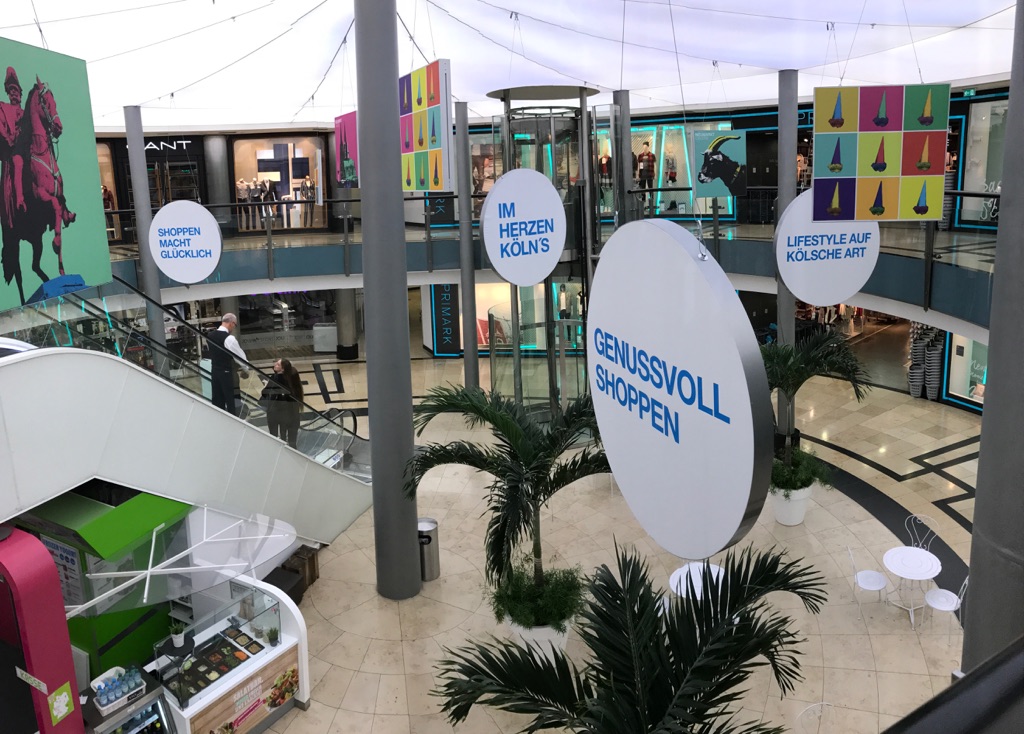
Ein Eindruck sei hier am Schluss gegeben – dies meint auch: eine eindrückliche Verdeutlichung des Gesamtzusammenhanges. Es handelt sich um ein persönliche Erfahrung des Autors – gemacht im August 2017: Ziel des Fußweges war die mehr oder weniger zentrale Geschäftsstelle einer Krankenkasse in einer größeren deutschen Stadt. Der Weg führte an den verschiedenen Geschäften der Ketten vorbei: einschließlich etwa Esprit,[1] TK, Starbucks, Karstadt, H&M, s.Oliver,[2] Victorinox, Subway, Zara, Primark, Nespresso, Manufactum, O2 – auch der ‚discounter’ Lidl, alle nun auch in den Zentren mehr oder weniger reicher Städte Deutschlands zu finden.

Vor dem discounter kniet ein Bettler, im danebenliegenden Kaffee wird der Verkäufer der Straßenzeitung von der am Tresen stehenden Verkäuferin vertrieben, in der Geschäftsstelle der Krankenkasse wird die Summe des Versicherungsbetrages genannt – es handelt sich um mehr als 16% des Einkommens. Im Falle der Einkommenslosigkeit sind es immer noch um knapp 180 €. – Glücklich, wer da noch beim discounter kaufen kann oder gar auf andere Weise den Wert der eigenen Ware Arbeitskraft senken kann, etwa durch die Inanspruchnahme des Foodora- oder Uber-Dienstes, möglicherweise bei einem Urlaubsaufenthalt, erschwinglich durch den solo-Unternehmer, der als Pilot arbeitet und die Airbnb-reduzierten Unterkunftskosten – die letzte Warnung: spätestens wenn der Trevi-Brunnen oder Ähnliches zum Verkauf angeboten wird,[3] sollte man sich fragen, ob die Grenzen nicht wirklich überschritten sind. – Déjà vu, das letzte Geschäft, welches ich nun auf dem Rückweg sehe – wohl Zufall, ebenso Zufall, wie die aufschimmernde Erinnerung an einen Platz in Rom, den ich vor einigen Jahren überquerte – selbst im Zentrum des katholischen Wohlgefallens ist bekannt, dass Wohlfahrt in der Konkurrenzgesellschaft Grenzen hat.

But I may submit something else to the discussion here – the short story written by L.N. Tolstoy: Master and Man – there is a no need to buy into the religious part of it. Many aspects are making if a good read – the main story line, and the little ramifications.
Reading the short story in the light of finance, there is one crucial sentence, and should not be forgotten when looking at the tool of finance – and applying tools without knowing sufficiently about the entire context:
Vasili Andreevich stopped, stooped down and looked carefully. It was a horse-track only partially covered with snow, and could be none but his own horse’s hoofprints. He had evidently gone round in a small circle. ‘I shall perish like that!’ he thought, and not to give way to his terror he urged on the horse still more, peering into the snowy darkness in which he saw only flitting and fitful points of light.
Indeed, limited perspectives don’t allow much – there is always good reason to take wider perspectives on studying, responsibility and life.
***********
*** Too lazy, and not trusting google-translation, I still dared – the result is reasonable, here inserted without changes made.
An impression of multiple pressures An impression should be given here – this also means: an impressive clarification of the overall context. It is a personal experience of the author – made in August 2017: the goal of the footpath was the more or less central office of a health insurance in a larger German city. The route took us past the various shops of the chains: including Esprit, TK, Starbucks, Karstadt, H & M, s.Oliver, Victorinox, Subway, Zara, Primark, Nespresso, Manufactum, O2 Also in the centers of more or less rich cities of Germany.   In front of the discounter, a beggar kneels, in the coffee next to it, the seller of the road is expelled by the saleswoman standing at the counter, in the office of the health insurance the sum of the insurance amount is called – it is more than 16% of the income. In the case of loss of income, it is still around € 180. – Happy, who can still buy at the discounter or in some other way reduce the value of the own goods labor, for example through the consumption of the food or over-service, possibly for a holiday stay, affordable by the solo entrepreneur, who as Pilot works and the Airbnb reduced accommodation costs – the last warning: at the latest when the Trevi well or the like is offered for sale, one should ask whether the limits are not really exceeded. – Déjà vu, the last business I see on the way back – coincidence, just as coincidentally, as the glimmering memory of a place in Rome, which I crossed a few years ago – even in the center of the Catholic prosperity is well-known that welfare In the competition borders.

[1]            Ja, es ist ein bemerkenswerter Geist, der da über allem schwebt. Und wie Namen, Images und Design eine immer prägendere Rolle spielt, was unter anderem durch Halbbildung ermöglicht wird.

Yes, it is a remarkable spirit that floats above everything. And how names, images and design play an ever more prominent role, which is made possible, among other things, by semi-education.

[2]            Es fehlt nur das an das S angehängte t um dem Ganzen etwas Heiligkeit zu anzuhängen.

The only thing missing is the t attached to the S to add something holiness to the whole.

[3]            Vom Teilverkauf in der Form von Besichtigungskosten, gig-sightseeing-tours etc. abgesehen.

 From the partial sale in the form of sightseeing, gig-sightseeing-tours etc. apart.