THE TRUE G 20 SUMMIT

Talking yesterday in ChangSha about academia, and a life committed to it also in terms of a political obligation, it is today about contributing to the

Summit for Global Solidarity

you may also see it as real G20-meeting – real as it is reality that we need alternative approaches to the worlds pressing problems and great opportunities.

Attac’s Academic Council contributes with various workshops, one of them looking the Digital Platforms.

In German language my contribution during a workshop – and below some more detailed description. In a few days, a more extensive, and more academic presentation will be posted in English language.

follow also the two projects

Is it really about Industry 4.0.?

Wandel des Wirtschaftens – Wandel des Rechts. Forschungsskizze zu Sozialrecht und Sozialpolitik

BEITRAG zum WIRKLICHEN G20-Treffen, dem

GIPFEL FUER GLOBALE SOLIDARITAET

[Aus der Programmankuendigung]

„Digitale Plattformen“, „sharing economy“, „crowd working“ sind neue Begriffe, an die sich Hoffnungen, aber auch Sorgen knüpfen. Laptops, Tablets und Smartphones revolutionieren die Arbeitswelt – tun sie das, und wenn ja, wie? Im Workshop soll unter Beteiligung von Prof. Peter Herrmann diskutiert werden, ob und wie sich unser (nicht nur Arbeits-) Alltag durch diese Digitalisierung verändern könnte und wie wir darauf reagieren.

Dieser Beitrag speziell versucht, die Änderungen der Kapitalstruktur herauszuarbeiten – die Schlussfolgerung ist einfach: Vergesellschaften anstatt Teilen.
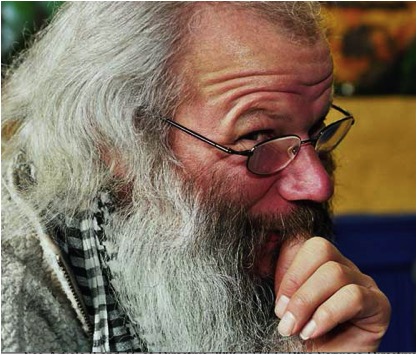
Living in and for academia – an international[ist] perspective

Published is a presentation given on the 4th of July in ChangSha, PRC, looking against the personal background from an academic perspective at the topic of international and global education. While sociology, economics, political science, law and arts are explicitly mentioned, philosophy remains as companion of all in the background. Highlighted is the need to regain and maintain academic integrity.

The video-recording, in some respect an extension to the interview published recently, can be found here.

Learned from the time I lived in Australia, and altered all this is not least about the statement that

I fully acknowledge the Right and Duty of the students to learn in a way that allows not only to administer their own life and land in a globally respectful way, to study the possibilities to work and connect with the world that is respectful against themselves, against their fellow beings past, present and emerging.

human beings or markets, products and services?

Do we really need markets everywhere, protecting products and services, instead of humans?

At least this is the impression while reading the [Guardian]report, titled

Israeli airline can’t make women move seats for religious reasons, court rules

El Al loses case brought by Holocaust survivor asked to move after ultra-orthodox man refused to sit next to her

Seeing there the remark on the background of the judgement:

Cohen-Lekah said the policy was a “direct transgression” of the Israeli discrimination laws relating to products and services.
So easy to be satisfied as such appalling behaviour is rebuked to result in overlooking a tiny, though fundamentally important point:
I suppose it would have been enough, simply saying: 82-year-old Holocaust survivor and a former lawyer, Renee Rabinowitz is a human being.
I suppose It would have been enough to simply take being a human as point of departure for a a judgment that is humane …
legal syllogism has two dimensions
* the formal:
  • legal norm/rule
  • case at hand
  • judgement as conclusio
* the substantial
  • humanity as socio-natural being
  • being member of a ‘social group’
  • claim of human rights

On studying, teaching, responsibility … and a bit on economy and economics

Students at Bangor College China asked me for an interview – some would say it is about god and the world – but that is not really an appropriate wording when it comes to talking with an atheist about studying, teaching and responsibility, is it?

It may well be of interests to a wider audience — trying to make sense of studying today. And it surely links to many other statements made on various occasions of looking for firm grounds in a world of flux.

The students:

采访:李雨欣 彭博 龚佳亮 刘佳浩

文字:李雨欣

编辑:章孛

translating from the past II

Perhaps the contemporary version of it would read like this:

… I do not blame personally the administrators and the suicidal colleagues who consider academic work and life as focused on ranking journals, ‘top-universities’ where leading academics are not available as they are writing for those journals or travelling around to give presentations or are working as advisors in ‘Commissions’ to gain some additional money … – they should not be blamed for following the rules, though they surely have to be blamed for elevating these into the status of holy grail, as standard others have to follow.

In this light I would ask them for one favour: Criticise and reject those of the scholars with whom I spent time and spaces in academia – friends, colleagues, students who see me as hojam, as lǎoshī …, those with whom I spend time and work without anybody thinking in utils of the togetherness – in the same way as I reject those who criticise me on wrong grounds, while drinking out of the grail, leaving the plastic cups, or just the hands to others … criticise and reject them if you see them striving for money instead for truth, if you find them being interested in others as ‘tools for themselves’, if you sense that they are interested in power to control others instead of power to improve people’s life in society. And criticise and reject them if they plagiarise and make life and work a plagiarism.

It is time to go know, all the work I could do here is done, the academic year clearly concluding, the next step changed – and I may have to move on in insecurity, facing precarity as it is the one norm in academia today. Others will stay, will settle, being secure – in what they say after the ‘wings of free speech’ had been truncated … – …, looking at the many careers of the giants, on the shoulders of whom we stand, it cannot be immediately clear who is going to the better place.

***

Those triumphant at the moment while others sit down and cry?

***

  • just in plain text: this is not [necessarily and completely] a direct reflection  of current experiences and moves – more a matter of ventilating generally ‘academia today’ – and without denial: yes it is as such also about personal experience of somebody who may be seen as ‘globally active academian and academician. And somebody who …, well I said the other day to Yi ‘I think I’m getting old, increasingly not really being able to link to many of these developments, feeling positioned outside …’ – she smiled though I am not sure if in affirmatin or joining in part into the claim …
    – In any case we should stay alert, never forget: many of those issues we complain about today, have their roots in the academic world of science [here understood as ‘natural science’] and geographically in the United States of America. – All this will also be soon published in another format, as talk you may listen to, before then diving into todays real world of the G20-debates on digitisation …. . Well, yes, life is full of contradictions, as is the world which I live …

translating from the past I …

At the moment, I am asking myself what one could say – imagining ‘being Socrates today’? While looking for he answer, quote here his last thoughts, as we know them from Plato’s Apology.


[souce: http://www.liberliber.it/online/wp-content/uploads/2015/04/apologia_di_socate.jpg%5D

… io personalmente non provo nessun rancore verso chi mi ha votato contro e chi mi ha accusato. A dire il vero, non mi hanno votato contro ed accusato con questa intenzione, ma pensando di danneggiarmi, [41e] e perciò meritano di essere biasimati. Tuttavia, a loro faccio questa preghiera: i miei figli, una volta cresciuti, puniteli, cittadini, tormentandoli come io tormentavo voi, se vi sembra che si preoccupino dei soldi e d’altro prima che delle virtù; e se fanno finta di essere qualcosa ma non sono nulla, svergognateli come io facevo con voi, perché non si prendono cura di ciò di cui occorre curarsi e pensano di essere qualcosa senza valer nulla. E se [42a] farete così, io sarò trattato giustamente da voi, ed anche i miei figli.

Ma è già l’ora di andarsene, io a morire, voi a vivere; chi di noi però vada verso il meglio, è cosa oscura a tutti, meno che al dio.

And I invite you to explore a bit what I wrote and read …

e.g.;  and also; as well as here

…

sorry, I wrote what I meant …

… although it is most likely that it will go unnoticed.

In a 2017 discussion paper from the McKinsey Global Institute, posing the question

Where will Latin America’s growth come from?

we can read on page 15

… shifting from an abundance mindset to a productivity mindset.

The hegemony of competitive market economies, grounded in and aiming on eternal growth as source of wealth is far reaching – and part of the mindset is: scarcity is nearly everywhere and abundance is actually a negative occurrence – widespread in the pattern that is crucial for these economies: we have to create scarcity if it is does not exist anyway. And we do so not least by social distinction [or should we say maintaining class divides and exclusion?], by ruthless exploitation of the environment and by simply maintaining the unsustainable Growth-of-Developed-Product[ion] ideology. Thus, the proposal in the report suggests:

Latin American countries need to make the most of their rich resources by extracting them, selling them, and using them more efficiently. [ibid.]

Admittedly there are some valid points made about lack of efficiency and the environmental problems within those economies. But if and to which extent commodity-production-oriented extractivism is the solution may be questioned.

And it should also make us thinking if there is something fundamentally wrong if

[o]verall, macroeconomic fundamentals in the region have been strong, with low inflation and low volatility in exchange rates and interest rates. Public debt levels have fallen slightly over the past 15 years. [22]

– the latter remarkable as it has to be seen against the enormous pressure from many uncivilised attacks from the so-called developed countries – protectionism is not protectionist if used by certain countries …

Well, abundance is bad … ??? – Well, perhaps it really is, namely if it based in the permanent and extended production of superfluous products, if it is a matter of Growth-of-Developed-Product[ion]-ideology

… to the point …

Well, you may say I am burning in the Heraclitean Fire, carried away and not doing what the academic world-order asks me to do – moving on with the metaphor, one may add: this little bit of disobedience is like playing with fire, a dangerous not to say: life threatening game.

So to the point, reading Erwin Chargaff’s

Heraclitean Fire: Sketches from a Life Before Nature.

He refers on page 171 to another work by himself**, which he wrote earlier and where he contended:

The fashion of our times favors dogmas. Since a dogma is something that everybody is expected to accept, this has led to the incredible monotony of our journals. Very often it is sufficient for me to read the title of a paper in order to reconstruct its summary and even some of the graphs. Most of these papers are very competent; they use the same techniques and arrive at the same results. This is then called the confirmation of a scientific fact. Every few years the techniques change; and then everybody will use the new techniques and confirm a new set of facts. This is called the progress of science. Whatever originality there may be must be hidden in the crevices of an all-embracing conventional makeshift: a huge kitchen midden in which the successive layers of scientific habitation will be dated easily through the various apparatuses and devices and tricks, and even more through the several concepts and terms and slogans, that were fashionable at a given moment.

Chargaff’s book had been published in 1978, he was, as widely known, professor in biochemistry, he emigrated from fascist Germany … – and one may ask if it is purely by accident that with this background already

[a]s early as 1949, this eminent scientist described certain irregularities in the composition of DNA and formulated the concept of ‘complementarity’ – later referred to as ‘Chrgaff’s rule’ and still later as ‘base pairing’ – which was the most important single piece of evidence for the double-helical structure of DNA’ [from the book-cover blurb].

‘Back to the fire’ – what he states, looking at methods, can cum grains salis also said for today and social science: where ‘methodology’ chapters in theses too often present methods, not showing any awareness of the difference between method and methodology, where publications and universities and people are ranked on the basis of algorithms and where entities are cut into pieces, making us forget the following:

The insufficiency of all biological experimentation, when confronted with the vastness of life, is often considered to be redeemed by recourse to a firm methodology. But definite procedures presuppose highly limited objects; and the supremacy of “method” has led to what could be called by an excellent neo-German term the Kleinkariertheit (piddling pedantry) of much present-day biological research. The availability of a large number of established methods serves, in fact, in modern science often as a surrogate of thought. Many researchers now apply methods whose rationale they do not understand. [170]

*****

End of term, and of the academic year – students, sometimes inviting lecturers, celebrating; preparing for holidays, but also asking for references, preparing the next career moves.

I have to admit, I am am happy that some say they did not ‘invite me to their celebration’ but invited me ‘to celebrate with them’; and I also have to admit that it is an honour to be seen by some as 老师, as lǎoshī – a bit like the hojam as we use it at ODTU in Ankara.

An unwritten chapter for the

Diary from a Journey into another World: Diaries against nationalism, inspired by trying to overcome personal resentments

to be closed.

======

** Chargaff, E. 1965. On Some of the Biological Consequences of Base-pairing in the Nucleic Acids. In: M.D. Anderson (Ed.), Developmentn.l and Metabolic Control Mechanisms and Neoplasw. Baltimore: Williams and Wilkins, p. 19.


preparing … – slowly but surely

As the time here is coming to an end, and as there will be many things just before leaving – a conference on education, a skype-participation in an event that is linked to the G20-summit, a ‘larger birthday party’ – not only Smith in Beijing [see also here], but also the Royal House in ChangSha – I started already grabbing things together, this way hoping to reduce end-of-time hectic. Part is the ‘selection’, the question: what to take with me, what to leave here, not least about the little presents and memorabiles …, little souvenirs, presents as the figurines Jenny nearly dedicated to me, from Antoine de Saint-Exupéry’s The Little Prince, Jiaying’s handwritten [or does one say hand-calligraphyied] poem: a copy of the ancient piece.


Well, looking at the translation I have[1], reading the last lines, I am wondering, I am wondering if it had been written for me, written for these days:

Younger than they, I have my hair all turned gray.

Life is but like a passing dream,

I’d drink to the moon which once saw them on the stream.

…

There is also a box with photos – Gerhard gave it to me as present, when we once met during the last years, on one occasion, when I had to visit Europe. Another poem, on the lid of the box, reading it I hesitate:

Tidying up

Here some letters, manuscripts,

mostly fragments, photographies –

but who can, after I left,

name the persons?

(Hans Bender)

Some other ‘souvenirs’ – immaterial, though very real as the seeming eternal replay of the Trials and Tribulations: memories, thoughts, fears, hopes, disappointments and appointments –  – a few answers and many questions …, the replay, lacking the reply …

and you can, after I left,

and you have to find the answers!!

=====

[1]

“The Charms of Niannu”

Su Shi

The great river eastward flows, with its waves are gone all those gallant heroes of bygone years.

West of the ancient fortress appears the Red Cliff.

Here General Zhou won his early fame when the Three Kingdoms were all aflame.

Jagged rocks tower in the air, swashing waves beat on the shore, rolling up a thousand heaps of snow.

To match the hills and the river so fair,

How many heroes brave of yore made a great show!

I fancy General Zhou at the height of his success, with a plume fan in hand,

In a silk hood, so brave and bright, laughing and jesting with his bride so fair,

While enemy ships were destroyed as planned like shadowy castles in the air.

Should their souls revisit this land, sentimental, his wife would laugh to say,

Younger than they, I have my hair all turned gray.

Life is but like a passing dream,

I’d drink to the moon which once saw them on the stream.