Herbert Marcuse supposedly said this … Is it another version of the words written on a postcard I recently received?
Swim to Nowhere, With No Thoughts.


Herbert Marcuse supposedly said this … Is it another version of the words written on a postcard I recently received?
Swim to Nowhere, With No Thoughts.


On youtube a new playlist is launched, asking to where we move in academia. Occasionally it may a bit about ….

sites.google.com/site/mrdssocialstudiessite/_/rsrc/1401456166430/word-of-the-week/treason/treason.jpg
…, well lets call it a strong wish to move forward.
From personal experience, occasionally videos will be posted there, having different backgrounds, being recordings of presentations but also reflections “on occasion of” – for instance reflecting after public lecture or in connection with teaching or in the context of politics, policies, and polities – sometimes being asked for advise, sometimes not being asked though I should have been asked 😉
One of the aims is to ventilate issues that are too often left out of consideration, leaving us with complains about how bad the world is, instead of thinking about what we – in academia – really complain, analysing the reasons being developments, often also going back to our performance in academia itself and not least taking out the way forward.
In any case, it is a potpourri, a kaleidoscope and a huge variety of topics will be dealt with.


Cher(e) ami(e),Selon une enquête de France Info diffusée la semaine dernière, de nombreux utilisateurs d’Airbnb estiment que leurs demandes de location ont été rejetées en raison de leur nom à consonance étrangère.
Certains particuliers qui mettent en location leur bien sur ces sites web annulent la location lorsque la consonance du nom du locataire ne leur plait pas. La preuve de cette discrimination est apportée par des opérations de testings : lorsqu’un ami présente sa candidature avec un nom à consonance plus européenne, le bien lui est loué sans problème.
Pour la Maison des Potes ce type de comportement discriminatoire, prouvé par ces opérations de testings, peut être et doit être condamné par les tribunaux. La Maison des Potes épaulera chaque victime de discrimination pour l’action en justice à mener et se constituera partie civile à ses côtés.
Si vous avez utilisé ces sites web et que vous avez le sentiment d’avoir été écarté d’une location du fait de la consonance de votre nom nous vous invitons à nous contacter le plus rapidement possible par e-mail contact@maisondespotes.fr ou par téléphone au 01.44.93.23.23 du Lundi au Vendredi de 10h à 18h.
Des testings pourront être organisés suite à vos signalements.
Si vous souhaitez nous aider à réaliser ces opérations de testings pour combattre ces discriminations, nous vous invitons à nous contacter en vous inscrivant sur ce formulaire : http://www.maisondespotes.fr/operation-de-testing-contre-les-discriminations
Amitiés antiracistes
When a company opens its databases to users, as Amazon, Google, and eBay have done with their Web services, it is encouraging participation at new levels. The corporation’s data becomes part of the commons and an invitation to participate. People who take advantage of these capabilities are no longer customers; they’re the company’s developers, vendors, skunk works, and fan base.Kelly, Kevin, 08.01.05: We Are the Web; in: Wired


an idealistic and optimistic company. For most of our existence, we focused on all of the good that connecting people can do. And, as Facebook has grown, people everywhere have gotten a powerful new tool for staying connected to the people they love, for making their voices heard and for building communities and businesses.
This week, meeting the students here in Lodz for the second time, the work will get more serious. The topics
I.
European Integration – A Failed Political and Social Union?

(from: Zeit Campus: September 2018/2019)
Though proposal had been made a while back – not focussing on issues GREXIT, BREXIT and the very recent “EU-developments” in Switzerland – one is wondering if these developments are seriously distracting the debates: Although they are highlighting the vulnerability, they are easily moving debates on solutions strategies – saving a torso – while neglecting the more fundamental issues that can be seen as fundamentally structural flaws, undermining the supposed plans and claims. In other words, the project had been from the beginning as half-hearted as the project of enlightenment. – In principle, already the lectures in Vienna (2017) had been dealing with these questions. However, in Poland the more philosophical may hopefully be more focussed upon.
II.
The second course will look at
Development versus Growth. Perspectives for a Qualitative Dimension in Developmental Economics
Not an easy one, as there is the fundamental issue of determining value, or to be more precise : to determine what economics/the economy is about. Unfortunately, also in debates one alternative paradigms, easily accept the flawed definition of economy
The economy of humans emerges from two roots. They have to beeconomically active because the means are scarce in relation to the ends …; and they are in a position that allows them to be economically active as, though with some limitations, they can make decisions about the purchase and use of the goods regarding the kind, quality, quantity, use etc., thus influencing the use-impact that are achieved …
(Schoenfeld, Leo, 1924: Grenznutzen und Wirtschaftsrechnung [Marginal Rate and Business Mathematics]; Wien: Manz’sche Verlags- und Universitäts-Buchhandlung; unchanged reprint München/Wien: Philosophia Verlag: 1)
While in very general terms there is nothing wrong with what is said, there is everything wrong if we use this as real point of reference or economy and development. An alternative is Frederick Engels’ proposition:
According to the materialist conception, the determining factor in history is, in the last resort, the production and reproduction of immediate life. But this itself is again of a twofold character. On the one hand, the production of the means of subsistence, of food, clothing and shelter and the implements required for this; on the other, the production of human beings themselves, the propagation of the species. The social institutions under which men of a definite historical epoch and of a definite country live are determined by both kinds of production: by the stage of development of labour, on the one hand, and of the family, on the other. The less labour is developed and the more limited the volume of its products and, therefore, the wealth of society, the more predominantly the social order appears to be dominated by ties of kinship. However, within this structure of society based on ties of kinship, the productivity of labour develops more and more; with it, private property and exchange, differences in wealth, the possibility of utilising the labour power of others, and thereby the basis of class antagonisms: new social elements, which strive in the course of generations to adapt the old structure of society to the new conditions, until, finally, incompatibility of the two leads to a complete transformation. The old society, based on ties of kinship, bursts asunder with the collision of the newly developed social classes; in its place a new society appears, constituted in a state, the lower units of which are no longer groups based on ties of kinship but territorial groups, a society in which the family system is entirely dominated by the property system, and in which the class antagonisms and class struggle, which make up the content of all hitherto written history now freely unfold.
(Engels, Frederick, 1884: The Origin of the Family, Private Property and the State. In the Light of the Researches by Lewis H. Morgan; in: Marx&Engels Collected Works. Volume 26: Engels 1882-89; Lawrence & Wishart, 2010 [Electric Book]: 129-276, here: 131 f.)
A lengthy quote, a position that should also allow thinking what “the old society, based on ties of kinship, bursts asunder with the collision of the newly developed social classes” means today.
In a forthcoming publication – titled
About You – Nur frage nicht ob Du ueberhaupt bist
part of the topic, dealing with modes of life, will be looked at. After publication in the Tarantel, published by the Ökologische Platform bei Der Linken it will be announced here.


На прекаризацию обычно ссылаются как на проблему заня- тости и увеличения неуверенности и нестабильности су- ществования труда в качестве безопасной и предсказуемой основы социоэкономической безопасности – впоследствии мы обнаруживаем нестабильность включения, цельности и полномочий (и/или понимания). Намекая на лозунг «Это эко- номика, глупыш», который использовался в президентской компании Билла Клинтона в 1992 году, данный лозунг исполь- зован в заголовке публикуемой статьи: «Прекаризация – это не безработица, глупыш». Этот тезис звучит в таком объ- еме в обсуждении прекаризации как нестандартное понима- ние экономики, основанное на четырёх базовых принципах: денежная прибыль, экономический рост, конкуренция и заня- тость. Реальный вызов заключается в обращении к ограни- чениям данного базиса из четырёх частей, который преобла- дает в современной социологии, а именно методологический индивидуализм, методологический национализм, методоло- гический солюционизм и методологический презентизм. Объект исследования. Анализ неустойчивой занятости. Предмет исследования. Изменение методологических требований.
Цель исследования. Выявление недостатков существую- щей методологии социологии и перспективы альтернатив- ных направлений методологии.
Основные положения статьи. Определение метода пре- каризации в рамках меняющейся экономической формации.
Ключевые слова: неустойчивая занятость; методология со- циологии; экономика и общество; социальное качество; труд.
Precarity is commonly referred to as matter of employment and the increasing insecurity and instability of obtaining labour as secure and predictable foundation of socio-economic security – subsequently we find instability of inclusion, cohesiveness and empowerment (and/or perception). Alluding to the slogan «the economy, stupid» which had been guiding Bill Clinton’s presidential campaign in 1992, the slogan brought forward is here «Precarity – it isn’t employment, stupid». The thesis is that much of the debate on precarity is referring to a curtailed understanding of the economy, based in four main pillars: monetary gain, growth, competition and employment. The real challenge lies in addressing the limitations of the quadriga that dominates modern social science, namely methodological individualism, methodological nationalism, methodological solutionism and methodological presentism.
The Object of the Study: Analysing precarious employment
The Subject of the Study: Change of Methodological Requirements
The Purpose of the Study: Identifying flaws of existing methodology of social science and perspectives for alternatives The main Provisions of the Article: Locating precarity within the framework of a changing economic formation
Keywords: precarious employment; methodology of social science; economy and society; social quality; work.
A widely known problem is that students today have – supposedly – problems to read: are unwilling, only printed on exams and subsequently the reeding they need for proceeding. My personal experience suggest something different: if students have space: literally by way of sufficient “quality location”, time and mental space, not being pestered by problem-solving urgency, allowed to foster critical thinking (as Robert Cox outlines it in the piece from 1981: Social Forces, States and World Orders: Beyond International Relations Theory; in: Millennium – Journal of International Studies 1981; 10; 126-155 DOI: 10.1177/03058298810100020501) most of them would love reading more, more widely, critically working with texts.


moving into the next stage, the eksoc-fellowship in Lodz ….
*******************
Charles BAUDELAIRE (1821-1867)
L’Etranger
– Qui aimes-tu le mieux, homme énigmatique, dis ?
ton père, ta mère, ta sœur ou ton frère ?
– Je n’ai ni père, ni mère, ni sœur, ni frère.
– Tes amis ?
– Vous vous servez là d’une parole dont le sens m’est
resté jusqu’à ce jour inconnu.
– Ta patrie ?
– J’ignore sous quelle latitude elle est située.
– La beauté ?
– Je l’aimerais volontiers, déesse et immortelle.
– L’or ?
– Je le hais comme vous haïssez Dieu.
– Eh ! qu’aimes-tu donc, extraordinaire étranger ?
– J’aime les nuages… les nuages qui passent… là-bas…
là-bas… les merveilleux nuages !

Der Fremde
Wer, rätselhafter Mensch, ist deinem Herzen am liebsten? Sprich!
Dein Vater, deine Mutter, deine Schwester oder dein Bruder?
Ich habe weder Vater, noch Mutter, noch Bruder, noch Schwester. –
Deine Freunde? –
Du brauchst ein Wort, dessen Sinn ich bis heute nie verstand. –
Deine Heimat? –
Ich weiß nicht, auf welchem Breitengrad sie liegt. –
Die Schönheit? –
Ich möchte sie lieben, die göttlich unsterbliche. –
Das Gold? –
Hasse ich, wie du Gott hassest. –
Was also liebst du, staunenswerter Fremder? –
Ich liebe die Wolken … die ziehenden Wolken … dort … die wundervollen Wolken.

The Stranger
Tell me, enigmatic man, whom do you love best? Your father, your mother, your sister, or your brother?
– I have neither father, nor mother, nor sister, nor brother.
– Your friends?
– You are using a word whose meaning to this day remains unknown to me.
-Your country?
– I do not know in which latitude it lies.
– Beauty?
– I would love her gladly, goddess and immortal.
– Gold?
– I hate it as you hate God.
– Well then! What do you love, unfathomable stranger?
– I love the clouds… the passing clouds … up there … up there … the marvelous clouds!
—Translated by Sam Taylor
*******
For the pcs: http://www.illustrationdetextes.fr/437139851
The 5th of October, since 1994, the World Teachers’ Day commemorates the anniversary of the signing of the 1966 UNESCO/ILO Recommendation concerning the Status of Teachers. The 1966 Recommendation provides the main reference when it comes to teachers’ rights and responsibilities on a global scale.
Worthwhile to remember what Alfred Marshall said in 1890.
The schoolmaster must learn that his main duty is not to impart knowledge, for a few shillings will buy more printed knowledge than a man’s brain can hold. It is to educate character, faculties and activities; so that the children even of those parents who are not thoughtful themselves, may have a better chance of being trained up to become thoughtful parents of the next generation. To this end public money must flow freely. And it must flow freely to provide fresh air and space for wholesome play for the children in all working class quarters. (Marshall, Alfred, 1890: Principles of Economics; MacMillan and Co., London, 1930: 718)
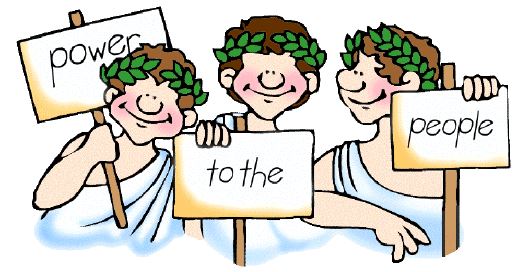
It seems that with the “refeudalisation of society” we face the situation that the positions of the revolutionaries of the olden times, whose authors had been yesterday’s conservatives, are becoming joining on the side of the revolutionaries again. In this light there is also something about the illustration, ensuring to sin – surely not catholic-literally but to accept that pupils and students are partners.
****
Worthwhile a note on the world and China: on September the 10th I received a mail from 张伟, a former student of mine – well, she would say “a student of mine”, skipping the word “former”. She sent her congrats and best wishes for the teachers day. First I was puzzled – did she mix up the date? 2018, the Chinese teachers’ day is on the 10th of September, the world teachers’ day on October 5th, a simple explanation. I checked later on the web and found something that is … – well, I leave it up to you to think about it:
10 September is an official holiday in China. This day the whole country fetes educators and teachers. This holiday, in its different interpretations, has been existed in China as early as the Middle Ages. Teachers and coaches have always been honored and respected in China. Very often teachers acted as mentors throughout the whole life; especially it is true for the traditional Chinese martial arts.
It also says something on the reason of making it a public holiday: the official acknowledgment of teachers – as intellectuals – and their important role in boosting the development of the country. Also
Since the school system in China is based on the Western model, many old traditions in honor of teachers have not been preserved today.
One may have different opinions on this, the political background …, well. But at least it seems to be worthwhile to mention that there is a deed in the one part of the world, and that there are just words, probably widely unspoken, unwritten, unheard, unread … in another part of the world.
****
Worthwhile a personal note:
Only recently, visiting with a friend the Kunsthalle in Munich, I remembered one point of all this, when standing with her in front of one of Emmanuel Maignan’s works, the “Anamorfosi San Francesco di Paola”. A pleasure to experience the amazement of both of us. Though it had not been about a visit with a student, it is very similar anyway: Something of learning together and admitting that it is about the experience of being caught by what one sees – in this case actually being caught by what one does not see: the praying person only visible from two specified angles, the sides. It reminded me of having used Holbein’s equally magnificent work “Gli Ambasciatori” for showing the same effect: the hiding of something, the fact of leaving something invisible for those who lack the enlightenment – an enlightenment that is emerging from the standpoint, the perspective. Never having seen the original of Holbein’s work, seeing something similar entailed still the experience of being amazed. – What foolish teacher would say s/he knows the one and only perspective. Doesn’t such perspective emerge only from putting together experiences, that may at some stage get stuck, paralyse the experienced if it goes together with closing the eyes, blocking off, not allowing new experiences to be made; and even more: not allowing looking at something “known” through new spectacles and of course forcing looking at the new through the old glasses.
Teachers’ Day – an opportunity to congratulate students, and to thank my students for allowing me to learning together with them.