Definitely, it is for us in China a kind of nightmare-situation: the threat, the insecurity, the psychological strain and also the inconvenience and thus physical strain: shops being closed, villagers deciding quarantine-ing themselves and people just accepting, staying calm and cooperating. And then …. – the German news magazine coming up with a title-page like this:
Sorry, for me it is sending a wrong message, it is simply tasteless … “when globalisation is becoming a deadly danger” …, I suppose that is more about Rana Plaza in Bangladesh, though mind: not produced there … and so many other similar incidents …
And, indeed, there is something else made in China – the other day I received a message from a former student of mine – when I had been teaching economics. We are still in touch and Isn’t him a message, just the hello and how r u and take care -part of the answer:
Not only protecting myself, also protecting people around me. Ordered nearly 1,800 face masks from Japan last week and looking forward to receive them. Going to sell them at original price with a limit number per person and donate revenue from selling them. Purchased 2kg of “hande desinfektionsgel” from Germany for my parents.
now, I would not even be surprised if les boches claim that is “German benevolence”
…………..
Machine translation of the letter mentioned:
Hello, I thank you for this letter and the assurance of solidarity from the German side. While searching for this mail-address of the BS I also see the reference to the naturally welcome wish for respectful cooperation. Germany East not Germany and the AA can not be everywhere and control etc. But I must confess that such a tasteless cover picture, like the one of the Spiegel, simply shakes me. The experience that I make with my life in China lets me see with my German passport such an insult with shame and anger. Der Spiegel is not the German press and I can only hope that this is the exception to the rule of reporting. This “naughtiness” of the seal with criticism and rejection but the AA would certainly be compatible with the freedom of the press, because this is equal to the responsibility in reporting. With kind regards Peter Herrmann
It has a little bit of a third New Years Celebration in a row: first to 2020, then the year of the rat and finally Brexit. a commemorative coin, a celebratory speech and surely for many some form of hangover feeling …
Of course this date is a fake – and it is impossible to assess history before it actually happened. What we just witnessed is not more than another stage of long process. Still, it is a crucial one. I will not try to make an analysis of it. However, three points are worthwhile to be mentioned.
Let’s start with the kind of success story: it is the extremely low unemployment rate on the island. According to The Economist we see in unemployment rate of 3.8 percent. So Brexit is already now a success? The Economist – and mind it isThe Economist – highlights of the following context: * A low unemployment rate * Young people sticking to their job and not ready for change * And the stability translates into stable low wages.
In the labour market, loyalty does not pay: shifting jobs tends to be a good way of getting a salary boost. In 2017 the average pay rise for a worker staying with the same employer was just 1.1% after inflation compared with 5.4% for someone making a change.
And
You might also expect supposedly flighty 20-somethings to be eager movers. Yet younger workers remain more wedded to their current jobs than they were before the financial crisis of 2007-09. There is a similar trend in other rich countries, but it is particularly pronounced in Britain. Young Britons’ reluctance to move may be part of the explanation for their dismal wage-growth. In the five years after the crash, they experienced a larger cut in real wages than their older colleagues.
Success? Things are open for discussion.
II.
I do not recall the time and occasion of the proposal of a “EU-free day”: all fees and taxes due, all regulations and bureaucratic procedures to be accepted -of course, everybody having the own national money in the pockets. Difficult to imagine? Trying to buy a computer, produced by a global enterprise, while you are residing in China. Go to the website of HP, DELL, xyz – at least in one respect they are global: you cannot find what you. It is a language problem, of course; however in this case the language problem is the fundamentals of the computer you buy are geared too the country where you buy in this case China. It may be even more obvious, if ui look at the Huawei mobile phones: for the Western market they have all are Google preinstalled while it is banned here. Then you may try going to a European site, ask for instance a friend in Germany or France to buy a laptop with an Italian keyboard. Please do not forget, to send a train ticket or flight billet – such keyboard will not be available in Gemany or France. As you will be more lucky if you go to the Internet. – there’s a good deal of deceiving – anyway we may speak of a veil of globalisation. It is topped by Apple, of course: they offer you to come into the shop, nowadays called store. You can go there and they will help you going to the Italian website and buy the computer online. The last hurdle: you will need the codice fiscale (the Italian tax number), an address in Italy and a friend who sends it from there to you. Writing the last hurdle, does not mean that the curtain falls: instead of saving the VAT, you will have to pay import tax – on top of the money paid for transport.
III.
Did you ever have the spiderweb apps? Well, it’s just another expression for a broken screen. It had been a little bit of a nuisance, so I decided to get repaired. Is so often, Guo Min helped me, suggesting: Don’t go to the high-street. There is the small workshop – actually as well on the high-street, the Lushan road, but it is kind of hidden – under the rarely used stair case. It is such cheaper. So, one day, in the evening when I went home, I stopped there and asked the guy if he could repair the screen. Kind of spontaneously he replied
No!
I walked on, not thinking much about it anymore. But then, a few hundred metres further, there had been another “under-the-stairs-shop” – here it a lady and she looked is a phone, checked a number, look something up in the catalogue and on the Internet, finally saying
Yes, that’s no problem. It will take about three hours —
Great, I’ll be back tomorrow. what time do you start business? — 10:30
– and that had been the time I arrived there the following day.She looked at me, shook her head:ù
I am sorry, but I cannot repair it – it is a foreign phone.
—
Hum,
I look at the brand-name, saying:
Foreign? But it is the leading Chinese brand, isn’t it?
—
Yes, indeed, but you bought it abroad, right?
—
Yes, that is a fact. And of course I know what you mean ….
So I trotted away, not thinking about it any further. Another day Lv visited me, saw the broken screen and she said
I sorted out, don’t worry.
A couple of keystrokes on the phone:
It is a workshop nearby – he will still do it if we go there now. He won’t close the shop then.
So we went there, about one hour later the screen had been replaced – but the brand-name, ingrained in it, had not been the original – just that of the main competitor.
IV.
Now, don’t believe I will let you go. In actual fact, we are arriving now at the most exciting point the the tragicomedy. according to the one article in teleSUR
For proponents, Brexit is a dream “independence day” for the U.K. escaping what they cast as a doomed German-dominated project that is failing its 500 million population.
Scots: Leave a light on for Scotland because we will be back
Indeed, a mess, isn’t it. As outlined earlier, and anecdotical, there are truly “good points”, favoring the EU. And we should not forget that the British orientation for independence is prevailing since a very long time – some will surely remember the fear and hostility around the tunnel; for others this remembrance day may be about the various anti-social, even anti-human(e) attitudes. I remember e.g. the way of dealing with the BSE-issue. I remember one Council meeting – the British refusing to accept a “package” (it contained a major social initiative) unless the discontinuation BSE-trade limitation would be included into the package. A very sad example of ignorance of human rights. The EU could you at least mean some control of such imperialist, anti-humanist, most egoistic behaviour. One of these successive stories, although not especially concerning, is the progress in the area of gender equality – though this is still limited, it is undeniable. Nevertheless, there is the trap we easily forget consciously ignore: in actual this European Union is a project of the centre-states, Germany still playing a leading role. And the historical comedy – or is it a parody – is, that Scotland – or to be precise the Scottish independentistas – want to counter British colonialism by joining the Franco-Germanic imperialism. – This could, indeed, emerge one day as real tragedy of the commons.
*****
Brexit – a kind of third New Years eve and New Year … . One of the visible similarities consists in the fact, there is much ado about it, a lot of it is for us, as people from all ways of life, just like a pool with many bubbles: some shallow waters, dangerous currents, and of course stretches of smooth sailing and many paired with traps. But I suppose in the end, it is just about opening another web, and we will be easily victims of the spider – on both sides of the border, not so much both sides of the classes. though there will surely be a hangover for everybody.
It reminds me of in some strange way of something – when theGerman Basic Law had been discussed, Kurt Bachmann said the German Bundestag something like the following
Although we are going to vote this act today, you will see the we will be the strongest defenders at some stage in the future.
Indeed, so it came. And so it seems to be with the institutionalized Europe: although we had been fundamentally critical about it, about THIS Europe, we are now those who are defending it in the most pronounced way.
2019, now 2020 the year of the pig, now the year of the rat
the time of old years coming to an end and new years taking their commence is often and commonly the time of thinking back … – the year that just come to its end and the early years of our personal lives and the lives of societies, ach and all with thither own dreams of “once upon a time ….” – some of the dreams possibly became true – and probably more that had been disappointed – what else could be the reason behind the new-years-resolutions: he hope for change and at least the little one can do oneself.
*****
Recently a friend (acquaintance, colleague, somebody I occasionally meet and like to meet, just to chat with across so many borders that mark our completely different backgrounds and lives) … , well, already last year she had been a bit in despair “…. I hear a problem.” – “Tell me!” and she did: her mother was going to retire – 55 years old (as it is [going to change now] the retirement age here in China. So young if we are honest and in many cases marking such an obvious break, evidencing that employment is not only some time we spend in some place, doing something defined in a contract and getting remunerated according to the same contract); it is a complex social relationship, also – at least very often – defining our “lives beyond” (this evidencing the simplification that is entailed in the formula of “work-life-balance”). And when it ends … – well, presumably especially daughters taut come up with what she said : “I have a problem”. The parents now expecting … – well, what do they expect? That the children compensate for the social loss: permanent visits, invites “wouldn’t it be nice …”; overacting the grandchildren or even moving into the same house: making their own loss to the loss of the children, in turn loosing their children just in order to get another time lost (mind the subtle though difficult to understand formulation of this formulation of the multiplication of loss). All this actually a consequence of justifying the alienation by auch nonsense of speaking off work-life-balance, affirmation and celebration of that fact that the worker
feels at home when he is not working, and when he is working he does not feel at home. (Marx, Karl, 1844: Economic and Philosophical Manuscripts of 1844; in: Karl Marx. Frederick Engels. Collected Works. Volume 3: Marx and Engels: 1843-44; London: Lawrence&Wishart, 1975; 229-346: here: 274)
Instead of work-life balance we should investigate more the question of individual and society in the spirit as Norbert quasi-implanted it into my thinking (Norbert had been surely grater influence than Niklas Luhmann although I had been occasionally classified as pupil of the latter, also with some justification).
Recently the said friend came back to this her problem, though she did not draw the link: My mother is getting more and more child-like …
*****
– for some time something popped up again and again seeks for a rest, wants to be resolved in one way or another – small things, and perhaps such blog is a way of resolving one issue, perhaps also by way of leading to a resolution …?
One or the other reader will remember what is still rather common here in Asia – I remember it from my childhood in the West: The Henkelmann, or as we usually said Düppe.
A simple container made from metal. Where I had been grown up it had been used by the workers: meals, having been prepared at home, had been carried to work and often heated up in large water basins – the workers sitting together, munching their individually prepared meal together. Today and here they are still used – but supposedly for carrying food from restaurants home, to be consumed then there. But what seems to be here and there the dominant pattern is different: the container is replaced by plastic bags and paper cups and the consumption …, well it seems to happen – while the various traditions of the family meal, the we-meal, the luncheon and you name it still play an important role, another and perhaps increasing role plays the throw-in-meal on the way: consumed out of throw-away crockery, throwing away the breaks between events and activities by focusing on the title plastic bag that send up in a bin … seen from today’s perspective the vocation of an archeologist in hundred, two-hundred or five-hundred years time appears to be promising: looking at what is left a long time after there eis not much left of us individually and exploring what we just throw away today, not only materially.
*****
Is it justified to say it is the ability of togetherness that depends on the ability of independence and vice versa? Does this not suggest, that such break as entering retirement-age brings up all disappointments, all the unrealised dreams we have heard at some time and that remained unfulfilled while growing into a society that did not allow us to make them becoming true in mature forms. I do nit remember the exact wording – Pablo Picasso said something like the following:
It to me three years to paint like an artist that is recognised by the academy – but it took me ages tor paint like a child again.
Highly recommended reading on this occasion the work by Norbert Elias, it least that part that is directly addressing the question of individual and society.
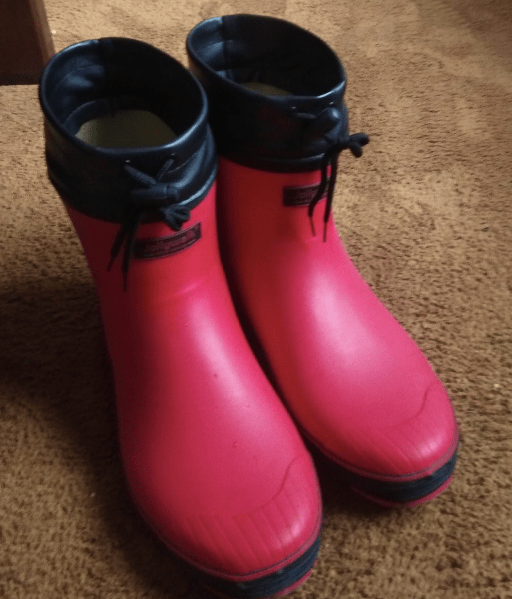
… and there I am hesitating. Sure, the terrible rain on the 25th had been not really bearable – even if I just received the day before my fancy new boots:
promising comfort, security …
… promising a deception? As enjoyable as it is to see the sun back, as delightful it is to look back on a long spell without rain, with pleasant weather in Changsha, looking back on a summer in Berlin with near to zero drops of rain and plenty of warmth, it comes with a bitter smack of fear and worries. Is that the global warming, possibly bringing draught and extinction at some foreseeable time in the future?
Perspectives change – also the perspective that is entailed in the variety of my work and jobs, being now law-prof. I asked this in different ways earlier, and put it now in a juridical nutshell:
Can we continue calling on individual rights, rights of the individuals witnessing that so many individuals, and on occasions being just one amongst them, have no other idea than buying a gun to amok? Sure, a person who finally storms a school to kill kids is being severely sentenced (if he is caught alive and did not kill himself – he/himself, never heard bit she/herself); but, while acknowledging the difference, I dare to ask if we should simply allow people driving their SUVs, companies dumping waste water into the rivers, ourselves sitting in a comfortable warm room, wearing a shirt instead of reducing the temperature a bit and wearing a warm jumper; seeing mass-SPAM-mail not just as matter of intruding into the private sphere but as terrorist attack on the environment (considering the cost of sending mails), defining it as criminal act to heating rooms while leaving the windows open ..? …. – Human rights had been and still are defined as protecting individuals against the state. isn’t it time now to think about human rights as matter of protecting society against excessive individualism … – protecting it by law?
some interesting notion for further debate can be taken from work undertaken in the 19th century. An important aspect is mentioned in the following para, taken from a work on the history of the rule of law, reading
The impossibility of opposing to it aliunde-founded elements was the ground of the central dilemma: how to combine an unlimited sovereign power with a legal order regulating it and making its intervention foreseeable. The central features of the theory that was gradually refined throughout the second half of the century and was thoroughly elaborated by Jellinek were the idea of the state’s self-limitation (which made sovereign absolutism compatible with the existence of fetters on its power), the existence of legal relationships between the state and individuals, the distinction between the state (as a whole) and its several institutional components, so that this or that organ could be limited whilst the state “as such” could be deemed as the holder of an absolute power.
New challenges, old debates, the need to reformulate and “reinvent” them – not least under changed and changing conditions: where states are not nation states anymore; and where the corporate sector strives to replace state.
Forthcoming: Herrmann, Peter: Human Rights: watch out for the trail before you bridle the horse – The search for a Future Global Human Rights Agenda; in: International Journal for Social Quality
The blog titled Brexit, Europe and the Left and edited by the Rosa-Luxemburg Foundation Brussels and Trademark Belfast, published recently a short piece they asked me to write – on the German economy.
The once “strong tiger” of the German economy might be crumbling. For decades, the Made in Germany strategy pursued by successive governments suggested high quality goods worth paying for. Systemic faultlines, structural conservatism and policies of privatisation have created new lines of conflict domestically. Why this is bad also for the rest of Europe and the world explains Professor Peter Herrmann.
A more or less recent decease pattern may be called APPSISM, it is transferred by a virus that comes along with different subtypes, as e.g. kakao, telegram, WeChat, QQ and not least WhatsApp. All the details are not yet known, also it remains open if the virus itself originates the symptoms or only activates something that has been there in a dormant state. The following lists the main single features:
communication via network sites, even small thoughts are fragmented
there is some quantum-theoretical asset: as smallest units of a communicative act they can be applied in different contexts in other words: communication becomes arbitrary, potential empty; but also: they are potentially all-encompassing, suitable for universal statements
any contact should be organised in first arranging to meet, even spontaneous phone calls are expected to be arranged in advance.
The problem is not primarily the short span of attention (an often discussed issue nowadays), but the lacking readiness to take dining decisions, formulated in a positive way: the claim to be as far as possible in control of situations – who would deny that this is at most for seconds.
— What, taking hypothetically, there would have been a god, and not that only, but the that god would have created the world with this attitude …, or knowledge? – But perhaps god and the followers are guilty, asking for obedience, asking for avoiding risks, asking for permanent calculability.
— I was watching Wim Wenders’ Wings of Desire (Der Himmel ueber Berlin), right at the beginning there is a scene, the two angles talking to each other, one expressing his wish being expressed in words like “to be normal again, visible, not observing but living.” Mind the paradox: While he is observing, it is him who is observing those of which “heaven” demands to observe every step they do.
a tiny riddle – or living with contradictions by ignoring them?
One of the global players, stating “invented for life” under its name and probably claiming inventing for life, commencing business with a
Workshop for Precision Mechanics and Electrical Engineering
and subsequently really moving into the area of the various areas that are connected to electricity, promises (= advertises) by suggesting to
become carbon neutral from 2020.
Appreciating the efforts of this and other companies to work towards more “environmentally friendly technologies”, there are so many promises that must evoke suspicion, for example provoking the question how electricity – the production and consumption of it – can be carbon neutral.
At least one ad I see these days is remarkable in this context, really remarkable. It is an ad from a shop, selling groceries — with one simple message:
The plan for Sunday: visiting the “Mittelmeermonologe“, it will be performed in the Heimathafen in Neukoelln. It is about people, daring the risky way across the Mediterranean Sea, hoping for a better life in Europe.
Sunday … Wednesday I walk to therein train station, going the rest to the airport by bus. At about 4 a.m. I am in the area Brandenburger Too, US and UK embassy. For reason of completeness I have to mention the French embassy, though it is kind of hidden – the time around “Je Sui Charlie” had been the only occasion that it had been really visible. Anyway, waking there that morning I was getting aware of the number police force.
12.10. landing at Dublin. Only elders of the Irish ID and European passports can go through the automated border control. Technology … but standing there in the queue, now being “all other passports”, I get a fright, my own Mittelmeermonolog, my personal talk of the past is coming up, more or less a soliloquy.
Berufsverbote the political control of people orating in any public service, the political refusal of people who did not want to go military service, the roundups – sure, justfied in some respect but not by way of starting from the assumption everybody being terrorist, threatening everybody by holding a machine-gun against their chin …
And now, instead of opening the places, increasing closure, and closure directed again everybody – positive reading: there is no We and Them. All are We, though Them …, well, they are those who tighten control …, closing borders and trying to spread parochial thinking ….
Leaving the terminal, buying the Busticket to Maynooth, the “Hi, dear” mutates, blurs to something like “Hei deer”, thinking about the old bull defending the little empire, maintaining a war that is lost already for a long time … -A saddening welcome, a saddening reminder of the state of Europe.
Yesterday Germany had been celebrating the end of the division of the country and a bit the old fundamentals: Liberté – Égalité – Fraternité
Law as rule for the country and
Equality, as everybody is enjoying
Freedom …, well, there is a bit of a linguistic problem: freedom from …, freedom of …, freedom to …? – at least it is the market freedom that everybody can return empty bottles and retrieve the money due.
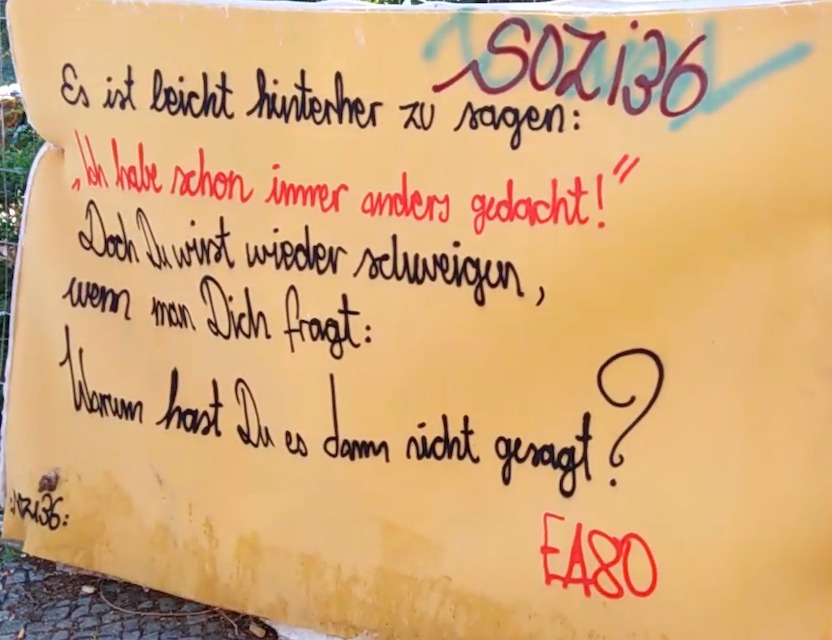
It is easy ro say afterwards: “I always thought differently!” But you will be silent for another time, being asked: Why didn’t you then say anything?” (transparent seen in Neukölln)
(Some say it is part of the sharing economy – bottle sharing: one group going for feasts and drinking, the other profiting from returning the empty bottles to have a bit more cash than social benefits only.)
An interview with Christa Luft, unfortunately only in German, allows availing of a perspective that is too often entirely pushed aside.
Cara Silvia, non sarebbe giusto rispondere scrivendo semplicemente “mi dispiace”. Infatti, mi dispiace leggere la tua situazione, ma sono ancora di più sconvolta, arrabbiata. Presto manderò una mail “Osato” – tempo passato …
And In the following the translation and nearly the entire epistle in English language – publishing it on a Friday 13th is not because of lack now or in the past. Much what is mentioned is a sign of lack of courage …, a matter of forbearance …
Dear Silvia it would not be right to reply by writing simply “I am sorry”. Indeed, I am sorry to read about your situation (being degraded by the Italian government: degraded by having been made “self-employed”/àFreelancer” as university teacher); but even more I am upset, angry. I will soon send another mail, a follow up to the previous one where I dared .. . … – and there the sermon begins. In other words, not least after having sent the original mail, with replies in mind and richer by the experience I gained, all this is emerging as an issue that is really gaining relevance in a very broad way. Seemingly becoming impersonal, but that is, I guess, my personal/psychological problem: kind of empathy unlimited, context without borders …
At the moment I am OK, due to the help of others; and due to the fact that I received a “call” from a Chinese university. For one year then, if things finally work out, I will be “Professor at the Law School of Central South University, Changsha, PRC” (that its the official version, the way I will have to sign). And as we already talked about my work there, it will be working in the area of law in strcitu sensu. At the moment it is still about bureaucracy getting things to the end. However, there are at least the following points regarding the recent problems: * the help of others – I should write of some others which would be absolutely OK. When writing the original mail, I had been aware that not every recipient would be in a position or willing to help. And I did not think every recipient should feel obliged. In actual fact I included some just to let them know what happened and how I feel. Still, there is a “but”: people who do not have much, were helping (between ‘every little helps’ and ‘I can’t believe – you probably put the dot into the wrong place’) – on the other side people who would not even mention … lets say 100 or 200 less per month, not giving a single cent, however stating ‘I am thinking how to help’. And there had been others … sending ‘my best wishes. Sometimes that is important, I know.’ And indeed, knowing, “readfeeling” that it is meant, helps – probably not expressed well, but I guess you know what I mean. At least it is not that they are looking for structural solutions … * All this was/is not solely about me – sure the very moment it had been just me; but so many wrote back that they … – well, for instance a friend from Brussels, she worked as senior office clerk (if this is the term) for an NGO, writing “I manage with my old age pension but at the moment I am in Spain, looking If I can move here – life in Brussels (actually in a village near to it, not even in the city itself) is unbearably expensive in relation to my pension” – sure, probably complains on a high level, but still. May be there is a good reason to call for another me-too-movement as I guess many try to cope with the situation and actually manage – there is still the shame of it: being poor, disabled, suffering from ill-health, being lonely after loosing all contacts from work … and too many do not dare to talk about their difficulties – with the “shame” hand in hand there is the difficulty of even asking the correct question let alone finding an answer. I suppose it is the difficulty of making out individual and social identities and subsequent responsibilities – There is no such thing as society, it had been destroyed … * it had been also and not least about those – and it seems many – who are looking on the footpath, in the bins and elsewhere for empty bottles to make a living out of returning them to the shops, and who are not complaining – there is nobody who listens, anyway – do we speak about bottle-sharing then, like car sharing, airb&b-sharing etc, in our beautiful new sharing societies? – A strand of Christianity talked at least about “sharing into poverty”, living in poor material conditions, giving mental space for the good (mind the “some” and “talked bout”) * do you (the original addressee) remember long time ago, the afternoon, we had been sitting in Trastevere, somebody approaching us, asking for some money: we then talked about the economic situation, you mentioned the crisis … – when I talked later to somebody (you know), mentioning an Italian crisis, I had been rebuked: ”Non dire sciocchezze – non c’è crisi in Italia” …“nonsense, no crisis” …. is that also true for young colleagues … for instance the son of a colleague and friend in Turkey who moves to Copenhagen, leaving everything behind because he fears the political future; the colleagues from Hungary who are moving and are lucky enough being able to find something e.g. in the UK; the many who move to places like Berlin, the new edition of La Boheme” …. * also, nobody asks if I really want to go, if I would possibly like – after so many years traveling, unrest – to come to a halt, relax a bit, not starting a new life again; nobody asks if siam actually really able to do so – as the climate in academia is coined by competition, skills training and exploiting cheap labour but not geared to establishing a healthy atmosphere that allows independent research and teaching, committed to social sustainability instead of increasing so-called effectivity and efficiency without asking the age-old question: cui bono … Sure, being invited as I am, is a great challenge and honour indeed – coincidentally I talked the other day about it to a girl here: my “broken carrier” and the fact that I probably would not really have liked the straight “I know with twenty what my life looks like when I am 80 – the excitement of life being bungee jumping or the like” – why to her? I guess because she is a bit like myself in this regard and that means living against the odds as our societal economies are still based on the opposite gist: stability, no risk …;looking for knowledge not an additional vocational training – although societies today cannot provide the conditions for what they expect and truly accept. At least such orientation on risk-aversion and stability is then and for them the justification for doing what they do, for instance making you and our colleagues “independent, self-employed, your own boss” another affront by theItalian(employment) system – is such employment the compliment of the bottle-sharer mentioned earlier? There are surely major gaps … and all this is about difficult issues. And there are people who are not looking for the simple way: subordination, intelligence adapted to and reduced on zer-one. The simple answer, part of it: Freedom of Decision and the lack of it. And freedom only exists if it is materially backed … if my language skills are correct something interesting happens: look at the ability to say something the ability – la capacità the ability to say – la capacità di dire the ability to say something – la possibilità di dire qualcosa The lack of specificity (ref to something, not specifically to this or that) can also be interpreted as shifting the definitional power to the speaker (say something, i.e. you, the speaker, can and has to define what exactly it is, what you want to speak about and say on it) – from the simple capacity to the possibility which is, I suppose, much more.- it seems to be far-fetched – I think it is not: When I woke up, scanning The Economist; I spotted n interesting article, filed it in the to-do-box. The title: “Quantum computing Proof that a quantum computer can outperform a classical one” … Indeed, year-one is very limited. The recent elections in two of the German Länder clearly showed: it is not, as Brecht wrote – entirely correct at the time – that the womb ist still fertile; today we are witnessing a new breed, spreading the germs of its rotten spectre in all wounds and gaps and niches, protected by the olden forefathers who could never be overcome. And they can easily do so as societies in decline leave many spots fro them to build their dangerous beds.
The middle class – erosion or conversion? – this is the topic they set for me in Krynica recently. I dared to ask two questions (https://youtu.be/CdCrqXLu9W8), hopefully provocative; and surely it had been reflecting only one tiny aspect of the entire middle-class isssue:
I Did we ever have a middle class? isn’t more appropriate to speak of a non-productive working class? Or a quasi-working upper-class, complementing the workers aristocracy? There had been some good reason for the middle class coming into existence . It had been professionals being engaged, aiming on changing peoples’ life, helping as doctors, also “professionally maintaining the system” as it had been the main concern of solicitors, some seeing the fight for justice, defending workers’ rights as their task … – it would be interesting to go back to Quesnay and his distinction between the classe productive (farmers), classe des propriétaires/classe distributive (proprietors , feudal landlords letting land for rent/lease) and classe stérile (traders) – based on the distinction between original and derived income – for him industry and trade did not generate value. It surely would be interesting to play with such a distinction today. Who is nowadays creating value – and what is value today? One thing, I suppose, is unquestionable: though there is still a middle class that is in the middle of society, playing an active role, there is a large number of people who are supposedly middle-class but whose sole purpose of work is to pretend that they are needed … Dirk Greaber speaks of bullish-it jobs – jobs where people put a stamp an a paper i order to confirm that they passed it on to somebody who put it into an envelope in order to send it to somebody who checks if the stamp is in the right position … – Is it really a problem if middle-class jobs are getting lost? I suppose not, if it is those administrative jobs that are today more important in education than the teachers; I suppose not if it is about those working in the administration of the health sector, hindering doctors, carers, physiotherapists to cure people; I suppose not if it is about people who are inventing and building electro cars for kids, making them unlearning to walk (well, good for the medical staff and the administrators of the health sector … … and possibly good for solicitors: the other day I nearly needed one because a kid, sitting in an electro-mini-car, nearly knocked me down – actually it had been the father, massing around with the remote control … – when waste occurs to this extent on the one hand, it should not surprise that even the “doing good of society”: measures against pollution, in favour of substantial deepening and broadening of education, the claim of a wider perspective policies around accommodation, not being limited on providing a roof over the head is entering a state of stumbling: indeed it seems to be a similarly harsh conclusion as that drawn by Adorno, writing “There is no right life in the wrong one.” (Yes, it had been written in a very specific context.so making it a bit problematic to reproduce it here)
II … and that is the second point I make increasingly in the entire debate on precarity and the middle classes: the real problem is that there is no society. I do not refer to the Iron Lady’s understanding, more the self-imposed withdrawal, finding its foundation in acceptance of competition as guidance. While this is surely in general a questionable way of relating, it is even more problematic when we look at professions. Of course, medical professions should be aiming at healing of and caring for the sick, something that is impossible if undertaken in the spirit of competition. Or librarians – for a tiny project I approached the local archives in Brandenburg and indeed several came back tome with helpful answers, and of course none suggesting they would be better than their colleagues. Taken even book-sellers, I guess also members of the middle-class. Admittedly, each of them wants to sell books, making profit this way. But aren’t they also “servant of books”, or call them “ambassadors of books”? So, if a bookseller gives good advice and the customer still goes to amazon, ordering the book, the seller still did some great job … and we will return sooner or later, then buying the book there. – Of course, this is a bit simplified but I guess it shows the train of my thinking: really qualified jobs, positions where people are engaged, interested, committed – and where they are getting paid for being exactly that: engaged, interested, committed.
Coming back to “my case”, the difficulties I have been confronted with, asking for help, I received also some spiritual, intellectual, psychological support. Conosce cosa hanno detto i colleghi – Do you know what colleagues said? Well, in short, a bit of “reformulation” and seemingly so trivial:
“We appreciate that you did your job, that we could engage with you on the topic we are working on, that there had been space for an academic debate that is so often closed by administrative procedures and/or competitive narrow-mindedness, and as well drowning in routines of everyday’s departmental and office life.”
In other words, it is another dimension of privatisation of the social, one of these typical paradoxes of our time. There is no socio-material security from doing the work we should do, from following “our calling”; such security has to be gained by fulfilling the demands of the system. If we insist on following the calling, doing what we have to consider as our genuine job: teaching, looking after the students and doing thorough, independent and innovative research, it is through investing our own means, investing the time and money it needs. Thus, making us independent, self-employed, actually reflects exactly those patterns we are expected to perform – in short: Do your own thing — don’t worry, be happy
One of the new phrases I learned coming after the odd twenty years to Germany, matches exactly this: Alles Gut – All Well = nothing to worry about, just be yourself and don’t even think about being part of the others: tinder yourself through life, it is all about you …
And what can we say about this “you”? These days the German government runs a campaign – a poster campaign by the Federal Ministry for Education and Research, celebrating the 100s anniversary of the Berufsbildungsgesetz – the Vocational Training Act. Fair enough one would say, seeing the main message:
What keeps our careers going
OR
What keeps our economy going
Still, I dare to ask, for instance:
What is this economy about? What does it mean when it is going? And how can we specify a career? Are we really talking about vocations or people just in need of a job? Doing something that is well paid?
All this sounds rather abstract, intellectual, is however for me the real process, it is what I feel as a kind of physical thread, a mill-stone, every round causing a crunching sound …
Non of the posters speaks about why and what is the meaning in substantial terms – the meaning is the career itself: il giro … fare un giro per arrivare all’inizio, in grado di fare un altro giro. And of course, like capital runs its rounds M – C – M’ decisively aiming on the ‘, the little bit more; perversely it reads in respect of education K – L – M’ Education as matter of obtaining knowledge is thus reinterpreted: • K standing for knowledge, and of course, entering any education builds on some form of already existing knowledge, • L standing for learning, too often a matter of replicating, providing little space for exploration • M’ standing for better income. Do we, who are working in education, do we not see it anymore? Do we blindly accept that educational standards are today set by wrongly programmed administrative systems, executioners of their donors, the donors executioners of the ‘ = the surplus, at the end clearly defined as money.
Well, I better stop here, having already been carried away quite a distance – my empathy problem: what may sound very theoretical, abstract is actually very much the opposite: the understanding of this “one injustice” with a systematic affront, an attack on people like you and me. Sure, we = each of us have to find a way of accommodating with the situation as it is. But … – last theoretical issue at the end – for me not theoretical at all, but something that pesters me every day, a question of personal responsibility: prevailing is in social science the so-called methodological individualism, i.e. the supposition that there are individuals and everybody acts as individual, pursuing the now individual interest – what better expression can this find as that given in Adam Smith’ presentation of the “egoism” of the butcher. Another expression is given by Leonard E. Read, titled „I, Pencil“.
I find an impressive, plausible presentation – as neat as it is presented as “process of production under the condition of the division of labour”, it is also suggesting “this is how we humans behave”, it is also claimed to represent “human nature”. Still, I dare to raise some doubts: • There IS another dimension – guess nobody would think that Aristotle, stating “man is a social/political being”, and as we know since Marx, it is to such an extent and in such a way the case that even individualising depends on ourselves being social beings: are you sitting in your living room right now, while reading these lines, perhaps the very cosy corner you consider as your shell as much as the snail “carries her house” into which it can withdraw, perhaps wearing your very personal house-dress – one you would not like to be seen wearing by your closest friends? Even such fact: not wanted to be seen is nothing else as considering them being part of the very moment you do not want to see them around; I find it so strange that in the most social area, i.e. work, we claim to be individuals and nothing else, the “social” in actual fact reduced on some kind of anti-social behaviour, acting by outcompeting the other; • while we do “our own thing” we do so with the very consciousness of some connectivity – the ability of others to link, the ability to link with other situations – marking the paper of a student means relating him or her to others. Each act, executed or not, consciously, habitual, “lemmingual”, i.e. following others like the lemmings supposedly do …, expressing our very personal decision or being reflection a discourse; • even if we do things, deciding according to the aim of achieving “personal benefit” or advantage, such benefit/advantage is “social” – it is a reflection of what is allowed and also what we allow ourself: as much as we CAN only individualise in society, connectivity HAS TO link to society, also in opposing it – in other words the challenge is about striking a balance between being part of and withdrawing (this is as such also “being part of by de-/a-parting”).
From here I come back to the question I originally raised: feeling guilty of having accepted precarious employment, this way allowing me doing something precious to me, then consequently depending on friends and colleagues while the social benefit system lacks accessibility – not least due to the fact that I previously accepted precarious employment, allowing me … This deals with one of the most interesting animals on earth, the cat chasing its own tail. But I really better stop here — writing too much anyway, bottom line: Thank you and lets in one way or another do together what should be our job but what receives little recognition as such. Amongst lawyers: Ubo societas ibis justitiam est. All the best from Peter