joining or not

The rally – not climate is out of control but life and living … or the other way round?

Vienna, September 19th;
Finally on the meeting Roland gratefully says in a short “impulse statement” for the debate: I do not have an answer, a solution …, I just know that we have to do something, namely look for the right question. Everybody agrees …, and so many say “but we know the narrative”

Berlin, September 20th, around 10 a.m.: traffic congestion on the highway 100 – I leave after a while, even with the scooter I am ore or less stuck

Berlin, September 20th, around 2 p.m. walking at the back of the metro/S-Bahn Friedrichstrasse, many years ago the place of “crossing” from one oa of the city another, divided by a wall.
Today crossing arms with strangers, building a wall – nobody has the answer, many have some answer and some may even think they have THE answer.

An old point comes to my mind – I am full of fear:

Ci dicono, in molti, in queste ore: non dobbiamo avere paura. Io invece ho paura. Voglio avere paura. Non dell’ineluttabile possibilità che questo orrore possa colpire me, o i miei cari; credo che per questo dovremmo affidarci alla nostra collettività, abbracciarci, dalla piccola alla grande, fino su in alto alle istituzioni che ci rappresentano e che dobbiamo aiutare a proteggerci.

Ho paura di chi dice: non sono umani. Ho paura delle risposte semplici alle domande complesse. Ho paura delle espressioni come: Parigi brucia. Ho paura di quello che può succedere: delle mamme che benedicono sulla porta i figli pronti alla guerra, ho paura dei numeri che prendono il sopravvento sulle storie, ho paura delle lacrime sulle bare che voglio altre lacrime su altre bare su altre bare su altre bare. Mi fanno paura i politici che hanno paura. Le frontiere europee chiuse unilateralmente senza logica apparente. Ho paura dei coprifuoco, dei concerti annullati, delle cene al ristorante con un occhio sempre fisso sulla porta.

Ho paura del Bignami della Fallaci. Mi fanno paura nella stessa frase “vaticinio” e “Sottomissione”. Quelli che pensano “scappiamo finché siamo in tempo”, come i bambini che chiedevano a Primo Levi: perché non siete scappati prima? Ho paura di chi mette tutto insieme nello stesso calderone, di quelli che non nascondono l’entusiasmo di pronunciare la parola “guerra”, ho paura anche del Piave che pure non ne può nulla e stava lì quando ero più felice. Ho paura di saperne troppo poco, di non trovare le parole o di dirne troppe, e fuori luogo. Ho paura della rabbia istantanea sulle notizie non verificate, una rabbia che rimane attaccata sulla pelle come una crosta, un trasferello nella testa anche se la notizia è smentita. Ho paura dei paragoni a capocchia, della banalità del male che non mi ha mai convinto, del sentirsi estranei, come se l’umanità non fosse sempre una e una sola, nel bene e nel male.

Mi fa paura anche “il tuo amico ti fa sapere che sta bene”. Si, ho una paura fottuta del tasto “sto bene” appeso sempre al collo come un salvavita per anziani, come una nuova coperta di Linus collettiva che non potrebbe che toglierci il respiro. Io non sono buonista. Non sono buono, sono cattivo. Proprio perché sono cattivo ho paura: perché in fondo, alla fine, a farmi paura siete tutti voi, siamo tutti noi.

I am to least afraid that we do not really know the answer, that we are moving without getting anywhere …

And a comment – the reproduction of a letter by Enrico Galiano:

Caro Ministro dell’Interno Matteo Salvini ,
ho letto in un tweet da Lei pubblicato questa frase: “Per fortuna che gli insegnanti che fanno politica in classe sono sempre meno, avanti futuro!”.
Bene, allora, visto che fra pochi giorni ricominceranno le scuole, e visto che sono un insegnante, Le vorrei dedicare poche semplici parole, sperando abbia il tempo e la voglia di leggerle. Partendo da quelle più importanti: io faccio e farò sempre politica in classe. Il punto è che la politica che faccio e che farò non è quella delle tifoserie, dello schierarsi da una qualche parte e cercare di portare i ragazzi a pensarla come te a tutti i costi. Non è così che funziona la vera politica.
La politica che faccio e che farò è quella nella sua accezione più alta: come vivere bene in comunità, come diventare buoni cittadini, come costruire insieme una polis forte, bella, sicura, luminosa e illuminata. Ha tutto un altro sapore, detta così, vero?
Ecco perché uscire in giardino e leggere i versi di Giorgio Caproni, di Emily Dickinson, di David Maria Turoldo è fare politica. Spiegare al ragazzo che non deve urlare più forte e parlare sopra gli altri per farsi sentire è fare politica. Parlare di stelle cucite sui vestiti, di foibe, di gulag e di tutti gli orrori commessi nel passato perché i nostri ragazzi abbiano sempre gli occhi bene aperti sul presente è fare politica.
Fotocopiare (spesso a spese nostre) le foto di Giovanni Falcone, di Malala Yousafzai, di Stephen Hawking, di Rocco Chinnici e dell’orologio della stazione di Bologna fermo alle 10.25 e poi appiccicarle ai muri delle nostre classi è fare politica.
Buttare via un intero pomeriggio di lezione preparata perché in prima pagina sul giornale c’è l’ennesimo femminicidio, sedersi in cerchio insieme ai ragazzi a cercare di capire com’è che in questo Paese le donne muoiono così spesso per la violenza dei loro compagni e mariti, anche quello, soprattutto quello, è fare politica.1
Insegnare a parlare correttamente e con un lessico ricco e preciso, affinché i pensieri dei ragazzi possano farsi più chiari e perché un domani non siano succubi di chi con le parole li vuole fregare, è fare politica. Accidenti se lo è.
Sì, perché fare politica non vuol dire spingere i ragazzi a pensarla come te: vuol dire spingerli a pensare. Punto. È così che si costruisce una città migliore: tirando su cittadini che sanno scegliere con la propria testa. Non farlo più non significa “avanti futuro”, ma ritorno al passato. E il senso più profondo, sia della parola scuola che della parola politica, è quello di preparare, insieme, un futuro migliore. E in questo senso, soprattutto in questo senso, io faccio e farò sempre politica in classe.

Enrico Galiano

Yes, I am afraid – and even if I am especially afraid saying what I think is the truth, saying that I have doubt and that I do not know but want to search, honestly, with others – Camminiare insieme – I will try to do, even if walking may mean building a wall. Not knowing the answer does not suggest moving on with giving the old and wrong answers

Berlin, 20th of September, about 5:00 p.m., I am waiting in the canteen – we want to go to the new performance of Brecht’s Baal …

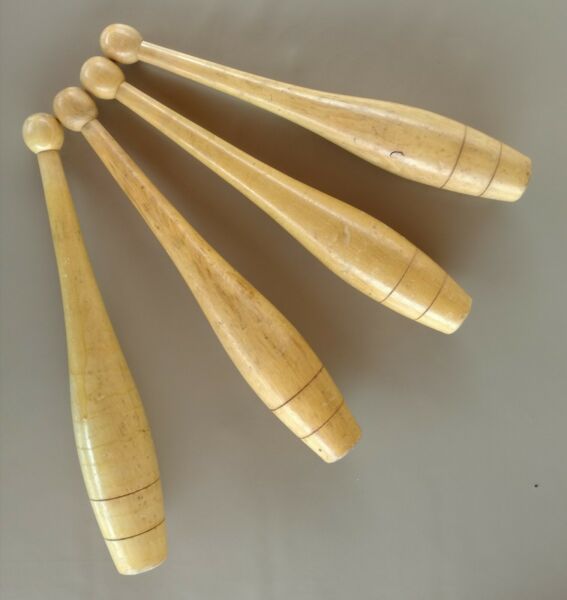
The Juggler

he is standing there since about a week now – every time I pass, thus it means very different times. Sure, it may be by accident that he is just there – arriving short time before I do arrive, and leaving just the second i am around the corner. More likely is that he has longish working hours – where? motor highway 100, going to Hamburg … the rich cities of the former West, exit Tempelhofer Damm, turning to the right, direction Platz der Luftbruecke, once thought to be the square linking Westberlin to the so-called free West, the rich Uncle Sam bringing presents.

I do not know the juggler, only know that he is free to stand there, performing his art.

juggling – and he seems to be a cheerful nature, nearly forgetting over his play to stop, collecting money some of the drives give. The traffic light switches, he plays again – a cycle like that of the economy of the country, and that of the global economy – here it is smaller, of course, manageable.Also – I guess – the money he has at the end of the day is most likely manageable.

Also – I guess – the money he has at the end of the day is most likely manageably 


The modern building, mostly men, white, middle-aged though far from belonging to the middle ages, upper-middle class though not thinking about classes and class interests, not even thinking about nations, while far from accepting “nationality human being”,  wearing their suits to make them suit into the smooth ivory towers, though those may be of glass .. – they aren’t elephants, are they? — all spruced up though looking a bit chivy … 

… finally it is 11 c’clock, nobody to blame: not the traffic – that might change anyway when the bureaucracies do not undermine the  use of helicopters for short distance flights anymore; not the driver – finally there is public space between the gated community and the fortress of the business-tower – public space that requires accepting public rules in order …, yes, in order of maintaining law and order; not the attendant at the golf tournament which had been finally a matter of meeting business colleagues  … – some time now to be spent in the office: brief meetings with other CEO’s, with secretaries, a call “No, I have to speak the minister personally …” – at the end of the day this juggler writes on the personal flag: the day’s turnover amounts to …, well, there are amounts mores suggest it is better not to mention them; this day’s regular income …, there are figures that cannot be imagined anyway; this day’s additional income, gathered from some private consultancy work … psst, not everybody has to know, some would even say it is income gathered in the shadow economy … isn’t shadow the natural companion of the bright sun they make shining everyday?

Despite the bright light many of them look grumpy, the kind of official face matching the severity of the job …the serene mind they have to employ to set the, to their algorithms into notion.

Jugglers, one job, one society, one world — gosh, such a difference … 

Worrying …

indeed it is worrying to see the right-wing, nationalist, fascist, populist spawn, occupying so may positions, spreading their words and establishing with their deeds a kind of new system (indeed, we should be careful, not just putting all of them under the hat of populism – László Andor highlighted this in a recent article. Gabor, a Hungarian colleague, now working in Milano, recently said

I think Hungary has already exited politics as we know it, and it decided to recreate Monty Python in a horror comedy version. 

The reason for his remark: I mentioned my encounter with one of the Hungarian Ministers and his nationalist tirade. Actually is reference to Christian traditions …, somewhat subtle: we are not against anybody, we just have to protect our “great traditions”, and these are those of Christianity … – well, another fundamentalist religious states like the IS, lurking on the Hungarian horizon?

The fact with many of these crops is that they establish systems that do not allow to be reversed — even if they would loose power, the authoritarian structures will survive them at least for a long time. As sich it is not just another round, part of a regular up and down of different political strands.

Now, some rumour – even that it is thinkable is disgraceful. Alexandra Brzozowski and Sarantis Michalopolous state in their EURACTIV-BRIEF, titled

Berlaymont’s rumour mill

László Trócsányi, Viktor Orban’s right-hand man in Brussels, might get the humanitarian aid and crisis management portfolio – a move that could easily fit into Fidesz’s migration narrative that instead of receiving immigrants, “help should be given at the point that it is needed.”

As said, that this is thinkable, made possible then by the German …, yes, of course, CHRIST-demagogue, uniting with Hungarian Christian fundamentalist.

There is another news these days:

Swedish FM to Resign from Her Post

As we read in the article

“I have put everything I have into the job of making Sweden safe, respected internationally and appreciated as a partner,” Wallstrom said in a statement.

I remember Margot from those years in Brussels. And I would say that there as well she put a lot into the job, without necessarily agreeing, it still had been a pleasure to find a commissioner convinced of what she was doing and convinced that it must be about opening: opening the institutions to the European citizens had been her remit at the time.
Who would deny her the right of doing what she intends to do:

It is time for me to spend more time with my husband, my children and my grandchildren.

However, so often we talk about modernity as process if reduction (“halved modernity”), its eclipse etc. And Daniel Kehlmann came up with this most telling story about Measuring the World, taking up on the tension between exploring reality (Alexander von Humboldt, and Aimé Boland) and calculating it (Carl Friedrich Gauss). Isn’t this in some way also today the baseline when it comes to artificial intelligence – the hope set into it and the fear facing it.

Part of the structure established with this process we usually refer to as modernisation/modernity had been about individualisation, a very special and specific establishment of the individual as ultimate point of reference. But isn’t this then also the need and justification of moving between the “outer world”, a public, seemingly/supposedly hostile, at least strange, alien and this cocoon of family and perhaps few very close friends, eagerly securing the borders … The public, in tis constellation, bears two labels:

HANDLE WITH CARE, MAY LEAD TO ADDICTION

says the one

DO NOT OVERUSE, SOCIETY IS CAUSES LOSS OF INDIVIDUALITY AND ENDANGERS THE PERSONALITY

states the other

I WILL COME BACK TO IT …

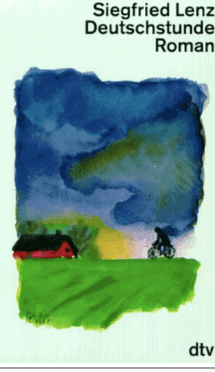
Talking to a friend inTurkey – she was just helping her son to settle in Denmark, reading Heisenberg, what he wrote about a talk to Max Planck, being still somewhat confused by the question if there is beauty as such (I ventilated this in the Berlin Diaries) and “being on the move” again, I stumbled upon a passage in Sigfried Lenz’ “The German lesson” … – are we stuck in a non-learning curve? I will return to this but here first the quote:

Well, then, I’ll tell you why I’m on the island. Because no one dares to send the Rugbüll police station for a detox; he can stay addict, remaining  damn duty-addicted. And I’m here because he reached a certain age and age is indispensable to reeducated. Yes, I am here on his behalf, if you ask me. But maybe it will work out: maybe one day he can take over from me the progress I am making here. That is to be hoped for. But that is all there is to hope for. I cannot believe it. (translation P.H.)

Here the original, from page 554:

Na gut, dann werde ich Ihnen sagen, warum ich auf der Insel bin. Weil keiner sich traut, dem Polizeiposten Rugbüll eine Entziehungskur zu verordnen; der darf süchtig bleiben und süchtig seine verdammte Pflicht tun. Und ich bin hier, weil er ein bestimmtes Alter erreicht hat und als Alter unabkömmlich ist, um sich noch einmal umtrimmen zu lassen. Ja, ich bin stellvertretend für ihn hier, wenn Sie mich fragen. Aber vielleicht gelingt’s ja: vielleicht kann er die Fortschritte, die ich hier mache, eines Tages von mir übernehmen. Das ist zu hoffen. Aber das ist auch alles, was zu hoffen ist. Glauben kann ich es nicht.

Admittedly, it is a rather weird thought suggesting that, indeed history is not repeating itself, but actually it moved with modernity into a Procrustean bed. At least, as much as learning is about asking, (see comment on an earlier post: it has to be allowed to table some questions …, they will follow here soon.

never forget: death penalty

The most severe punishment for capital is when the money it represents is used for private consumption.

Even making generous donations is more acceptable as via taxation etc., the money is not declared being private asset. Thus, there is little surprise in the mushrooming of philantrocapitalism as new form of systemic parasite-ism (see e.g. Planck, Kerstin, 2017: Philanthrocapitalism and the Hidden Power of Big U.S. Foundations; in: Momentum Quarterly; Innsbruck )

times we are living in

Karl Marx, taking up the Aristotelian spirit, stated in the Economic Manuscripts of 1857-58:

Man is a Zoon politikon [political animal] in the most literal sense: he is not only a social animal, but an animal that can be individualised only within society

Seen on allwallpapersfree.blogspot.com

In an extended version of the text About You, now submitted for a Festschrift of a dear colleague, thinking about developments as expressed in the Hyperindividualist patterns of Tinder and the like I am wondering if it should read now

Man is a Zoon politikon [political animal] in the most literal sense: he is not only a social animal, but an animal that can be socialised only when excessively individualised.

Excellence

There is so much talk and wrong-doing about excellence, high performance striving for exceptional individual results. And there is so much forgetting of the fact that any human performance is part of a process, picking up the seeds and germs, delivered “for free”, often by really great minds, so often greater than the celebrities. Excellence, well understood, is about being part of a wider social and historical performance, not about individuals who – by chance or fierce violence in a competitive strive – are excluding themselves from the cooperative context, possibly even positioning themselves against it.

http://www. haleadvisors.com/wp-content/uploads/Dollarphotoclub_65673150-1024×576.jpg

William Guthrie is  somebody who showed by exposing his modesty what this actually means, writing in the second half of the19th century the following words, part of the Introduction and Translators Notes to the translation Savigny’s Private International Law and the Retrospective Operation of Statutes (A Treatise on the Conflict of Laws, and the Limits of their Operation in Respect of Place and Time)

Now, when a considerable portion lies before me completed, I might wish that much of it had been more exhaustive, plainer, and therefore different. Should such a knowledge paralyze the courage which every extensive enterprise requires ? Even along with such a self-consciousness, we may rest satisfied with the reflection, that the truth is furthered, not merely as we ourselves know it and utter it, but also by our pointing out and paving the way to it, by our settling the questions and problems on the solution of which all success depends ; for we help others to reach the goal which we are not permitted to attain. Thus, I am now satisfied with the consciousness that this work may contain fruitful seeds of truth, which shall perhaps find in others their full development, and bear rich fruit. If, then, in the presence of this full and rich fructification, the present work, which contained its germ, falls into the background, nay, is forgotten, it matters little. The individual work is as transient as the individual man in his visible form ; but imperishable is the thought that ever waxes through the life of individuals, the thought that unites all of us who labour with zeal aud love into a greater and enduring community, and in which even the meanest contribution of the individual finds its permanent place.

This is surely part of Marx probably meant when talking about the fact that humans are social beings and can even individualise only in society.Now, when a considerable portion lies before me completed, I might wish that much of it had been more exhaustive, plainer, and therefore different. Should such a knowledge paralyze the courage which every extensive enterprise requires ? Even along with such a self-consciousness, we may rest satisfied with the reflection, that the truth is furthered, not merely as we ourselves know it and utter it, but also by our pointing out and paving the way to it, by our settling the questions and problems on the solution of which all success depends ; for we help others to reach the goal which we are not permitted to attain. Thus, I am now satisfied with the consciousness that this work may contain fruitful seeds of truth, which shall perhaps find in others their full development, and bear rich fruit. If, then, in the presence of this full and rich fructification, the present work, which contained its germ, falls into the background, nay, is forgotten, it matters little. The individual work is as transient as the individual man in his visible form ; but imperishable is the thought that ever waxes through the life of individuals, the thought that unites all of us who labour with zeal aud love into a greater and enduring community, and in which even the meanest contribution of the individual finds its permanent place.

This is surely part of Marx probably meant when talking about the fact that humans are social beings and can even individualise only in society. It is not (only) the dwarf on the shoulders of giants, but (also) the cogwheel without which the entire engine cannot work.

two acting the same way does not mean twice the same thing done

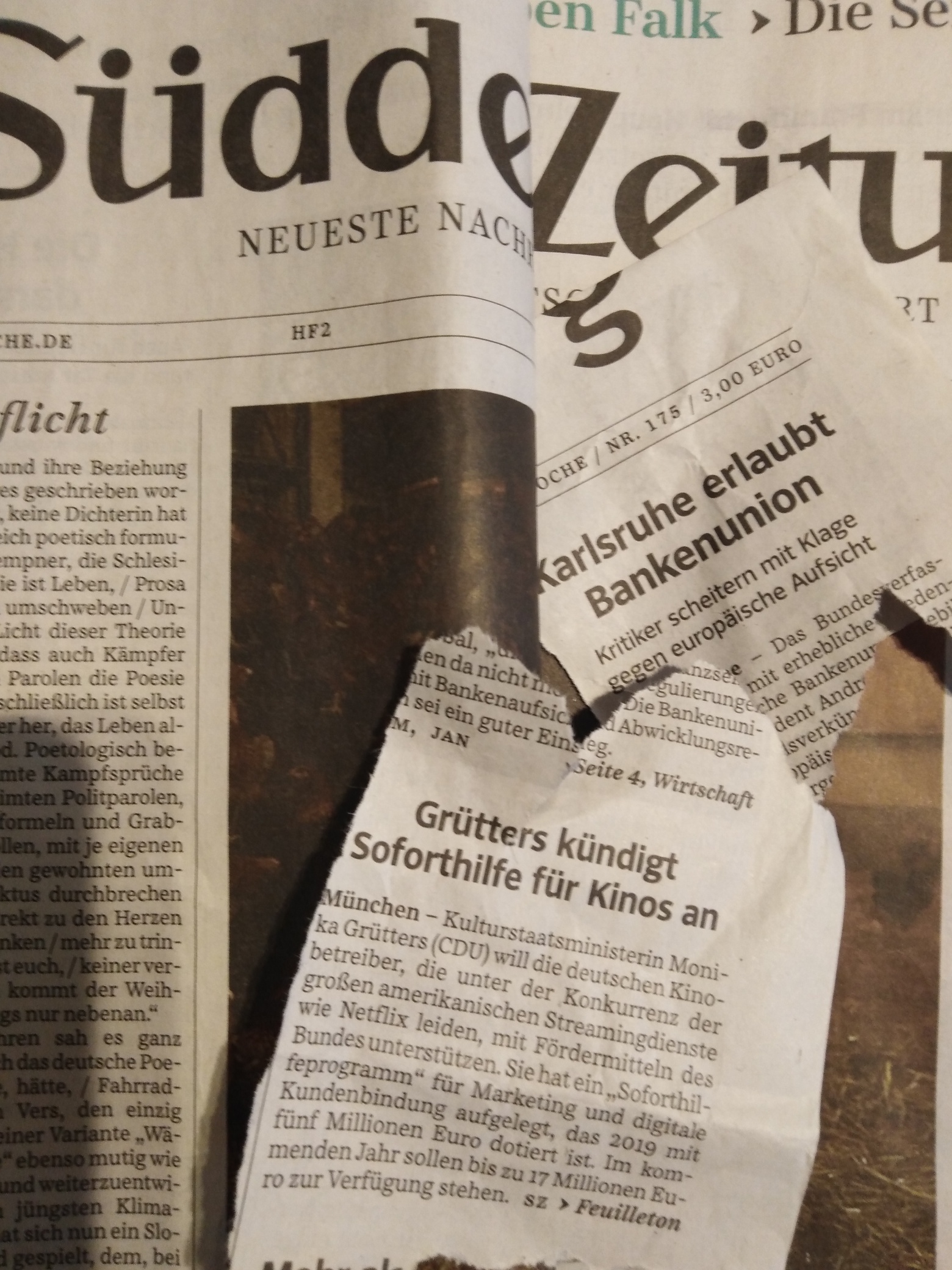
The other day I read in the SZ two short notes, each referring the to a main article in other sections. The one dealing with the control of banks, the other looking at subvention of cinemas in Germany.

Remarkable is that the first shows the reference for more info being available in the section of economy, the second referring to the “Feuilleton”. It is at least worthwhile to think briefly why the support of the national industry is in one case a matter of economics and in the other case classified as supporting the national culture.

Be it as it is – and to be honest I trust that Gruetters is really concerned with the promotion of arts – there remains a bit of a riddle: Why do we speak in in the one case of economics, in the other of culture. Could it be that national interests play a role and that they are prioritised in economics whereas they remain veiled, while existing in the gap between Germany’s strive for national competitiveness and the spirit of the nation of poets and thinkers?

Perhaps it is becoming clearer when we consider another message, recently issued by a proponent of the free market. What is commonly understood as essential functioning of the market – the change of prices based on emend and supply – is criticised by rebuking the very same practice of one competitor – making offers and setting prices based on the principle of “prices following demand”. So we learn from one of the dominating figures of “market-free hotels and (chain) restaurants”:

In addition, the portals led hotel owners to so-called yield management.

He (Eugen Block, private hotel and restaurant owner) dislikes the fact that prices on the Internet are sometimes adjusted to demand every hour; guests have to pay 50 or 500 euros for the same room. “If a fair is, the emergency situation of the guest is exploited. At other times the rooms are sold at prices that threaten the existence of the guest. That, says Block, “is also simply bad marketing. He himself takes a fixed price, which fluctuates by a maximum of ten percent depending on the season.

So what? Defending the “free market” against an internet firm for applying the principle of the free market? Every Blockhouse (brand-name of Block’s restaurants acts in the same way of using quasi-monopolist power against others, though usually by seeing the price up. … Something strange here I suppose.

The decisive difference is the sovereignty linked to the person, or, using the words from the translator’s (William Guthrie) introduction to Savigny’s Treatise on the Conflict of Laws and the limits of their operation in respect of place and time:

It has to do with the capacity of persons to have rights, not with their capacity to act, i.e. to acquire or lose rights. It forms an exhaustive treatise on the person, in its legal sense, from the beginning of capacity for rights at birth until its termination by death, with all its limitations and modifications in respect of freedom, political rights, dependence arising from the family relations, and other causes of less extensive operation.

who will be the fools then?

though it is disputed if he really said so, the following words are attributed to Abraham Lincoln:

You can fool some of the people all of the time, and all of the people some of the time, but you can not fool all of the people all of the time.

Some fooling goes obviously on when to comes to support of children, In one of the advertisement “booklets”, distributed to every household in the area where I live at the moment, it is highlighted:

buying two products = supporting holiday outings “kids farms” in Berlin.

It is this chain shop, together with a multinational and the Deutsche Kinderhilfswerk, a charity of which is said

  • it supports materially deprived children and youth
  • engages in support of children’s/youth’ rights
  • and for which transparency is important, and equally the will off the donor

20 Cent are donated to this holiday action if one buys two items of a specified range of products – it reminded me first of those activities which I know from earlier years as support measures by the welfare associations – it had been called “liberal welfare”, charitable action which is now privatised in a very specific way: transferred to the so-called free market, thus part of the so-called neo-liberal project.

Well, in some respect there is nothing wrong with it – at least some kids will have an enjoyable time – in some respect as there is a lot wrong when it comes to the political economy of it, something I issue in the forthcoming book of which I am just doing the proofreading.

There is, however, also something that has to be asked when looking at transparency: is it transparent to accept without the complete and open calculation donations

  • that are gathered by “gently convincing” customers to buy (more of) something that actually do not want to buy, at least not with such an additional incentive?
  • that donate private customers’ money under the veil of a chain shops charitability and good-doing?
  • that deduct the 20 cent from an amount of which we do not learn the composition, i.e. of which it is not clear how much profit is (still) made)?
  • that is presumably used as means of gaining special tax relief on parts of the supermarket’s turnover?

Reason becomes a sham, Beneficence a worry

These words are taken from Goethe’s Faust; perhaps one can meaningfully allude to them, stating

The jester becomes the normal, the normal is the sham.

hitherto – now – and then?

It had been well stated that

Philosophers have hitherto only interpreted the world in various ways; the point is to change it.

but so far “it changes” and philosophers and others are in a touristy mood, moving around and watching enjoyable spots.

I suppose, we lost even the ability to ask the right questions – and have to start from scratch …