Gach rud is fearr! …

Quick info – just in case: My phone does not work at the moment, thus I also cannot be reached via ordinary phone calls, SMS, WhatsApp or WeChat …

here the little “novel” to it:
Why not reachable? Here you see, first by taking a quote from Graeber’s book:
3. what duct tapers do
Duct tapers are employees whose jobs exist only because of a glitch or fault in the organization; who are there to solve a problem that ought not to exist. I am adopting the term from the software industry, but I think it has more general applicability. ”
…..
On the social level, duct taping has traditionally been women’s work. Throughout history, prominent men have wandered about oblivious to half of what’s going on around them, treading on a thousand toes; it was typically their wives, sisters, mothers, or daughters who were left with the responsibility of performing the emotional labor of soothing egos, calming nerves, and negotiating solutions to the problems they created. In a more material sense, duct taping might be considered a classic working-class function. The architect may come up with a plan that looks stunning on paper, but it’s the builder who has to figure out how to actually install electrical sockets in a circular room or to use real duct tape to hold things together that in reality simply don’t fit together the way the blueprints say they should.
Passi di: David Graeber. “Bullshit Jobs”. iBooks.
Anyway:
(it had been nice chatting with you)
and of course, everything noticed …
(Here are the minutes of the chat
Sunday …
Duration …)
no success, but a lengthy chat with I…, from Portugal, now in Ireland, chatting in German as my phone provider … and probably miserably paid .. but for the time being she likes it – Gach rud is fearr! – everything is good …
Some “tiny things” though — may be it is just a matter off paranoia …
  • There was another Apple-message popping up, from M… – USS – Unknown Supervising Subject ??? I…’s and P…’s big brother…?
  • “probably miserably paid” … – we surely have to think more about precarity and voluntariat – taking the latter term from piece written by Geoff Schullenberger in 2014 in the Jacobin. The point I want to make – as I did already on various occasions – is the following: as relevant as issues of social security, uncertainty are as consequence of a managerial strategy of undermining social rights, the really important thing seems to me the aggressive restructuration of the conditions and strategy of capital accumulation, characterised by the fact that “capitalism dissolutes itself” – something many would welcome, though the real and serious problem is the direction it currently does. A lengthy quote from the Jacobin-article may be allowed:

Coursera’s founders are no doubt aware that translation, no less than software engineering, is traditionally a paid activity done by trained professionals with specialized knowledge (particularly when it involves the kinds of technical vocabularies used in many college courses); otherwise, they would not have sought the considerable financial resources of the Carlos Slim Foundation to facilitate translations of its courses into Spanish in January.

But who needs Carlos Slim’s billions when you can have the courses translated free of charge by “a tight-knit community of committed individuals” enthusiastic about “helping millions of learners” and, well, helping Coursera expand its profit margin?

While joining Coursera’s “community” does not resemble a job in the “getting paid” aspect of things, it does require you to sign a “Translator Agreement,” which makes clear that the relationship between Coursera and members of the GTC is subject to employment law insofar as it ensures Coursera’s complete and perpetual ownership of value produced by employees — or rather, “volunteers” — but in every other respect, it is not a job, just a way to be nice.

  • While talking to I… – actually we had been really chatting a bit (the old Irish country boy  coming through), I was not only thinking about a possibly enthusiastic young women, who did not see any future in Portugal, exited to migrate to the country with forty shades of green, only lacking the sun (that is what she said); I was also thinking about her social security, health services, old-age pension etc. – at least most of those jobs ARE badly paid; and living in a country that refuses to accept the tax-money owed by her employer Apple (a random collection of reading: here and here and here and here), money that could well be used to develop a sustainable infrastructure instead of violently enforcing unsustainable growth)
  • Last, not least and not finally: as I… could not help me, sending me to a shop here in Łódź, I hoped … – la speranza è l’ultima cosa a morire – Nadzieja umiera ostatnia – the hope is the last thing to die …, well, being the last thing does not change ultimate death: they could not help me either, suggesting they could send it for repair and …

Most likely they will have a brief look and replace it with a new one – for 1699 Złoty, it is new, but coming without the box and without cable for charging and without warrantee, A new one in a box, comes with cable and warrantee …., we sell it for 2229 Złoty. that is for the 7, the 8, brand new with box and everything is 2979 Złoty

Everything = even this thingy-thing called Rip-Off, theatre, show

Taking this together – and adding some other things about that I will talk early December (being announced here on the 3rd of December) I suppose Graeber is wrong, saying “BS-jobs don’t pay”. In fact they, part of them do … until the bubble birst, again destroying human lives or this time opening for the 99% re-occupying public space …   under penalty of victory of V.

By Enrique Dans from Madrid, Spain – We are legionUploaded by SunOfErat, CC BY 2.0, https://commons.wikimedia.org/w/index.php?curid=30480799


The Vicious Cycle of AIV*

We enter a vicious cycle

Doing what we hate to do,
loosing any virtue
just in order to gain virtuosity which is
in fact nothing else then virtual perfection
– escaping then … into some virtual world
 gaming, drug-binge, bungee experience …
… and in fact the weird excitement of entering with your friend
an exhibition,
getting the spectacles that allow
experiencing the virtual reality
fearing …, not being able to help yourself,
in order to allow helping your friend —
the fear to fall
together from the narrow beam,
so close
– you thought
you would be to heaven,
so close you are
to the ground
awaking, having learned something
* the artificially intelligent virtuality

You should sleep nine hours without dreams. Then you have the day for dreams

Herbert Marcuse supposedly said this …  Is it another version of the words written on a postcard I recently received?

Swim to Nowhere, With No Thoughts.

So there we are worrying about big brother, watching us, algorithms rule the world and with Artificial Intelligence taking over.
Sure, there are important issues linked to these catchwords – though one seemingly tiny point is a negligence, not just as matter of language I suppose.
Just a few mails, from a Spam-poor night, and a mail-free one too. Leaving the obvious SPAM aside, to mails are perhaps even more worrying: the one at the top …, well, is there a term like SPAM-IFICATION? At least it does exist now.
* Instead of thoughtful targeting advertisement and communication in general, we accept the wikiwiki culture, leading us to just throw things out, without much thinking.
* Instead of “academic matchmaking”, I mean: bringing me/us academics in contact with relevant other academics, sites like academia, researchgate … often come to the most confusing proposals: does it really make sense to send me a link to an article on trading chemical products between China and Europe, presumably on ground of the fact that I gave a presentation on OBOR or the fact that I lived some time in China?
* hat is the premium of having access to something that is out of reach in terms of manageability?
over two million papers …? What are the criteria forlinking them …, and when will I be able to read them?
Artificial Intelligence?
Indeed, I read an article some time ago, a short one in a newspaper, talking about
artificial stupidity
… which is too often more characterising.
BUT HANG ON …
Don’t we have to blame ourselves for it – not because of using FB; twitter etc.. It is probably a much more serious problem that we – living and working in academia – accept this world and work being directed by ranking; publishers’ journal sites that manipulate our reading behaviour by aggressively suggesting that “readers of this article also read … — and quoted ….” and boxing our thinking and acting.
A new trinket in the jewel case of administrative stupidity, with which the Polish government (as a Czech friend said yesterday on the phone “we are joining”) is blessing us: every academic, working in a university, has to commit her/himself to two subject areas: sociology, economics, medicine … – sure, they are very broad which may be taken as some comfort. Articles for the assessment of the academic will only be taken into account if it is in line with this self-attribution. What now if I am looking into
as M. Keith Chen did.
What if I am looking at the question of European unemployment insurance in the light of legislation, sociological aspects and the economic development, possibly publishing the results in a journal on European history …?
There is not only direkt and outspoken censorship but also the seemingly “tame brother”,
And predictive shopping is not really new – though earlier it occurred in different forms
(Saw this the other day in Berlin: “What is missing today?” – Bakingpowder, bread, butter, eggs … onions)
Still, there is surely the need to resist …
… though there is also the time … – well, as said the other day I received a postcard, with a colour drawing, not algorithm-based but manufactured in the true sense by the sender, much appreciated by the recipient …, occasionally I allow myself resisting the need to resist, sitting there
and looking at it,
Swim to Nowhere, With No Thoughts
as the few words under the drawing suggest. And making me think, energising me … to resist!

From here to where ? Living in academia …

On youtube a new playlist is launched, asking to where we move in academia. Occasionally it may a bit about ….

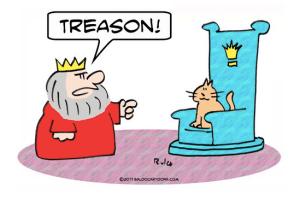
sites.google.com/site/mrdssocialstudiessite/_/rsrc/1401456166430/word-of-the-week/treason/treason.jpg

…, well lets call it a strong wish to move forward.

From personal experience, occasionally videos will be posted there, having different backgrounds, being recordings of presentations but also reflections “on occasion of” – for instance reflecting after public lecture or in connection with teaching or in the context of politics, policies, and polities – sometimes being asked for advise, sometimes not being asked though I should have been asked 😉
One of the aims is to ventilate issues that are too often left out of consideration, leaving us with complains about how bad the world is, instead of thinking about what we – in academia – really complain, analysing the reasons being developments, often also going back to our performance in academia itself and not least taking out the way forward.

In any case, it is a potpourri, a kaleidoscope and a huge variety of topics will be dealt with.

paradoxes of jurisprudence

  • All right, but also all just?
Recently I received a mail (see below), calling against ending the discriminatory practice of the AirBnB-business, namely the difficulties of “foreigners”, namely potential customers with a foreign, non-european name (see here an article in Le Monde, here in the Guardian). For the organisation that sent the mail, la Maison des Potes – Maison de l’égalité, reason to argue against the discrimination – and up to some point there is nothing wrong with such complain.
But then … there is a point: AirBnB is one of those “sharing-economy” ventures that are in fact not sharing anything. On the contrary, they contribute to ruining local accommodation markets, make housing unaffordable to many due to the fact that speculators are buying apartments, blocking them for normal use as it is more profitable to use the space for “quasi-hotel”-business and forcing ordinary citizens to live in some subordinate quarters … or even on the streets.
So, the constellation becomes weird when looking at it from the legal side:
calling for the protection of people who want to rent, legitimising this way indirectly AirBnB, and thus contributing to a situation that is too often contributing to eviction … then, however, the legal system is reluctant to protect the homeless.
– All right, but also all just? – below a documentation of the mail
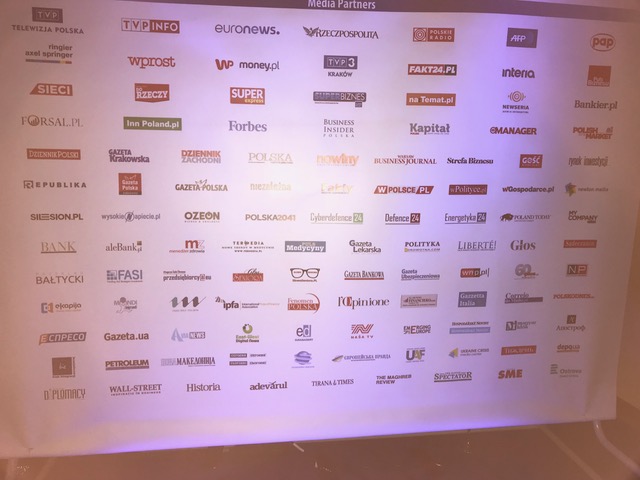
– Before another and (for me) similar contradiction – economic and political issues, political-economic issues aren’t different: the immediate personal encounter during the Economic Forum in Krynica – with (not only) the Polish Vice-capo and a high-level politician from Hungary’s fidesz had been simply shocking – as much as seeing who was providing the stage: not only KPMG:
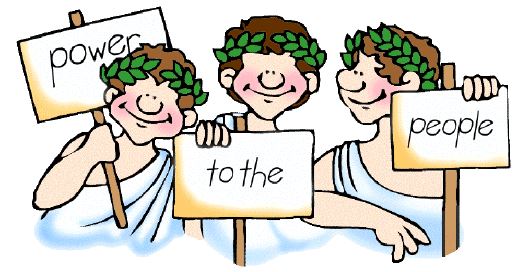
and the “excellence” in performing Panem et Circenses as means of establishing and maintaining hegemony. But even there remarkable: during the same panel the voice of a multi:
“Nationalism is bad for you!”
So there will be and are somewhat strange coalitions again – again, as all this is of course well known from history. – Hegel’s Cunning of history?
***
In the following the mail mentioned above:

Cher(e) ami(e),Selon une enquête de France Info diffusée la semaine dernière, de nombreux utilisateurs d’Airbnb estiment que leurs demandes de location ont été rejetées en raison de leur nom à consonance étrangère.

Certains particuliers qui mettent en location leur bien sur ces sites web annulent la location lorsque la consonance du nom du locataire ne leur plait pas. La preuve de cette discrimination est apportée par des opérations de testings : lorsqu’un ami présente sa candidature avec un nom à consonance plus européenne, le bien lui est loué sans problème.

Pour la Maison des Potes ce type de comportement discriminatoire, prouvé par ces opérations de testings, peut être et doit être condamné par les tribunaux. La Maison des Potes épaulera chaque victime de discrimination pour l’action en justice à mener et se constituera partie civile à ses côtés.

Si vous avez utilisé ces sites web et que vous avez le sentiment d’avoir été écarté d’une location du fait de la consonance de votre nom nous vous invitons à nous contacter le plus rapidement possible par e-mail contact@maisondespotes.fr ou par téléphone au 01.44.93.23.23 du Lundi au Vendredi de 10h à 18h.

Des testings pourront être organisés suite à vos signalements.

Si vous souhaitez nous aider à réaliser ces opérations de testings pour combattre ces discriminations, nous vous invitons à nous contacter en vous inscrivant sur ce formulaire : http://www.maisondespotes.fr/operation-de-testing-contre-les-discriminations

Amitiés antiracistes

Public-Private .. a hoax?

When a company opens its databases to users, as Amazon, Google, and eBay have done with their Web services, it is encouraging participation at new levels. The corporation’s data becomes part of the commons and an invitation to participate. People who take advantage of these capabilities are no longer customers; they’re the company’s developers, vendors, skunk works, and fan base.
Kelly, Kevin, 08.01.05: We Are the Web; in: Wired
Which is, of course, embellishment. However, there is more to it as an article in The Economist, titled
made recently clear. It raised the question if social media, shutting down websites, that they see as channel for hate speech, are in breach of the law by undermining “free speech”. Of course, it is easy to say that they have the right doing so and even the obligation. However, at second glance it is not as simple as that. In actual fact it turns out to be extremely tricky:
The meaning of the so-called rule of law is primarily protecting citizens against arbitrary action of the state. However, it is obligation of the state as democratic instance to guarantee freedom of speech, but also to agree in this very same function of being a democratic state on the limits of freedom of speech. It is about the limit given in the case of one individual or group infringing the rights of (an)other individual(s) or groups – the latter is the second dimension of the rule of law, namely the protection of individuals against each other. In other words, we are a bit in trouble, not least if we take as point of reference T.H.Marshall’s view on citizenship with the three dimensions: civil, political and socio-economic rights: the state, against which citizens have to be protected by the rule of law in case of unjustified state action has to apply the same rule of law in case of citizens that are in conflict with each other. The problem is that these citizens would, then, have the right to use the rule of law if they feel threatened or wrongly treated by the state. It seems to be an endless circle of recursive applications.
36721749 – wooden gavel on book with golden scale on table
The solution seems – at least in theory – that citizens are actually not simply individuals but already as such “social instances”. Thus, the rule of law can only be meaningful if it is intrinsically conjoined with the rule of democracy – obviously a non-juridically defined matter, to be valued in the same realm of praxis.
This, then, is also the problem when it comes to decisions concerning social media and the (not existing) obligation to publish information that is submitted by third parties: such “institutions” as facebook etc. are entirely private agencies. Thus we are confronted with some far-reaching contradiction: while they are in some way public (namely they are publicly traded), they are equally private and self-referential, defined by the one and sole motive of making business. Legally it simply means:
  • In the business-cases we are dealing with terms of use with reference of an exchange relationship, in principle focused on a mutual interest, namely the conclusion of a contract
  • However, in the case of publicness we are dealing with terms of mutual responsibility with reference of common interest which needs to be negotiated – which includes also the conflict of interest, the result of which is conclude by a treaty.
The kernel is, consequently, to look at the congruence and divergence of private and public. This emerges from business leaving the private realm, becoming public (and suggesting, like facebook’s Zuckerberg in the Washington hering, to be

an idealistic and optimistic company. For most of our existence, we focused on all of the good that connecting people can do. And, as Facebook has grown, people everywhere have gotten a powerful new tool for staying connected to the people they love, for making their voices heard and for building communities and businesses.

And it emerges if publicness claims to fulfill its “mission” by accepting the rules of private business (as we find it in so-called public-private partnerships).

Failing projects

This week, meeting the students here in Lodz for the second time, the work will get more serious. The topics

I.

European Integration – A Failed Political and Social Union?

(from: Zeit Campus: September 2018/2019)

Though proposal had been made a while back – not focussing on issues GREXIT, BREXIT and the very recent “EU-developments” in Switzerland – one is wondering if these developments are seriously distracting the debates: Although they are highlighting the vulnerability, they are easily moving debates on solutions strategies – saving a torso – while neglecting the more fundamental issues that can be seen as fundamentally structural flaws, undermining the supposed plans and claims. In other words, the project had been from the beginning as half-hearted as the project of enlightenment. – In principle, already the lectures in Vienna (2017) had been dealing with these questions. However, in Poland the more philosophical may hopefully be more focussed upon.

II.

The second course will look at

Development versus Growth. Perspectives for a Qualitative Dimension in Developmental Economics

Not an easy one, as there is the fundamental issue of determining value, or to be more precise : to determine what economics/the economy is about. Unfortunately, also in debates one alternative paradigms, easily accept the flawed definition of economy

The economy of humans emerges from two roots. They have to beeconomically active because the means are scarce in relation to the ends …; and they are in a position that allows them to be economically active as, though with some limitations, they can make decisions about the purchase and use of the goods regarding the kind, quality, quantity, use etc., thus influencing the use-impact that are achieved …

(Schoenfeld, Leo, 1924: Grenznutzen und Wirtschaftsrechnung [Marginal Rate and Business Mathematics]; Wien: Manz’sche Verlags- und Universitäts-Buchhandlung; unchanged reprint München/Wien: Philosophia Verlag: 1)

While in very general terms there is nothing wrong with what is said, there is everything wrong if we use this as real point of reference or economy and development. An alternative is Frederick Engels’ proposition:

According to the materialist conception, the determining factor in history is, in the last resort, the production and reproduction of immediate life. But this itself is again of a twofold character. On the one hand, the production of the means of subsistence, of food, clothing and shelter and the implements required for this; on the other, the production of human beings themselves, the propagation of the species. The social institutions under which men of a definite historical epoch and of a definite country live are determined by both kinds of production: by the stage of development of labour, on the one hand, and of the family, on the other. The less labour is developed and the more limited the volume of its products and, therefore, the wealth of society, the more predominantly the social order appears to be dominated by ties of kinship. However, within this structure of society based on ties of kinship, the productivity of labour develops more and more; with it, private property and exchange, differences in wealth, the possibility of utilising the labour power of others, and thereby the basis of class antagonisms: new social elements, which strive in the course of generations to adapt the old structure of society to the new conditions, until, finally, incompatibility of the two leads to a complete transformation. The old society, based on ties of kinship, bursts asunder with the collision of the newly developed social classes; in its place a new society appears, constituted in a state, the lower units of which are no longer groups based on ties of kinship but territorial groups, a society in which the family system is entirely dominated by the property system, and in which the class antagonisms and class struggle, which make up the content of all hitherto written history now freely unfold.

(Engels, Frederick, 1884: The Origin of the Family, Private Property and the State. In the Light of the Researches by Lewis H. Morgan; in: Marx&Engels Collected Works. Volume 26: Engels 1882-89; Lawrence & Wishart, 2010 [Electric Book]: 129-276, here: 131 f.)

A lengthy quote, a position that should also allow thinking what “the old society, based on ties of kinship, bursts asunder with the collision of the newly developed social classes” means today.
In a forthcoming publication – titled

About You – Nur frage nicht ob Du ueberhaupt bist

part of the topic, dealing with modes of life, will be looked at. After publication in the Tarantel, published by the Ökologische Platform bei Der Linken it will be announced here.

schwach angefangen, stark nachgelassen

A book review – in Gemany language – can be found here, trying to do justice to China by reviewing a publication

Schwach angefangen, stark nachgelassen

Buchautor_innen
Edition Le Monde diplomatique
Buchtitel
Chinas Aufstieg
Buchuntertitel
Mit Kapital, Kontrolle und Konfuzius
Kann man dem komplexen Phänomen „China“ auf wenigen Seiten gerecht werden? Zweifel daran sind mehr als angebracht. …

Precarity – It Isn’t about Employment, It Is the Economy, Stupid…

From the printer
Herrmann, Peter, 2018: Precarity – It Isn’t about Employment, It Is the Economy, Stupid…
in:
No3 (209)/2018: 73-73
Издается с 1992 года Выходит 4 раза в год
DOI: 10.24411/ISSN. 1999-9836
НАУЧНО-ПРАКТИЧЕСКИЙ ЖУРНАЛ
(scroll for English abstract)
Аннотация 

На прекаризацию обычно ссылаются как на проблему заня- тости и увеличения неуверенности и нестабильности су- ществования труда в качестве безопасной и предсказуемой основы социоэкономической безопасности – впоследствии мы обнаруживаем нестабильность включения, цельности и полномочий (и/или понимания). Намекая на лозунг «Это эко- номика, глупыш», который использовался в президентской компании Билла Клинтона в 1992 году, данный лозунг исполь- зован в заголовке публикуемой статьи: «Прекаризация – это не безработица, глупыш». Этот тезис звучит в таком объ- еме в обсуждении прекаризации как нестандартное понима- ние экономики, основанное на четырёх базовых принципах: денежная прибыль, экономический рост, конкуренция и заня- тость. Реальный вызов заключается в обращении к ограни- чениям данного базиса из четырёх частей, который преобла- дает в современной социологии, а именно методологический индивидуализм, методологический национализм, методоло- гический солюционизм и методологический презентизм. Объект исследования. Анализ неустойчивой занятости. Предмет исследования. Изменение методологических требований.

Цель исследования. Выявление недостатков существую- щей методологии социологии и перспективы альтернатив- ных направлений методологии.
Основные положения статьи. Определение метода пре- каризации в рамках меняющейся экономической формации.

Ключевые слова: неустойчивая занятость; методология со- циологии; экономика и общество; социальное качество; труд.

Abstract

Precarity is commonly referred to as matter of employment and the increasing insecurity and instability of obtaining labour as secure and predictable foundation of socio-economic security – subsequently we find instability of inclusion, cohesiveness and empowerment (and/or perception). Alluding to the slogan «the economy, stupid» which had been guiding Bill Clinton’s presidential campaign in 1992, the slogan brought forward is here «Precarity – it isn’t employment, stupid». The thesis is that much of the debate on precarity is referring to a curtailed understanding of the economy, based in four main pillars: monetary gain, growth, competition and employment. The real challenge lies in addressing the limitations of the quadriga that dominates modern social science, namely methodological individualism, methodological nationalism, methodological solutionism and methodological presentism.

The Object of the Study: Analysing precarious employment
The Subject of the Study: Change of Methodological Requirements
The Purpose of the Study: Identifying flaws of existing methodology of social science and perspectives for alternatives The main Provisions of the Article: Locating precarity within the framework of a changing economic formation

Keywords: precarious employment; methodology of social science; economy and society; social quality; work.

never blame students for what lecturers and politicians do to them

A widely known problem is that students today have – supposedly – problems to read: are unwilling, only printed on exams and subsequently the reeding they need for proceeding. My personal experience suggest something different: if students have space: literally by way of sufficient “quality location”, time and mental space, not being pestered by problem-solving urgency, allowed to foster critical thinking (as Robert Cox outlines it in the piece from 1981: Social Forces, States and World Orders: Beyond International Relations Theory; in: Millennium – Journal of International Studies 1981; 10; 126-155 DOI: 10.1177/03058298810100020501) most of them would love reading more, more widely, critically working with texts.

However, if politicians educate teachers who then educate students and then these students become politicians, educating teachers who then educate students who then become politicians … … … – it is quite natural that after going a couple of times around, policy documents and texts books look very much alike, nit even reaching the intellectual level of A Little Bit of Everything for Dummies.
Though already from 2011, a document issued by the Irish government can be taken as example for such dummies=stultification-strategy, showing on page 7 the following:
It reminds me that at some stage “Communications“, issued by the European Commission had not been allowed to be longer than 20 pages – politicians are not reading longer documents …  the paradox then and there: instead of producing one document with 30 pages, two documents with twenty pages each had been produced … , and so forth and so forth … at least the printing press being extensively used. The crux of “maths”: making two documents out of one 30-page document dos not mean having two 15-pages docs. because additional space is needed for the cross-references and the like. though we end up with something like 30 divided by 2 = 20+20 = 60, or in short: 30 divided by 2 equals 40. There is a German term “Milchmaedchen-Rechnung”, literally “calculation made by a dairymaid”, meaning fallacy, naive. Perhaps it should be changed, the new term being Commissioner- or Politician-Calculation.
May be it is still better then producing one document that is so much simplification of everything that it requires a guideline to show the reader the way through (though to sweet) nothingness.
In any case, please, never blame students for what lecturers and politicians do to them.
Some voluntarily, some lazily, some being forced .., and some still resisting.