Dr. Peter Herrmann is a sociologist of German origin -- well, he was, before moving forward, being now ..., well, some say: social philosopher, permanently crossing borders between arts, economics, jurisprudence, philosophy, political science and .., yes, still sociology ... and having lost many links to the origins as fasr as nationality is concerned, trying to imagine that there is no border ...
Or New Years Eve, celebrated those days when it had been linked to the vernal equinox. Some uproar in the BaseCamp because of some mates celebrating NEWRUZ … not worthwhile elaborating on this quarrel in detail (though there is much to learn about this holiday, now also internationally recognised). But I was chatting with Loay about it, and expressed my conviction that we have in general so much nationalism in our thinking, not the extreme but just the apparent need to classify everything and everybody, not least making reference to nationality: “We” (people of the country 1 or 2 or country 148 …) are so different, special, compared with the others … . It may well be about being especially good, but also about especially neglecting, neglected, poor untidy … And “they” are … and yes, so often it is about negative things: “their music”, “their meals and eating habits”, “their law”, “their attitude to work” … and one may even add: though often there is some truth in it, there are too often ridiculous prejudices, stereotypes and unjustified generalisations.
Still, I am wondering why we are so often sticking together – I still remember my time in Brussels:
Les Français avec les Français, Język polski z polskim, Na Gaeilge leis na Gaeilge, Gli italiani con gli italiani, Die Deutschen mit den Deutschen – occasionally one felt alone, not being French, Polish, Irish, German or anything … until one decides for this and other reasons it is Time to Say Good-Bye, moving forward, leaving so many behind
A lot has to do with lack of knowledge, missing opportunity to engage in deep learning. Why are we talking about deep learning for computers and any IT-“self”-driving cars, while we are forgetting over all this the need to have deep learning as part of school and university curricular?
Soon to be published, interesting in this context:
Peter Herrmann: Right to Stay_Right to Move, With a preface by Lorena Ossio Vienna: Vienna Academic Press.
(well, anything though surely no slide-presentation-simplification)
A colleague in Turkey had been
charged with “propagandizing for a terrorist organization” (Article No. 7/2 of Turkey’s Anti-Terror Law No. 3713) for signing the Academics for Peace statement “We will not be a party to this crime”. The statement criticized military actions in the Kurdish regions of Turkey and called for international observers to monitor the situation in place.
The colleague had been charged, and confronted with a “choice”: accepting being sentenced, with this admitting that the political activism had been a criminal verdict – then being “gratified” with the suspension of the sentence – the alternative: appealing and going to jail if the appeal is rejected.
Looking at it as matter of human rights, the case grasps attention on this/such case as it is the state who hinders the citizen to express a personal opinion – other issues may be raised.The human rights issue is about the fact, that HR emerged especially (if not only) as matter of protecting citizens (thought as being “global”, though implicitly “private”) against arbitrariness of the state.
So far, so good. Only now comes the interesting part.The message – and call for action – came from the UK, currently also known as BREXITUK and had been sent by a colleague, using the university office mail at the
University of [… ] which is a charity and company limited by guarantee, registered in England (reg.no …)
Hesitation: First, I simply thought “a university”
Second thought (not the first time though): uni as charity sounds strange – education as charity, doing good. Doing so but to and for whom in whose name?
charity (n.) late Old English, “benevolence for the poor,” also “Christian love in its highest manifestation,” from Old French charité “(Christian) charity, mercy, compassion; alms ….caritas by ‘charity.’ But the 16th c. Eng. versions from …
Doesn’t it say in Mathew 5.3.
“Blessed are the poor in spirit, for theirs is the kingdom of heaven.
Well, this opening for other field . I will have a go for that in another occasion …
For here and now, adding to the puzzlement: does it mean a private body, engaging something like “spirit of general interest”, benevolent to society by providing education. This is actually a tricky one (yes, sloooooooooww reading, more thinking): it easily entails
the public, commonly understood as “statutory”, provided by the state, is not providing what it should provide, thus some other instance has to do it
or
The public cannot look after itself, thus an “instance from outside”, e.g. a benevolent “private”
Or it is
possibly “benevolence” itself the public and finally becoming true (well, for the philosophers, of course, a bit of Hegel’s cunning of reason and the absolute idea)?
Now, down to earth, nearly trivial, my question was and is: are (those) universities public institutions or not. Later I met Jeremy, how is fearing about the future of his home [he is European] as the Brexiters want to take it off him [well, their name does not say it clearly: they are Brits = they do not want to leave Britain but that want Britain to leave]) and asked him – he confirmed that nearly all British universities are public. Part of the exact definition of these universities is then, institutionally and legally that in this case we are dealing with a body that is
“registered as a higher education provider with the Office for Students (OfS) and is subject to the OfS Regulatory Framework. The OfS is also the University’s principal regulator for charity law purposes on behalf of the Charity Commission for England and Wales.”
Is then the OfS the public and who/what is it? Possibly a kind of council, or “soviet” to use another term?
So, coming back to the HR-issue: Having stated
The human rights issue is about the fact, that HR emerged especially (if not only) as matter of protecting citizens (thought as being “global”, though implicitly “private”) against arbitrariness of the state.
it now means that one state (to be more precise: an institution from one state, or even more precise: somebody working in a representative position of one institution of one state has to stand ups against one the breach of HR by another state.Did I say by another state? Well, more precision would suggestBreach of HR by one person (Erdogan) who claims that he represents the state – as the public – and can thus oblige every citizen to accept those rules, even if they are finally private rules in the sense of the rules an individual defines …
Still to be added: representing in the one case means “speaking for”, in the other case it claims to mean “to be”. ‘L’État, c’est moi’
At the end it surely still remains a lot to be clarified, and even to be formulated as question. I suppose it is a challenge I may pass on to my new students, when commencing teaching next week
what does it actually mean? why is it usually seen as positive if something, somebody is shortlisted? Originating apparently in business and in particular in HR, it is now a term increasingly used in general to highlight people, books, competitors for the longest word
(whatsoever comes to your mind as worthwile being awarded with something to attribute a special meaning of whatever kind for whatever purpose and aim seems to be noteworthy to be awarded or brought to the attention of others)
what does shortlisted actually mean when we look at a list compiled by a disabled person?
the list of disabling items and matters is so long that already one page, neatly compiled, is actually really short if related to other things that are listed
the issue at stake is so relevant and important (e.g. the non-accessibility of a toilet for wheelchair-users due to a hindering step – yes, using the “duck” in the non-subdivided passenger compartment of the train is not impossible but still not the most fancy thing to do) that other issues are becoming nearly meaningless (the missing shelve that allows a disabled person to put some cosmetics, deodorant, a hairbrush and comb … into an appropriate location, having it handy for his/her beautification – yes, also wheely-users may think about it)
is it about the small print? we manage to print so small that nearly nobody can read anything and actually everybody is being disabled
is it about security? the observation of security issues (firealarm-procedures causing so much inconvenience that the gained security is paid for by serious disturbances and dangerous activities to be safe
or is it the unintrusive friendliness and support of some that allows to feel just .. part of everything as everybody else who is walking on two legs instead of creeping like the Kantian worm through the mud …
Which list will be shortlisted as the longest? which as the shortest?
He really brought utilitarianism down to its very core:
Devoted employees of the 101-year-old company that makes the world’s favorite soft drink have always believed that the human being was created primarily to serve as a conduit for the dark fizzy beverage.
Indeed, it is not primarily the utilitarian customer – it is the producer that counts. And furthermore, as a job is a utility and even an essential one, it is better to be of the same opinion as s/he is and identify with “your” firm.
Now, is that a paradox? The real producer is surely not producing, at most sitting alone or amongst other CEOs, thinking about new strategies of extending business, without considering possible negative externalities, elaborating ways of producing externalities in order to enhance profit …
Now one may wonder and take up the question recently asked here;
What is if the satisfied human actually is becoming aware of the fact that s/he is a “pig”, in the metaphorical sense? A being that established this satisfaction on deception, wrong-doing, bribery or simply not sufficiently questioning the facts … just a moron …?
“It’s indisputable that there’s a real pay gap. People can argue about how big, but that’s almost besides the point, The point is that every woman, every girl deserves to get paid what they’re worth.”
These are words by Sheryl Sandberg, taken from the Huffington Post, looking only on the year, not day, it had been five years ago. I am wondering if this is about a modern form of slavery and trafficking? Is payment about worth, even value of people in monetarised form? The difference is today’s deference of women: in old slave societies “owners”, the previous slave owner had been paid; Sandberg proposes to pay the slaves themselves. Hummmm, enslave yourself as alternative to wage work? Or is it just the same?
Surely an interesting question, most appropriate for the 8th of March, the International Women’s day.
A different point – as matter of a different chapter in the same book. In a brief note, titled
(even) the IWD (Institute of the German Economy) contends that inequality is going far beyond the gender pay gap, engraved in the entity and the expectations:
Although an attractive basic salary is at the top of the employers’ wish lists for both sexes, women in the various disciplines have on average significantly lower expectations than men in this respect.
It is better to be a human being dissatisfied than a pig satisfied; better to be Socrates dissatisfied than a fool satisfied. And if the fool, or the pig, is of a different opinion, it is because they only know their own side of the question. The other party to the comparison knows both sides.
so far Mr. Mill, in his book Utilitarismus, published in 1863- Now, as morals and ethics are frequently employed – especially by those who feel a bit like Socrates himself – I am wondering if Socrates would possibly ask:
What is if the satisfied human actually is becoming aware of the fact that s/he is a “pig”, in the metaphorical sense? A being that established this satisfaction on deception, wrong-doing, bribery or simply not sufficiently questioning the facts … just a moron …?
Indeed, harping on about principles, resulted in a disastrous consequences.The teaser of the article reads in my translation as follows:
sueddeutsche.de Economy 27 February 2019, 05:18 Hartz IV Job centres spend 60 million euros to collect 18 million • Job centers must also reclaim small amounts from Hartz IV recipients. This causes an enormous administrative effort. • In 2018, a total of 18 million euros in small amounts of up to 50 euros were reclaimed. However, this cost around 60 million euros. This is shown by new figures available to SZ. • Reclaims are made when job centres discover that they have transferred too much to Hartz IV recipients. The Federal Agency has long demanded a de minimis limit for smaller amounts.
But isn’t this exactly against the principles? Yes and no – as there are two principles: the one is about what we learn from an article in the guardian?
They shop frugally, use credit cards rarely and save up to a third of a property’s value before applying for a mortgage.
There is another, though in some way linked, principle: discipline and discipline-enforcing zero-tolerance policies – honoring the cent is the ultimate rule, even if it costs a fortune … and even if it for the price of self-denial. Looking at conservatism, it sometime too simple to reduce things on black and white – they are simply deep, dark black.
Another instrument of the specter is the use of various schemes of ranking, awarding and the like …There are different dimensions of policies that are tightly strangulating what may be called “freedom of academia”
(may be called so, as this terminology had been abused by conservative and reactionary politicians in Germany against the student movement end of the 1960s (see Hans-Abrecht Koch: Professorale Selbstbehauptung in turbulenter Zeit; see also Review of Nikolai Wehrs, Protest der Professoren. Der «Bund Freiheit der Wissenschaft» in den 1970er Jahren Alessandro Stoppoloni (in Italian); also: Martina Steber: Die Hüter der Begriffe. Politische Sprachen des Konservativen in Großbritannien und der Bundesrepublik Deutschland, 1945-1980 – available via liegen.io)
Hammond was recently asked for his reaction to a prediction that a computer would win a Pulitzer Prize within 20 years. He disagreed. It would happen, he said, in five.
The other passage:
Last year at a small conference of journalists and technologists, I asked Hammond [Narrative Science’s CTO and cofounder, Kristian Hammond] to predict what percentage of news would be written by computers in 15 years. At first he tried to duck the question, but with some prodding he sighed and gave in: “More than 90 percent.
What actually is frightening of the following little story? Sure, for many the outlook of loosing their employment but we may consider that today’s standards – such as the Pulitzer Prize and many others – aren’t as noble as so many ranking-fed moneybags propose. Again, many things to be said and discussed, though for the moment only one, quoting Felix Stalder:
“iUsers are only able to evaluate search results pragmatically; that is, in light of whether or not they are helpful in solving a concrete problem. In this regard, it is not paramount that they find the best solution or the correct answer but rather one that is available and sufficient.”
Estratto di: Stalder, Felix. “The Digital Condition.” Polity Press, 2018
Indeed, everybody gets the Prize he or she deserves – it also means that at some stage the winning material will be self-assessed by an algorithm (a step further than the currently already ‘automated review’) by – finally that would be the ‘peer’ for the review. Anything new? May be, but may be not so much. Rancière, writing about post-democracy, states that it
is the government practice and conceptual legitimization of a democracy after the demos, a democracy that has eliminated the appearance, miscount and dispute of the people.
Just in time – and one could say: time does actually not matter. One of “my” universities sent a newsletter today – via e-mail, may be that this is the reason for calling it ‘connection’. It is arriving from one of the Chinese universities I worked at, ne of the headlines reading (in the section Education)
Nobel Prize Inspiration Initiative kicks off at … with Michael Young
right away followed by an article titled
… establishes International Business School
Now I dare to wonder to which extent revolutions, also and perhaps especially in science are initiated by a spark, a genius – often not (easily) understood, daring to make a step further – nit fearing being possibly wrong … – of course, this is a slippery field. We in China and we protestants in Europe know, for different reasons: it is all about working hard – in the east to serve society, in the west to build a house, plant a tree and have a sun (so the sayings go, standards set for male). And it is – nolens volens – working in society, being, existing , living in society and (as Marx stated) even individualising in society. And still there is this moment of genius – not only needed to be awarded any of these high ranking symbols but being awarded by some form and degree of independence. One does not have to agree with Kant in all the facets, one can laugh about his habits – but one has to accept the challenge he out in front of each of us: consciously living, accepting responsibility, only with this being able to go beyond the Kantian individualism, and doing what we do: making our own history, even if we have to accept that we do not do it entirely according to our own ‘simple individual will’.
Such awards make only sense if this is acknowledged and academic work does not degenerate to mere International Business …
The latter is exactly what we see with the entire reviewing, and new attitudes to awarding – at least as danger of the massification of ranked publishing: mass, numbers, formal perfection counts – quality control as engaged dispute amongst peers is replaced by checking the reflection of formal coherence – relativity in terms of E = M2cannot be seen, and Schroedinger’s cat will be known as dead or alive, no option for the beast to be … really Schroedinger’s cat.
Another issue with reviews – algorithmised or not, or another expression: Finally any reviewer – human or not – can only review what is familiar.
The divine day in-day out
Or it is about resistance
and getting engaged in debates …we, each of us, has to decide
The plan for the weekend is concluding the final touch – the topic a huge one – and the aim to put struggle on the human rights agenda, understanding these rights not as matter of achieving global harmony but als permanent contest about self-determination in a world without borders – obviously an oxymoron.
The subtitle of the present intro, well, actually the title of the book will be
The Right to Stay – the Right to Move
Aren’t we living in a world of abundance?
Foreword
The present two contributions emerged in rather different contexts than being immediately concerned with what the title suggests: first, the topic employs my thinking for several years – background had been discussions with a former student, Lucey O’Leary, a while back, when I had been teaching in Ireland. She did have a degree in law and discussions emerged from my teaching: social policy, which in my understanding included political economy and also law (social law, philosophy and sociology of law). My background in Political Economy is that of Marx(ism), that of law the learning experience and work at the Max Planck Institute for Foreign and International Social Law/Max Planck Institute for Social Law and Social Policy in Munich. Over the years, it never worked out to elaborate the reflections which had been nevertheless engaging my mind, guided by the idea of the need of a ‘fourth generation of human rights’.
These considetations moved back towards the top of the agenda while working more recently on economic issues: digitisation and the subsequent hollowing out of social protection systems, but more importantly the far-reaching, though often not sufficiently reflected changes of the mode of production.[1] Leaving the many aspects aside (technology and economics, composition of capital, investment of otherwise overaccumulated capital, shift of and between sectors to name but a few – and considering also that some of the legal issues are very ‘simple’, i.e. issues of blocking social-protection-flight as subspecies of capital flight, applying labour (protection), employment law and (re-)establishing collective bargaining (law) or even more ordinary the criminal offenses of bullying and (sexual) harassment, there are others that require revisiting fudamental issues of law and even further issues around the meaning of justice in a world that is at the very same time shaped by two tensions that are increasingly meaningful and also increasingly interwoven:
it is the tension between globalisation, accompanied by standardisation on the one hand and processes of diversification on the other hand.
the other trend is about the possibilities of overcoming poverty;[2]but this is just one side of the coin, the other being about an increasing impoverishment, the quasi-destitution of the middle-classes, the shift of impoverishment to the countries that are still the countries of the north and not least the re-establishment of the concurrency of public poverty and private wealth
Against this background, quesitons of human rights, universality and not least the meaning of socio-economic developments gain new importance, not least demanding overcoming even the standard criteria, or we may also say the standards of criteria. If the present volume had been successful in pursuing this goal is, remains to be decided by the reader.
For me as author remains to thank too many people to list them by their names. There are the many discussants; and there are – two exceptions may be allowed to be personally mentioned: Dorota Borkowska from the Faculty of Economics and Sociology at the University of Łódź, looking after the many students who come every year, diving into what is even today an adventure: studying in a foreign country; and still finding time to support me. The second is Peter Kube, yes, a priest, aus Halle – still, appreciated as discussant and friend to laugh with. Talking with and to him means so much about listening to oneself and I can only hope that it does not mean that he has to go one day a similar way as a person from whom he apparently learned – that person was finally condemned to drinking the hemlock, then price for saying the truth.
Not least, I am grateful for the generous support by The EKSOC Visiting Fellowship Programme at the University of Łódź, Poland (2018/2019) and the preceeding support by the Max Planck Institute for Social Law and Social Policy in Munich, Germany (2017/2018).
[1] I see thisas core of the entire process while I am admittedly still not entirely sure about the range and wider meaning – the standard answers: (i) nothing really changed, (ii) we witness fundamental changes but they are limited to niches, possibly only temporary outlayers and finally (iii) we are already at the doorsteps of a new mode of production are not really satisfying.
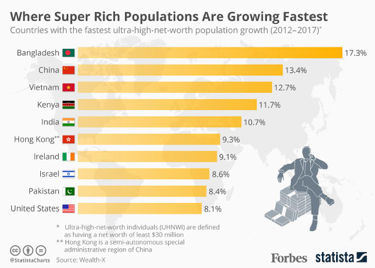
[2] Evidence may be taken from the success in combatting poverty in China, and also the increasing number of people from the so-called emerging economies joining e.g. the club of the superrich (e.g. Mc Carthy, Niall, 9/2018: Where Super Rich Populations Are Growing Fastest [Infographic])













 COMMEDIA DELLA VITA OR PÁNTA RÊI'S FIRM GROUND

