What we See – What we sometimes think – and What we have to learn

A Dedication to my Students, Around the World

The first impression on one of the the websites of my previous position was yesterday that of the

in its own way a very pleasing tune, matching the mood of the nicety of the previous Friday – for me much more than a beautiful autumn day

A day proving  the enjoyable lightness of being …

I scrolled down the site, saw the old photo showing me during the Shanghai Forum and was getting a bit curious, started the decipher …, wearisome …, to find out that all this is about the media centre and the ‘hyper-modern way of the networked world’ – where the global and the village come together …, perhaps not bad at all, if handled with care. Perhaps this is more important: the way to control the handling, not the instruments …

It surely means not least to be there for students – real, not virtual, and respecting …, no, accepting that we as teachers and as students have more in common than there are differences – where differences and arrogance, where delay and ‘servant-attitudes’ prevail, we have lost already our ingenuity.

Sorrows of Young Werther – not only

It had not been just the young Werther plagued by sorrows, and among the many concerned are academics – some old, some young; some knowing, some innocent; some forced and some voluntarily … .

[scan from: Johann Wolfgang Goethe, Faust – Der Tragödie Erster Teil, mit Illustrationen aus drei Jahrhunderten, ed. by Hans Hanning, Berlin: Rütting & Loening, 1982, 2nd ed., p. 123

Teufelspakt_Faust-Mephisto, by Julius Nisle]

All this is by no means new, the fine-tuning changed while the symphony itself is still the old lyre …

Career settings – career is a nice word actually: ‘a person really made a career’, we say it is somebody reached ‘high ranks’, and to get to the heights one has to make a career, i.e. move along a given path. Going back to Latin and Italian it is about the via cararia – the carriage road, the path on and along which the car – carrus – chariot moves. And it is about carrying, of course.

A brief outline then, if one gets an important part of the picture – surely not the complete one:

First step, getting the weight that needs to be carried – well prepared, and well wrapped:

Influence and manipulation in Teaching Economics – Backgrounds and Examples[1]

– There is at least an abstract in English language – and there is also an article on the topic[2]

Next step, prostitution[3] – it is not about what one says but how and where one says something.

And mind, see the progress: from the wrapped being presented, it is now about oneself, the young academic, wrapping.

Well, the end of the career? For some … the eternal wrappers, stepping higher and higher, the chariot being increasingly beautiful, the golden grids appearing as louvre – is it by accident that this is also the name of the great galleries in Paris?

For others the story ends …, well one may say Wertherian, i.e. by suicide – the way that social science goes too often[4] – actually the other side of prostitution – or its other side.

And indeed, there is some cunning of reason in the fact that this obituary on the academic freedom is published in a journal with access-by-payment-only … – Well, the Goethe, in his Faust, was clearer than Hegel with his hope for the cunning of reason, writing

To nonsense reason turns,

and benefit to worry.

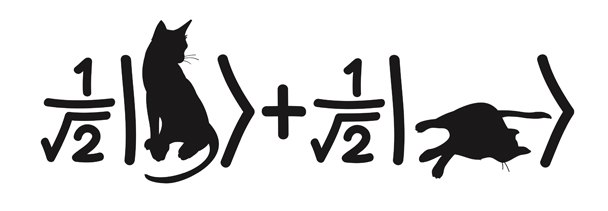
And we basically have to fail if we maintain reasoning by simple reason, accepting that we are not quantum mechanic beings but real ones.

And still, exactly therefore we have to look where and how exactly the cat moves – accepting also that it cannot be understood if we use those concepts that are hidden behind the eclipsed reason.

Sure, some leave the wrapping post and move on as rapper – against the rapists.

The answer history will give ????   – well, it may be that you have to go for it

******

******

[1]            Silja Graupe: Beeinflussung und Manipulation in der ökonomischen Bildung Hintergründe und Beispiele; Duesseldorf: FGW – Forschungsinstitut für gesellschaftliche Weiterentwicklung e.V.

[2]            Silja Graupe. The Power of Ideas. The Teaching of Economics and its Image of Man; in: Volume 11, Number 2, © JSSE 2012 ISSN 1618-5293

[3]            Frey: PUBLISHING AS PROSTITUTION? Choosing Between One’s Own Ideas and Academic Failure; http://www.econ.uzh.ch/static/wp_iew/iewwp117.pdf

[4]            Holmquist, Carin and Sundin, Elisabeth(2010) ‘The suicide of the social sciences: causes and effects’, Innovation: The European Journal of Social Science Research, 23: 1, 13 — 23

Responsibility versus Success?

“All that glisters is not gold;
Often have you heard that told:
Many a man his life has sold
But my outside to behold:
Gilded tombs do worms enfold
Had you been as wise as bold,
Your in limbs, in judgment old,
Your answer had not been in’scroll’d
Fare you well: your suit is cold.’ Cold, indeed, and labour lost: Then, farewell, heat and welcome, frost!”

― William Shakespeare, The Merchant of Venice

Responsibility and Success, at times and in some cases may stand in contradiction, at least tension to each other … – while the cat is chasing its own tale, not being sure if it is dead or alive.
… It is said of medical doctors that they cannot perform well unless they overcome a certain kind of empathy – some interventions cause instant pain, providing relief in the longer run. Is that the same with doctors in economics and even social science in general?
In any case the question to be asked is more specific as empathy as such is a rather empty and shallow notion as long as it is not specified. And specifying means here as in most of the cases to ask the simple question for which in particular Marcus Tullius Cicero was getting famous:
Cui Bono – for whose benefit?
Reading the other day an interview, made with a former …, shall I still say colleague?, brought this question back to me. I do not want to question the interviewees qualification, have no doubts that he is committed – but that may make things even worse.
If finance and stock analysis is such an advanced discipline, I feel obliged to ask why in 2007 a crisis manifested, actually already visible for some time for attentive observers? And it had been a crisis in particular around finance and stock markets.
I also feel obliged to wonder how it is possible to elevate a tiny fraction of the economy, an actual tool of the entire socio-economic processes, making it a major?
Sure, I agree with the emphasis of students responsibility – but it is not about them entering life – students are surely already living and perhaps we, as teachers, should think more about keeping them alive, not killing these lives by subordinating them under the rules of the ‘Lehmans of this world’.
Reading, as said to students
You are not far away from productively enter society and the real world. For that, you  will need to be as ready as possible to become accomplished and successful professionals.
shows in my reading a bit of disrespect – at least as student, I and many of my generation, would surely not have accepted such suggestion – though what is presented in the interview is surely view on young people and on life reflecting very much an negative approach to academic work: first work and then think about what you are doing. First act, and then reflect on the issues of responsibility – and even more: you may come to the conclusion that you don’t have to. There is surely a complex issue at stake – unfortunately very positive experience of the Polytechnic Secondary School education in part of Germany, finding roots in Henry Holmes Belfield’s foundation of the Chicago Manual Training School [founded in 1883] are surely more valuable than orienting on professional skills training, without sound academic foundation.
Yes, it is indeed time to take on responsibility …. – I returned to Europe – the interviewee once talked about one of my ‘homelands’, namely Italy. At least there he was right, stating that the country is in a mess. But he also celebrated another of my ‘homelands’ Germany and the U.K. suggesting that their success was very much due to austerity measures … – well, there is a point in it: the relative wealth of both is founded in austerity which can be taken as externalisation of cost and privatisation of gain: social inequality in Germany is increasing; an increasing number of people, though in full-time employment, do not earn enough money to make a living; after a full working life, the old age pension is mot secure; the health system is deteriorating, although the private contributions are extremely high. the UK took another way: exiting the EU, hoping to be thus in a position to avoid any obligation under the gelding ’solidarity’ – Indeed, Cui Bono as in both countries the rich are getting richer and more infueotnail! Being in Europe now – a bit of a tour de force through Italy, Germany, France, The Netherlands it is very visible what it means … – and there are too many facets that would need to be highlighted.

I take a short passage, from the end of an article I am currently finalising [‘Plattformökonomie – flexi, ein Schritt vorwärts oder zwei Schritte zurück?’] … Sorry, it is in German language ….***

Ein Eindruck vom mehrfachen Druck

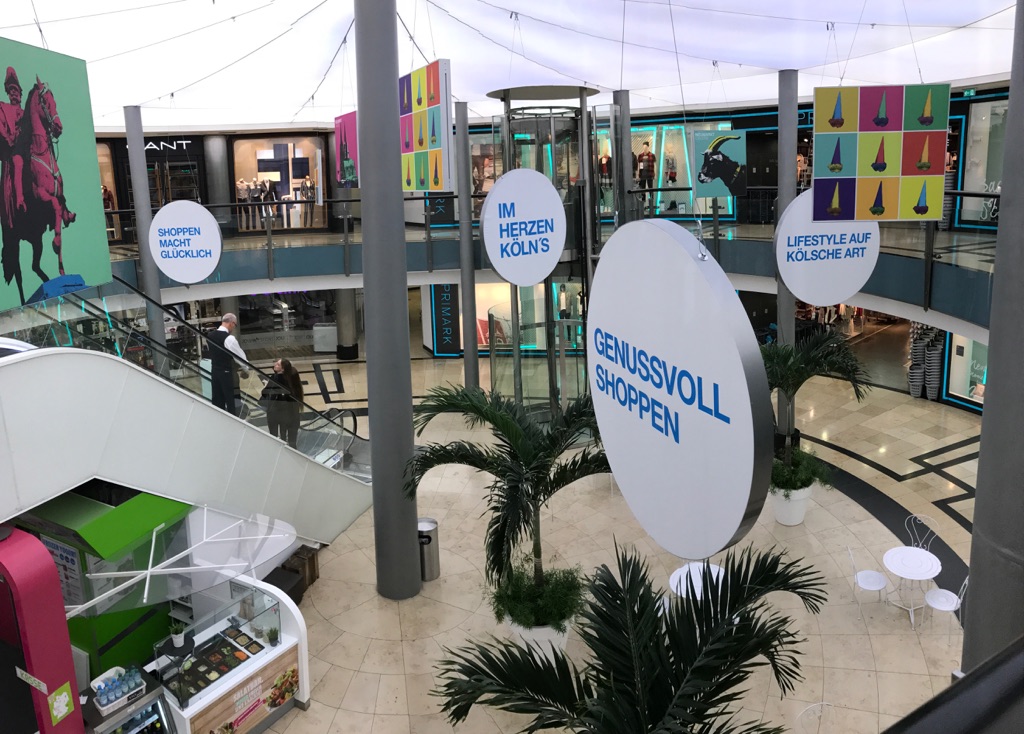
Ein Eindruck sei hier am Schluss gegeben – dies meint auch: eine eindrückliche Verdeutlichung des Gesamtzusammenhanges. Es handelt sich um ein persönliche Erfahrung des Autors – gemacht im August 2017: Ziel des Fußweges war die mehr oder weniger zentrale Geschäftsstelle einer Krankenkasse in einer größeren deutschen Stadt. Der Weg führte an den verschiedenen Geschäften der Ketten vorbei: einschließlich etwa Esprit,[1] TK, Starbucks, Karstadt, H&M, s.Oliver,[2] Victorinox, Subway, Zara, Primark, Nespresso, Manufactum, O2 – auch der ‚discounter’ Lidl, alle nun auch in den Zentren mehr oder weniger reicher Städte Deutschlands zu finden.

Vor dem discounter kniet ein Bettler, im danebenliegenden Kaffee wird der Verkäufer der Straßenzeitung von der am Tresen stehenden Verkäuferin vertrieben, in der Geschäftsstelle der Krankenkasse wird die Summe des Versicherungsbetrages genannt – es handelt sich um mehr als 16% des Einkommens. Im Falle der Einkommenslosigkeit sind es immer noch um knapp 180 €. – Glücklich, wer da noch beim discounter kaufen kann oder gar auf andere Weise den Wert der eigenen Ware Arbeitskraft senken kann, etwa durch die Inanspruchnahme des Foodora- oder Uber-Dienstes, möglicherweise bei einem Urlaubsaufenthalt, erschwinglich durch den solo-Unternehmer, der als Pilot arbeitet und die Airbnb-reduzierten Unterkunftskosten – die letzte Warnung: spätestens wenn der Trevi-Brunnen oder Ähnliches zum Verkauf angeboten wird,[3] sollte man sich fragen, ob die Grenzen nicht wirklich überschritten sind. – Déjà vu, das letzte Geschäft, welches ich nun auf dem Rückweg sehe – wohl Zufall, ebenso Zufall, wie die aufschimmernde Erinnerung an einen Platz in Rom, den ich vor einigen Jahren überquerte – selbst im Zentrum des katholischen Wohlgefallens ist bekannt, dass Wohlfahrt in der Konkurrenzgesellschaft Grenzen hat.

But I may submit something else to the discussion here – the short story written by L.N. Tolstoy: Master and Man – there is a no need to buy into the religious part of it. Many aspects are making if a good read – the main story line, and the little ramifications.
Reading the short story in the light of finance, there is one crucial sentence, and should not be forgotten when looking at the tool of finance – and applying tools without knowing sufficiently about the entire context:
Vasili Andreevich stopped, stooped down and looked carefully. It was a horse-track only partially covered with snow, and could be none but his own horse’s hoofprints. He had evidently gone round in a small circle. ‘I shall perish like that!’ he thought, and not to give way to his terror he urged on the horse still more, peering into the snowy darkness in which he saw only flitting and fitful points of light.
Indeed, limited perspectives don’t allow much – there is always good reason to take wider perspectives on studying, responsibility and life.
***********
*** Too lazy, and not trusting google-translation, I still dared – the result is reasonable, here inserted without changes made.
An impression of multiple pressures An impression should be given here – this also means: an impressive clarification of the overall context. It is a personal experience of the author – made in August 2017: the goal of the footpath was the more or less central office of a health insurance in a larger German city. The route took us past the various shops of the chains: including Esprit, TK, Starbucks, Karstadt, H & M, s.Oliver, Victorinox, Subway, Zara, Primark, Nespresso, Manufactum, O2 Also in the centers of more or less rich cities of Germany.   In front of the discounter, a beggar kneels, in the coffee next to it, the seller of the road is expelled by the saleswoman standing at the counter, in the office of the health insurance the sum of the insurance amount is called – it is more than 16% of the income. In the case of loss of income, it is still around € 180. – Happy, who can still buy at the discounter or in some other way reduce the value of the own goods labor, for example through the consumption of the food or over-service, possibly for a holiday stay, affordable by the solo entrepreneur, who as Pilot works and the Airbnb reduced accommodation costs – the last warning: at the latest when the Trevi well or the like is offered for sale, one should ask whether the limits are not really exceeded. – Déjà vu, the last business I see on the way back – coincidence, just as coincidentally, as the glimmering memory of a place in Rome, which I crossed a few years ago – even in the center of the Catholic prosperity is well-known that welfare In the competition borders.

[1]            Ja, es ist ein bemerkenswerter Geist, der da über allem schwebt. Und wie Namen, Images und Design eine immer prägendere Rolle spielt, was unter anderem durch Halbbildung ermöglicht wird.

Yes, it is a remarkable spirit that floats above everything. And how names, images and design play an ever more prominent role, which is made possible, among other things, by semi-education.

[2]            Es fehlt nur das an das S angehängte t um dem Ganzen etwas Heiligkeit zu anzuhängen.

The only thing missing is the t attached to the S to add something holiness to the whole.

[3]            Vom Teilverkauf in der Form von Besichtigungskosten, gig-sightseeing-tours etc. abgesehen.

 From the partial sale in the form of sightseeing, gig-sightseeing-tours etc. apart.

On studying, teaching, responsibility … and a bit on economy and economics

Students at Bangor College China asked me for an interview – some would say it is about god and the world – but that is not really an appropriate wording when it comes to talking with an atheist about studying, teaching and responsibility, is it?

It may well be of interests to a wider audience — trying to make sense of studying today. And it surely links to many other statements made on various occasions of looking for firm grounds in a world of flux.

The students:

采访:李雨欣 彭博 龚佳亮 刘佳浩

文字:李雨欣

编辑:章孛

… to the point …

Well, you may say I am burning in the Heraclitean Fire, carried away and not doing what the academic world-order asks me to do – moving on with the metaphor, one may add: this little bit of disobedience is like playing with fire, a dangerous not to say: life threatening game.

So to the point, reading Erwin Chargaff’s

Heraclitean Fire: Sketches from a Life Before Nature.

He refers on page 171 to another work by himself**, which he wrote earlier and where he contended:

The fashion of our times favors dogmas. Since a dogma is something that everybody is expected to accept, this has led to the incredible monotony of our journals. Very often it is sufficient for me to read the title of a paper in order to reconstruct its summary and even some of the graphs. Most of these papers are very competent; they use the same techniques and arrive at the same results. This is then called the confirmation of a scientific fact. Every few years the techniques change; and then everybody will use the new techniques and confirm a new set of facts. This is called the progress of science. Whatever originality there may be must be hidden in the crevices of an all-embracing conventional makeshift: a huge kitchen midden in which the successive layers of scientific habitation will be dated easily through the various apparatuses and devices and tricks, and even more through the several concepts and terms and slogans, that were fashionable at a given moment.

Chargaff’s book had been published in 1978, he was, as widely known, professor in biochemistry, he emigrated from fascist Germany … – and one may ask if it is purely by accident that with this background already

[a]s early as 1949, this eminent scientist described certain irregularities in the composition of DNA and formulated the concept of ‘complementarity’ – later referred to as ‘Chrgaff’s rule’ and still later as ‘base pairing’ – which was the most important single piece of evidence for the double-helical structure of DNA’ [from the book-cover blurb].

‘Back to the fire’ – what he states, looking at methods, can cum grains salis also said for today and social science: where ‘methodology’ chapters in theses too often present methods, not showing any awareness of the difference between method and methodology, where publications and universities and people are ranked on the basis of algorithms and where entities are cut into pieces, making us forget the following:

The insufficiency of all biological experimentation, when confronted with the vastness of life, is often considered to be redeemed by recourse to a firm methodology. But definite procedures presuppose highly limited objects; and the supremacy of “method” has led to what could be called by an excellent neo-German term the Kleinkariertheit (piddling pedantry) of much present-day biological research. The availability of a large number of established methods serves, in fact, in modern science often as a surrogate of thought. Many researchers now apply methods whose rationale they do not understand. [170]

*****

End of term, and of the academic year – students, sometimes inviting lecturers, celebrating; preparing for holidays, but also asking for references, preparing the next career moves.

I have to admit, I am am happy that some say they did not ‘invite me to their celebration’ but invited me ‘to celebrate with them’; and I also have to admit that it is an honour to be seen by some as 老师, as lǎoshī – a bit like the hojam as we use it at ODTU in Ankara.

An unwritten chapter for the

Diary from a Journey into another World: Diaries against nationalism, inspired by trying to overcome personal resentments

to be closed.

======

** Chargaff, E. 1965. On Some of the Biological Consequences of Base-pairing in the Nucleic Acids. In: M.D. Anderson (Ed.), Developmentn.l and Metabolic Control Mechanisms and Neoplasw. Baltimore: Williams and Wilkins, p. 19.


responsibility – responsiveness: trying to avoid the wrong answer

Waiting for the results from Turkey …

… whatever the outcome will be

… daily bread, the worries about securing it … daily routines of getting it – while the ‘big events’ are overshadowing every step, not necessarily all the time present, and still often enough hammering into the brain, shouting over the routines and the daily bread and the worries about securing it … – hammering louder than the footsteps of any individual on the asphalt; different things going through my mind, also my CV came up a short while ago – together with the hammering of the boot-bearing thoughts …

I was wondering if we are now moving back to the stage of considering to delete part of it, hide away what we did and what we have reason to be proud of …? Not that I am fearful, worrying in the strict sense = considering to delete, while being afraid of being deleted. But the need to think about this as being possibly urgently advisable makes me feeling uncomfortable.

What and how can we worrying warriors and warring worriers teach young people, the future to stand up if we live under conditions that nature such ideas …?
Let us hope, not for me, surely a bit for ‘us’ who do not want to stand there as spectators but especially for those to which we committed out selves, for ‘those future social lifes’

Vernunft und Verstand sind des Teufels Huren

Vernunft und Verstand sind des Teufels Huren.

ein altes, tüchtiges Pfaffen-Wort, Allen denen zu Lieb und Ehren,

denen Vernunft und Verstand im Wege stehen. Sie sagten auch:

‘Verstand und Vernunft können Gottes Wort nicht verfechten; sie

sind nur große Wettermacher und Hagelsieber in der Schrift!’

Freilich machen sie anderes Wetter in der Schrift, als es die

Pfaffen gerne haben, welche lieber im Dunkeln munkeln und

immer nur vor dem Teufel warnen, aber nicht anders, wie jener

Dieb auf der Flucht, der immer aus Leibes-Kräften rief: ‘Haltet

den Dieb!’ – damit man ihn selber nicht dafür erkennen möchte.

Lichter weg! mein Lämpchen nur!

Es nimmt sich sonst nicht aus!

Aus:

Die Sprichwörter und sprichwörtlichen Redensarten der Deutchen: nebst den Redensarten der deutschen Zechbrüder und aller praktik Grossmutter, d.i. der Sprichwörter ewigem Wetter-Kalender; Wilhelm Körte; F.A. Brockhaus, 1847; 567 pagine; hier: Seite: 450

Studying, Responsibility and Ethics

Peace cannot be kept by force; it can only be achieved by understanding.
Albert Einstein

I uploaded a series of presentations given to students of economics at 中南林业科技大学班戈学院/Bangor College CSUFT in Changsha, Hunan Province in China.

The title/subject of the course these presentations introduced is “Learning Skills” – the recommended book rather stupidifying, assuming students are naive, pursuing a formalist approach to learn – and moreover reducing academic work on the approach: “Give me an answer. We will then look for the question.” It is also the way in which we ignore what is attributed to Einstein’s wisdom, namely that
We cannot solve our problems with the same thinking we used when we created them.
I tried in these lectures to raise awareness of the importance of questions, working towards an preliminary or introductory understanding of methodology.
And I tried also to make students aware of the need to counter the
 The lectures used in particular arts and history (and a bit of arts history) as means to delve into different aspects of the relevant topics. – Although there are a few references immediately to my Economics course her ein China, the presentation is relevant (and can be understood) beyond this.
The videos can be found here – they also show the used slides (sorry for the audio-quality – but one gets used to it after a while).
The last lecture, given shortly after the attacks in the middle of November 2015, draws particular attention on ethical aspects and questions of responsibility.
Revised versions of the slides can be found on my researchgate site at

Privacy – there is more to it

I got recently a mail from a colleague from a place where I worked for some time during my professional existence – it had been sent to colleagues and some others, being concerned with data security issues in connection with dropbox. This mail provoked some wider contextualisation from my side which I sent as reply – this is reproduced in the following.


Thank you …, good to hear from you – though in ways not the best things.
Though personally I am not sooooo concerned in some way (the experience of having been permanently surveyed when I lived in West Germany at least in the 60s, and 70s and having faced some of the consequences of the 72-“administrative decree known as Berufsverbot did have a somewhat numbing effect) we are surely facing a frightening development: not least as personal data are used by war mongers, by business sectors for the war of consumerist terror and by individuals and groups who hack into personal e-mail accounts, using them for sending SPAM. There is however another dimension to all this which may – and I think should – require a minute of thought.

You see here an article under the heading
EU Citizen Science Initiative Asks Us All To Do Our Part
in the journal research*EU results magazine 35, page 17 f. – looking at the date mentioned at the end of the article it seems to be obsolete. However, the question is not so much about this specific initiative. The point is that we are increasingly – and uncritically – justifying with our research approaches without considering their ambiguity. In particular, we are in many cases making ourselves to string puppets, eager to collect data, getting more descriptive research done etc. while at the same time fading out the actual use of the overall research or of the data. This goes far beyond the personal sensitive stuff of staff, students etc. I discussed issues around this recently, participating in a conference against militarism and war where relevant issues had been tabled not least in connection with so-called double use patterns of technologies like drones (BTW: cheap offers for private use, already from some “good stuff” available for about 400 Euro).

Keeping things short, there is also from this side the need to develop more critical strategies – the “more” as matter of quality: more fundamental, more principal and accepting in more serious ways our role as educators instead of seeing the work we do as providers of “pure” knowledge and skills. Looking at this, the shocking part is not only starting when it comes to extremes like the development in Hungary (where direct government intervention in teaching is “reasonably” common). The shocking part is not only starting when it comes to developments where (as in Lithuania) a social policy department is now renamed as department for social technology. The really dangerous part is where we are not critically taking up our responsibility and remain stuck in the cocoons of individualist reseachers, unwilling and unabled (sorry, the term should exist, against Microsoft’s will) to collaborate in a sound and integrated and radical way.
Sure, part of it is that we cannot change the situation as individuals though we have to change the individuals in order to change the situation. And part of it being the ambiguity of working towards a process of change itself: Apparently we are fighting for “the social” as individuals.  Sure, all this includes the challenge that we have to get off the pedestals that are still characterising academia: as we chanted in the late 60s

Under the gowns / Is the musty odour of a thousand years

(see another potential abuser of data processing – wikipedia, here in German on the slogan and in English on the context the context)

All this is, of course, not least linked the the loss of readiness to think of contradictions as driving force of development – already the notion of dialectical and historical materialism is whipped out, even in “progressive” thinking, unfit for being squeezed into slide-thinking of presentations which are always not least self-presentations. In this context, I hope that the science shop (as it had been called those times) is developing in a direction which is not moving and moved further against the intention which I have had when I co-initialised the work.
All the best and enjoy the weekend – camminare insieme 😉
Peter

Variations*: Omne ens habet aliquod esse proprium

– every entity has a singular essence(Johannes Duns Scotus, Opera Omina [1266 à Duns 1308] quoted in: Suarez-Nani, Tiziana: Pietro Pomponazzi et Jenas Duns Scot critiques de Thomas d’Aquin; in: Biard, Joel/Gontier, Thierry (dir.): Pietro Pomponazzi entre traditions et innovations; Amsterdam/Philadelphia: B.R. Gruener Publishing, 2009: 29-67; here:  33)

or: About Academic Responsibility between Dynamics and Statics.
*****

Recently I had to go to Rome – and if ever possible I take it as opportunity at least for a short visit to the Villa Borghese. It is actually not really about visiting the palace and the multitude of exhibits, most of them surely admirable objects in their own right. My visit there is usually solely dedicated to Gian Lorenzo Bernini’s statue Ratto di Proserpina – the rape of Proserpina.[1]

It surly is the most dynamic statue I ever saw. For me it is actually not about rape or abduction. Instead, I see it as visualisation of abhorrence of power: the questioning of power and apparent superiority. A woman challenging the given reality by facing it and at the same time refusing to accept it – she turns away from it. Of course, it is easy to see the historical newness – in sculpting and also in societal realities. Bernini’s work is the dialectical repeal of earlier sculptures as for instance Michelangelo di Ludovico Buonarroti Simoni’s masterpiece David.

Supposedly David had been the first free-standing sculpture: firm, independent, disjointed from the environment …. – the beauty and arrogance of the claim of the emerging new era:

Omne ens habet aliquod esse proprium

– every entity has a singular essence

However, paradoxically it had been this new era – the Renaissance and later also the enlightenment – that needed something completely new and even opposing, the upcoming era needed a Proserpina: aware of the abduction, ready to confront herself with this fact because only this allowed to resist. It had been not really about a new moral, about taking a different position. What – in my opinion – Bernini actually expressed is about the opposite: dynamics, allowing the emergence of traction, pulling forces, attraction and surely also the acceptance of possible failure.

In other words the singular essence of every entity is only emerging – and this is the apparent paradox – from the very relationship in which this entity is located and locates itself. And in this light every singular essence is about the dynamic and/or static the entity engages in.

NB: Mentioning dynamics here, I am speaking of statues – not of installations as they are now dominating the arts world. I know that I stand somewhat as a loner in the world of critics, seeing the latter very much as frantic attempt to dynamise the static – frantic like the attempt to use administration as substantial tool. Frantic like using grades and degrees and computerised quotation indices as means of assessing qualification.

*****

Now, something apparently completely different. Recently the German minister for education had been asked to resign – and she even dared to refuse (though finally she had to step back). The background is apparently simple: plagiarism.

But Ulrike Baureithel on the 6th of February in Der Freitag points on a much wider and deeper meaning of the entire debate on an increasing number of leading politicians being caught in comparable scandals – her article is titled Core of the Spectacle. She notes that doctoral dissertations had been for long times already subject to critical disputes. However, in earlier times these disputes had been about substantial matters, highlighting (or searching) political positions that are contestable in terms of political correctness. Baureithel states:

Today politicians do not have to fear to be criticised because of questionable politicial statements they made in works that are already forgotten for long time. Instead, they have to fear the detection of the fact that their statements are not traced back to the original author. This is in an era in which copyrigth is increasingly under pressure and in which blithe transfer of knowledge is advancing to a political flagship rather remarkable.

[Heute müssen sich Politiker nicht mehr vor verdächtigen Inhalten einer längst vergessenen akademischen Arbeit fürchten, sondern davor, den Inhalt nicht auf ihren Urheber zurückgeführt zu haben. Das ist in einer Ära, in der das Urheberrecht wie nie zuvor zur Disposition steht und der unbekümmerte Wissenstransfer zum politischen Aushängeschild avanciert ist, doch immerhin bemerkenswert.]

And indeed it highlights a shift of academic consciousness that marks the fundamental reference of work: it is not about daring ideas, bringing thinking forward, developing original ideas – rather it is about forms. Following this line we easily end in at most positivist research … at most … .

Thus we come now back to the earlier statement:

In other words the singular essence of every entity is only emerging – and this is the apparent paradox – from the very relationship in which this entity is located and locates itself. And in this light every singular essence is about the dynamic and/or static the entity engages in.

And it is exactly here where we find in current academia a new self-localisation. At surface level it is of course about commonly known and accepted matters: the overwhelming influence of management, the financial dependencies and obligations, the constraints within research projects emerging from the conditions for obtaining grants etc.

All this is surely true. But all this is at the end very much about blaming “the other” – a kind of trading indulgences, fading out important parts of our own responsibility as academics – and on this occasion I do not refer primarily to our positioning but to our thinking.

*****

Few of you know me well enough, are aware of the very fact that I am easily getting lost in time, in figures – in general such “hard data” are somewhat meaningless for me. Academically this in some respect of course wanton – isn’t science something “positive”, something that deals with facts as they can be expressed in figures? Sine ira … as Weber said. Still, this “getting lost” has also something that I want to defend – it allows abstractions, something that

separates things out, isolating them from our concerns as social beings immersed in particular cultural practices. As Locke once put it: “Words become general by being made the signs of general ideas: and ideas become general, by separating from them the circumstances of time and place, and any other ideas that may determine them to this or that particular existence.” The problem, however, is that we tend to be interested in things as they exist in a context with others. Indeed, the very word “interest” comes from the Latin inter-esse, which means “to be between,” while the Oxford English Dictionary tells us that the root of “abstraction” denotes a “drawing away from” and that the root of its opposite, “contextual,” means “woven together”.

(Blattberg, Charles, 2009: Patriotic Elaborations: Essays in Practical Philosophy; Montreal/Kingston: McGill-Queen’s University Press: 45; with reference to John Locke, An Essay Concerning Human Understanding, ed. Peter H. Nidditch [Oxford: Oxford University Press, 1979], bk 3, ch. 3, sec. 6)

Very much the same is stated in the comments of an exhibition, I recently visited in Copenhagen:

On the one hand, details cannot be ignored if one wishes to depict reality in a convincing manner. On the other hand, however, focusing on a detail threatens to impede our understanding of how it fits into the overall whole.

(from one of the explanations on the wall of the exhibition ‘detaljer’ in the Statens Museum for Kunst)

All this allows us bringing things together – matchmaking if you want; matchmaking even if the matches are extremely distant. Distant as the German ex-minister is from the Kunsthistorische Museum Wien. Distant in time as my visit there – and distant as the time with which I had been confronted when entering a special exhibition: I had to walk up onto a scaffold close to the wall pantings which had been presented by one of the most contested artists of the early 20th century: Gustav Klimt. To cut a long story short: I stepped up, the leverage of the scaffold covered by a black cloth. Arriving on the platform of the exhibition “face to face”, I had been forced to turn around – a crossroads of which I took the option to rue to the right. Now, not concentrating on stepping up the stairs, I could also lift my head. I experienced a kind of numbing, looking into the eyes of the work of this artist: a goddess, not despising, not inflicting but sending a chill down my spine. Only once before I experienced the very same awe, standing just on my own in front of Picasso’s Guernica (At the time of my visit even the security guards keeping in the background.)

I said before “to cut a long story short” – and I know that this is a frequent mistake: we cut long stories short, we squeeze complex issues into power point presentations. And as much as we are in danger to loose the ability to read handwriting as we a dominated by computer scripts, we are in danger to loose the ability to listen, to look – be it at others or at ourselves. And we loose the ability to bear somebody looking at us. Somebody as the history of Guernica! Somebody as Pallas Athena.

Of course it is challenging – not so much to understand but to accept that understanding actually means that we are permanently questioning ourselves, our practice. And we have to do this not as academic exercise but as matter of questioning what we are doing, how we are acting. Things and people come back, even if they leave us. I read recently, in connection with the death of one of the examiners of my doctoral thesis, Hans Heinz Holz, a statement, contending that the important question is not

… ob man prinzipiell damit einverstanden ist, dass nicht in erster Linie Ideen den Lauf der Dinge bestimmen, Kopfgeburten, sondern die ökonomischen Bedingungen –

… if one is in general agreement that not ideas determine history, …, but the economic conditions –

Important is

ob man auch bereit ist, im Sinne von Gleichheit und Gerechtigkeit Schlüsse daraus zu ziehen

if one is ready to accept practical consequences in the sense of equality and justice

– I write this as something that employed my thinking very much over the last years, a matter that I saw and see as permanent challenge. It is the challenge to develop a truly historical perspective. It is about capturing presence not as such but in a light of history – past, present, future – but as matter of exploring history in the light of the presence and future. It had been exactly this responsibility that I felt while standing in front of Picasso’s Guernica and Klimt’s Pallas Athena. The … – yes, it has been a kind of trauma – this trauma did not come from an explicit or implicit accusation. Instead, it emerged from the implicitly asked question:

What do you do? Are you able to relate or are you only following the relations that are put in front of you? Is your strength about the resisting static self-positioning within a hostile dynamic of the environment or is it about the dynamic movement against a more or less static block as it is characterised by Antonio Gramsci. Stephen Gill, in his work on Power and Resistance in the New World Order (Palgrave, Macmillan – 2002, p. 58) captures it, saying

An historical bloc refers to an historical congruence between material forces, institutions and ideologies, or broadly, an alliance of different class forces politically organized around a set of hegemonic ideas that gave strategic direction and coherence to its constituent elements. Moreover, for a new historical bloc to emerge, its leaders must engage in conscious planned struggle. Any new historical bloc must have not only power within the civil society and economy, it also needs persuasive ideas, arguments and initiatives that build on, catalyze and develop its political networks and organization – not political parties such.

Or, coming back to Hans Heinz Holz: the question of not being

ready to accept practical consequences in the sense of equality and justice

And this surely means to look for new Berninis – for new dynamics that are transcending the given system by openly facing the challenges from within by positi0ning ourselves in a fundamentally critical position – fundamentally critical also meaning: taking positions that may fail but that are open to contest.

*****

Well, nobody said it is easy – and I leave it to you, better: invite you to think about the connection and disconnection between the steady David, supposedly the first statue standing on its own and the dynamics of the Bernini’s Ratto di Proserpina – the woman courageously facing the situation in order to draw away not by way of abstraction but by its opposite: inter-esse, drawing things together by tearing them apart.

Still, I do not want to conclude without some reflection on the issue by myself, directing this matter in particular to an academic audience I may conclude by the following – drawing a very broad line. When I studied we had been captured by the idea of a scientific community. Although we had been – part of and inspired by the revolutionary movements of the late 1960s – critical about such elitist community, we maintained the fundamental notion. And we joined in this critical spirit the various movements that engaged for democratic progress. Moreover we joined in this critical spirit the trade unions and the working class. Sure, this had been an imagined community, and it had been a community that had been full of contradictions. But looking back I think it is fair to say that it had been a community that had been by and large a disputatious community. Personally I remember these contests with and against Luhmann, Offe, Kaufmann, …, to name but a few, people that many of you will also know at least by name. Actually it had been an interesting development at the time: a new science developing and claiming to be acknowledged. Though heated debates took place with conservative colleagues, it had been very much about claims against them – the ongoing quest against the  “mustiness of 1,000 years covered by the gowns of academics” (Unter den Talaren – Muff von 1,000 Jahren). Part of this contest had been surely successful: positions taken, contests taken into the system and finding a stable foundation. However, the crux of history, like Hegel’s ‘cunning of reason’ emerged, cutting the dialectical of enlightenment short of the emancipative side.

So, academia replicated the development of modern society: structures, in the beginning surely necessary, became an “independent force”: a structure, obedient to its own rules, having lost out of sight that it can only then be justified if it maintains practice.

Sure, this is the same as a society that maintains a structuralist take on citizenship, perverting it to such an extent that citizens, the original sovereign of the modern state, are incapable to act. And it is even defined by its structural position, any consideration on practice being pushed aside (see in this context for instance Lister, Ruth, 1997: Citizenship. Feminist Perspectives; Palgrave Macmillan; Houndsmills, 20032: 42; cf. Oldfield, Adrian, 1990: Citizenship and Community. Civic Republicanism and the Modern World; London: Routledge).

Coming back to the two paintings – Athena/Atlas and Guernica: facing history as actual reality, as genuine presence, can hurt – it can severely hurt. Still, it is probably easier to deal with such injuries than to deal with the permanent intoxication, causing a slow death, still leading first to the suicide of social science, then to the suicide of people.

I do not mean this literally. I speak of the danger of accepting to be buried in structures, being battered to death by what had been once necessary, that could claim legitimacy: a steadfast claim of liberty now perverted into an iron cage of commodification ….: dispute seemingly only possible by taking the form of war. That is the dimension of suicide Carin Holmquist and Elisabeth Sundin do not mention, it can be grasped as discerping the quadriga of social science

  • self-critique,
  • critique of the other,
  • critique of processes and
  • critique of structures.

In any case we can see a wide bracket: academic performance – and the lack of it – is measured in PhD-cases and the de-recognition of the degree on grounds of formal rules: originality is only a matter of sufficiently and clearly making reference; impact is measured in computerised citation indices rather than in actual debates; and publication-output is in this narrow-minded attitude only relevant if it is squeezed in the suicidal framework of peer reviewed articles. Books don’t count and subsequently contributions to books do not count – and …

… and the murderers a still free, in well-paid positions in academia and parts of the publishing world with its vested interests …

… and fortunately some woke up, repeal their admiration of the form. It is so to say the move from David to Proserpina, the move from a rigid position to the readiness to move again. Many universities are turning their back against rankings, are looking for innovative publications and are demanding the publication of ‘work in progress’, fostering open source software etc. Those stubborn David’s – having concrete blocks where there should be a creative brain, will at some stage have to face the fact that their static version of enlightenment only pretends vision. However, in reality, at the end of a single-line tunnel the light at the end of it turns out to be the light of the train driving towards us.

It should not be a surprise that under these conditions live becomes deception – we find a line from

  • disavow of historicity to
  • personal self-deception to
  • subordination under form to plagiarism to
  • the loss of responsibility.

With the shift of references to different individualities, thus the loss of social references we loose of course responsibility – not as moral decay but as absurdity of today’s realities. A lengthy statment from Theodor W. Adorno’s Minima Moralia (published 1945 – here refering to the 1951 edition to which Adorno addded a dedication, and taken from the dedication) regains importance:

What the pilosophers once knew as life has become the sphere of private existence and now of mere consumption, dragged along as an appendage of the process of material production, without autonomy or substance of its own. He who wishes to know the truth about life in its immediacy must scrutinize its estranged form, the objective powers that determine individual existence even in its most hidden recesses. To speak immediately of the immediate is to behave much as those novelists who drape their marionettes in imitated bygone passions like cheap jewellery, and make people who are no more component parts of machinery act as if they still had the capacity as subjects, and as if something depended on their actions. Our perspective of life has passed into an ideology which conceals the fact that there is life no longer.

But the relation between life and production, which in reality debases the former to an ephemeral appearance of the latter, is totally absurd. Means and end are inverted.

(Theodor W. Adorno, 1951: Minima Moralia. Reflexions from Damaged Life; translated from the German;London: Verso, 1978: 15)

[Was einmal den Philosophen Leben hieß, ist zur Sphäre des Privaten und dann bloß noch des Konsums geworden, die als Anhang des materiellen Produktionsprozesses, ohne Autonomie und ohne eigene Substanz, mitgeschleift wird. Wer die Wahrheit übers unmittelbare Leben erfahren will, muß dessen entfremdeter Gestalt nachforschen, den objektiven Mächten, die die individuelle Existenz bis ins Verborgenste bestimmen. Redet man unmittelbar vom Unmittelbaren, so verhält man kaum sich anders als jene Romanschreiber, die ihre Marionetten wie mit billigem Schmuck mit den Imitationen der Leidenschaft von ehedem behängen, und Personen, die nichts mehr sind als Bestandstücke der Maschinerie, handeln lassen, als ob sie überhaupt noch als Subjekte handeln könnten, und als ob von ihrem Handeln etwas abhinge. Der Blick aufs Leben ist übergegangen in die Ideologie, die darüber betrügt, daß es keines mehr gibt.

Aber das Verhältnis von Leben und Produktion, das jenes real herabsetzt zur ephemeren Erscheinung von dieser, ist vollendet widersinnig. Mittel und Zweck werden vertauscht.]

++++++++++++++++++

* This is very much another approch to questions that had been recently issued in another post.


[1]            The translation is not quite clear. It is sometimes also translated as ‘abduction’, not ‘rape’.