Value Theory –, asking if there is still any value in it?/Is it still worthwhile to talk about it?

Abstract
The theory of value is probably the most contested feature of Marx’ political economy. The reasons for this are the following two
Value Theory –, asking if there is still any value in it?/Is it still worthwhile to talk about it?

Abstract
The theory of value is probably the most contested feature of Marx’ political economy. The reasons for this are the following two
ELMAR ALTVATER DIED
It talks about him as an
Inspiring critique of the capitalist economy
This he truly was – as such he encourages me to dedicate the presentation to him: as quest to me and to the students to take up this challenge of critical thinking.

Living in China means as well getting used to a highly advanced level of internet-penetration in large parts of daily life. Often this is perceived as contradicting prevailing traditional ‘life styles’ and attitudes. At first glance this has not much to do with the future of social policy, or does it? – Social policy faces the difficult task of bringing an institutional system and ‘life worlds’ together. With globalisation and digitisation there is an additional challenge: the reference to the nation state and standard forms of labour are increasingly loosing or changing their role, or at least changing it. Is there any common ground for small island nations like Ireland and unimaginable countries like China?
One Belt – One Road [OBOR] – One World – From Economy of Comparative Advantage to Socio-Politics of Cooperative Progressing.
One Belt – One Road – One World – Digitisation of Life as Chinese Lifestyle

Two more Isar-Kanal Lectures, given by Peter Herrmann, currently visiting Researcher at the Max Planck Institute for Social Law and Social Policy [section social law] are now available. The second lecture looks under the title
Digitisation – Morals, Politics and Responsibility
Digitisation, highlighting that Responsibility has to be seen in a new light, namely and again the light of real publicness.
The reference to Popper and falsificatioism in simple terms

[https:// commons.wikimedia.org/wiki/File:Black_Swans.jpg]
There is no point in waiting for black swans, it is necessary to bread them!
The third of this short series of Isar-Kanal Lectures, titled
Digitisation – Meta-Methodological Reflections
highlights that much of the supposedly new issues are very much old questions around socialisation, pushing towards a new stage and thus looking at
Thus, all moral boils down to the question of the mode of production.
From the MPI-pressrelease: 09.03. – 23.03.
beigewum.de (16.03.2018)
Can the EU still be saved? The implications of a multi-speed Europe. Presentation of the EuroMemorandum 2018
Nennung von Gastwissenschaftler Prof. Peter Herrmann und dem MPISOC
Link (Englisch)
Dr. Julia Hagn
Max-Planck-Institut für Sozialrecht und Sozialpolitik
Amalienstr.33
80799 München
…and the lack of the understanding of what meaning is about.
Two robots – artificial intelligence and predictive apps are switched on – are sitting in a self-driving car. The one, named 42, begins laughing out loud.
What’s the matter?
asks the other, named 21.
Oh, it is about the joke you are going to tell me in an hour.
…. An hour later, 21 says:
Do you actually know where we are going?
42’s turn:
Boy, I don’t have the slightest idea.
No break, but just the answer, on the spot:
Neither do I – but you know google has this self-prediction – so they will know where we will be happy.
I have serious doubts, that god plays a role as Shauna Niequist suggests. But I guess it is of little meaning if the engineer laughs about fooling people who are caught in [and by] another solution that is not an answer to any problem. Remember what you could read in a recent blogpost about poems and raincoats … .

In general, having worked on this topic for quite a while now, I see the following major questions that urgently require thorough systematic consideration:
Of course, this requires not least thorough and systematic classification and demarcation of the different aspects that are commonly loosely and vaguely subsumed under such catchall term as digitisation.
I am grateful to a friend, discussing life with her, helped me taking much of the mist of the topic, and also remaining aware, and feeling the challenges of real life, persisting when talking about the virtual one – 감사합니다 !
Artificial intelligence is like …
Poetry in translations is like
taking a shower with a raincoat on.
Well, much can be said about China – not the issue here and not for me at the moment. Still, I am wondering if a country and continent [sorry, all links are to articles in German language]
________________

[Bei der Düsseldorfer Tafel bekommen alle Bedürftigen Lebensmittel. In Essen vorübergehend nur noch die mit deutschem Pass. – photo dpa]
_______________
should really worry about a Chinese investor, who steps substantially in at Daimler Benz? Carrying in his luggage the gift of advanced technologies for electric cars, a gift that does not promise venom-free driving[1], but is at least a small contribution to reduce emissions. – It would be more desirable to think about possibilities to move with this to cooperative advantage instead of maintaining comparative advantage as guide, – Sure, here state regulation could take new forms.
Less complains here I suppose than about google as potential competitor on the market of car manufacturing.
_______________
Two of the many points that should be mentioned in detail:
*
Quoted from the first article, in translation:
The spokesperson of the job center … says that persons who re receiving basic basic social income would not depend on begging.
It is the old flam that here is no poverty [a] because everybody has the right to receive that kind of income and [b] it is sufficient for a decent life. But it is as well a matter of defining begging as smiliar-to-employment activity.
**
In all these contexts [there are similar cases, also in other German cities, the issue of donations is coming up: basically it says money – also goods – given to people who are begging, also food and other support people receive from charities – are legally ‘donations’ [non-deductible] to the recipient, i.e, beggar.
So, playing this bitter game a bit further we arrive at the state where actually income may soon be defined as donation, the employer soon being defined as good-doer, and the employee …
Well, NOW I think it is time to return to the China issue: I discussed with a colleague more or less extensively about Corporate Social Responsibility – the project to co-author an article finally failed, admittedly it was my fault: I simply could not accept that paying business tax can be seen as corporate social responsibility … .
_______________
And all this is much about a topic I discuss occasionally with my colleague here, in a nutshell the old, and still unresolved question about justice and right. And John Stuart Mill, in Volume X of his Collected Works [Essays on Ethics, Religion and Society], in particular writing on the ‘On the Connexion between Justice and Utility’ is at least stimulating, asking us to think about social and individual.
Is it far fetched then if the gist of my presentation, titled
is the necessity to think about the a radical ‘new beginning’ when it comes to thinking about social and welfare issues?
Now lean back and think a bit: In the presentation I mention towards the end that one of the most serious problems with the ‘new economic and juridical normal’ is the -delegalisation, ops: the fact that we find a substantial trend towards charitibilisation: the replacement of social rights by charitable activities ….
****
[1] The German term ‘Geschenk’ translates into English as ‘gift’, the German term ‘Gift’ translates into English as venom, toxic, poison.
A short presentation on Big Data and Digitisation at the Max-Planck-Institute fro Social Law and Social Policy
WYSIWYG, the supposed revolutionary concept that once opened a new world for computer quarter-literates is not necessarily applicable if we look at the supposed recent revolution: Big Data. More likely we find the emergence of a WYSID – What You See Is Delusion.

[from Leibniz’ writing on the Binary Code Calculating Machine]
The presentation aims on contributing from the perspective of political economy to an understanding of some systemic developments that are hidden behind a blurred understanding of Big Data and Digitisation. The following is guiding the development of the argument:
On the latter, especially four topics are seen as major challenge:
Some background material can be found here.
Here the link to the recording of the presentation – speaker presentation: Professor Dr. Ulrich Becker.
******
[1] What you see is what you get
Just published:

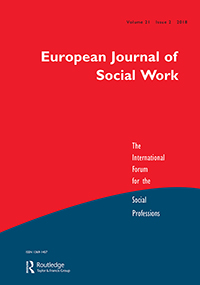
Digitalization, immigration and the welfare state, by Mårten Blix, Cheltenham, UK & Northampton, MA, USA, Edward Elgar Publishing, 2017, 186 pp., ISBN 978 1 78643 294 0 (hardback)
One may be grateful, seeing a title as the one of the books for review, that finally it is about some- thing that can well be perceived as a crossroads for the future, defined by: digitization as one of the main new hopes, and equally a major variable of insecurity; migration is seen by many as a major threat; and the welfare state as known centre and channel, allowing taming rough sea. …
It is published in the
EUROPEAN JOURNAL OF SOCIAL WORK
and can be accessed – if you have access via: