Wiedereingliederung

…, leider ist es in der Tat auf unangenehme Weise verlaufen und an den Ton musste ich mich erst über lange Zeit gewöhnen – ob es mir vollständig gelungen ist …? Es bleibt unterm Strich dieses seltsame ‘im Grunde ist er ein guter Kerl und meint es nicht so.’
Fuer mich ist er und ist dies alles derzeit eh Teil eines größeren Feldes von Kommunikation und Kommunikationsfehlern und Verhältnissen, Verhalten und auch Beziehungen, denn Verhalten und Verhältnisse sind ja im Grunde immer eine Frage auch der Beziehungen. Und das ist fuer mich derzeit eben ein weites Feld, da ich mich im Übergang befinde, im Untergang gar:
das Untergehen der Beziehungen nach zwei Jahren, das Untergehen in den neuen Eindrücken, mit denen ich beim Versuch des Fuss-Fassens in einem neuen Lebensabschnitt konfrontiert sehe, und auch das Untergehen des ‘alten Europas’, dass durch den Aufenthalt ausserhalb doch einige ‘Prellungen’ erlitten hat: vermisst habe ich sicher einen Teil und zugleich habe ich einen Teil ‘zu hassen’ oder ‘verachten’ gelernt. Einen Teil Europas? oder doch eher der ganzen Welt? oder dessen, was sich da entwickelt hat im Europa und nun exportiert wird? Der Fortgang der Dinge, die absehbar sind, derweil man da am Abgrund steht und nur den einen Weg kennt, erlaubt ist zu gehen: den Weg nach vorne, den Weg des Weiter-So …?
Derzeit bin ich glänzend bei Freunden in Availles Limouzine untergekommen:
im Haus der ehemaligen Geschäftsführerin von ESAN, meinem alten EU-Netzwerk, die von Lille mit ihrem Mann nach dessen Pension nach hier gezogen sind. Eine dieser eher schwer zu verstehenden Freundschaften: lange Pausen und man trifft sich, als ob man eh jeden Tag zusammen ist. Und auch wenn man scheinbar über Jahre jeden Tag zusammen ist und war und sein wird, wird es nie langweilig eine tragbare Leichtigkeit des Seins, um dann Referenz zu Kundera’s Roman zu machen; aktuell ist hier bestimmt keine Langeweile, denn Christian ist ein ‘bekennender Chaot’ – im zutiefst positiven Sinne. Die Gegend ein Traum, und doch auch fuer mich eine ‘Herausforderung’: 1200 Einwohner gegen 9 Millionen in Changsha.
Und auch: mehr Diskussion zu globaler politischer und ökonomischer Entwicklung als in Changsha, wo ich ‘stumpfe Wirtschaftswissenschaft’ unterrichtete – dies ‘mehr an Diskussion’ hängt zugegebenermassen aber auch damit zusammen, dass es nicht wirklich reiner Urlaubsaufenthalt ist, sondern eben auch Teil meiner Parteiarbeit. Eine Art von Bericht habe ich ja zu den Erfahrungen in China – zumindest it Blick auf das Hochschulwesen – auch auf dem blog veröffentlicht, bzw, von dort verlinkt. Dort habe ich auch Bezug auf ein Buch von Erwin Chargaff: The Heraclitean Fire, genommen: bemerkenswert fand ich, wie das, was einige oder gar viele heute als Probleme sehen, eben auch ein Teil eines lang sich entwickelnden Prozesses ist. Und das habe ich selbst auch dort zu schreiben versucht: das Wissen um die allgemeine Entwicklungslinie, das Beklagen über Details, und das Handeln durch den Versuch, einen individuellen Ausweg zu finden – gönnerisches gleichsam ein anerkennendes Nicken fuer jene erübrigen, die etwas mehr wollen und fordern; und vielleicht ein gönnerisch-anerkennender Blumenstrauss oder Kranz eines Tages – von Individualisten an Individualisten, denn jeder scheint darauf reduziert zu sein – ‘Jeder stirbt fuer sich allein’, nicht nur in der Extremsituation, ie sie im Mittelpunkt von Fallada’s Stück im Mittelpunkt steht.
Sicher war China eine ‘besondere Erfahrung’, schließlich waren es über zwei Jahre. Und doch war fuer mich auch wieder einmal sichtbar, wie viel doch eben überall stattfindet, wie auch die alte Rostow’sche Westdampfwalze des Kapitalismus noch immer über solche Länder rollt – selten habe ich so viele SVUs und sonstige protzige Autos gesehen, wie in Hangzhou und Changsha; und selten wurde so offen wie in Hangzhou und auch bei jenem joint venture so vieles an Widerwärtigkeit ‘konkurrenzbetonter, verlogener Wissenschaft’ fuer mich unmittelbar deutlich – freilich: alles im besten Gefühl, ‘im Grunde gute Kerle zu sein’ – und nicht nur im Grund, sondern tatsächlich, allerdings begrenzt durch den Hyperindividualismus, den man eigentlich bekämpfen will; und selten wurde ir deutlich, wie weit es eben ein ganz normales Prinzip heute ist, was mit China nicht wirklich etwas zu tun hat; selten aber auch die immer noch zu findende Wertschätzung und das aktive Leben bestimmter traditioneller Verhaltensweisen, auch und gerade bei Studierenden. Selten auch deren Entfremdung, deren Hin- und Hergerissen-Sein zwischen ‘da muss man durch’ und tatsächlichem Interesse, Respekt, etc. Und selten habe ich auch die verschiedenen Facetten eben von Fehlkommunikation erlebt. Dies gilt mit Blick auf so viele – das Leben in Dichotomien: Studierende und Lehrende, Junge und Alte, Chinesen und Ausländer, auch wenn die Ausländer Chinesen sind, ‘dortige und hiesige’ – letzteres meint: bei solchen Gelegenheiten lernt man ja immer fast mehr über das, wo man her kommt als über das, wo man lebt. Und Kommunikation ist eben Gesellschaft – auch wenn ich nicht mit der Luhmann’schen Umkehrung übereinstimme, dass Gesellschaft nichts anderes als Kommunikation sei.Das letzte ‘Kommunikations- und Gesellschaftsproblem fuer mich: der Mieter in der Wohnung, die ich in Berlin gekauft habe, wurde tot in der Wohnung aufgefunden – man vermutet, dass er dort zwei Wochen gelegen hat. etc. pp. – so ist es in der freien und soziale Gesellschaft – fürsorgend und christlich …, bis zur nächsten Wahl, aber auch da nur, soweit es sich nicht vermeiden lässt … Und dann geht das ‘Kommunikationsstück’ weiter: in diesem Zusammenhang hatte ich mit dem Makler auch wieder Kontakt. Er schrieb in einer mail, er habe auch Leute, die bei der Renovierung helfen könnten, zumal es in Berlin nicht leicht sei, fuer kleine Arbeiten jemanden zu finden, schlug vor dass wir Telefonieren. Ich sagte OK und ich sei in Europa wieder und daher könne ich problemlos anrufen und fragte wann. ‘Geht auch gleich’ kam als Antwort und gleich …, nun ich versuchte ‘gleich’ und später und es kommt immer nur der Anrufbeantworter und keine Nachricht, die ich dort hinterlasse, wird beantwortet. Das ist gleichsam eine Art Standard-Erfahrung fuer mich: vielfach auch ‘global’: eine Erfahrung ’hier und dort’. Oft Zeichen von hypocrisy [mir fehlt der deutsche Begriff] und auch eine Erfahrung, die mich oft erschrecken laesst, wie tief eingeschliffen ein ‘berechnendes Verhalten’ ist, in dem wir alle zu leicht gefangen sind, bei dem mich auch verunsichert, wie weit ich mich ausschliessen kann. Ganz tief, selbst oft wenn es um Freundschaften geht – oft habe ich mit 邹籽仪 darüber gesprochen: Ehrlichkeit, Unverfälschtheit … und zugleich das Wissen darum, dass man es nicht immer Leben kann. Sie sagte es einmal direkt: ich bin nicht immer und zu allen so ehrlich und offen. So viele Dinge gingen mir da durch den Kopf und so viele Dinge sagte ich da zu ihr: die Erfahrungen und ach die Konflikte: der innere Streit mit dem und gegen den eigenen Opportunismus. Und die Spannung zwischen dem Anspruch auf Ehrlichkeit, Unverfälschtheit … gegenüber sich selbst und anderen und dem Wissen und sich und anderen Zugestehen: es geht nicht …, nicht immer … . Ich denke nicht, dass all dies ‘neu’ ist, neu sind höchstens die konkreten Muster und Instrumente. Das WWW mit all den Apps und die gadgets nur ein kleiner, und ich denke, oft überschätzter Teil. Und oft unterschätzt: wie leicht man selbst das gleiche Verhalten an den Tag legt, auch wenn man es kritisiert; wie bedeutungsvoll auch der konkrete Grund ist, auf dem man steht. Auch im Sinne etwa des Lebens jenseits von Computer und Akten und … Es erinnert mich an eine andere Stelle aus dem Buch Chragaff’s, wo er bemerkt, dass

[t]his is directly related to the loss of human proportions in science which I mentioned before. Science-at any rate in my way of considering it- is a mental activity, something that you do much more with your head than with your hands.

Hier und nun ist der Ausgleich das Schneiden der Hecke und der Weg zum Dorfladen, um die Zeitung zu kaufen. Wie ich sagte: hier ist doch auch mehr Diskussion zu globaler politischer und ökonomischer Entwicklung als Im Unterricht in Changsha oder sonst wo, hier hat Globalisierung auch und gerade eine ganz besondere und sichtbare Bedeutung. Und all dies im Moment hat etwas von jener bekannten Stelle aus der Deutschen Ideologie. Es geht um ein Leben,
‘wo Jeder nicht einen ausschließlichen Kreis der Tätigkeit hat, sondern sich in jedem beliebigen Zweige ausbilden kann, die Gesellschaft die allgemeine Produktion regelt und mir eben dadurch möglich macht, heute dies, morgen jenes zu tun, morgens zu jagen, nachmittags zu fischen, abends Viehzucht zu treiben, nach dem Essen zu kritisieren, wie ich gerade Lust habe, ohne je Jäger, Fischer, Hirt oder Kritiker zu werden.’
Es erinnert mich ein wenig an die Zeit meines Studiums seinerzeit in der DDR – oder lautet es: mein Studium in der seinerzeitigen DDR? Bei allem geht es ganz konkret um den Grund auf dem wir stehen – und der ist eben Kommunikation und Produktion des täglichen Lebens,wenngleich genau dieser seit langem und immer weiter zunehmend durch Marktaustausch zu einem sandigen Grund wird, auf dem sich schlecht bauen lässt. Nicht das gesprochene Wort gilt, sondern die bits und bites, die zu Markte getragen werden können. Und dies wird leider auch durch die gegenwärtige Privatisierung und Sparpolitik weiter getrieben. Von dem Ort hier – Availles-Limouzine – gibt es gleichsam nur einen Weg: hinaus in die Stadt, denn hier selbst gibt es zunehmend weniger. Und den Weg zu beschreiten bedeutet: eine viel zu lange Radfahrt nach Poitier z.B. [selbst noch klein genug], ein Privatauto, denn es gibt nicht Bus oder Bahn, vielleicht dann ‘sharing economy’ im wahren Sinn von Fahrgemeinschaften oder aber schlussendlich Umzug = Urbanisierung. Ein Teufelskreis, denn je weniger Menschen hier leben, desto geringer die Bereitschaft, Infrastruktur zu erhalten – und alle Bemühungen erscheinen einem oft selbst als Kampf gegen Windmühlen – gerade fällt mir hier die hervorragende Aufführung in Wien, früher in diesem Jahr, ein. So direkt, wie man es hier erfährt, erlebt, so schön laesst es sich schwerlich im Textbuch beschreiben. Und so wenig wird es sicher von vielen so empfunden – von den vielen, fuer die es ‘Alltag’ ist, und nicht, wie fuer mich derzeit, ‘Leben im Kontrast-Programm’. Und auch Leben im einer Art persönlicher Konflikte: verlassene Freuden, Freunden und Leben und  Lieben,a ich verlassene Reibungspunkte, verpasste und gar joint-venture-unterdrückte Möglichkeiten guter, aber nicht ranking-relevanter Hochschulerziehungsarbeit, aus verschiedenen Gründen versäumte Erfahrungen auch in jenem Land, das mir Gastlichkeit für über zwei Jahre anbot, verpasst nicht zuletzt aus meinem ‘Verschulden’ – eine Freundin aus China sagte einst, sie unternehme selbst wenig: ‘ich weiss nie so recht, warum ich soviel Aufwand treiben soll.’ Und das ist auch mein Problem, wenngleich ich dann gelegentlich erfahre, wie lohnenswert solche Ausflüge doch sein können – wenn man sich die Zeit und Ruhe dafür nimmt, wenn man Gelegenheit hat, den tatsächlichen Grund als Neuland zu erfahren, nicht nur die Standardimages. Zeit und Ruhe auch und gerade eben im Zusammenhang mit den locals, soweit er dann bei einem ungezwungenen Kaffee oder Tee möglich ist.
Das Ungezwungene aber … – was ist es? Dies nun war und ist ein Rätsel fuer mich …, geworden. Es hat sich dadurch ergeben, dass ich eben auch eine andere Erfahrung der Kommunikation erfahren habe, die ich aber nicht greifen kann. ‘Wir sind wer wir sind und nehmen alles durch den Filter unseres Wissens wahr.’ Das scheint eine Binsenwahrheit und gerade diese wurde ‘gestoert’, infrage gestellt – ich versuche es zu formulieren:
‘Wir sind wer wir sind – und wir sind wesentlich uns entwickelnde Wesen, stellen uns und unsere Welt damit ständig in Frage und wir nehmen alles durch den Filter unseres Wissens wahr – aber wir wissen eigentlich nur, dass wir nichts, oder doch zumindest nur wenig wissen.’
Ich weiss nicht, ob ich damit wirklich diese Erfahrung zum Ausdruck bringe. Es ging bei den Treffen, auf die ich mich beziehe,nie darum, irgendetwas = das eigene ich oder das des Anderen in Frage zu stellen: das Ausländer-Sein – das wir eben alle sind, und da wir uns entwickeln und das Land sich entwickelt, sind wir es teils selbst im eigenen Land; die Alters- und Berufsposition; die bestehenden oder nicht bestehenden Bindungen ….; und vielleicht bedeutete dies doch auch, dies nicht einfach als selbstverständlich hinzunehmen, sondern zu verstehen: sich selbst und den anderen …, und damit sich die Frage zu erlauben, ob denn nicht die vermeintliche Normalität eben das Erzwungene ist und das Ungezwungene gerade erlaubt, einmal aus eben jenem Alltag herauszutreten, eine neue Spannung zu erlauben, die eigenen Ängste zu spüren, vielleicht teils zu überwinden … – und damit hatte auch jenes etwas von dem überwinden des ‘einen ausschließlichen Kreis[es] der Tätigkeit’ auf den ich mit den Zitat aus der Deutschen Ideologie mich bezog. Und auch dann immer wieder die ‘Anstrengung’, die auch in dem Zitat von Chargaff eine Rolle spielt, die Unterscheidung von Aussage und Ausdruck:
In the evening and at night, my friend Albert Fuchs and I often walked through the beautiful streets of Vienna, and we talked endlessly about writing: what made a text genuine, what caused a poem to be good. We distinguished between Aussage (statement) and Ausdruck (expression), and we concluded that only the genius could “express,” whereas any talent could “state.” Something of this distinction has remained with me, and I would still say that only what is “stated” can be translated, but not what is “expressed.”
Und vielleicht kann man solche Ausdrücke nicht einmal klar verstehen — denn wann gibt es die Zeit dazu? Wann sind wir bei all den Windmühlenkämpfen in der Lage und auch bereit, das zu machen, was ich oben beschrieb:
‘Wir sind wer wir sind – und wir sind wesentlich uns entwickelnde Wesen, stellen uns und unsere Welt damit ständig in Frage und wir nehmen alles durch den Filter unseres Wissens wahr – aber wir wissen eigentlich nur, dass wir nichts, oder doch zumindest nur wenig wissen.’

Du erinnerst Dich vielleicht an die kleine Auseinandersetzung, als es um meine Wiederwahl ging? ‘Ich verstehe oft nicht, was Du sagen willst, befürchte daher Probleme, in der Zusammenarbeit,’ so der eine Mit-Kandidat – und damit sind wir wieder beim Thema des Anfangs … ‘Im Grunde sind wir alle gute Kerle, nur haben wir keine Lust, uns ernsthaft auf Debatten einzulassen.’ Die Alternative: Wir diskutieren darüber, dass wir eigentlich viel zu wenig diskutieren – freilich in der intelektuell-besseren Formulierung des zweiten Teils: wir beklagen das Fehlen von diskursiven Räumen … .Es wäre schön, wenn wir Gelegenheit bald finden zu einem Treffen – leider dieses Mal wohl nicht im Kőleves Vendéglő …Bis dahin gruesst ganz herzlich Peter

Meanings of a Term – Global Village

Bizarre, n’est-ce pas?
Turning away from teaching at a university in a more or less large city [well, a city with 9 million people is in China not considered to be really large …], in a country that is classified as ‘emerging economy’ in a setting of a joint venture, i.e. the collaboration of a Chinese and Welsh university to debates in a small village in France – 1.200 inhabitants allow to speak of a village.
What makes it bizarre is not so much the huge difference in the settings but the fact that the teaching in the supposed global setting had been very much about  narrowly understood economy, suggesting individuals acting rationally on transparent markets, being completely informed, whereas we discuss in the village – really transparent, a real market with all its imponderables, including that of non-market performances, solidarity, neighbourly support etc.- strategies hat are suitable for new politics and policies in a globalised world.
The internet is there and used in both cases and one wonders if it offers a net sufficiently strong to absorb the tension?
*****
The one meeting is relocated – we go on the river.
The reflection of the trees and bushes in the water make me reflecting on the actual meaning of the relationship between base and superstructure.
The roots as base, more or less rigid in the ground, the stem and strong branches, the leaves … – not moving this calm evening – the firm regulatory framework that is completed by the actual ‘governance’ and mode of life and living regimes [and here].
Or is it the other way rond, the accusation regime being the flexible part, adapting to the changing conditions of utilising capital? Perhaps such ‘flexibility of the accumulation regime is just a temporary matter – during phases of massive change as we see them at the moment?
Bizarre – and interesting – how short the way can be between trees, reflected in a river and ventilating for instance matters of digitisation and sharing economy. surely much shorter than the reflections teaching model economics in the modern ivory tower of wrongly understood curricula.

Which means?

Which means?

— the standard question when working in several countries, across continents and a meeting has to be arranged: 12:00 o’clock — meaning nothing if it is not referring to a specific time-zone which, as context, makes it possible to answer the question ‘what time is it there?’

Which means!

— this time, after having returned to Europe — it is stated with an exclamation mark … : being [w]here again, means at the moment at least being in a place that causes exploding in the stir of feelings of extreme ‘alienation’, while not being sure about the cause[s]. It is about learning as ‘Foreigner in the own country – viewing from inside or asking: Are we serious at all?[1]

  • alienation …. , land- and city-scapes that are as distant from each other that it cannot be grasped as something real;
  • alienation, looking at the involvement in academic work of different levels, the distance between them going beyond the distance between the ground level of a cottage and the top level of Burj Khalifa as the world’s highest building;
  • alienation when it comes to different love stories: teatrale e tragico but also other fun stories … , divertente, sull’amore platonico, preguidica la vanità — as long as one sits solely in the audience it makes them simply enjoyable, while standing on the stage is at times difficult;
  • alienation, when standing in the shop, looking at the price tags, calculating: it may be ‘cheaper’[2] to buy a new shirt …, coffeemaker … not bringing the one already owned to the dry cleaner …, not going to the coffee shop for a cuppa …
  • alienation, when seeing someone taking keys out of the handbag, highlighting the ‘own’ as proper part of the proper life, though contradicting the reality of the loss of property, the accumulation by dispossession, characterising life in societies of which the social is defined by its dissolution
  • alienation when thinking about representatives, figures whose work consists of representing and presenting, flying first class while others do not find the mere resources to go to work or to study …
  • alienation when receiving e-mails, using addresses that actually do not exist, institutions and institutes pretensions: people mentioned although they left for other positions, large statutory bodies sending replies to inquiries after many weeks, with the surprising ‘signature’: sent from my blackberry …
  • alienation when looking at the stabilities: the same places hosting the same begging, pleading faces: ho fame …., the same churchy-type hypocritical nuns, surely loving — meaningfully loving by giving, though too often missing it by not taking, where taking is understood as

grasp another human being in the innermost core of his personality

  • alienation when feeling obliged to ‘defend the other’ — too often simply as reply to ridiculous prejudices that would even in a mediocre cartoon simply stupid, and unfortunately also dangerously igno-arrogant
  • alienation when accessing the web: fast, unVPNdisturbed, free and uncensored and then getting aware of the very personalised notions, all defining the rhythm of the web-movement … — algorithms of another VeryPersonalisedNotions.

Isn’t this all about expectations of meaning where one wonders if there is any meaning that can be defined as matter of humanity, let alone in humane terms, all this and much more opening the way to alienation, meaninglessness and …

… and where the only meaning seems to be the ability to adapt, adopt, into the world of hypocrisy,

stirring the pot just for the sake of stirring

in the illusion that it may end as it did in the case of the frogs, the one surviving as he resisted to stop floundering after falling into the milk jar so that finally

the frantic moves of his companion had churned the milk into butter.

All he had to do was to jump out of the jar

What Brecht grasped as matter of the work and exploitation process

Dig away!

Major Chung owns a wood

See it’s cleared before tonight

That’s orders. Understood?[3]

In the original German version

Trabt schneller!

Herr Dschinn hat einen Wald

Der muß vor Nacht gerodet sein

Und Nacht ist jetzt schon bald!

is now body-soul-snatching the entire life, reflected in terms as care-work, relationship-work, love-work even where it should not be a matter of the supposed ‘oldest profession’ – life-work, where, as known from Goethe

to nonsense reason turns,

and benefit to worry.

… I saw this earlier, at Roma Termini, the central train station

It seems then there is nothing we ACTUALLY ARE and overcoming alienation may really be a matter of ‘being what you want’ … and the Kiko Milano, the shop, advertising this way, is surely only one of many shops, designers, political forces, think tanks … that will tell us.

Sure, the question that needs to be asked is the following:

****

What is new, what is different …?

Those olden days, so often presenting themselves as golden ways on which life trotted along, it had been the priests and the dignitaries of the villages, those power holders, hegemons who changed the labels, and with it the matter that enables …

Isn’t all this locating us in both cases — the traditional and the contemporary society, and also in the old world and the new world — in the middle of The Lonely Crowd,[4] allowing some variation, but not allowing escaping loneliness, leaving us in different ways alone with Man’s Search for Meaning.[5]

Locating us as alie-loners[6], though all of us akin to a similar underlying sentiment so that Frankl could indeed suggest that every era needs its own therapeutic paradigms.

The time where we are increasingly forced alie-loners in a world that provides the freedom of being what we want, as it makes it difficult to be what we are, ‘undesigned’, but loved and loving as reflected in Frankl’s words:

Love is the only way to grasp another human being in the innermost core of his personality. No one can become fully aware of the very essence of another human being unless he loves him. By his love he is enabled to see the essential traits and features in the beloved person; and even more, he sees that which is potential in him, which is not yet actualized but yet ought to be actualized. Furthermore, by his love, the loving person enables the beloved person to actualize these potentialities. By making him aware of what he can be and of what he should become, he makes these potentialities come true.

Alienation as designer-life in designer-dresses with designer-bags, knowing the time from the designer-watches takes place in gated socio-spatial realms in which language is reduced on information about models and their functioning about which Erwin Chargaff wrote:

The more limited and circumscribed the question, the more likely a definite and comprehensible answer, i.e., one that adds to, and fits into, a previously conceived system or model. In limited sciences, such as physics or chemistry, which are surrounded by boundaries, as it were, the multiplicity of frequently overlapping answers, collected in the course of centuries, has produced a broad area of understanding, though even here much is still obscure.

But biology is limitless, and our experiments are only drops out of an ocean that changes its shape with every rolling wave. Because our questions must skirt our fundamental ignorance of the nature of life, the answers we receive can be no more than a travesty of truth; a truth, moreover, that may be so much of a plural that we can never comprehend it. The manner in which questions are asked, i.e., experiments designed, is either completely random or conditioned by our ideas of a preestablished harmony, a harmony that we seldom recognize as a contract with God that He has never signed.[7]

And it has as its very consequence either hyperactivity — the rat running in the wheel because it is running in the wheel because it is running in the wheel, and the only reason is …, running in the wheel, maintaining the movement, mistaking it for development.

Or it is the mentioned

stirring the pot just for the sake of stirring

Alienation as pain, pain that does not find a cure

Nicht alle schmerzen sind heilbar, denn manche schleichen sich tiefer und tiefer ins Herz hinein, während Tage und Jahre verstreichen werden Sie Stein.[8]

In my translation

not all pain is curable. Some is getting deeper and deeper under the skin, into the heart, and over the years they establish themselves as stone.

****

And the religion — aren’t Frankel and Chargaff, and so many others returning to it. Arriving in Rome the other day: there had been the churchy-type hypocritical nuns as a kind of welcome, at the airport a high concentration of these globalists, ranting against the fundamentalists of other origin, without considering the own religion possibly being fundamentalist … — Perhaps the attraction is a reflection of the commitment to integrity, the holistic character of the world which surely is needed. And still, I refrain from it. I once heard a friend, speaking about a book that was deeply coined by the Indian religious thinking, saying:

Yes, I don’t buy into it. I just read it as general reflection, stepping across the religious part.

And it means to face the paradox of reality, to accept the contradiction and tension that accepting the holistic character of the world does not mean to accept that there is one world only.


Pánta rheî

***************************************

[1]            Ausländer im eigenen Land – ein Blick von innen Oder: Was machen wir denn bloß?; in: Nachrichtendienst des Deutschen Vereins für öffentliche und private Fürsorge, Frankfurt/M., Issue 11/2000: pp. 376 – 382 (based on a presentation on the 75th Deutsche Fuersorgetag, November 2000 in Hamburg)

[2]            in inverted commas as this is of course only a matter of the mney paid here and now, not considering externalisation, social ‘meaning of exploitation’ that defined such prices along the different levels …

[3]            Brecht: Good Person of Szechwan. Song of the eighth elephant.
https://books.google.de/books?id=kPc0DQAAQBAJ&pg=PT128&lpg=PT128&dq=song+of+the+eighth+elephant&source=bl&ots=S6Wjpszmg6&sig=Qd6o4q4Z2z4aVca7-eqbXE5XXvg&hl=it&sa=X&ved=0ahUKEwiorOPi_qXVAhWpI8AKHVRYCdw4ChDoAQhGMAU#v=onepage&q=song%20of%20the%20eighth%20elephant&f=false

[4]            David Riesman/Nathan Glazer/Reuel Denney, 1950: The lonely Crowd. A study of the Changing American Character

[5]            Viktor Frankl, 1946: Man’s Search for Meaning – original title: …trotzdem Ja zum Leben sagen: Ein Psychologe erlebt das Konzentrationslager

[6]            as composite of alienation and loner

[7] Chargaff, Erwin, 1978: Heraclitean Fire: Sketches from a Life Before Nature, New York: The Rockefeller University Press: 169

[8]            Poem by Ricarda Huch

STRAIGHTFORWARDNESS ….

straightforwardness – it could well mean not to follow the straight line …

Taking the words from Keynes’ General Theory we have to see:

The classical theorists resemble Euclidean geometers in a non-Euclidean world who, discovering that in experience straight lines apparently parallel often meet, rebuke the lines for not keeping straight—as the only remedy for the unfortunate collisions which are occurring. Yet, in truth, there is no remedy except to throw over the axiom of parallels and to work out a non-Euclidean geometry. Something similar is required to-day in economics.

And even beyond geometry and economics, the seemingly simple solutions, bringing us forward ling the straight lines, may be fatal, especially while standing next to the abyss.

… another time to say good-bye …

Saying good-bye as permanent state of living?
Moving to one place, just to Say Good-bye again?
… and again it is time to leave …, or to move on … because …, well, it is simple, ‘it is me‘.

And for the others?

You do look, my son, in a moved sort,
As if you were dismay’d: be cheerful, sir.
Our revels now are ended. These our actors,
As I foretold you, were all spirits and
Are melted into air, into thin air:
And, like the baseless fabric of this vision,
The cloud-capp’d towers, the gorgeous palaces,
The solemn temples, the great globe itself,
Ye all which it inherit, shall dissolve
And, like this insubstantial pageant faded,
Leave not a rack behind. We are such stuff
As dreams are made on, and our little life
Is rounded with a sleep. Sir, I am vex’d;
Bear with my weakness; my, brain is troubled:
Be not disturb’d with my infirmity:
If you be pleased, retire into my cell
And there repose: a turn or two I’ll walk,
To still my beating mind.

(From: Shakespeare, 1611/12: The Tempest; Act 4. Scene 1. Before Prospero’s cell)

… the way to go …. – from where, to where, with whom?


.., along the river, though against its stream ….  va, pensiero, sull’ali dorate …

[I will soon publish a link from here to some replique, looking back on two years, trying to draw some conclusions for the two-hundred years to come …]

On studying, teaching, responsibility … and a bit on economy and economics

Students at Bangor College China asked me for an interview – some would say it is about god and the world – but that is not really an appropriate wording when it comes to talking with an atheist about studying, teaching and responsibility, is it?

It may well be of interests to a wider audience — trying to make sense of studying today. And it surely links to many other statements made on various occasions of looking for firm grounds in a world of flux.

The students:

采访:李雨欣 彭博 龚佳亮 刘佳浩

文字:李雨欣

编辑:章孛

translating from the past II

Perhaps the contemporary version of it would read like this:

… I do not blame personally the administrators and the suicidal colleagues who consider academic work and life as focused on ranking journals, ‘top-universities’ where leading academics are not available as they are writing for those journals or travelling around to give presentations or are working as advisors in ‘Commissions’ to gain some additional money … – they should not be blamed for following the rules, though they surely have to be blamed for elevating these into the status of holy grail, as standard others have to follow.

In this light I would ask them for one favour: Criticise and reject those of the scholars with whom I spent time and spaces in academia – friends, colleagues, students who see me as hojam, as lǎoshī …, those with whom I spend time and work without anybody thinking in utils of the togetherness – in the same way as I reject those who criticise me on wrong grounds, while drinking out of the grail, leaving the plastic cups, or just the hands to others … criticise and reject them if you see them striving for money instead for truth, if you find them being interested in others as ‘tools for themselves’, if you sense that they are interested in power to control others instead of power to improve people’s life in society. And criticise and reject them if they plagiarise and make life and work a plagiarism.

It is time to go know, all the work I could do here is done, the academic year clearly concluding, the next step changed – and I may have to move on in insecurity, facing precarity as it is the one norm in academia today. Others will stay, will settle, being secure – in what they say after the ‘wings of free speech’ had been truncated … – …, looking at the many careers of the giants, on the shoulders of whom we stand, it cannot be immediately clear who is going to the better place.

***

Those triumphant at the moment while others sit down and cry?

***

  • just in plain text: this is not [necessarily and completely] a direct reflection  of current experiences and moves – more a matter of ventilating generally ‘academia today’ – and without denial: yes it is as such also about personal experience of somebody who may be seen as ‘globally active academian and academician. And somebody who …, well I said the other day to Yi ‘I think I’m getting old, increasingly not really being able to link to many of these developments, feeling positioned outside …’ – she smiled though I am not sure if in affirmatin or joining in part into the claim …
    – In any case we should stay alert, never forget: many of those issues we complain about today, have their roots in the academic world of science [here understood as ‘natural science’] and geographically in the United States of America. – All this will also be soon published in another format, as talk you may listen to, before then diving into todays real world of the G20-debates on digitisation …. . Well, yes, life is full of contradictions, as is the world which I live …

preparing … – slowly but surely

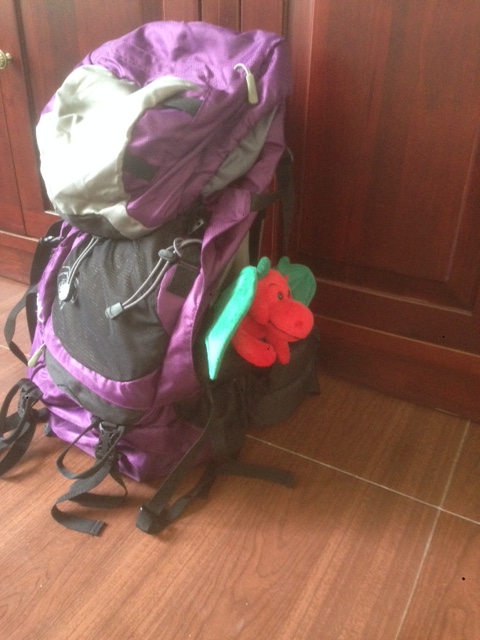
As the time here is coming to an end, and as there will be many things just before leaving – a conference on education, a skype-participation in an event that is linked to the G20-summit, a ‘larger birthday party’ – not only Smith in Beijing [see also here], but also the Royal House in ChangSha – I started already grabbing things together, this way hoping to reduce end-of-time hectic. Part is the ‘selection’, the question: what to take with me, what to leave here, not least about the little presents and memorabiles …, little souvenirs, presents as the figurines Jenny nearly dedicated to me, from Antoine de Saint-Exupéry’s The Little Prince, Jiaying’s handwritten [or does one say hand-calligraphyied] poem: a copy of the ancient piece.


Well, looking at the translation I have[1], reading the last lines, I am wondering, I am wondering if it had been written for me, written for these days:

Younger than they, I have my hair all turned gray.

Life is but like a passing dream,

I’d drink to the moon which once saw them on the stream.

There is also a box with photos – Gerhard gave it to me as present, when we once met during the last years, on one occasion, when I had to visit Europe. Another poem, on the lid of the box, reading it I hesitate:

Tidying up

Here some letters, manuscripts,

mostly fragments, photographies –

but who can, after I left,

name the persons?

(Hans Bender)

Some other ‘souvenirs’ – immaterial, though very real as the seeming eternal replay of the Trials and Tribulations: memories, thoughts, fears, hopes, disappointments and appointments –  – a few answers and many questions …, the replay, lacking the reply …

and you can, after I left,

and you have to find the answers!!

=====

[1]

“The Charms of Niannu”

Su Shi

The great river eastward flows, with its waves are gone all those gallant heroes of bygone years.

West of the ancient fortress appears the Red Cliff.

Here General Zhou won his early fame when the Three Kingdoms were all aflame.

Jagged rocks tower in the air, swashing waves beat on the shore, rolling up a thousand heaps of snow.

To match the hills and the river so fair,

How many heroes brave of yore made a great show!

I fancy General Zhou at the height of his success, with a plume fan in hand,

In a silk hood, so brave and bright, laughing and jesting with his bride so fair,

While enemy ships were destroyed as planned like shadowy castles in the air.

Should their souls revisit this land, sentimental, his wife would laugh to say,

Younger than they, I have my hair all turned gray.

Life is but like a passing dream,

I’d drink to the moon which once saw them on the stream.

Academia Today — and also the rest of the world

Sometimes I get the impression that there all the outperforming which we are facing and which we are asked to join is best captured by Douglas Adams’ The Hitchhiker‘s Guide to the Galaxy. I recently found a nice version of the little story concerning the magic 42, translated here:

A well advanced extraterritorial culture strives to answer the ultimate question, namely the question concerned with the foundation of and reason behind ‘life, the universe and everything’. The supercomputer Deep Thought is built. After calculating for 7.5 million years Deep Thought comes up with the answer „42“.

Deep Thought replies to the baffled constructors that the question had not been sufficiently clear, and proposes to build an even large computer, able to find an appropriate question to which „42“ is the answer. it turns out that this larger computer is actually the planet earth.

Here the original:

Eine weit fortgeschrittene außerirdische Kultur sucht die Antwort auf die Frage aller Fragen, nämlich jene nach „life, the universe and everything“. Dazu baut sie den Supercomputer Deep Thought. Nach einer Rechenzeit von 7,5 Millionen Jahren erbringt Deep Thought die Antwort „42“.

Auf die Ratlosigkeit der Erbauer hin entgegnet Deep Thought, dass die Frage nicht präzise gestellt worden sei und schlägt vor, einen noch größeren Computer zu bauen, der fähig ist, die zur Antwort passende Frage zu finden. Dieser Computer wird gebaut und das Programm zur Suche der Frage auf die Antwort wird gestartet. Es stellt sich heraus, dass dieser noch größere Computer der Planet Erde ist.

In other words – more in the formulation of systems theory: we re producing an increasing number of empty spaces, in order to fill them with the same emptiness. And instead of really arriving at public spaces, we establish in two ways pseudo-and quasi-public places

  • by charismatisation of individuals and institutions, leading to the ‘obligation’ that being part of it is the main thing – one has to publish in THEIR vicinity, one has to GO TO the events WITH THEM, one has to know HERHIM … – name dropping as the other, i.e. personal droppings are considered to be and are made meaningless.
  • and then there is the perpetuation of this charismatic fields of hegemony: who did not read THAT, who had not been THERE, who did not know ALREADY … – All this is, of course not about the factual but the somewhat virtual. If WE write and say something, it becomes only meaningful if THEY stated it already , and if WE say something meaningful it remains an empty phrase as long as it is not quoted. – I am not talking about the gained meaning by spreading the word – that is a purely quantitative aspect and as true as it is that things we think without letting others know are equally meaningless as the most stupid things even of they are published ‘properly’. It is better to be a footnote that everybody can see than being a sapience crawling serpently in the stash. And who does not belong to this and that who-is-who-social-network, can prove a certain number of friends, fans, supporters, follower is nearly non-existent – the social-network-death, which can only be beaten by brain death.

But how much is really new and how much is really limited to the academic world?

Protestocatholicism …. or … Cathoprotestanism …

Teaching is over now – most of the exam papers corrected and time …, to look forward. Teaching always is caught in the tension: dealing with the ‘real realities‘ on then hand and with ‘clear’ theories and the supposed ‘objective, value-free’ analysis of the reality on the other hand – and in economics it is even worse than other disciplines: the ‘objective reality’ being the reality of rational individuals. If it would be only for my neighbours and colleagues: I know that humans are not rational actors. Some are not acting, some are solely actors, some are not rational – and the worst category are the irrationally acting actors …
Well, leaving this aside …, or actually no: taking it from here, there is always also the point that even the ‘rational systems’, as central banks, money, exchange values etc are never following the books – it is not because they have their own lives but more because text books create ‘an own life’: the life of a world as it should or could be, the life of a world that had been imagined by some as political programs etc.
Two issues, the one like to pure doctrine when it comes to banking and central banks: be they independent or not, they are usually considered to be public bodies, committed to the common wheal etc. Still, in one way or another, i.e. more or less explicit, these banks serve – in most if the cases – public AND private interests, usually without being specified.
However, sone specification can be seen in the generally agreed upon ‘holy trinity’: maximisation of employment, stabilisation of prices, moderating interest rates.
But ….. where is the challenge addressed that Dani Rodrik poses as irresolvable trilemma: we cannot have democracy AND sovereignty AND global integration.
In fact – this is indeed part of the story –  we see that over the recent years and even decades the overall goal of controlling inflation is positioned over the goal of maximising employment. Stating this, it is necessary to ask as well: why maximising employment if we are already producing large surpluses?
From there it is worthwhile to look at the second issue: the question of value, valuation and valorisation. It haunts me for a long time, always asking myself and perhaps even more so: talking about values, calling for living along the lines of the cardinal virtues …- beh, forgotten what the quarterly reviewer said?
“Capital is said … to fly turbulence and strife, and to be timid, which is very true; but this is very incompletely stating the question. Capital es- chews no profit, or very small profit, just as Nature was formerly said to abhor a vac- uum. With adequate profit, capital is very bold. A certain 10 per cent, will ensure its employment anywhere; 20 per cent, certain will produce eagerness; 50 per cent., posi- tive audacity; 100 per cent., will make it ready to trample on all human laws; 300 per cent., and there is not a crime at which it will scruple, nor a risk it will not run, even to the chance of its owner being hanged. If turbulence and strife will bring a profit, it will freely encourage both. Smuggling and the slave trade have amply proved all that is here stated” (T.J. Dunning, 1. c, [Trades’ Union and Strikes,] pp. 35-36; from: Marx, Karl, 1867: Capital; Volume I; in: Karl Marx/Frederick Engels. Collected Works; Volume 35; London: Lawrence & Wishart, 1996: 748, footnote 2)
Still, working currently in the ‘mainstream’ [or to be more precise: trying to swim against it], I am looking at questions of digitisation, all the new economic forms emerging in that context, linked to primarily in the issues about technical developments but more about relations of procession and the mode of production. Profitability plays a role and …, exactly the issues around value, valuation and valorisation. in the context of a paper I am still developing not least in connection with the preparation of the G20-discussions I am wondering of it is time to change perspectives in political economy. Famously Max Weber centre-staged an issue that was already issued – more en passant – by Marx: the question of the protestant ethics. Marx saw it, of course, as matter of the superstructure, without denying its importance whereas Weber saw the emergence of this ethics system as driving force.
My question is a different one at this stage: instead of counterpoising catholicism and protestantism, we may have tops of a merger, we may call it
Protestocatholicism …. or … Cathoprotestanism …
The reflection behind it? Well, quoting from the paper – work in progress –
Early capitalism was characterised by the fundamental ambition to follow the principle of exchange of equivalents – inequality existed at the point of departure but after ‘free individuals entered the economic sphere of exchange – they had been equals. The ten new capitalism stood against the feudal system that was based on violence. However, looking at the situation today, we see that the foundation is not simply and solely about the different points of departure. The economic process of the data economy is itself a violent relationship that has little to do with equivalence: it is the violence of withholding information, utilising the directional power of information, the enforcement of conditions, perfectioning of control etc.
A world which has lost much of the foundation in reality and where, indeed, values seem to be virtual, even if they are presented by concrete numbers as Peter Wahl pointed out already some time ago:
Even if every business transaction was protected by derivatives, the real economy-based proportion would still be less than 5%. Therefore, by far the largest portion is used for speculative trading. Buyers and sellers no longer have anything to do with each other. Dealers with not the slightest interest in wheat purchase large quantities of grain forwards in order to sell them profitably when the contract matures. Only a very small proportion of this business actually refers to material objects such as grain, gold or oil – the BIS assumes this proportion to be approximately 1%. The predominant proportion concerns financial products. There is practically no end to fantasy in developing derivatives: meanwhile, the system has achieved such a complexity that there are derivatives dealing with derivatives of derivatives.
Protestocatholicism …. or … Cathoprotestanism … – just another form of indulgence payments, from old violence to new violence.
And in any case, this violence is real.