… to the point …

Well, you may say I am burning in the Heraclitean Fire, carried away and not doing what the academic world-order asks me to do – moving on with the metaphor, one may add: this little bit of disobedience is like playing with fire, a dangerous not to say: life threatening game.

So to the point, reading Erwin Chargaff’s

Heraclitean Fire: Sketches from a Life Before Nature.

He refers on page 171 to another work by himself**, which he wrote earlier and where he contended:

The fashion of our times favors dogmas. Since a dogma is something that everybody is expected to accept, this has led to the incredible monotony of our journals. Very often it is sufficient for me to read the title of a paper in order to reconstruct its summary and even some of the graphs. Most of these papers are very competent; they use the same techniques and arrive at the same results. This is then called the confirmation of a scientific fact. Every few years the techniques change; and then everybody will use the new techniques and confirm a new set of facts. This is called the progress of science. Whatever originality there may be must be hidden in the crevices of an all-embracing conventional makeshift: a huge kitchen midden in which the successive layers of scientific habitation will be dated easily through the various apparatuses and devices and tricks, and even more through the several concepts and terms and slogans, that were fashionable at a given moment.

Chargaff’s book had been published in 1978, he was, as widely known, professor in biochemistry, he emigrated from fascist Germany … – and one may ask if it is purely by accident that with this background already

[a]s early as 1949, this eminent scientist described certain irregularities in the composition of DNA and formulated the concept of ‘complementarity’ – later referred to as ‘Chrgaff’s rule’ and still later as ‘base pairing’ – which was the most important single piece of evidence for the double-helical structure of DNA’ [from the book-cover blurb].

‘Back to the fire’ – what he states, looking at methods, can cum grains salis also said for today and social science: where ‘methodology’ chapters in theses too often present methods, not showing any awareness of the difference between method and methodology, where publications and universities and people are ranked on the basis of algorithms and where entities are cut into pieces, making us forget the following:

The insufficiency of all biological experimentation, when confronted with the vastness of life, is often considered to be redeemed by recourse to a firm methodology. But definite procedures presuppose highly limited objects; and the supremacy of “method” has led to what could be called by an excellent neo-German term the Kleinkariertheit (piddling pedantry) of much present-day biological research. The availability of a large number of established methods serves, in fact, in modern science often as a surrogate of thought. Many researchers now apply methods whose rationale they do not understand. [170]

*****

End of term, and of the academic year – students, sometimes inviting lecturers, celebrating; preparing for holidays, but also asking for references, preparing the next career moves.

I have to admit, I am am happy that some say they did not ‘invite me to their celebration’ but invited me ‘to celebrate with them’; and I also have to admit that it is an honour to be seen by some as 老师, as lǎoshī – a bit like the hojam as we use it at ODTU in Ankara.

An unwritten chapter for the

Diary from a Journey into another World: Diaries against nationalism, inspired by trying to overcome personal resentments

to be closed.

======

** Chargaff, E. 1965. On Some of the Biological Consequences of Base-pairing in the Nucleic Acids. In: M.D. Anderson (Ed.), Developmentn.l and Metabolic Control Mechanisms and Neoplasw. Baltimore: Williams and Wilkins, p. 19.
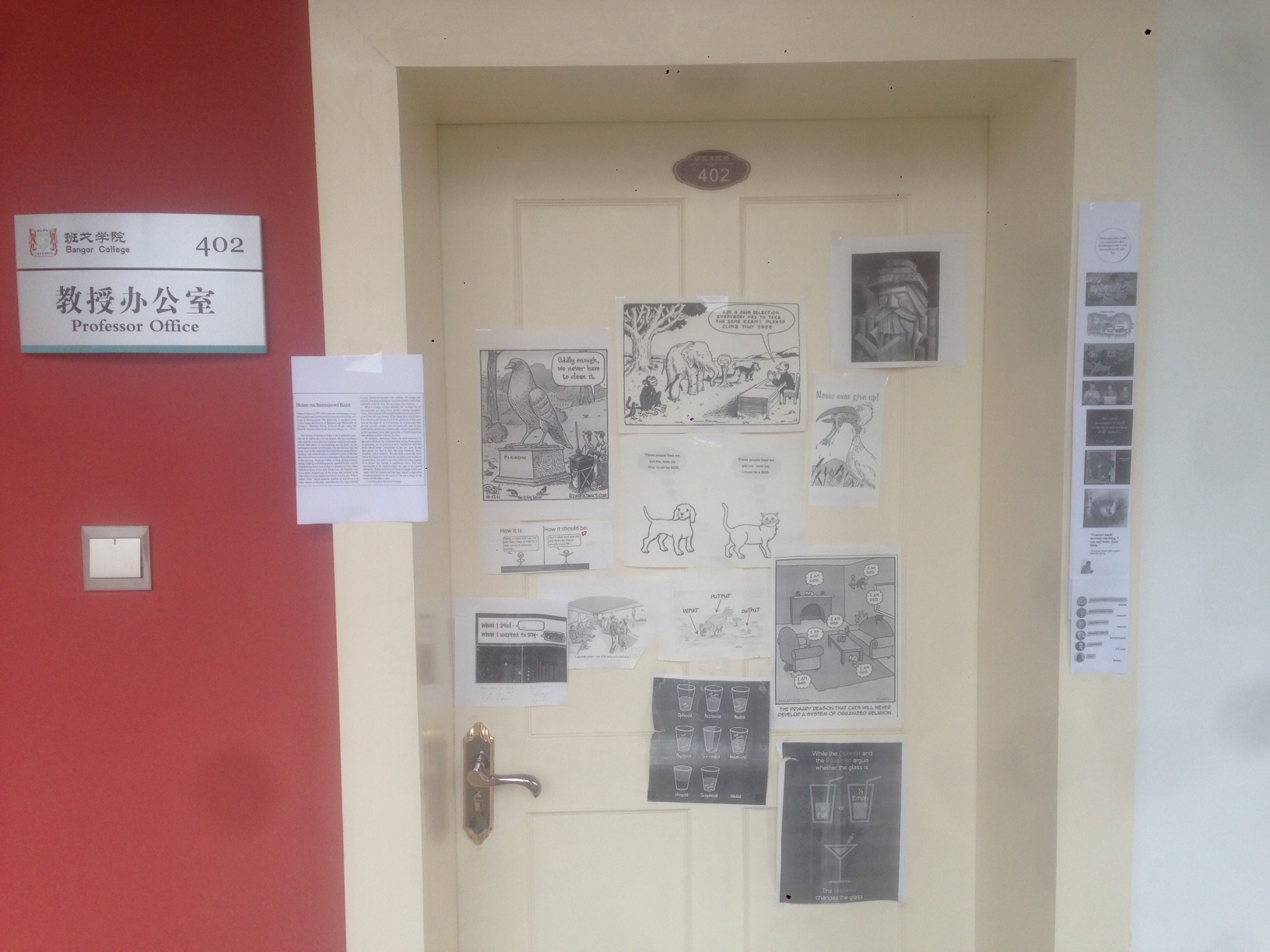



knowledge, education, digitalisation, information …

… or what is all this about?

Just stumbling upon the two more or less recent publications:

Peter   Herrmann,   Fan   Hong, and Remi Rzepka: Education in an International Setting. In Leonid E. Grinin, Ilya V. Ilyin, Peter Herrmann,   and   Andrey   V.   Korotayev   (eds.), Globalistics and Globalization Studies: Global Transformations and Global Future: 76-92. Volgograd: ‘Uchitel’ Publishing House, 2016

In this volume there is also a co-authored introduction:

Leonid Grinin, Ilya Ilyin, Peter Herrmann, and Andrey Korotayev: Introduction. How Global Can Be Global Future? In Leonid E. Grinin, Ilya V. Ilyin, Peter Herrmann,   and   Andrey   V.   Korotayev   (eds.), Globalistics and Globalization Studies: Global Transformations and Global Future. Volgograd: ‘Uchitel’ Publishing House, 2016: 5–9

Для дополнительной информации

….

Working now a bit more on this topic, also for the conference

Education and Globalization – Opportunities and Challenges

教育与全球化 – 机遇与挑战

organised by

  • Central South University of Forestry and Technology中南林业科技大学
  • Bangor University班戈大学
  • British Consulate-General in Guangzhou英国驻广州总领事馆

and scheduled for the 5th of July, 2017.

All that will then be middle of this month available on my other sites – here and here, also a bit more from another side … .

… first want to close this door behind me, with a bit more time then.


Academia Today — and also the rest of the world

Sometimes I get the impression that there all the outperforming which we are facing and which we are asked to join is best captured by Douglas Adams’ The Hitchhiker‘s Guide to the Galaxy. I recently found a nice version of the little story concerning the magic 42, translated here:

A well advanced extraterritorial culture strives to answer the ultimate question, namely the question concerned with the foundation of and reason behind ‘life, the universe and everything’. The supercomputer Deep Thought is built. After calculating for 7.5 million years Deep Thought comes up with the answer „42“.

Deep Thought replies to the baffled constructors that the question had not been sufficiently clear, and proposes to build an even large computer, able to find an appropriate question to which „42“ is the answer. it turns out that this larger computer is actually the planet earth.

Here the original:

Eine weit fortgeschrittene außerirdische Kultur sucht die Antwort auf die Frage aller Fragen, nämlich jene nach „life, the universe and everything“. Dazu baut sie den Supercomputer Deep Thought. Nach einer Rechenzeit von 7,5 Millionen Jahren erbringt Deep Thought die Antwort „42“.

Auf die Ratlosigkeit der Erbauer hin entgegnet Deep Thought, dass die Frage nicht präzise gestellt worden sei und schlägt vor, einen noch größeren Computer zu bauen, der fähig ist, die zur Antwort passende Frage zu finden. Dieser Computer wird gebaut und das Programm zur Suche der Frage auf die Antwort wird gestartet. Es stellt sich heraus, dass dieser noch größere Computer der Planet Erde ist.

In other words – more in the formulation of systems theory: we re producing an increasing number of empty spaces, in order to fill them with the same emptiness. And instead of really arriving at public spaces, we establish in two ways pseudo-and quasi-public places

  • by charismatisation of individuals and institutions, leading to the ‘obligation’ that being part of it is the main thing – one has to publish in THEIR vicinity, one has to GO TO the events WITH THEM, one has to know HERHIM … – name dropping as the other, i.e. personal droppings are considered to be and are made meaningless.
  • and then there is the perpetuation of this charismatic fields of hegemony: who did not read THAT, who had not been THERE, who did not know ALREADY … – All this is, of course not about the factual but the somewhat virtual. If WE write and say something, it becomes only meaningful if THEY stated it already , and if WE say something meaningful it remains an empty phrase as long as it is not quoted. – I am not talking about the gained meaning by spreading the word – that is a purely quantitative aspect and as true as it is that things we think without letting others know are equally meaningless as the most stupid things even of they are published ‘properly’. It is better to be a footnote that everybody can see than being a sapience crawling serpently in the stash. And who does not belong to this and that who-is-who-social-network, can prove a certain number of friends, fans, supporters, follower is nearly non-existent – the social-network-death, which can only be beaten by brain death.

But how much is really new and how much is really limited to the academic world?

Protestocatholicism …. or … Cathoprotestanism …

Teaching is over now – most of the exam papers corrected and time …, to look forward. Teaching always is caught in the tension: dealing with the ‘real realities‘ on then hand and with ‘clear’ theories and the supposed ‘objective, value-free’ analysis of the reality on the other hand – and in economics it is even worse than other disciplines: the ‘objective reality’ being the reality of rational individuals. If it would be only for my neighbours and colleagues: I know that humans are not rational actors. Some are not acting, some are solely actors, some are not rational – and the worst category are the irrationally acting actors …
Well, leaving this aside …, or actually no: taking it from here, there is always also the point that even the ‘rational systems’, as central banks, money, exchange values etc are never following the books – it is not because they have their own lives but more because text books create ‘an own life’: the life of a world as it should or could be, the life of a world that had been imagined by some as political programs etc.
Two issues, the one like to pure doctrine when it comes to banking and central banks: be they independent or not, they are usually considered to be public bodies, committed to the common wheal etc. Still, in one way or another, i.e. more or less explicit, these banks serve – in most if the cases – public AND private interests, usually without being specified.
However, sone specification can be seen in the generally agreed upon ‘holy trinity’: maximisation of employment, stabilisation of prices, moderating interest rates.
But ….. where is the challenge addressed that Dani Rodrik poses as irresolvable trilemma: we cannot have democracy AND sovereignty AND global integration.
In fact – this is indeed part of the story –  we see that over the recent years and even decades the overall goal of controlling inflation is positioned over the goal of maximising employment. Stating this, it is necessary to ask as well: why maximising employment if we are already producing large surpluses?
From there it is worthwhile to look at the second issue: the question of value, valuation and valorisation. It haunts me for a long time, always asking myself and perhaps even more so: talking about values, calling for living along the lines of the cardinal virtues …- beh, forgotten what the quarterly reviewer said?
“Capital is said … to fly turbulence and strife, and to be timid, which is very true; but this is very incompletely stating the question. Capital es- chews no profit, or very small profit, just as Nature was formerly said to abhor a vac- uum. With adequate profit, capital is very bold. A certain 10 per cent, will ensure its employment anywhere; 20 per cent, certain will produce eagerness; 50 per cent., posi- tive audacity; 100 per cent., will make it ready to trample on all human laws; 300 per cent., and there is not a crime at which it will scruple, nor a risk it will not run, even to the chance of its owner being hanged. If turbulence and strife will bring a profit, it will freely encourage both. Smuggling and the slave trade have amply proved all that is here stated” (T.J. Dunning, 1. c, [Trades’ Union and Strikes,] pp. 35-36; from: Marx, Karl, 1867: Capital; Volume I; in: Karl Marx/Frederick Engels. Collected Works; Volume 35; London: Lawrence & Wishart, 1996: 748, footnote 2)
Still, working currently in the ‘mainstream’ [or to be more precise: trying to swim against it], I am looking at questions of digitisation, all the new economic forms emerging in that context, linked to primarily in the issues about technical developments but more about relations of procession and the mode of production. Profitability plays a role and …, exactly the issues around value, valuation and valorisation. in the context of a paper I am still developing not least in connection with the preparation of the G20-discussions I am wondering of it is time to change perspectives in political economy. Famously Max Weber centre-staged an issue that was already issued – more en passant – by Marx: the question of the protestant ethics. Marx saw it, of course, as matter of the superstructure, without denying its importance whereas Weber saw the emergence of this ethics system as driving force.
My question is a different one at this stage: instead of counterpoising catholicism and protestantism, we may have tops of a merger, we may call it
Protestocatholicism …. or … Cathoprotestanism …
The reflection behind it? Well, quoting from the paper – work in progress –
Early capitalism was characterised by the fundamental ambition to follow the principle of exchange of equivalents – inequality existed at the point of departure but after ‘free individuals entered the economic sphere of exchange – they had been equals. The ten new capitalism stood against the feudal system that was based on violence. However, looking at the situation today, we see that the foundation is not simply and solely about the different points of departure. The economic process of the data economy is itself a violent relationship that has little to do with equivalence: it is the violence of withholding information, utilising the directional power of information, the enforcement of conditions, perfectioning of control etc.
A world which has lost much of the foundation in reality and where, indeed, values seem to be virtual, even if they are presented by concrete numbers as Peter Wahl pointed out already some time ago:
Even if every business transaction was protected by derivatives, the real economy-based proportion would still be less than 5%. Therefore, by far the largest portion is used for speculative trading. Buyers and sellers no longer have anything to do with each other. Dealers with not the slightest interest in wheat purchase large quantities of grain forwards in order to sell them profitably when the contract matures. Only a very small proportion of this business actually refers to material objects such as grain, gold or oil – the BIS assumes this proportion to be approximately 1%. The predominant proportion concerns financial products. There is practically no end to fantasy in developing derivatives: meanwhile, the system has achieved such a complexity that there are derivatives dealing with derivatives of derivatives.
Protestocatholicism …. or … Cathoprotestanism … – just another form of indulgence payments, from old violence to new violence.
And in any case, this violence is real.

teaching about realities?

Sometimes, when teaching about harsh realities, I admittedly ask myself if I am not exaggerating, making things looking worse than they are. Sometimes, when writing about economic and social facts, I am wondering if it is really about facts or about vested interests that are suggesting some biased interpretation. At least, when looking at the OECD-countries there is the assumption – or proposition –  that we are living in enlightened countries, developed on the basis and for the sake of wealth and well-being of their people, now even ‘thinking-tanking’ about an Inclusive Growth Opportunities Index 2017. And indeed, reading what the OECD member-states suggests as Our Mission suggests that we can put our minds to rest – rest assured that things are not perfect but at least moving towards perfection:

The mission of the Organisation for Economic Co-operation and Development (OECD) is to promote policies that will improve the economic and social well-being of people around the world.
The OECD provides a forum in which governments can work together to share experiences and seek solutions to common problems. We work with governments to understand what drives economic, social and environmental change. We measure productivity and global flows of trade and investment. We analyse and compare data to predict future trends. We set international standards on a wide range of things, from agriculture and tax to the safety of chemicals.
We also look at issues that directly affect everyone’s daily life, like how much people pay in taxes and social security, and how much leisure time they can take. We compare how different countries’ school systems are readying their young people for modern life, and how different countries’ pension systems will look after their citizens in old age.
Drawing on facts and real-life experience, we recommend policies designed to improve the quality of people’s lives. We work with business, through the Business and Industry Advisory Committee to the OECD (BIAC), and with labour, through the Trade Union Advisory Committee (TUAC). We have active contacts as well with other civil society organisations. The common thread of our work is a shared commitment to market economies backed by democratic institutions and focused on the wellbeing of all citizens. Along the way, we also set out to make life harder for the terrorists, tax dodgers, crooked businessmen and others whose actions undermine a fair and open society.

Well, often the small print is overlooked, when putting minds resting assured …, so often it is overlooked that people, humans are put to rest – or even more: that people are not even considered to be human beings. So we read for Australia, on of the OECD-countries:

In the past, Australia’s Indigenous communities were administered under fauna and flora laws, according to Reuters.

Indeed, teaching about realities is not only a matter of teaching about more than models – it is also about teaching something that can be very different.

… trapped …

Not avoiding the hazard actually means being trapped, condemned to the worst of all things: eternal life …. – is that what Hesse meant in his novel Steppenwolf?

“Gentlemen, there stands before you Harry Haller, accused and found guilty of the willful misuse of our Magic Theater. Haller has not alone insulted the majesty of art in that he confounded our beautiful picture gallery with so-called reality and stabbed to death the reflection of a girl with the reflection of a knife; he has in addition displayed the intention of using our theater as a mechanism of suicide and shown himself devoid of humor. Wherefore we condemn Haller to eternal life and we suspend for twelve hours his permit to enter our theater. The penalty also of being laughed out of court may not be remitted. Gentlemen, all together, one-two-three!”

On the word “three” all who were present broke into one simultaneous peal of laughter, a laughter in full chorus, a frightful laughter of the other world that is scarcely to be borne by the ears of men.

At least somewhat ‘strange’ or: occupying the occupied

At least somewhat ‘strange’ – or at least remarkable: the fact of being occupied by social spaces and occupying social spaces, namely cities.

It is several years ago that I visited Vienna the first time, and I returned a couple of times. The first time was somewhat unpleasant – unpleasant in terms of disliking the place as exhibiting imperial power. Indeed, having known Budapest already, I joined in the popular saying: Budapest is the ‘nicer Vienna’. The nicer Vienna because it was seen as the city where people, real people, would live. One could surely move towards issues like the ‘Hungarian soul’: a bit of permanent resistance and suffering going hand in hand – Leiden, dass dann führt zu Leidenschaft und Leidenschaft, die Leiden schafft.

Vienna … a space that presented itself to me as occupying, remaining unapproachable, remote … . Anyway, what did it matter? It had been another business trip amongst many. Not so on one later occasion. Actually it may be that I went there for business but in the meantime a friend of mine, Viennese whom I knew for many years from Brussels, lived in Vienna again and I remember that I stayed in his apartment. Another district, in short: Working class Vienna. Much could be said … In a nutshell it was the experience that allowed me to occupy space. Sure, local knowledge helped – the ‘local guide’ who showed me also those places next to the ‘imperial exhibits’: the people’s park, one or the other coffeehouse: and as much as Vienna is shaped by the gallant Cafe Centrale, Vienna is characterised by those Kaffeehäuser that are a bit dingy, humming along with the croaking sound of the violin, the waiters apparently competing in ignoring the guests, the Volksbuhne and those spaces that are occupied the peculiar charm of bohemian, intellectual, critical debates …

Anyway, I returned later on different occasions, stayed in different quarters, though mostly in district VII and VIII. The city gained space, I gave it space in my life even if only for the short times of my stays, always remaining visitor even barely coming as tourist – it had been about short business trips to the government, to conferences, or as the last time for teaching … and of course unforgettable: one year the visit with my students and my friend Joe.

The city gained space, I gave it space in my life …. – even visiting the imperial places as the museum of history of arts – a specifically lost ground which, by the way, hosts also a beautiful collection of Pieter Bruegel’s the older works –, the Albertina and its private collection, the state opera, the Burgtheater and yes, the Cafe Centrale, I visited as well the people’s park, the People’s opera, and the several small galleries and theaters, local stages, the Kaffeehäuser and restaurants … Mixing, merging … becoming a place where the different circles of debates, culture, ordinariness are emerging as a new normal, merging as living space, lived space for some time – not necessarily to be agreed with, but to a large part challenging, demanding to be … occupied again and again.

*****

And Budapest? – Yes, it is still, with its own eccentricities, the beloved place, also the place to meet a good friend …, and yes, there is the shadow of de-occupation: the city loosing its very specific charm which I learned to love, I tried to capture a little bit in the Diary from a Journey into another World: Diaries against nationalism, inspired by trying to overcome personal resentments.

Lectionis et Seminario – De sociali et politica in Europea

European Integration – a failed political and social union?

2017 S. BA-Course at the University of Vienna, Department of Political Science.

A series of fifteen sessions delivered at the University of Vienna, Department of Political Science. The series is looking at the process of European integration – a wide topic looked at under the guiding question if EUrope failed to deliver the ambitious perspective of establishing a political and social union. The answer is by the present author given in somewhat negative terms: we cannot really say that the EU-institutions failed to reach the target of a political and social union … – it is worse: such targets never existed. So, we have to be clear in our critique. This means not least that we are challenged – and may gain sufficient insight – to develop the EU to something meaningful – meaningful not for the people but a reflection by the people – men make their own history, but it is not only the nightmare of the past, it is also a matter of the conditions of the still present hegemons who employ gatekeepers of different kind – even if the princes today wear the clothes of normal people, it is very much about behind the veils of the most expensive princely garments.

The various sessions, of which the recordings [German language] are available, present the historical development, some key issues and relevant theories in a more or less narrative way.

challenges – attempts to move forward

05/05/17

Attributed to Johann Caspar Lavater, the words

Those who do not strive to move forward, are not taking themselves seriously

are at the House of Science in Bremen. It is the venue of yesterday’s symposium to honour Rudolf Hickel.

The symposium is aiming on addressing the

Herausforderungen für Politik und ökonomische Wissenschaft im 21. Jahrhundert/ Challenges for politics and scientific economic disciplines in the 21st century.

The event was organised by the University of Bremen, its Institute for Labour and Economy and the Arbeiterkammer Bremen.

In particular André Heinemann put a huge effort into compiling an interesting programme. – And actually he brought me back to Bremen, to the university, from which I obtained my doctorate. A long way if you want as André and myself actually met on occasion of the Shanghai Forum.


Importantly, the sessions and the overall event aimed on creating some space for really reflecting on some of the issues, allowing for more than presentations and Q&As only, and furthermore crossing borders. This did not (only) mean to look at wider issues of political economy but also emphasising the need of developing questions. The evening before we had been actually sitting together, mocking about parts of the current mainstream:

It is not really so important to have a question. Relevant is having data – and then you can define a question from calculating the data in some way that allows you to arrive at some interesting result.

Of course, some answers had been given during the event; and many questions had been raised. For my part, I was continuing [here and here frequently updated information the work] to ventilate the issue of precarity, in this case in close connection with the challenges posed by ‘Industry 4.0’. Soon an update will follow – linking to a text with some background considerations on the topic, titled

Beklagen von Prekarität oder Forderung nach neuen Sicherheiten/Sicherungsstrukturen – Herausforderungen durch Industrie 4.0

the audio recording of the presentation of during the symposium is available and another, more extensive presentation, to be given in early next week in Changsha will follow.

First, back to my students in Vienna … – teaching European integration at times of increasingly disintegrating pressures an interesting topic.

responsibility – responsiveness: trying to avoid the wrong answer

Waiting for the results from Turkey …

… whatever the outcome will be

… daily bread, the worries about securing it … daily routines of getting it – while the ‘big events’ are overshadowing every step, not necessarily all the time present, and still often enough hammering into the brain, shouting over the routines and the daily bread and the worries about securing it … – hammering louder than the footsteps of any individual on the asphalt; different things going through my mind, also my CV came up a short while ago – together with the hammering of the boot-bearing thoughts …

I was wondering if we are now moving back to the stage of considering to delete part of it, hide away what we did and what we have reason to be proud of …? Not that I am fearful, worrying in the strict sense = considering to delete, while being afraid of being deleted. But the need to think about this as being possibly urgently advisable makes me feeling uncomfortable.

What and how can we worrying warriors and warring worriers teach young people, the future to stand up if we live under conditions that nature such ideas …?
Let us hope, not for me, surely a bit for ‘us’ who do not want to stand there as spectators but especially for those to which we committed out selves, for ‘those future social lifes’