skills and – or versus – knowledge?

A short passage from Hannah Arendt’s Human Condition, right at the beginning, shows the Poodel’s core …

If it should turn out to be true that knowledge (in the modern sense of know-how) and thought have parted company for good, then we would indeed become the helpless slaves, not so much of our machines but of our know-how, thoughtless creatures at the mercy of every gadget which is technically possible, no matter how murderous it is.

Well,

This was the poodle’s real core

Usually we read about the gadgets, being easily ready to blame them for everything but in actual fact it is not about machines, algorithm’s and the mathematisation of science as such. Indeed we are dealing with the alteration of substance by subordinating matters under alien standards, those of technology or of administrations

The death of the theorist and the emergence of data and algorithms in digital social research

What Hannah Arendt presents as us having

been forced to adopt a “language” of mathematical symbols which, though it was originally meant only as an abbreviation for spoken statements, now contains statements that in no way can be translated back into speech.

is exactly the inability to express ourselves, even more: the inability to be selves.

Indeed, there is no reason for Luddism. It is not about blaming instruments for what they are instrumentalised.

All this has a bit of the body snatchers – if you did not watch the film yet, try to get hold of it and watch it in the presented perspective.

The poodle’s real core – the translation of the phrase in different languages is exciting, allowing to play a bit:

the crux of the matter – fin mot de l’histoire – nocciolo della questione – madre del cordero

The cross we are bearing after committing the sin, confronting us with the end of everything, just reducing things on a nucleus that barely has space for much, and still, brought to explosion it reduces even this little, showing itself as mother of the lamb – and we know too well that the lamb had to be sacrificed.

Though we should not feel tempted to sacrifice the gadgets, we surely should get the brush ready to sweep away the ‘new thinkers’: those new priests that torture us by putting people into boxes and those new priests that ruin institutions by reducing them on administrative machines. It is one of the challenges to see that machines – be it in forms of boxes or administrators desks, are simply not able to engage in what would be needed: intellectual confrontation.

We may move from Arendt to Goethe’s Faust:

‘Tis written: “In the Beginning was the Word.”
Here am I balked: who, now can help afford?
The Word?—impossible so high to rate it;
And otherwise must I translate it.
If by the Spirit I am truly taught.
Then thus: “In the Beginning was the Thought
This first line let me weigh completely,
Lest my impatient pen proceed too fleetly.
Is it the Thought which works, creates, indeed?
“In the Beginning was the Power,” I read.
Yet, as I write, a warning is suggested,
That I the sense may not have fairly tested.
The Spirit aids me: now I see the light!
“In the Beginning was the Act,” I write.

If I must share my chamber with thee,
Poodle, stop that howling, prithee!
Cease to bark and bellow!
Such a noisy, disturbing fellow
I’ll no longer suffer near me.
One of us, dost hear me!
Must leave, I fear me.
No longer guest-right I bestow;
The door is open, art free to go.
But what do I see in the creature?
Is that in the course of nature?
Is’t actual fact? or Fancy’s shows?
How long and broad my poodle grows!
He rises mightily:
A canine form that cannot be!
What a spectre I’ve harbored thus!
 

Alternative Economic Policy Today


In the presence of the two award winners:

the award ceremony is scheduled for the 6th of December at 18:00. The event will take place at the Rosa-Luxemburg-Stiftung [Salon], Franz-Mehring-Platz 1, 10243 Berlin.

The Scientific Advisory Board of Attac Deutschland, Attac, the Working Group on Alternative Economic Policy, the EuroMemo Group and the Rosa Luxemburg Foundation award the Jörg Huffschmid Prize 2017 in memory of Jörg Huffschmid’s scientific work and socio-political commitment.

This prize is awarded every two years since 2011.

Schedule of the event:

Welcoming address by Prof. Dr. Rainer Rilling, Member of the Executive Board of the Rosa-Luxemburg-Foundation

Introduction by Prof. Dr. Peter Herrmann, Max Planck Institute for Social Law and Social Policy, Munich

‘A different and better way of running the European economy! Alternative Economic Policy Today’ lecture by Dr. Axel Troost, Working Group Alternative Economic Policy e. V.

Speech by Dr. Silke Ötsch, Innsbruck; Member of the Scientific Advisory Board Attac Germany

Laudatory speech by Prof. Dr. Thomas Sauer, Ernst-Abbe-Hochschule Jena; Member of the Scientific Advisory Board Attac Germany

Replies by the winners

Verleihung des Jörg-Huffschmid-Preises 2017

In Anwesenheit der beiden Preisträger: Dr. rer. pol. Ulaş Şener für seine Arbeit «Die relative Autonomie der Zentralbank – Eine politökonomische Analyse der türkischen Geldpolitik nach 2001» und Etienne Schneider für seine Arbeit «Raus aus dem Euro – rein in die Abhängigkeit? Monetäre Dependenz und außenwirtschaftliche Restriktionen alternativer Wirtschaftspolitik unter den Bedingungen der Eurozone und des Weltmarktes»

Der Wissenschaftliche Beirat von Attac Deutschland, Attac, die Arbeitsgruppe Alternative Wirtschaftspolitik, die EuroMemo Gruppe und die Rosa-Luxemburg-Stiftung vergeben im Gedenken an das wissenschaftliche Werk und das gesellschaftspolitische Engagement von Jörg Huffschmid den Jörg-Huffschmid-Preis 2017.

Zur Bewerbung um die mit 2.000 Euro dotierte Auszeichnung, die seit 2011 alle zwei Jahre verliehen wird, konnten für 2017 Studienabschlussarbeiten (Magister-, Master- und Diplomarbeiten) sowie Dissertationen eingereicht werden, die thematisch im Bereich der politischen Ökonomie der Finanzmärkte angesiedelt sind.

Ablauf:

Begrüßung durch Prof. Dr. Rainer Rilling, Vorstandsmitglied der Rosa-Luxemburg-Stiftung

Einführung durch Prof. Dr. Peter Herrmann, Max-Planck-Institut für Sozialrecht und Sozialpolitik, München

«Anders und besser wirtschaften in Europa! Alternative Wirtschaftspolitik heute.» Fachvortrag von Dr. Axel Troost, Arbeitsgruppe Alternative Wirtschaftspolitik e. V.

Laudatio von PD Dr. Silke Ötsch, Innsbruck; Mitglied des Wissenschaftlichen Beirates Attac Deutschland

Laudatio von Prof. Dr. Thomas Sauer, Ernst-Abbe-Hochschule Jena; Mitglied des Wissenschaftlichen Beirates Attac Deutschland

Antwort der Preisträger

Moderation: Peter Herrmann

one of the root causes of bad academics today

One of the root causes of the problems of academic work today is surely the lack of open, possibly confrontative communication. Instead of sitting alone in the offices, and ‘communicating’ by way of gathering information, we may learn from a kind of small print we find in the preface to Keynes’ General Theory of Employment, Interest and Money.

The writer of a book such as this, treading along unfamiliar paths, is extremely dependent on criticism and conversation if he is to avoid an undue proportion of mistakes. It is astonishing what foolish things one can temporarily believe if one thinks too long alone, particularly in economics (along with the other moral sciences), where it is often impossible to bring one’s ideas to a conclusive test either formal or experimental.

Well, there is so much in economics – even in unexpected veins – one could sometimes think economists are just ordinary human beings.

For Paul Boccara, although he will not be able to read it anymore

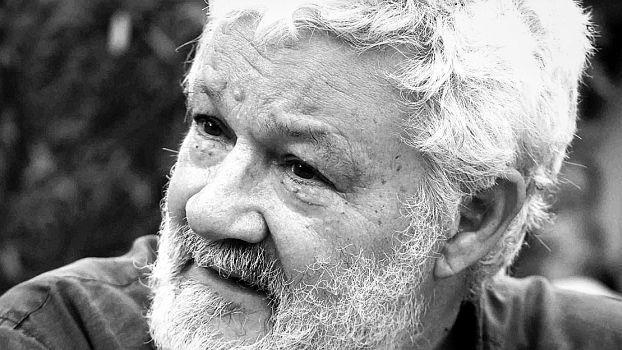
When we met the last time in person – if I remember correctly, it had been at the place du Colonel Fabien in Paris, Paul, arriving with Catherine, welcomed me by saying something like:

I am so glad that we can meet, I only just recovered …, can you imagine; I could not speak for about three days … – he his fatherly and still young laugh marked his face as it did so often. Can you imagine, me, not being able to speak a single word.
We all laughed …, nobody could really imagine … and after a short while we took up our work. And despite the ease of the discussion, it had been real work, requiring full attention.
And as much as he was talking he was also so well able to listen – to the large lines and the details of arguments. It may there was one exception to all this, or I should say: one condition: newness, commitment going hand in hand with ambition, the desperate endeavour to move things forward. It was about working for improvement – the work of understanding and interpreting and all that for the political change.
My first encounter with his work is many years back, reading about his ideas of state-monopolist capitalism – it was a long time before we met. And it was surely one of the works that inspired a new thinking for me: bringing economic and political thinking not only together, but doing so in the best tradition of developing a new integrated approach, understanding ‘building on tradition’ not least as the need to move on, developing things further in order to understand today’s reality and to elaborate concepts for the reality of the future – reform and revolution, it included for him also the revolution within the existing capitalist system.
At least three off his later works have to be mentioned, not least for the reason that we discussed often the related topics:
The book

And our cooperation – in detail and the presentations and debates in the large conference venue at the place du Colonel Fabien – was something that tightened a deep felt friendship.

Two volumes followed, exploring the
Théories sur les crises, la suraccumulation et la dévalorisation du capital
In this context we talked also about the various economic theories, the shift around the large waves and the different interpretation of the work of Kondratieff, also taking about the new technological challenges – danger and opportunities – and also the need to work towards an integrated approach that employed his thinking over the last years, feeding into the recent book, ambitiously analysing
Indeed, he ended this publication
with the words
Ce que je fais est follement prétentieux, et pourtant, même si on le fait mal, il faut le faire. C’est en le faisant mal qu’on le fera mieux un jour
What I do is insanely pretentious, and yet, even if you do it wrong, you have to do it. It’s by hurting him that we’ll ever do it better.
I remember the one day, already a few years ago – we walked somewhere in Paris, he passed and looked at me:
There are so many notes I made, there are so many ideas … . It is your turn soon to gather it, and to move things on.
Sunday the 26th of November his voice ceased for ever to speak, that day his ears stopped to listen – and I hope and I know there are enough who listened over the years and who will now take up what he cannot say anymore.
A tiny beginning can be already found in a small and very modest volume I edited in 2011, titled

Academia Now and Then

I am wondering if and in which way we can and have to speak of changes in the academic world.

Putting it into a question one could ask:

Can living in the academic world be compatible with working academically?

It has something religious – similar to the questions, leading to and accompanying the Reformation, criticizing the institutionalised church in order to rescue faith.

It has something ancient philosophic-economical, where we find the contrast of Oikonomia, roughly  use-value oriented and resource-respecting management of the household  and Chrematistike, roughly the exchange-value oriented money-making, money becoming as fetish a use-value.

If we are generously accepting that different sides are justified, instead of insisting on a romanticised ideal, there still remains the

cui prodest, cui bono?

To be precise, it is not just the question who benefits. Centre-stage we have to ask

Where do we find systemically and what are the leading motives?

Looking at the distribution of income within the sector of Higher Education is revealing. And understanding that this is not the only sector where power is abused is frightening. And that power is often abused not just for private benefits, but where dependents are guided into wrong directions is a disgrace …

And there are still people speaking about freedom of thought and speech? Well, we see, it is not just a matter of a finger …, it can also be about having a different approach or uncovering injustice or speaking about it. And then people hear they should think outside of the box …?

Well, there is something biblical in all this as we know from Genesis 26 ff. – still encouraging some to ask Why can’t we do what we like to do?

babies and bathing water

With this reference I ended a comment on the entry of Paul’s blog, where he looks at the CORE-project.

In a nutshell: a textbook that is slightly better as others, does not make it sufficiently fit for use.

As my experience of working with the text-book shows, some more radical change is needed. And blaming a faulty economic system, narrow-minded economists and trumpy-dumy politicians should not tempt us to kill the baby …

Why can’t we do what we like to do?

Why can’t we do what we like to do?
– this was the question a Chinese student asked me when I visited the country the last time and walked across the Campus before going to the conference. It had been one of these somewhat strange encounters: a student seeing a Westener, taking the opportunity to proudly exercise a bit of English. I am never sure what to think about it – it reminds me of what can be read in Bakewell’s ‘Existentialist café’:
Not being black, not being gay, not being in Switzerland, there is still sometimes ‘something special’ about being white and hetero and in China [similar applies in other countries, including the occasional introduction as ‘Herrmann the German’ after having lived there nearly twenty years, and an introduction that actually was meant to be very kind] – sure, there is some ambiguity about it, depending on the ‘other person’ [the one who looks, stares or dares to talk …], the own mood and …, ah, so many things, including a possible nice smile or a somewhat rebukingly-fearing look.Is all this what some people man when they are talking about ‘social skills’?
**********
A sentence in Marten Blix book on Digitalization, Immigration and the Welfare State [Edward Elgar, 2017] made me thinking about this in a wider context. On page 84 we can read:
Whether automation will hit an insuperable obstacle when it comes to to tackling tacit skills remains to be seen. Rather than being brick wall beyond which automation cannot venture, tacit knowledge might be reshaped or subject to circumvention and redefinition.
The highlighted part is as remarkable as easily overlooked: Skills, by [my??] definition have the tendency to be as set of rules, more or less easy to learn and also simple to algorithm-ise – the simplicity consists basically in something we may call ‘cutting off the edges, making the wedges’.
**********
Life and living is not just a technical rule – though in the context of digitisation and IT-development technical rules surely play a more pronounced, more visible role. Underlying is a social rule: the arrogance of a class that aims on shaping a world according to its own image …. Doesn’t this remind the person, well versed in the bible of Genesis 26 ff.? There we read:
 Then God said, “Let Us make man in Our image, according to Our likeness; and let them rule over the fish of the sea and over the birds of the sky and over the cattle and over all the earth, and over every creeping thing that creeps on the earth.” God created man in His own image, in the image of God He created him; male and female He created them. God blessed them; and God said to them, “Be fruitful and multiply, and fill the earth, and subdue it; and rule over the fish of the sea and over the birds of the sky and over every living thing that moves on the earth.” Then God said, “Behold, I have given you every plant yielding seed that is on the surface of all the earth, and every tree which has fruit yielding seed; it shall be food for you; and to every beast of the earth and to every bird of the sky and to every thing that moves on the earth which has life, I have given every green plant for food”; and it was so. God saw all that He had made, and behold, it was very good. And there was evening and there was morning, the sixth day.
Those in the dark, remain invisible, are expelled, allowing the untouchables to be amongst themselves:
This egalitarian style can clash with the Valley’s reality of extreme income polarization. ‘Many tech companies solved this problem by having the lowest-paid workers not actually be employees. They’re contracted out’, Schmidt explained. ‘We can treat them differently, because we don’t really hire them. The person who’s cleaning the bathroom is not exactly the same sort of person.’
(Freeland, Chrystia, 2012: Plutocrats: The Rise of the New Global Super Rich and the Fall of Everyone Else; New York: The Penguin Press)
Are we really talking about New Princedoms and refeudalisation?
**********
Coming back then to Anhui [and Changsha … – and even some international airports or some ‘melting pots’ of apparently complete and absolute indifference], perhaps one should think also more about the need of social knowledge as something that entails sovereign mastering of technical rules going hand in hand with empathy when encountering the other: fully understanding the other person [the one who looks or stares or dares to talk …], the own mood and …, ah, so many things, not least the respect of oneself as part of the situation: also with his/her own rights, defined by the interaction ….
And coming back to the question of the student:
why can’t we do what we like to do?
I suppose the answer is simple: because we are teaching and learning too many skills, and too little real knowledge. We are, even after the supposed enlightenment, and perhaps increasingly again ruled by gods, not by ourselves. And we do not even need a question as the answer is always the same, not allowing any critique anyway. And not even allowing a question … – boxing people ….

… boxing humans …

Well, moving in the academic realm is too often about boxing humans – yes, both sides going together: putting people into boxes and brutally beating them up. The following a letter I sent to relevant newspapers as comment on what is going on, how students [and lecturers] are mal-treated, disrespectful encounters when students are following their curiosity. It makes me increasingly sad, and I feel deeply ashamed …

******

Dear colleagues,

adding to the various discussions on ranking and formalistic approaches to studying, admission to universities and performance of third-level teaching and research, one point is easily overlooked – the following example is perhaps extreme, though not necessarily completely exceptional.

I worked for two years as professor of economics at Bangor College China, Changsha [BCC] before taking up my current position as research fellow at the Max-Planck Institute for Social Law and Social Policy in Munich, Germany. Still, one persisting bond to the previous job is concerned with writing references for some students. Some universities where students applied, accepted only references, requiring my mail-address from the previous job – but shouldn’t universities at this time and age accept that scholars are moving, following ambitions and calls in other positions? This means: they should also accept that mail addresses change, and one may even prefer to use a non-institutional address. Anyway, I mentioned the BCC-mail address – however, sending a mail to that address is answered by an auto-reply referring the sender to another address. This is the first point where the institution that was seeking the reference – the Graduate School, The Chinese University of Hong Kong – failed. They ignored the auto-reply and I did not know about the request they sent. Finally I was made aware of it [by the bright applying student], checked the dormant mail box and continued to the website for the submission of the reference. A form opened [after going through a more or less cumbersome procedure], asking for replies to multiple choice questions. I still think students are not made up of multiple choice elements, instead: they are real beings, humans with a multifaceted personality that cannot be squeezed into such forms – even when considering data-processing as an at-times appropriate tool. So, instead of ticking the boxes I preferred skipping them, attaching a recommendation letter instead. However, the system did not allow me to submit the letter unless I would first answer the multiple-choice questions which would feed into a one-dimensional profile. I complained, sent the letter as a mail attachment – and did not receive a reply by the said office of the Hong Kong University. At some stage, I agreed – honestly disgusted by the lack of qualification and respect towards students – ticked the boxes and attached the letter [again cumbersome, as one had to enter a code which was not clearly legible, not allowing to distinguish 0 and O]. I sent another letter of complaint to the Graduate School, The Chinese University of Hong Kong – which was again answered to the BCC address, and again they failed to resend the mail to the e-mail address mentioned in the auto-reply.

If these are the standards of entering higher education, one should not be surprised that at the other end, i.e. at the time of finishing studies, many people have difficulties. They feel their creativity being limited by the requirements of publishing, acquiring funding and the competition along lines of subordination under expectations instead of striving for innovation [see Maximilain Sippenauer: Doktor Bologna; Sueddeutsche Zeitung, 20.10.2017: 11]

Still, it is a bit surprising that all this is well known and still not much is changing. Surprising … ? Perhaps it is not really surprising if we consider that the income of top-administration posts increase while the income of lecturers does not follow accordingly [see for instance the article titled: Times Higher Education pay survey 2016 in The Times Higher Education; https://www.timeshighereducation.com/features/times-higher-education-pay-survey-2016%5D.

It seems that there is a long way towards ‘supporting the brightest by open systems’, overcoming the dominant administrative policy of ‘wedge the narrowest by furthering their smart submission’.

Sincerely

Peter Herrmann

Elite or Common Sense?

It is, sometimes, difficult to draw a line between elitism and common sense. Especially when the elite is just a pretension, a claim that has no legitimate foundation in reality but is established on the pillars of imagined rules of which the validity is only …, the claim of their legitimacy, presumed to be unquestionable. those are claims of conventional wisdom, of which J.K, Galbraith writes

Because familiarity is such an important test of acceptability, the acceptable ideas have great stability. They are highly predictable. It will be convenient to have a name for the ideas which are esteemed at any time for their acceptability, and it should be a term that emphasizes this predictability. I shall refer to these ideas henceforth as the conventional wisdom.

(Galbraith, J.K., 1958: The Affluent Society; London: Hamish Hamilton:6)

‘Religious rites’ as he calls them a page later.

And they could also be seen as rules or hegemonic setting – we believe in them because …, we believe in them as all believe in them. And they are used to misguide the future generations.

The paradox: the elite turns into an ‘un-elite’, not knowing what they are doing but just doing what they don’t know. some time ago I read in an interview with the conductor Philippe Herreweghe the following lines, making me thinking about a strange reversal of elite and common sense we face in today’s algorithm society.

Ich bin beispielsweise der Ansicht, dass Beethoven seine Musik für eine kleine, hochgradig künstlerisch veranlagte Elite komponierte – diese Zuhörerschaft war mit seinen Werken vertraut. Fast alle spielten selbst ein Instrument, häufig auch im kammermusikalischen Rahmen, oder gehörten sogar einem Orchester an, welches diese neue Musik interpretierte. Und genau aus diesem Grund konnten seine Zeitgenossen den etwas später so genannten »armen Beethoven, der von niemandem verstanden wurde«, durchaus sehr gut verstehen. Das Niveau seiner Zuhörerschaft war schlicht und einfach um ein Vielfaches höher, als wir es heutzutage erleben. Heute kann es vorkommen, dass manche Zuschauer begeistert ein Tennismatch verfolgen, ohne dabei die Spielregeln genau zu kennen …

 translated:

For example, I think that Beethoven composed his music for a small, highly artistic elite – this audience was familiar with his works. Almost all played an instrument, often in a chamber music setting, or even belonged to an orchestra, which interpreted this new music. And precisely for this reason, his contemporaries could quite well understand the so-called “poor Beethoven, which was later understood by nobody.” The level of his or her audience was simply a lot higher than we do today. Today it can happen that some spectators enthusiastically follow a Tennismatch without knowing the rules of the game …

(Ich habe mir meine Neugierde bewahrt. Philippe Herreweghe im Gespräch mit Louvres Langevoort/
I kept my curiosity. Philippe Herreweghe in conversation with Louvres Langevoort; in:
Kölner Philharmonie; Das Magazin. Nr. 3; Jul/Aug 2017: page 19; 18/08/2017)
Time to get back then to another common sense – that of asking what the rules are about, demanding to understand and not simply accepting acceptability.

where legal scholars and economist (should) sit at the same table

And of course, they should be joined by political scientists and politicians …

As usual, i am working on different projects, the one being the preparation of the workshop on The political economy of right wing populism, the other the question of digitisation and, of not anything else: continuing the work we started in February as part of the International scientific and practical seminar: “Occupation: Russian practice and international experience”: the book I am editing together with Vyacheslav Bobkov – we will discuss this further during the International Scientific-Practical Conference

“Instability Of Employment: Russian And International Contexts Of Changing The Legislation On Labour And Employment”

commencing tomorrow at the ФГБОУ ВПО “РЭУ им. Г.В. Плеханова” in Moscow

where I arrived a few minutes ago, coming from Anhui.

The following paragraph – the draft of a co-written contribution, that links to the different projects mentioned – may be worthwhile to be published here – taken out of its original context, valid in various contexts that characterise in my view much of the current situation in which economic greediness and acquisitiveness, political populism, and so-called hedonism alike are finding futile ground. So the para is the following:

… this is about the ‘major conflicts’ but also about the small print. One example may do suffice – in fact it is one that also shows that we are facing a thorough interpenetration, already going on for a long time, reaching seemingly unrecognised into the mentality: the common law tradition is increasingly eroding for a simple reason: “modern business” needs reliable frameworks for “mathematised rationalities” and “protestant ethics” – something that common law does not guarantee to the same extent as civil law (Romano-Germanic tradition). This is a particularly interesting example as it clearly shows the way in which accumulation regime and mode of regulation are entangled. This is expressed not only expressed in the fact of the legal regulations ‘for business’ as a system of systematic compilation and deductions (Leges Duodecim Tabularum or Duodecim Tabulae) but also in the regulatory system itself establishing the tradition of the “constitutional state” (Rechtsstaat).

Interestingly, this comes right now under pressure and is in different ways qualified, hollowing out the scope and degree of liability of the state,[1] the emphasis of individuality (including corporate social responsibility) and the accentuation of ‘governance’ as systematic deregulation of government. Such shifts can be found by way of “Global Governance”, characterised by different strands, entangled like the threats of a rope: (i) international and global organisations play increasingly a role and in tendency even openly contesting state power; (ii) not strictly “statutory” in character, there is a tendency of strong think tanks developing power positions that go far beyond the traditional role of opinion leaders: the World Economic Forum, The Bilderberg Conference and the Club de Madrid are examples, all characterised by the fact that leading representatives of big business, [former] members of governments and some mainstream ‘trendy’ academics are part of these undertakings; (iii) the traditional lines of division and distinction are frequently blurred and contested – here it is about socio-economic strata but also about boundaries of states, regions etc.; (iv) non-binding, often “think-tank-like” left-intellectual-liberal proposals; (v) critical and clientelist claims (iv) new ethics also being brought forward in organisations as the WEF, IMF, WB and Bilderberg. – It has to be said that all this does not replace objective societal structures and division; much of the effect can probably be seen as reflection of changing processes of politisation: the trend of a flattening can be seen on the one hand, establishing mechanisms of ‘presentationalism’ as dominant feature, supporting the emergence of a post-factual; on the other hand we find the push and pull effects when it comes to redefining politics as administrative issues, solely bound to factuality and rules.[2]

[1] This is still relevant even if we accept that even the Rechtsstaats-traditon strongly emphasised “The Limits of State Action” as the title of the work by Wilhelm von Humboldt suggested (see Humboldt, Wilhelm von, 1792: The Sphere and Duties of Government (The Limits of State Action); London: John Chapman, 1854)

[2] one has to acknowledge that there is ontologically and epistemologically a close kinship between post-truth and evidence based politics and policies, both dissecting complex truth.