vie veritable II

Il y a plus à la vie véritable – pas seulement ce qui ne peut être compté

La bêtise et la sagesse se rencontrent au même point quand il s’agit de l’attitude à prendre face aux malheurs qui frappent les hommes : les sages répriment le mal et le dominent, les autres l’ignorent. Ces derniers sont, en quelque sorte, en deçà des événements fâcheux, les autres au-delà, et après les avoir bien soupesés et appréciés, les avoir mesurés et jugés tels qu’ils sont, sautent par-dessus grâce à leur courage.

Vie veritable

I was actually looking for the reference to this quote:

“Our life is part folly, part wisdom. Whoever writes about it only reverently and according to the rules leaves out more than half of it.”

A sentence I found in a review of Bakewell’s Montaigne-review. and I failed. But I found huge pleasure in reading Montaigne then, and just a bit for you to look for.

For instance looking at the question of true life – pouvons-nous encore le trouver?

Numbers and what cannot be counted // nombres – et ce qui ne peut être compté

Quel que soit le moment où votre vie s’achève, elle y est toute entière. La valeur de la vie ne réside pas dans la durée, mais dans ce qu’on en a fait. Tel a vécu longtemps qui a pour- tant peu vécu. Accordez-lui toute votre attention pendant qu’elle est en vous. Que vous ayez assez vécu dépend de votre volonté, pas du nombre de vos années. Pensiez-vous ne jamais arriver là où vous alliez sans cesse ? Il n’est pas de chemin qui n’ait d’issue. Et si la compagnie peut vous aider, le monde ne va-t-il pas du même train que vous ?

Montaigne: Essais. Livre Premiere: 116

The Middlemen

It seems to be a somewhat weird way: people have to make a fuss out of everything, ideologise the smallest act and thus apparently make even the non-market, non-political, non-whatever act a somewhat utilitarian one: give it a ‘defined purpose’, the definition being aim and instrument at the same time giving it meaning in relation to others, as – thus it is implicit – the existence and all these acts do not have meaning in themselves, it seems not have any meaning that can be derived from its inherent relationality.

So – what I did not know, let alone think about – we have a World Vegetarian Day, actually it is today, as every year on the first of October, and we have of course also, now also amongst leftist and progressivists, the reasoning behind being vegetarian: it reduces, thus they speak, the ecological footprint, is even an opening for an alternative economy [or eve mode of production] and even the beginning of a new era, allowing us to be not simply humans but finally being also humane.

I a hesitating, not agreeing with all this fuss: sure, much of it may and will be true, simple given facts. But well, I am human, I guess humane, vegetarian – but I simply, without any Cartesian claim that ideologise it, calling out the world-revolution based in the fact that I think about it, rationalise every little f…, or a or z.

But there something nice – and thought-provoking – when it comes to C, D and P, expressed by Winston Churchill.

Christopher Soames, Churchill’s future son-in-law, remembered] Churchill showing him around Chartwell Farm [around 1946]. When they came to the piggery Churchill scratched one of the pigs and said: I am fond of pigs. Dogs look up to us. Cats look down on us. Pigs treat us as equals.[1]

So. where do we find humans then, not looking up, not looking down …  – the middle offering apparently for us, and for pigs, some space.

*******


[1]                   Christopher Soames, speech at the Reform Club given on 1981-04-28, reported in Martin S. Gilbert, Winston S. Churchill. Volume Eight: Never Despair: 1945–1965. p. 304


Feet of Clay

This morning, while walking as I usually do, I have been accompanied by Fontane’s ‘A Summer in London’, the audio-book-version, to my knowledge unfortunately not translated.

In the chapter

Very, le Pays und die »Tönernen Füße« Englands

it says:

At all times, trade made large, but also small: large towards the others, but small in the heart. It buys courage; courage is not its inherent nature – and this is the danger. … Trade has never higher ambitions than its own being and its ultimate condition is – calmness. Hoping for profit and the City of London joins any dynasty.[1]

This morning I arrive in the office, going through the news, one of the headlines:

Dove Slammed for Racist Ad Featuring Black Woman Turning White

Trade wars and slavery …, of course they have new faces …

….

Well, to be added: The Britain Fontane was talking about, exits Europe … one may ask, of course, if Europe didn’t already exit itself.

*******

[1]            Der Handel hat zu allen Zeiten groß gemacht, aber auch klein: groß nach außen hin, aber klein im Herzen. Er kauft den Mut; er hat ihn nicht selbst – und hier liegt die Gefahr. … Der Handel hat nie größte Zwecke als sich selbst, und seine erste Bedingnis ist – die Ruhe. Ein Gewinn in Aussicht gestellt und die City von London geht mit jeder Dynastie.

The need to search for what we cannot know

Wittgenstein once wrote:

For that would appear to presuppose that we were excluding certain possibilities, and this cannot be the case, since it would require that logic should go beyond the limits of the world; for only in that way could it view those limits from the other side as well.

We cannot think what we cannot think; so what we cannot think we cannot say either.[1]


And later he concludes his tractatus with the words

6.54 My propositions serve as elucidations in the following way: anyone who understands me eventually recognizes them as nonsensical, when he has used them—as steps—to climb up beyond them. (He must, so to speak, throw away the ladder after he has climbed up it.)

He must transcend these propositions, and then he will see the world alright.

7 What we cannot speak about we must pass over in silence.[2]

And Bertrand Russell summarises in his Introduction that

What we cannot think we cannot think, therefore we also cannot say what we cannot think.[3]

This may leave us in a state of paralysis when it comes to the need of change; but it may also lead us to use the mistakes we make as some form of beauty: as challenge and opportunity to work on unknown paths – not simply as path we did not know before but going beyond this, at path we did not even imagine that they would exist. Paradoxically it means to start from what is really given, unveiled from abstract thoughts and political-economic frameworks, starting from real reality as fundamental truth, and develop things from there.

Talking about economics, as we did end of September in Athens on occasion of the annual Euromemo-conference, we may see this as special challenge to move further with what is today called heterodox economics. Some reflections, trying to radicalise approaches, made at the end of the conference can be found here.

********************

[1]            Wittgenstein, Ludwig, 1921: Tractatus Logico-Philosophicus; Translated by D. F. Pears and B. F. McGuinness With an introduction by Bertrand Russell; London/New York: Routledge, 1974: 68

[2]            ibid.: 89

[3]            Russell, Bertrand, 1922: Introduction; in: Ludwig Wittgenstein, 1921: Tractatus Logico-Philosophicus; Translated by D. F. Pears and B. F. McGuinness With an introduction by Bertrand Russell; London/New York: Routledge, 1974: XX

slow death – of individuals and societies


a long way … from the priests on the Acropolis [ἄκρον (akron, “highest point”) and πόλις (polis)] to the gardens which had been the roaming place of the philosophers to the reality of today’s Europe …- back at the desk after returning from Athens, where we organised at the Harokopio University in Athens, with support of the Nicos Poulantzas Institute the Euromemo-conference under the title

Can the EU still be saved? The implications of a multi-speed Europe


I remember the recent reading of Juergen Roth’s Radetzkymarsch from 1932. It seems to be clear that we can speak of a kind of congeniality when it comes to death of individuals, stubbornly caught by their ideas and societies going through some agony before the final step:

He lived long enough to know how silly it is to say the truth. He allowe people making this mistake and he believed less than the jesters who talked about him in the wide realm of anecdotes, that his world would persist. [1]

**********

He was old, and tired, and death already expected him, still life did not release him. Like a gruesome host it kept him at the table because he did not go through all the suffering that life had prepared for him.[2]

I leave it to the reader to find out why it returns right now to my mind ….: after having returned to Greece after the elections in Germany, after Macron launching his ‘Initiative for Europe. A sovereign, united, democratic Europe’ and while going on with the personal attempt to figure out how old and how European one has to be to understand the challenges and options that are showing up ahead; and how old and how European one has to be to misunderstand them. And how much it personally helps me not to know exactly how old I am, how EUropean …call it uprooting, or call it a bit of transcending the ‘conventional wisdom’ J.K. Galbraith wrote about in this book on the ‘Affluent Society’.

***************

[1]            Own translation; an English version of the book is available …, somewhere
Original: Er hatte lange genug gelebt, um zu wissen, daß es töricht ist, die Wahrheit zu sagen. Er gönnte den Leuten den Irrtum, und er glaubte weniger als die Witzbolde, die in seinem weiten Reich Anekdoten über ihn erzählten, an den Bestand seiner Welt.

[2]            Own translation; an English version of the book is available …, somewhere
Original: Alt war er und müde, und der Tod wartete schon auf ihn, aber das Leben ließ ihn noch nicht frei. Wie ein grausamer Gastgeber hielt es ihn am Tische fest, weil er noch nicht alles Bittere gekostet hatte, das für ihn bereitet war.


Who is Nobody?

Being now in the capital of Greece, a recent communication with a student comes to my mind again – it had been about her not having time to follow up on a mail I sent in connection with a reference letter I wrote for her because she was busy with urgent preparations of some exams. I frankly replied that I hate exams and reviews, receiving the reply

Nobody likes assessments …
Isn’t it amazing what nobody manages to do, how nobody develops power, being able to control us and the way we relate to each other.
There is surely a serious problem with personalising issues but at times it helps to give nobody a face – and that helps going beyond, instead of simply following rules.
It is well known from ancient times, that leaving decisions and power to nobody, just following rules defined by nobody, is fatal – as we read in Homer’s Odyssey in book nine:
So he declared. I poured him another fiery bowl –
three bowls I brimmed and three he drank to the last drop,
the fool, and then, when tile wine was swirling round his brain, I approached my host with a cordial. winning word:
‘So, you ask me the name I’m known by, Cyclops? I will tell you. But you must give me a guest-gift

as you’ve promised. Nobody-that’s my name. Nobody – so my mother and father call me, all my friends.’

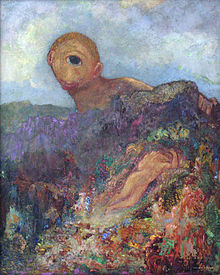
But he boomed back at me from his ruthless heart, ‘Nobody? I’ll eat Nobody last of all his friends-
I’ll eat the others first! That’s my gift to you!’ …

Later then, after Polyphemus talked later about his failure to his peers, they replied
‘If you’re alone: his friends boomed back at once,
‘and nobody’s trying to overpower you now-look,
it must be a plague sent here by mighty Zeus
and there’s no escape from that.
You’d better pray to your father. Lord Poseidon
Never leave anything to blinding rules, nobody always has a name – everybody who followed the recent politics against, about and  in this beautiful country in which I am now, knows the names of the relevant people and the deciding institutions.
And we may add a bit political philosophy, going some steps with Rawls, looking at the proceduralisation of the categorial imperative. Shouldn’t then all the nobodies be coerced to think of themselves as everybody? The danger that everybody is becoming nobody would surely be reversed then.

Looking back …

Being in Athens, seeing the monuments of history, so often claimed to be the foundation of Europe, is of course also a reason to look back at the more recent history, and think about a recently published short

Update on Greek Debt Crises

asking

Why Syriza Continues to Lose

Looking more thoroughly at history, and also accepting that rational behaviour, as supposedly underlying economic decisions, is nothing else than the rationality of power and maintaining it.

Frogs and Humans — who is the more intelligent species?

Frogs – possibly they are more intelligent than humans?

In a nutshell, frogs, if thrown into boiling water, will jump out, thus saving their life. On the other hand, being in water that is gradually heated, they will at some stage be boiled to death. The argument is that gradual changes lets them overlook the danger – too big to fail [overlooking the different], too small to hail [mentioning and acknowledging the relevance] — of far we may say: frogs are very much the same as human beings.
However, that story was – according to Wikipedia –  evidenced by 19th century experiments, while, as it is suggested there too – with some reference and supposed evidence as can be found here and here – 
according to contemporary biologists the premise is false: a frog that is gradually heated will jump out.
Now, there may be another explanation, of course: it is not that the original premise was wrong, but that frogs today learned from frogs who lived – and died – during the nineteenth century, changing their behaviour and becoming more alert. This would suggest, of course, that frogs are more intelligent than humans are, right?

Ho Paura

Or:

Weird-alternative analysis of the results of the German elections

Yes, it is five minutes before midnight …

… here in Germany had been elections [without me, I temporarily lost voting rights as I lived too long outside of the country – actually I think it is justified]. Anyway ‘I took part’, not least seeing the various posters – it least those by Aldi, highlighting that there is no Aldi-native

Consumo ergo sum – I wrote this slogan many, many years ago –a ctually in the last century. With such posters it reaches a new stage: the political citizen now even closer to the consumer … . Wolfgang Streeck also speaking since some time of the market citizen.

Well, I am admittedly more or less good in losing ground – leaving my thoughts to seemingly abstract levels …, but perhaps it is not so abstract at all: all the independence and populism …, isn’t that very much about this: having lost ground – transparency being closed behind the door, the only ground on which we can stand and move is consuming and individually struggling to survive = to manage life as the space for real living is limited.

There is a paradox I cannot solve for myself – it is in some way linked to the experience I made while being in China: the experience of living there, and also the experience of looking from there back: to Italy, Ireland etc. We struggle for life, to survive and apparently the only way and place of and for living is very much the wee space we have with other individuals. Initially nothing wrong with it, of course: we are individuals and being together with other individuals – camminare insieme, perhaps also in honest disputes with those near to us, is indeed also some kind of satisfaction of the social instincts – or less profane: the social being that is reflected upon by Aristotle and the many who followed him. But coming back to the sentence ‘Initially nothing wrong with it …’ suggests that there may be something wrong with it: isn’t it also potentially the futile ground for small seedbeds of hedonism and communitarian ideologies of seclusion, NIBY-ideas? Isn’t it in this way the ground on which populism finds its roots? If so, it is not so much abbot charismatics leaders but about the search for the private being political and the political being a matter in which every individual needs to have a say. The alienation of Aldi-nativlos, the alienation of a society that offers identity only by consumption shouting for a solution – offered by communitarian self-love and the loving those who are next to you. It is about the age-old recommendation as we know it from Mark, 12:30-31

30 And thou shalt love the Lord thy God with all thy heart, and with all thy soul, and with all thy mind, and with all thy strength;’ this is the first commandment.
31 And the second is like, namely this: ‘Thou shalt love thy neighbor as thyself.’ There is no other commandment greater than these.”

Admittedly there may be other interpretations of this, but at least it allows a populist version’: it is only the one who is above you and those who are immediately around you. This is of further relevance, of course, at times where identity-building via consumption faces the limits – increasing inequality and increasing poverty are much more than they seem to be at first glance: it is not ‘only’ about loosing control over life [basic socio-economic security], but even more the loss of control over living beyond the    immediate  neighbours: the [fear of the] loss of social inclusion, social cohesion and social empowerment, the loss of personal (human) security; social recognition; social responsiveness; personal (human) capacity as elaborated in Social Quality Thinking. It is the economy, but on the surface it appears to be the community.

…, and in this weird constellation of competitive, hedonist consumers we loose the control not just over our individual behaviour [well fortunately not everybody turns to Buddhism, Catholicism, Islam and its political-populist variations … though too many do]. But we have these difficulties of ‘emphatically socialising’: call it controlled, rational empathy if something like it can exist. Many [not all for sure] my of the students throughout the years – really young people or youngish as myself – wanted to escape this individualism. And seemingly they could not – that was my impression: they did not want this consumerism, this ‘success’, this ‘ranked education’ – they were modest, curious, open but always faced those walls of our times. One of the walls: not being taken serious, pushed into the world of ranked competition …, and even young lecturers, just having entered that world, still verbally remembering their lovings from ten years or so ago, pushing and pulling those who are young now, into that direction. I tried to get closer to some, tried to organise a jour fixe to get known to each other, went for class trips to other countries, yes admittedly to incite them a bit: YOU HAVE RIGHTS – YOU AS STUDENTS [mind the plural], MAKE THEM KNOWN, CHALLENGE US … very limited success. There are many small and large case-studies to it, I should have written the third volume of my bio … , following up on the Briefe zwischen Welten and the Diary from a Journey into another World

Anyway, there is a wider perspective on it I will later engage with this and you can read it in a bloge-entry under the title

where legal scholars and economist (should) sit at the same table

[Pianificato il: 25 Ott, 2017 @ 17:40] It is about the changes I see – and that brings me closer to my take on the results of the elections but also on the independence question in Catalonia and the like: really looking from outside, though knowing a bit from inside: having been active in political struggles and canvassing in Germany, being member of a party in one of the neighbouring countries [where we have had elections to the senate], also looking back at ‘my Irish years’, but also looking at the time I spent in Australia [there the question of aborigines and PNG played a major role], there is something that goes for me MUCH beyond the current issues: populism, independence, the helplessness of being ‘voll muttiviert’[1] as one of the celebratory banners of the CDU suggests…; the … can one even say dictatorial behaviour of Madrid, the mal-functionings in Catalonia … the aggressiveness and ignorance of Trumpism, shown another time and also shown as part-defeat  … all these are serious issues but when we look at this as an attack against democratic institutions, I am wondering: did they ever really exist? Do we really have anywhere REALLY democratic institutions? The problem I see more and more is: how can we bring together the Rechtstaat, equality and direct peoples’ saying and rule. This trinagle may be a bit of an extension of Rodrik’s ‘inescapable trilemma of the world economy’ …

And it is a triangular tension that we easily put aside, simplifying things, finding answers before we really think about what the questions are.

Yes, a better government for Germany – one that is not a minority government with a highly problematic turnout, independence for Catalonia and others. But how can we guarantee that such democracies – small and large – are respecting the rights of others AND how can we ensure that such democratic entities respect ‘equality within it’s the borders’. Looking at independent and democratic Germany speaks volumes, if not libraries.

– Well, but for me: more philosopher than politician, more economist than lawyer: the crucial questions are the following two: how to overcome inequality on the different levels, i.e. from the local to the global, and how can we guarantee that by tackling the core = production, not the distribution — that the latter does not work had been shown often enough: e.g. by the Bill and Melinda Gates Foundation and the Pope’s appeals of the camminare insieme. Walking together is fine – if it is on the same layer; if it is about sitting in one and the same boat, the one giving the orders and the others still pulling the oared, there is something wrong.

Well, whatever happens in the near future – in Catalonia, Bavaria, Germany, Europe – I am afraid here remains much to be done to reach at real change.

And this is also something I brought with me from China: name it deep respect for the students and distaste of this system that keeps us in its fetters …; it makes me a bit sad, jaundiced, hurt …. somewhat feeling ashamed and afraid: with so many moves, the tiny moves against accepting these fetters and the fear of just forcing fetters on others, not being able to fully respect and support the students’ modesty, curiosity, openness … All the walls that surround them, while being forced to walk like cattle to the trough of competitive success may be for a tiny number pointers on the way success, for many it may well be the harness of the live that makes real living difficult and for another and increasingly large number it may well be wall they duplicate as wall against a fortress Europe, closure towards Mexico and the like …

Well, much could be added – also about ‘The enjoyable lightness of being’ that we can still find – a phrase linking to the title of a book, a Chinese friend made me aware of: Kundera’s ‘Unbearable Lightness of Being’ – an amazing book we still did not digest. A book that still employs our mind. Actually reading it, and talking about it brought many things back to me: all the stuff that moved me and my generation so many years ago: existentialism, Marxism, communism, anarchism – there was for me much of that ‘in the air’ during the more than two years; and the air here, being back in Europe now, is soaked by it too.

****************

[1]            A pun: merging Mutti Merkel and motivation.