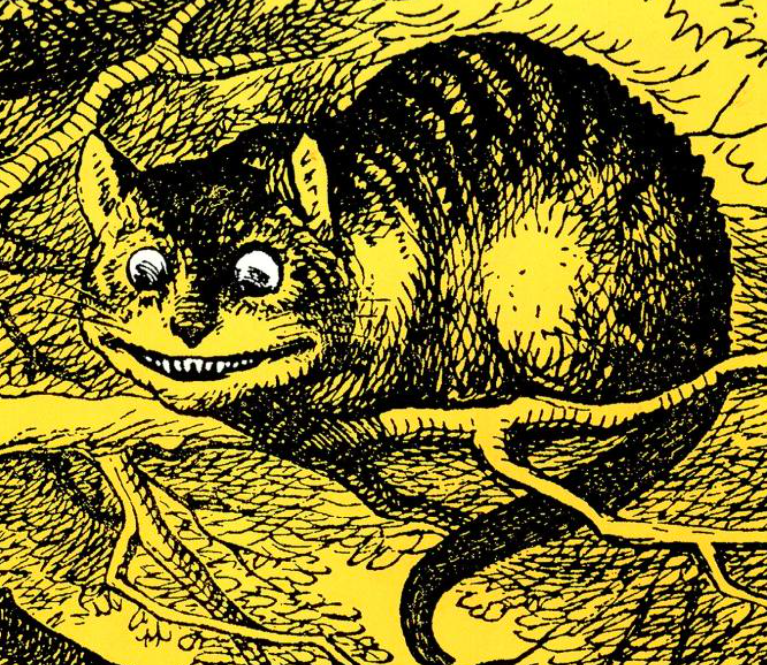
Principiis obst! Mind the beginning!

We talked a couple of times about Hannah Arendt – point of departure was actually something that seems to be very distant from her work: criteria that constitutional courts can refer to when taking decisions. And of course, taking the perspective from the legal doctrine is different from that taken by others. Funnily enough, legal doctrine translates into German as Rechtsdogmatik – suggesting something like dogmatic law, of even dogmatic thinkers on legal issues?

At some stage I mentioned some literature to my office mate – stuff I would think being important on this topic. Books, some more or less legalist, at least coming from sociology of law, philosophy of law, and perhaps stuff philosophising on justice – we both laughed when I dared to say – mind, to a jurist:
law is not interested in justice, hardly knows about it. what we share – legal scientists and economists – is a more or less blind interest in coherence. that may be rather simple: you put numbers and articles and even laws, we put numbers on goods and people – no matter on how bad the goods are, no matter how deep personalities are buried behind the figures.
 We laughed, knowing that it is reality and when it is lived reality it is harsh.
After such books, and after working a bit on our different tasks, I interrupted the silence:
Right, there is another one: Hannah Arendt’s Human Condition. it is probably the most comprehensive book she wrote, and from reading this, it is possible to understand the others …  to least the one on he Eichmann-trial and the banality of evil.
 A short chat, a couple of days later, we had been sitting for lunch – just across the street. Else a rather dull, grey day. I don’t know why she asked me about Hannah and Martin Heidegger … – I said what I knew, and part of it, actually part of the question had been already about Heidegger’s relationship to the fascists.
The romantic relationship between the two philosophers was known as a difficult one – and apparently the relationship between Heidegger and the fascists had not been so clear …
– can one say it was part of this banality of evil? We talked about it, the time, the difficulty of admitting that it is difficult. For me it is again and again emotionally a difficult matter, having known comrades, colleagues, friends who went through that hell – making impossible to accept that those had been ordinary people.
It could be him
I pointed on the table to the left
or her
my eyes moved to the right. I looked into her eyes:
It could be you — or do you know if it is not me at some stage?

It was loud, the snowfall was not too bad and I proposed to leave. I opened the brelli:
Let’s go to the LMU. I do not know exactly where it is …
– did you ever hear about the Geschwister Scholl?
She did not – and I told her the bit I knew, talked also about Anne Frank, my visit in the Anne Frank House, im Amsterdam. I remembered, at the end of the museum little notes, one asking
Why do we feel such a pity for this one child, knowing that there had been so many more being brutally slaughtered. – it is because we hardly can cope with this one, bearing the large number would crash us completely. 
After a while we found one person who could help us finding the way – and a little while later we find the little memorial – I had to swallow, as usual when being confronted with my past which is not my past and against which I had been fighting. I managed, we entered – we walked along the exhibits, I have had the impression getting slower and slower. And for my part I was wondering if it was right to put all this weight on her shoulders. Or if it was my duty? Or …just something like a waste of time?
 After we left, we stood a while at the bottom of the broad stairs …
Do you know, I fell sometimes so … riven, so unsure, insecure …
She talked about Korea, the occupation by the Japanese … – and I had to ask sincerely and honestly to forgive me for not knowing anything about her country. A bit later, when we walked back to the Institute, I remembered Albert Einstein – I used this reference to underline what I said before, and already while we have had lunch:
I cannot guarantee that I would be as brave as these people – I would like to be, but would I be as strong as they had been? Albert, with all his knowledge, he was one of the enablers – finally his contribution mad it possible that the USA developed the nuclear weapon. And he did so intentionally, ‘knowing’ that the bomb in the hands of the US would better than it would be in the hands of the fascist Germany. Later, when he knew better, namely that it had been used so senseless, the US playing with the muscles without any military need and humane consideration, he changed not just his mind but concentrated much of his effort on condemning .., well part of his own deeds. – Braveness …
 ******
The morning of the same day I submitted another recommendation letter for  student – the boxing exercise – the mail to the university is already prepared but I have to wait, sending it:
Earlier I just submitted a recommendation – and I dare to make a recommendation to your institution:
Be professional and serious, and do not breach confidentiality law – there is much improvement for you, actually I was near to recommend to the student not to go further with the application due to your highly unprofessional way of treating students.
Sincerely worrying about the quality of academic standards I remain
Prof. Dr. Peter Herrmann
 … 
The evening I went to a presentation at the institute:
„Jenseits der Praxis? Die aktuellen Vorschläge für eine Reform des Gemeinsamen Europäischen Asylsystems (GEAS) aus rechtlicher und praktischer Sicht“
 A very clear presentation, also highlighting some fundamental flaws – followed by a ‘soft debate’, leaving some important points out,
Principiis obsta. Sero medicina parata, cum mala per longas convaluere moras.
[Ovid]
Mind the beginning| Too late the remedy is prepared when the evil became stronger simply by time.
Ovid wrote it, thinking Remedia Amoris – what then about the self-loving academics …?
******
Today, I went for my usual walk  the first time that I really was getting aware of the name of the one street I passed so often: Ackermannstreet – the city of Munich still celebrating this loyal property of a man who had to go to court because of misappropriation,
This day I did not listen to my usual lectures and audio-plays, I remembered my last visit in Athens. After that visit I wrote:
a long way … from the priests on the Acropolis [ἄκρον (akron, “highest point”) and πόλις (polis)] to the gardens which had been the roaming place of the philosophers to the reality of today’s Europe.
It is a way full of the tensions: on the one hand the small academies of free thinking – free and ready for the hemlock; on the other hand the abduction, about which Maria Mies wrote in the one book on Europe I edited [Mies, Maria, 1999: Europe in the Global Economy or the Need to De-Colonize Europe; in: Peter Herrmann (Ed.): Challenges for a Global Welfare System: Commack, New York: Nova Science Publishers, Inc.: 153-171].
Studying the history – sine ira et studio – as Tacitus said.
Also making history without hate and zealousness? There is always the danger then of abduction: the legal doctrine, expressed in the constitutional state, the state under the rule of law is turned into the one-sided application of law, its consistency the utmost and only validation. The economic doctrine, being caught in the mirage of closed systems, the equations make equal what is different, and not able to see that not figures but power matters.
Life goes on – only not forgetting its complexity and ambiguity can make us free. [I could not find the link to the one, the eleventh song].

I am scared …

E0702 UHDE 9827

There is a light

she said

and they are together. It is not a sad painting!

This is from a most enjoyable visit with a friend at the New Pinakothek. It had been much later that evening, after we had been chatting, nicely, seriously, laughingly over a drink when she gave me this think-piece, and with it came a ‘provocation to live’ …

I am Scared, Therefore I am Brave!

Recently, my Italian translator, Giuseppe, wrote me an email. It was not a typical exchange, but quite an extraordinary personal query:

“Many see you as a very courageous person. They would like to imitate you at that, at least a little bit, but they feel they are not courageous, say, ‘by nature’ and they cannot learn courage. What do you think about that? Can people train themselves to be courageous?

I do not know how to answer this question in brief, and definitely not in the body of an email, not in just a few words. But the question is important, maybe essential, and so I decided to reply by writing this essay. ….

Digitalization, immigration and the welfare state – A Book Review

Just published:

BOOK REVIEW

Digitalization, immigration and the welfare state, by Mårten Blix, Cheltenham, UK & Northampton, MA, USA, Edward Elgar Publishing, 2017, 186 pp., ISBN 978 1 78643 294 0 (hardback)

One may be grateful, seeing a title as the one of the books for review, that finally it is about some- thing that can well be perceived as a crossroads for the future, defined by: digitization as one of the main new hopes, and equally a major variable of insecurity; migration is seen by many as a major threat; and the welfare state as known centre and channel, allowing taming rough sea. …

It is published in the

EUROPEAN JOURNAL OF SOCIAL WORK

and can be accessed – if you have access via:

https://doi.org/10.1080/13691457.2018.1434267

changing face

Patterns of revolution change …
– at some stage it had been the increase of the price of bread, causing the upheavals in France, or at least being a string contributor; now things changed
more changed: At some stage it had been about directing ager against the nobility, now it is against the fellow consumer … – apparently too small to mention details of history matter, indeed.

complements to bubble economies

Sure, some debate is needed on it; and on the conclusion and the needed conclusions have to be brought on the agenda. Not least the various strategies of exploitation that stand behind impoverishment.


But at least we see: more bubbles, a failing system of global policies complementing the bubble economies, and even more: making them possible.

fortaste

It may be that future referencing look like this, at least I felt obliged to add the underlined part while having written an essay for publication

Herrmann, ongoing [a]: Is it really about Industry 4.0.?; https://www.researchgate.net/project/Is-it-really-about-Industry-40; [b] Wandel des Wirtschaftens – Wandel des Rechts. Forschungsskizze zu Sozialrecht und Sozialpolitik; https://www.researchgate.net/project/Wandel-des-Wirtschaftens-Wandel-des-Rechts-Forschungsskizze-zu-Sozialrecht-und-Sozialpolitik; 29/12/17; some of the references had been added by researchgate and are completely irrelevant to the work and/or content would be fundamentally criticised and even rejected. Actually thus confirms parts of what had been stated: the complete lack of competence of the algorithm jugglers and the lack of real power of users as those references cannot be manually deleted)

The paragraph I referred to reads as follows:

This pattern applies – cum grano salis – to many areas, and of course, it means higher efficiency, thus lower cost, the possibility of establishing user-friendly and comfortable use of services and purchase of goods, in selected cases even giving the customer/service user some space for interaction and increased influence, opening roads towards part-individualised services/goods. All this going hand in hand with decreasing prices. However, there is a price to be paid, and there are two different charges levied. The one is a – possibly twofold – pressure on working conditions; twofold means that pressure is increased on those who are directly involved as for instance UBER-drivers, foodora-deliverers but also hotels [individual or chains] that are engaging with booking.com. The other bill has to be paid by people and strata who are only peripherally concerned – we may even think about the click-workers on click-farms, boosting the image of their customers by making virtual reality to faked realities. The other reason is that the increased freedom and power of the customer/user is in actual fact more illusionary than anything else: one crucial point is that even the attempt to make use of the options requires a pre-empt formulations, making thus sure that ‘the system’ is able to process the data. In other words, increased variety is more qualitative than quantitative.

Adding a bit of the background: I am not extensively working with my researchgate-site, and the same applies to academia.edu which actually had been established a long time by my university in Budapest. Recently I saw by accident references to documents and texts as reference which had not been added by me, some of them I didn’t even know. I contacted the ResearchGate Community Support, complaining. I even received an answer whited not always been the case:

Thanks for contacting us. You are the only collaborator listed, so you are the only person who can add research items to this project.
If you are referring to the references (34), these are automatically added using the publications that you have added to your project. To remove the references, you need to remove the publication that you added as an update.

So, the first thing that can be said: they a liars – obviously they are also collaborators, to be more precise, a system that is not thought through is collaborating. On the point that this system is not thought through, the following my be said, quoting from my answer:

Thanks …, from the perspective of an academic researcher this is not reflecting how things should work. In the extreme – as known from an English case, doing research on fascism/right wing policy it ended up in the most contested position appearing as most outstanding work in this field of research. – It was not a researchgate-related case but shows that your management should revisit policies that are going into that direction.

Just showing up is thus sufficient, substance, positions of researchers are erased from the agenda. and still it has something of the Berufsverbote we had been fighting – be it under terms of Berufsverbote, McCarthyism, censorship or anything the like. All this is worrying enough.

There is still another point that deserves mention. Those days with the little encounter with the ‘community’ I wrote a mail to a friend in China:

I made yesterday a somewhat funny experience: the midwife saying something, i.e. ‘ I am obliged to inform you …. – but from my own experience …’ – so after her midwife-business was done, I asked what this would actually mean: ‘I am obliged …’. Who and what would oblige her. The professional organisation, the medical professionals, some administration …. – she did not know. All was based on some statistical surveys, not a matter of experience. – Doesn’t acceptance begin with such small things? Doesn’t it begin as well with people like myself simply completely accepting the requirements … put up by national ministries, by other universities like Bangor, Warwick, LSE etc,, by ministries from other countries … ? As said, difficult and there is probably no ‘one answer’. Refusing on some occasions to comply, I actually had to pay thousands of Euro over the years leaving aside other payments like being ignored, censored, bullied or not being accepted for certain jobs based on ‘political’ reasons. Still, this is also something linked to the issue of knowledge versus skills. Skills … it is something for computers and robots … – but knowledge …
And real knowledge is …, well another experience from one of the recent days, when I went to the opera in Munich. I met one guy who works there – after ??? some five years at least, he still remembered me …, bit of chatting, also about the performance – during the pause he said: you will enjoy the third act — one must really be a very good side and dancer to be able to sing and dance wrongly. – Similar to what Picasso once said – something like: it took me three years to learn painting like the classical painters, and it took me many more years to learn painting like a child.

The world isn’t flat – though accepting that some people suggest it would be is sad to say the least, and seeing them making a career and having the power to algorithm-ise the careers of others and the way knowledge develops is appalling. The fact that major journals do it, should for researchgate and similar a motivation to do better instead reproducing the publishers ‘artificial bashfulness’, borrowing a term from from Hito Steyerl.

inner beauty – and the lack of it

The times of Jean-Paul Sartre and Simone de Beauvoir and the somewhat frivolous times at The Existentialist Café – the times of being,enjoying freedom and striving for more of it and of philosophising over and about Apricot Cocktails are gone [may be they are here 😉] – and sometimes a paradoxical development requires now political correctness that would be countering the understanding that we[re] meant those years. So, even talking about beauty becomes quickly a somewhat tricky topic – easy to drop a brick, or even to cause a tower collapsing. Sure, a problem for many, and for me too.

Be it as it is, when talking to a friend in China, occasionally the term inner beauty came up. I suppose it mainly refers to harmony and ‘contentedness’, making beauty a matter of living ones own life – a bit of La Belle et la Bête perhaps? And as much as this is an individual matter, or a matter to be resolved between beauty and beast, it is also very much a social construct, depending in multiple ways on the space and time we live in. And part of it is the paradoxical attempt to compensate for the lack of inner, of one’s ‘natural’ beauty by a whole range of artificial means – Clothes Make the Man [Gottfried Keller] and in some way we may add: makeup make the woman [ah yes, I know …, as said …]. It is at least interesting to see that – according to Angus Trumble [2004: A Brief History  of the Smile; NY: Basic Books: page 57]

[t]oward the beginning of the current recession, in 2001, American women spent more then $836 million on lipstick, 6% more than the year before. According to Leonard Lauder, chairman of Esteée Lauder, ‘When things get tough, women buy lipstick.’ Perhaps.

Probably this is a matter of striving for some artificial beauty, underlining natural expressions, compensating for ‘unnaturally’ enforced lack of beauty: socio-economic crisis causing too many worry lines and wrinkles – some redistribution from the bottom to the top being implied: at least trying to makeup the way to higher echelons ….

More interesting, I find, is the other case, namely the in fact explicit redistribution from rich artificiality, aiming on making natural beauty possible –

first comes a full stomach, then ethics [Brecht],

and

first comes a full stomach, then inner beauty can unfold again
[Herrmann, nothing wrong with occasionally forgetting modesty I supose]

So, how to make sure that people can live up to their inner beauty? – again from the book mentioned, here page 61,

by the eighteenth century the French consumed approximately two million pots of rouge each year, of wich a certain proportion was applied to lips as well as cheeks. The reason we can be sure of the figure is that an attempt was made to impose a tax on each pot at a rate of 25 sols, in this case to finance pensions for the widow of poor army officers. Comparable amounts of rose and patchouli scent are consumed by women of rank.

[I did the highlighting; and in this case I do not give out, reading that the money was used to support  widows of army officers – the normal thing: social support first for military servants, then state officials and finally, if at all, for ‘ordinary people’ – looking at cutbacks, we find the reverse order … – and there I give out.

Yes, economy and economics is lurking around every corner, and sometimes it is easier to forget all about it, simply enjoying the inner beauties that are around…

Talking … – but about what?

It is apparently not just a phenomenon of our present time … – pretending to know, acting accordingly – and not acknowledging the need to know [about] the fundamental rules

Spencer’s own books were widely read, or at least widely discussed, in the closing decades of the nineteenth century and the opening years of the present one.

(John Kenneth Galbraith, 1958: The Affluent Society; London, Hamish Hamilton: 45)

– the difference between reading and discussing, similar to the often provided answers, before the question is really formulated and understood. Doesn’t it remind of the tennis-matches Herreweghe mentioned?

problems of language

It happened frequently, and when using different languages, I got confused, when listening to a sentence or a word: I understood the words, but not the meaning. An exciting challenge at times, actually making it possible to develop a deeper understanding than we have when we simply refer to our knowledge without reflecting on what we really know – and mean.

Sometimes …

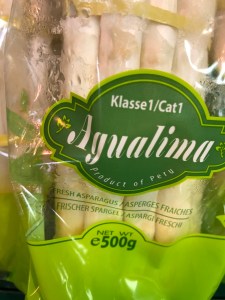
One of the early days in January we went shopping, some stuff for a nice meal. My friend picked up a package, not being from Europe she wanted to know what this is:


I looked at the label, and said:

This vegetable is called Oxymoron, a subspecies of asparagus. It comes from Peru to Bavaria and is supposedly fresh.

I guess, more in general, that little story is one about the small print of language and one dimension of the difficulties of people understanding each other. And one wonders if it tells us to take things from experience, talking to people and trust or if one should run around with all the relevant textbooks and reference manuals – here a beginners guide for EU-Fruit and vegetables: Marketing standards. Many seem to be far fetched, but it actually reminds me of universities. boxing students and not allowing to open them. Sure. all as well a matter of skills and knowledge.


Cages of Gods

The following from Montaigne’s essay may also make us think about academia and the life in what is called academic world:

It happens as with cages: the birds without despair to get in, and those within despair of getting out.
Book III, Ch. 5. Upon some Verses of Virgil
Arts and sciences are not cast in a mould, but are formed and perfected by degrees, by often handling and polishing, as bears leisurely lick their cubs into form.
Book II, Ch. 12. Apology for Raimond Sebond
Man is certainly stark mad; he cannot make a worm, and yet he will be making gods by dozens.
Book II, Ch. 12. Apology for Raimond Sebond
******
For the Image: