Moving On …

2019, now 2020
the year of the pig, now the year of the rat

the time of old years coming to an end and new years taking their commence is often and commonly the time of thinking back … – the year that just come to its end and the early years of our personal lives and the lives of societies, ach and all with thither own dreams of “once upon a time ….” – some of the dreams possibly became true – and probably more that had been disappointed – what else could be the reason behind the new-years-resolutions: he hope for change and at least the little one can do oneself.

*****

Recently a friend (acquaintance, colleague, somebody I occasionally meet and like to meet, just to chat with across so many borders that mark our completely different backgrounds and lives) … , well, already last year she had been a bit in despair “…. I hear a problem.” – “Tell me!” and she did: her mother was going to retire – 55 years old (as it is [going to change now] the retirement age here in China. So young if we are honest and in many cases marking such an obvious break, evidencing that employment is not only some time we spend in some place, doing something defined in a contract and getting remunerated according to the same contract); it is a complex social relationship, also – at least very often – defining our “lives beyond” (this evidencing the simplification that is entailed in the formula of “work-life-balance”). And when it ends … – well, presumably especially daughters taut come up with what she said : “I have a problem”. The parents now expecting … – well, what do they expect? That the children compensate for the social loss: permanent visits, invites “wouldn’t it be nice …”; overacting the grandchildren or even moving into the same house: making their own loss to the loss of the children, in turn loosing their children just in order to get another time lost (mind the subtle though difficult to understand formulation of this formulation of the multiplication of loss). All this actually a consequence of justifying the alienation by auch nonsense of speaking off work-life-balance, affirmation and celebration of that fact that the worker

feels at home when he is not working, and when he is working he does not feel at home.
(Marx, Karl, 1844: Economic and Philosophical Manuscripts of 1844; in: Karl Marx. Frederick Engels. Collected Works. Volume 3: Marx and Engels: 1843-44; London: Lawrence&Wishart, 1975; 229-346: here: 274)

Instead of work-life balance we should investigate more the question of individual and society in the spirit as Norbert quasi-implanted it into my thinking (Norbert had been surely grater influence than Niklas Luhmann although I had been occasionally classified as pupil of the latter, also with some justification).

Recently the said friend came back to this her problem, though she did not draw the link: My mother is getting more and more child-like …

*****

– for some time something popped up again and again seeks for a rest, wants to be resolved in one way or another – small things, and perhaps such blog is a way of resolving one issue, perhaps also by way of leading to a resolution …?

One or the other reader will remember what is still rather common here in Asia – I remember it from my childhood in the West: The Henkelmann, or as we usually said Düppe.

https://commons.wikimedia.org/wiki/File:Henkelm%C3%A4nner.jpg#/media/Datei:Henkelmänner.jpg 
https://upload.wikimedia.org/wikipedia/commons/thumb/4/4c/Henkelmänner.jpg/901px-Henkelmänner.jpg
Von Claus Ableiter – Eigenes Werk, CC BY-SA 3.0, https://commons.wikimedia.org/w/index.php?curid=5197464

A simple container made from metal. Where I had been grown up it had been used by the workers: meals, having been prepared at home, had been carried to work and often heated up in large water basins – the workers sitting together, munching their individually prepared meal together. Today and here they are still used – but supposedly for carrying food from restaurants home, to be consumed then there. But what seems to be here and there the dominant pattern is different: the container is replaced by plastic bags and paper cups and the consumption …, well it seems to happen – while the various traditions of the family meal, the we-meal, the luncheon and you name it still play an important role, another and perhaps increasing role plays the throw-in-meal on the way: consumed out of throw-away crockery, throwing away the breaks between events and activities by focusing on the title plastic bag that send up in a bin …  seen from today’s perspective the vocation of an archeologist in hundred, two-hundred or five-hundred years time appears to be promising: looking at what is left a long time after there eis not much left of us individually and exploring what we just throw away today, not only materially.

*****

Is it justified to say it is the ability of togetherness that depends on the ability of independence and vice versa? Does this not suggest, that such break as entering retirement-age brings up all disappointments, all the unrealised dreams we have heard at some time and that remained unfulfilled while growing into a society that did not allow us to make them becoming true in mature forms. I do nit remember the exact wording – Pablo Picasso said something like the following:

It to me three years to paint like an artist that is recognised by the academy – but it took me ages tor paint like a child again.

Highly recommended reading on this occasion the work by Norbert Elias, it least that part that is directly addressing the question of individual and society.

revealed

The influential dinner party, where the 13 lads served themselves the food, each of them brought along (at least there is no kitchen and there are no waiters mentioned) is reasonably well documented – amongst others Leonardo had been witnessing and painting (Ok, that one is a bit blurred) it. Recent research revealed another meeting, the veil had been at least lifted by a Chinese Human Rights Researcher at Central South University – it may become known in the future as DD, the December dinner. The editors of this blog could take a glimpse, especially at the host’s toast. Here it is presented in a somewhat dramatised form, titled :

Virtual Christmas Dinner

staring age and ages, times and eras.

Another great day ….

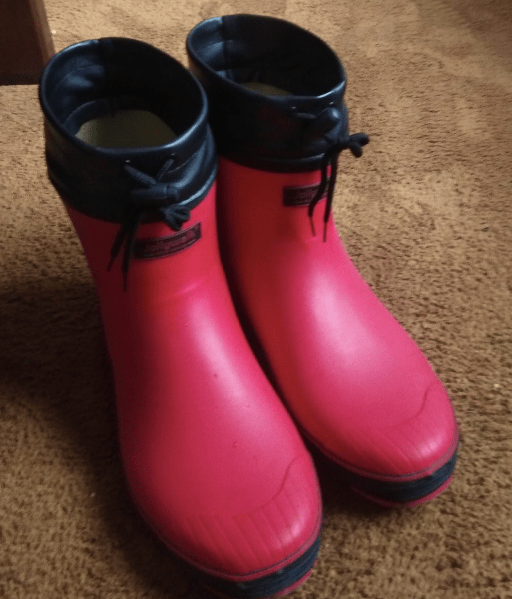
… and there I am hesitating. Sure, the terrible rain on the 25th had been not really bearable – even if I just received the day before my fancy new boots:

promising comfort, security …

… promising a deception? As enjoyable as it is to see the sun back, as delightful it is to look back on a long spell without rain, with pleasant weather in Changsha, looking back on a summer in Berlin with near to zero drops of rain and plenty of warmth, it comes with a bitter smack of fear and worries. Is that the global warming, possibly bringing draught and extinction at some foreseeable time in the future?

Perspectives change – also the perspective that is entailed in the variety of my work and jobs, being now law-prof. I asked this in different ways earlier, and put it now in a juridical nutshell:

Can we continue calling on individual rights, rights of the individuals witnessing that so many individuals, and on occasions being just one amongst them, have no other idea than buying a gun to amok? Sure, a person who finally storms a school to kill kids is being severely sentenced (if he is caught alive and did not kill himself – he/himself, never heard bit she/herself); but, while acknowledging the difference, I dare to ask if we should simply allow people driving their SUVs, companies dumping waste water into the rivers, ourselves sitting in a comfortable warm room, wearing a shirt instead of reducing the temperature a bit and wearing a warm jumper; seeing mass-SPAM-mail not just as matter of intruding into the private sphere but as terrorist attack on the environment (considering the cost of sending mails), defining it as criminal act to heating rooms while leaving the windows open ..? …. – Human rights had been and still are defined as protecting individuals against the state. isn’t it time now to think about human rights as matter of protecting society against excessive individualism … – protecting it by law?

some interesting notion for further debate can be taken from work undertaken in the 19th century. An important aspect is mentioned in the following para, taken from a work on the history of the rule of law, reading

The impossibility of opposing to it aliunde-founded elements was the ground of the central dilemma: how to combine an unlimited sovereign power with a legal order regulating it and making its intervention foreseeable. The central features of the theory that was gradually refined throughout the second half of the century and was thoroughly elaborated by Jellinek were the idea of the state’s self-limitation (which made sovereign absolutism compatible with the existence of fetters on its power), the existence of legal relationships between the state and individuals, the distinction between the state (as a whole) and its several institutional components, so that this or that organ could be limited whilst the state “as such” could be deemed as the holder of an absolute power.

New challenges, old debates, the need to reformulate and “reinvent” them – not least under changed and changing conditions: where states are not nation states anymore; and where the corporate sector strives to replace state.

Forthcoming: Herrmann, Peter: Human Rights: watch out for the trail before you bridle the horse – The search for a Future Global Human Rights Agenda; in: International Journal for Social Quality

Herrmann, Peter, December 8th, 2019: Search for Future Global HR-Agenda; Conference presentation, Changsha

unintended

I had been communicating with colleagues from different countries recently, looking at “this and that”, i.e. the question or meaning of and perspectives for academic work and remaining true to oneself, without becoming egoistic and stubbornly obsessed by something. An interim conclusion, not put into  nutshell, perhaps one may say “entwined around the lines of a question mark”.

They are all so much harmed by different forms of disciplinary measures, offended by an illegitimate hegemonic system, did they just have to become in one or another way thinking and writing now more in a way that is far from being harmless …

Do we all have to wait to become retired to be good academics?

Surely not intended by the hegemons

Zombies

another offer …..

an exchange and visiting programme  – the inviting centre is another institute that contributes by and to “outstanding leading research”, and of course thigh they are not stating this they are moving the robbers of the world and universe. Being just a modest light at the firmament of global research, I am wondering what happened to what Thomas Kuhn said – something that is widely accepted:

Few people who are not actually practitioners of a mature science realize how much mop-up work of this sort a paradigm leaves to be done or quite how fascinating such work can prove in the execution.

So there are no ordinary people anymore around?

Everybody standing on the tiptoes – nobody can see better. And every chef a 5 *-chef, 

there is no place anymore for the stew we loved eating as child, there is no way having hated spinach until Popeye convinces us from its better side … life already being paradise … – which, in consequence means we are actually already dead.

never forget

Social policy is not an issue for Sunday’s prayers, it is for hard work, needing sound criteria that allow a rights based approach. Leaving aside if Rawls is correct in providing the latter, he is surely right in his critique of an approach also many left pursue:

In any case, moral worth would be ut­ terly impracticable as a criterion when applied to questions of distributive justice. We might say: Only God could make those judgments. In public life we need to avoid the idea of moral desert and to find a replacement that be­longs to a reasonable political conception.

(Rawls, 2001: Justice as Fairness. A Restatement; THE BELKNAP PRESS OF HARVARD UNIVERSITY PRESS Cambridge, Massachusetts London, England: 73)

APPs-generation

A more or less recent decease pattern may be called APPSISM, it is transferred by a virus that comes along with different subtypes, as e.g. kakao, telegram, WeChat, QQ and not least WhatsApp. All the details are not yet known, also it remains open if the virus itself originates the symptoms or only activates something that has been there in a dormant state. The following lists the main single features:

  • communication via network sites, even small thoughts are fragmented
  • there is some quantum-theoretical asset: as smallest units of a communicative act they can be applied in different contexts  in other words: communication becomes arbitrary, potential empty; but also: they are potentially all-encompassing, suitable for universal statements
  • any contact should be organised in first arranging to meet, even spontaneous phone calls are expected to be arranged in advance.

The problem is not primarily the short span of attention (an often discussed issue nowadays), but the lacking readiness to take dining decisions, formulated in a positive way: the claim to be as far as possible in control of situations – who would deny that this is at most for seconds.

— What, taking hypothetically, there would have been a god, and not that only, but the that god would have created the world with this attitude …, or knowledge? – But perhaps god and the followers are guilty, asking for obedience, asking for avoiding risks, asking for permanent calculability.

— I was watching Wim Wenders’ Wings of Desire (Der Himmel ueber Berlin), right at the beginning there is a scene, the two angles talking to each other, one expressing his wish being expressed in words like “to be normal again, visible, not observing but living.” Mind the paradox: While he is observing, it is him who is observing those of which “heaven” demands to observe every step they do.

circularity of madness

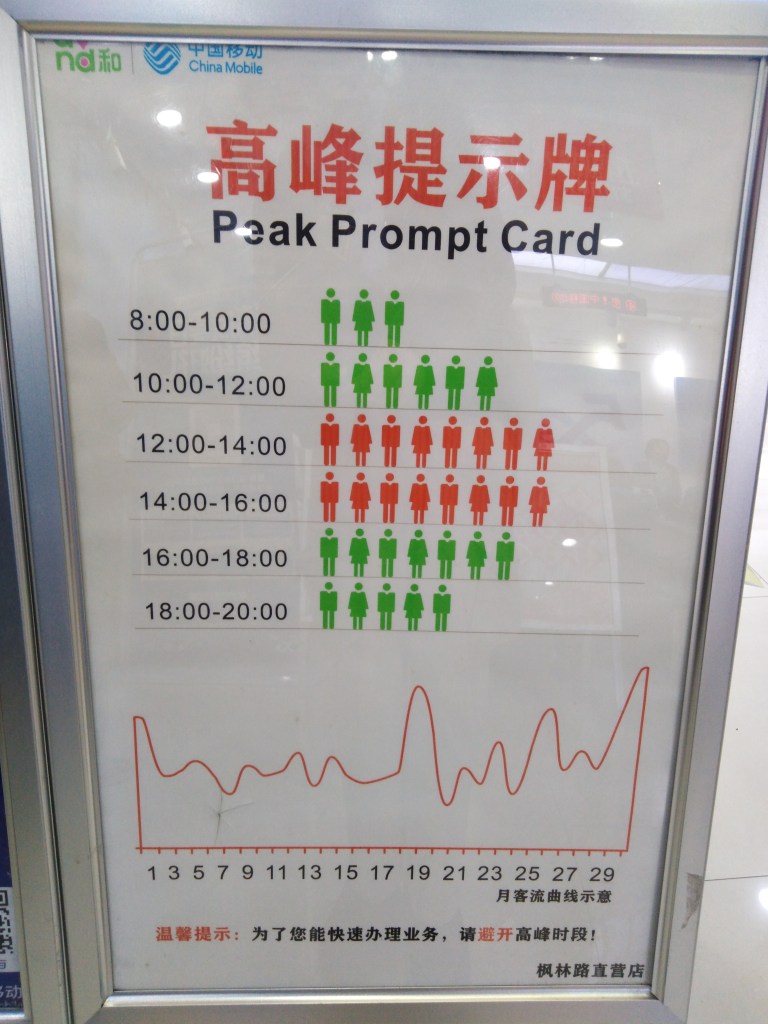
New technologies – the other day I bought a new phone card – life without such gadgets as mobile phone with connection to the world wrapping weirdness seems to be barely possible even if there is the internet-connection in the office. Arriving at about 17:00 it took about 1.5 hours.

Oh yes, fortunately I did not come during peak hours …

Still, time enough to wonder how such technology initialises a momentum of a certain …, well perhaps we can speak of “circularity of madness”:

First we are mad to avail of the new junk; and having it, we are becoming mad, being busy with maintaining it … installing the upgrades and updates; adding the credit card to an account, adding the account to the social network, installing the security apps, going back to website of the bank in order to fix a bug that actually occurs only with this bank … And then being told that this card would not be accepted anyway ….

It reminds me (for good reasons I guess) of the often quoted passage from Marx’ Capital

Capital is said by a Quarterly Reviewer to fly turbulence and strife, and to be timid, which is very true; but this is very incompletely stating the question. Capital eschews no profit, or very small profit, just as Nature was formerly said to abhor a vacuum. With adequate profit, capital is very bold. A certain 10 per cent. will ensure its employment anywhere; 20 per cent. certain will produce eagerness; 50 per cent., positive audacity; 100 per cent. will make it ready to trample on all human laws; 300 per cent., and there is not a crime at which it will scruple, nor a risk it will not run, even to the chance of its owner being hanged. If turbulence and strife will bring a profit, it will freely encourage both. Smuggling and the slave-trade have amply proved all that is here stated.

(T.J. Dunning, l. c. [Trades Union and Strikes], pp. 35, 36; in: Marx, Karl, 1867: Capital; Volume I; in: Karl Marx/Frederick Engels. Collected Works; Volume 35; London: Lawrence & Wishart, 1996: 748, footnote 2)

In fact we can make out that all this is part and parcel of the capital circle: the need to continue, even accelerate – like a bike, falling as soon as we stop cycling … 

Add my name to it, say it is Herrmann’s circularity of madness, named after the person who first formulated it … , it may make me famous one day, having found one of the diseases of our times … (mind, not being founder …)

better – different – less — what is more?

a tiny riddle – or living with contradictions by ignoring them?

One of the global players, stating “invented for life” under its name and probably claiming inventing for life, commencing business with a

Workshop for Precision Mechanics and Electrical Engineering

and subsequently really moving into the area of the various areas that are connected to electricity, promises (= advertises) by suggesting to

become carbon neutral from 2020.

Appreciating the efforts of this and other companies to work towards more “environmentally friendly technologies”, there are so many promises that must evoke suspicion, for example provoking the question how electricity – the production and consumption of it – can be carbon neutral.

At least one ad I see these days is remarkable in this context, really remarkable. It is an ad from a shop, selling groceries — with one simple message:

Buy less

multifailure?

The other day I walked into a coffeeshop, a bit off the main road, a bit multiculti and hipster – yes, one of these things I like: paradoxes: off the main street, on the main trends …

Anyway, I looked around, found it OK and put my stuff down, before going to to order …

An espresso …,

I know hipster, snob …, call it as you want – instead of pronouncing it in proper German

Einen Espresso …

Part of the “einen” was shortened to an/un, the pronunciation of the “r” of espresso …, Gosh, it would make every Italian blush.

Ah, the answer had been clear …, at least clearly Italian.

A brief chat …, sitting down and working away – working away with a smile, coincidentally on identity, for the presentations later this week on Maynooth.

Then, walking away I am smiling even more, hearing at every table the sound of “one of my languages”, thinking back, having often been located between many chairs, but finding so seldom chairs that are growing with the number of cultures, walks of life … of the people sitting down. Perhaps it is because the chairpeople are always walking away. multiculti presenting itself as multifailure.

It is not long anymore, wondering since a long long time if I am leaving more behind or will be finding more ahead. – Gracias. Realmente disfruté conociéndote.