GTPT

Outright wrong !?

Tiny differences matter – you want to look at Chat GPT and a typo brings you to chat about GTP, of course no problem as you know everything about Guanosine-5′-triphosphate (GTP), this tiny building block which plays an important role in transcribing the synthesis of RNA.

Well, and this is the problem, where we should not really worry primarily about Chat GPT (or google’s bard or …) which may get things reasonably correct as long as we (a) apply the correct spelling, (b) do not expect really clear replies and are happy with answers that are as concise as the horoscope or the statements of any other oracle and (c) come up with simple issues . It is so advanced now that occasionally you may end up with an honest answer:

Sorry, I cannot answer this question. I am an AI-tool.

Yes, there are things where HI, i.e. human intelligence is needed: contradictory, emphatic, combative …

More worrying is the AI-imposed formulation of questions. Embedded in our word processor, or available as AI-writing support like Outright, QuillBot, Grammarly …

Such applications may be helpful at times …, and at first glance. But then the tiny differences may make a big difference:

This is really only the first draft of the initial script and we appreciate very much feedback by the readers. 

This is really only the first draft of the initial script and we appreciate very much feedback by the readers.

This is really only the first draft of the initial script and we appreciate very much feedback by the readers.

Or in Italian

Sono

Io sono

Sono anch’io

Io sono anche

AI comes up and autocorrects a sentence in different ways, sometimes possibly more elegant, and possibly “correcting” something that is actually wrong … because it is new: a new term, concept, … a searching for an “unknown unknown” — yes, borrowing from a militarist like Rumsfeld (MI?) may occasionally be more intelligent than relying on AI.

Intelligent or not … enjoy Christmas … or look forward to Spring Festival while others are celebrating … 

Justice – Law – Mercy

“Die Priester stehen in diesem Zeitpunkt in jedem Streit der Macht gegen das Volk auf der Seite der ersten […] Das Nonplusultra ihrer Kunst, das Unrecht der Macht in den Schutz ihrer Kutte, oder wenn du lieber willst, in den Schutz ihrer Frömmigkeit zu nehmen, besteht in ihrer Manier, die ersten Fragen des gesellschaftlichen Rechts – das Interesse für die Freiheit selber und die einfachen, aber ersten Gesichtspunkte unseres Forschens über diesen Gegenstand – unseren reichen, behaglichen und unseren nach Behaglichkeit schmachtenden armen und armseligen Zeitmenschen ganz aus den Augen zu rücken, ihnen diese Gesichtspunkte als für ihre Glückseligkeit unbedeutend und sogar für ihre Sittlichkeit gefährlich in die Augen fallen zu machen und dabei den Ansehnlichen unter ihnen den Anteil, den sie an dem göttlichen Recht der Macht selber haben, zu relevieren und den Hoffartskitzel, den sie also in ihnen verstärken, durch den Wonnegenuß der Gnade und des Mitleids zu verfeinern, auch tiefen Argwohn und Unwillen gegen jeden Mann rege zu machen, der es wagt, ihr ruchloses Auslöschen der bürgerlichen Tugend durch den Trug einer wahrheitsleeren Sittlichkeit und ihr Verscharren des Rechts in die Mistgrube der Gnade für das zu erklären, was es wirklich ist.”

Pestalozzi: Meine Nachforschungen über den Gang der Natur in der Entwicklung des Menschengeschlechts; von dem Verfasser Lienhard und Gertrud; Zürich bei Heinrich Gessner, 1797, PSW 12, S. 1-221

The priests are at this time on the side of the first in every dispute of power against the people […. ] The non plus ultra of their art of taking the wrongs of power under the protection of their cowl, or if you prefer, under the protection of their piety, consists in their manner of putting the first questions of social law – the interest in liberty itself, and the simple but first points of view of our research on this subject – quite out of the sight of our rich, comfortable, and our poor and miserable contemporary men, who pine for comfort, to make them see these points of view as insignificant to their happiness and even dangerous to their morality, and thereby to make relevant to the respectable among them the share which they have in the divine right of power itself, and the thrill of hope which they thus increase in them, by the delight of grace and pity, also to excite deep suspicion and ill-will against every man who dares to declare their nefarious obliteration of civil virtue by the deception of a truthless morality, and their burying of right in the dung-pit of grace, for what it really is. “

The Riddle of Time, Space and Being

Death – or even already ageing … … there is something that is so well expressed in Michael Ende’s Never ending story: the Riddle of Time, the dependency and indeed relationality of future, presence and past. With every moment of our life we gain experiences – and gaining means filling the storage which is the past; and with the past and presence we encounter future which is then presence. However, while there is more and more past, future is decreasing.

So far the individual perspective. Now we face the question if such law can also be seen societally, here and now, claimed as orientation:

It is not only that every little helps – the tesco-slogan at some stage – but it is also that every little kills. I don’t want [and I cannot] enter deeply into this debate. But there is no doubt, that we live today, follow a lifestyle for which the future generation will have to pay – killing them softly, the piecemeal strangulation of the future (generation), literally breathing today the air, they cannot breathe anymore. Moreover, we deny not only their right but also the right of nature.

No, I am not going to be vegan from now on (and I will still not eat any sausages …). But there is some truth in what Frances always said when I wanted to help her in the kitchen. She gave me the knife, and when I approached a tomato she said, scaringly looking at me:

do you hear them screaming?

Of course [really of course?] it is not about single tomatoes, single trees…. But the genre, the “collective nature” may well have and should have rights – some countries are not only thinking about it, but have respective legislation in place.

A complicated debate, indeed. But obviously pointing out that the demonstrations and activities of the “Last Generation”, “Extension Rebellion” and others are not about the interests of activists and for instance the “general interest” or environment activists and those who are interested in free movement [and the free choice of the means of transport] or the imagined/supposed “interests of the state”. The interest of nature – life against life; or living of a few today against the sur-life of nature.

Indeed, the seemingly abstract question of death turns into a very concrete one.

Bottom line, I suppose: it is simply a paradox. Talking about life means acknowledging death as part of it; talking about death means being or becoming able to live. And death is so to say only the extreme, the final point on a scale. Final meaning absolute? Not really, as it is still part of life and living in the true sense, namely the understanding of relationality = processuality = totality.

Allowing others – or an other – taking one’s place, taking and giving part, including partialities.

Triage – one has to leave; not because there is not sufficient space but because there is “not enough to do”. In other words: not leaving means taking part which is at some stage about taking the part of somebody else, ignoring the other.

The challenge is balanced-managing and administering.

Inequality as permanent dissolution of entities. As such it is not a matter of distribution [though it appears to be “only” that]. Relationally is a matter of distribution as production, as such a matter of given and/as taking. Now the majestic equaliser emerges as an instrument of bringing production to a halt. The result is another dimension of the same paradox: permanent overproduction… of something that is useless, because it does not have any value. Sure, it has exchange value:

More years, not active years, but years that are only about maintaining life. Visiting doctors, physiotherapists, mobility exercise groups and social gaming events that are little social and not playful at all. Doing crosswords and jigsaws, … and in the extreme case it is even a brainless body … breathing, nutrition is artificially maintained.

Less extreme: the strive of old men and women to maintain whiteness, pushing then young to the edge, leaving them in the role of witnesses of decay. And even worse, forcing them to make the same mistake(s)!

Euthanasia, is for very good reasons – especially in Germany, but not only – hugely problematic, problematised and prohibited; and it is still a matter that is also problematic in the commonly/mostly forgotten way: it starts from the presumption of negativity of death [interestingly in a society that claims to be Christian, where religion suggests death being redemption].

This negativity is not least an expression of the obligation to Permanently Perform Perfectly – the basic and general pattern of PPP, reading in today’s terms Power Point Presentation, and then translated into politics: Public Private Partnership.

And of course, it is not allowed to leave, to say

I did what I wanted and could do, I am ready to leave ….

Sure, there are or can be very different reasons why somebody wants to leave; as much as there are or can be very different reasons for the want to stay [leaving aside that in both cases there can be reasons out of control of the person concerned].

The problem behind all these remarks is that the system, solely concerned with the production of worthless exchange values, is reflexive in the sense of extensively reifying itself – Andy Warhol perfectively confronting us with the jester’s mirror: design, originally used as means of presentation and advertisement, is elevated and presented as arts – Campbell sends regards. And both, arts and food alike are perverted after their death, i.e. the end of living and resurrection as commodities, the presentation of life in form of symbols. 

The effect depends on volume, on momentary hyper-presence, which in the extreme contains its own destruction:

The shredding of Banky’s Girl with the Balloon, just at the moment when the hammer falls – at one end, at the other end of a kind of scale, the light installation, where one can argue about whether it is really still an original piece of art when the curator replaces the defective original neon tube with one bought at the DIY store.

And indeed the new understanding of the character of arts is symptomatic for the entire range of new lifestyles. With view on Andy Warhol, Benjamin H.D. Buchloh points out that

[t]he systematic invalidation of the hierarchies of representational functions and techniques finds a corresponding statement in Warhol’s announcement that the hierarchy of subjects worthy to be represented will someday be abolished ….

(Buchloh, Benjamin H. D. (December 1, 2001). “Andy Warhol’s One-Dimensional Art: 1956–1966”. In Michelson, Annette (ed.). Andy Warhol. The MIT Press. p. 2)

(to be continued as Only Arts? Or the art of living and leaving?)

Disappointment-the old white men, grumpy, as he lost the privileged, elitist status?

I knew it (though I kind of denied it, wanted not to think it would be real), as we talked while back about my “Higher Diplomas” in Ireland – I definitely should say “our HDips”, as Joe played an important role too: principal teacher and course director, though really important: the more or less small group of students, up to 15, welded together by provoked critical thinking, exploring something new – we as university staff only provided a space so that they could work, coming from very different backgrounds, more and more going very different ways (after starting with the same idea or even ambition: getting into social work studies). In a way I established myself as a kind of leader, mentor. Nowadays, there are about 60 students, now mainly online teaching – yes, I guess that is the real move: from learning to teaching/being taught.

Yes, there is some disappointment, perhaps even anger.

But, of course, there is another, much wider dimension to it.

The group, stablished at the human rights centre in Changsha, HRUG.legal, is discussing at the moment different informal structures as ubuntu, guanxi, jaan-pehchaan… all in some way seeing these network-like relations in a positive light. It is about communities, non-alienated relationships [or better: relationalities] and direct mutual support: do you want to go fast, go alone; do you want to go far, move together. It is about the we-society, where a village is needed to bring up a child…

Then, I asked Maria, looking for somebody who would be able and willing to talk about the Russian blat. Her spontaneous reaction:

It’s a dark side of the social connections, when personal [family, friendly and other] relations are used to achieve something in spite of law or/and rules violation. In popular terms I would call blood a corrupt way to use social capital.

Ah, capital …

Le secret des grandes fortunes sans cause apparente est un crime oublié, parce qu’il a été proprement fait. (Balzac)

– and it is conservative saying this.

And from great capital we come to the great “equaliser”, knowing with Anatole France

La majestueuse égalité des lois interdit aux riches comme aux pauvres de coucher sous les ponts, de mendier dans la rue et de voler du pain.

Easy to conclude and learn : Sine ira, sine studio!

Is it true, then? There is no alternative? Education must be reduced on large-scale teaching, and going beyond the small learning-group is the only and necessary anti-elitist, and also anti-critical way, guaranteeing equality and access for everyone? And not least, calling for a new elite?

****

That is what they did, isn’t it? New generations of artists, opposing the academy… and establishing themselves as new academy …

Secession – though always in need of some kind of “accession”, Or even being a form of accessing: entering another, perhaps new, world.

Fear … Can we be sure about the access? What if we fail? Partial death!?

This partial death seems to be also motivation to join false friends, stick to communities – a bribe for tribe. Who wants to leave with dirty hands? So, one hand washes the other- mutuality, here with the advantage of feeling it – as it is the habit on the one on the horse market: not shaking hand in the way we usually do… but do we? Often amongst young people there is a greeting ceremony that includes a firm handshake, somewhat combined with a high 5, followed by a hug. Of course not possible in times of pandemics – there we still found some strange kin: “greeting with the elbows” – a sort of hooking up with each other?

Back to guanxi, then, to ubuntu …, facing, admitting the impossibility of distance… Trying spasmodically to “keep the church in the village” even here, talking about the global village…, and in law always also looking at emergency exit: discretionary leeway.

Mind, keeping always on the top the supposed justification: it is only the others where such networks are bad, questionable; whatever we do, is a sobber and clean way of negotiation.

It may be farfetched, perhaps one can even see it as depressive, though more likely one has to say that it is realistic: overcoming the attitude of the old white men – Aherns, Belusconis, Francescos, Prodis …., not being able or willing to leave the stage [and of course their female partners as the Lagardes, beginning a new career at a time where they should stop and enjoy the money they did not pay to the tax office] – will only be possible by teaching the youth about finality, death. And then, only then, we old men and women, whatever the colour of the skin, will be respected [and can be respected] as true gentlemen and gentlewomen.

(To be continued )

Control Yourself

Control Yourself

Isn’t it another paradox – or at least another formulation of various paradoxa? Being “social beings” is in itself a kind of paradox, if we consider that the social is something that is permanently changing, this making being in a strict sense impossible: Bing is having been and becoming at the very moment we are. And controlling oneself, then, means controlling how we position ourselves in and being part of change, by which, to some extent, we change.

A matter not least of HumaArtificial Intelligence: While we are, of course reacting, caught in some kind of feedback loop, we are – if we do exist in the said sense – able to leave the feedback loop, too – making this kind of intelligence human – and possibly humane – so different if compared with Kant’s/McEwan’s Adam.

And then? Capitalism in particular, perhaps society? Ageing, especially when becoming ill, fragile? When all this means, perhaps reducing life on maintaining itself, staying alive… the permanent concern of securing food, securing living under a roof …, a large roof the seize of which goes beyond (but where is the limit?) what is needed for security, for comfort; … maintaining the body and its beauty… exercises, communication, even if it is communication about communication, classifying and screening communication … Is it about personalities, that lost character, about newspapers that perpetuate news bare of information; about publishers publishing books nobody is interested in, nobody can afford … but everybody then is encouraged (and taking up the offer) to download for free; to subscribe for free… at least for three weeks, or months or so …,  having all stored on the computer, the cloud … .

Of course reading is a good thing for the individual and for humanity. But do you have to write something about what you read, which is then written about, about which legions of educated people argue, in order to subsequently document the argument and discuss the documentation in the feuilletons? (Zeh/Urban: Zwischen Welten … 32 f.)

Reducing human intelligence, even human existence… on pure being, on the very moment, without past, consequently without future, like the homo faber not being able to rest under the tree – resting needs to acknowledge movement, failing this, means failing to exist. As “always understanding what one does, means remaining unchallenged by oneself.” (Walser)

Beginning to exist is something that – from the perspective of the very individual – simply  happens, out of control … and is that the ultimate answer, the fact of being damned to live like Sisyphus?

academia between enchantment – disenchantment

For only fools, fanatics, and mental cases can stand living at the highest pitch of soul; a sane person must be content with declaring that life would not be worth living without a spark of that mysterious fire. [1]

It is a fundamental challenge of scientific thinking: if disenchantment is the ultimate goal, it is at the same time enchantment that makes results valuable: the enchantment of discovering questions as being relevant in the first place and then “unpacking” the results in such a way that they lead to a renewed enchantment of life. This applies to the discoveries of Pythagoras as well as the seemingly trivial invention of a mechanism like the zip fastener.

Nowadays, the question of meaning tends to take a back seat to highly specialised knowledge, both in terms of asking questions and imparting knowledge. It is important, however, to keep the awareness alive that the latter is only a tool for understanding the world. As far as my expertise is concerned, it is about overcoming economics, being reduced to mathematical formulae, moving it towards sustainability as matter of life of and living in society; it is about reaching a legal system that promotes coherence of justice and is thus able to put content before form.


[1] Musil, Robert, 1940: The Man Without Qualities. A Sort Of Introduction And Pseudoreality Prevails; Translated From The German By Sophie Wilkins; Editorial Consultant: Burton Pike; New York: Vintage International, 1996: 199

So bad !?

Reading last week the headlines in The Economist, and learning again that AI-tools are passing exams, celebrating the advancement I am hesitating, wondering if it is possibly not about the highly developed AI but an indicator on the downgrading of education: limited to reproducing knowledge, performing “excellence in simplicity”. Limiting thinking to binary scales and scopes.

(Higher) Education on a low level … and seen in the binary spirit, there are only two directions: horizontal and vertical so that the tower of PISA is in real danger of finally falling …

moving Globalisation further …

making globalisation more userfriendly for those who work with others ‘across the time line’: establishing a “global time”.

It is like coming from here

and moving towards “unity”

Now, think about

  • unity and entity — and the difference between them
  • the increasing independence of work, as consequence of electric light, climate independent energy (agency climate independent does not mean that climate is not influenced, on the contrary)
  • the indifference towards time shown by a virus travelling around the globe
  • the hurdles the vaccines have to overcome because of borders and differences

power confusion

A somewhat remarkable constellation; indeed telling, if we think about power relations, and the role of political parties as it is defined in the Basic Law (so-called constitution):

Article 21
[Political parties]

(1) Political parties shall participate in the formation of the political will of the people. They may be freely established. Their internal organisation must conform to democratic principles. They must publicly account for their assets and for the sources and use of their funds.

The German Social Democrats reached apparently the end of the ‘governance period’, preparing the election of a new board – this happened on December 11th.

Auf dem Ordentlichen Bundesparteitag in Berlin wurden am 11. Dezember 2021 die Mitglieder des SPD-Parteivorstands neu bestimmt. 

Interestingly, on the 4th of December the same party voted in favour of the Koalitionsvertrag, the agreement between social democrats, greens and liberals.

There are two extrem interpretations:

  • The outgoing elite of the party uses the remaining power to determine the future course.
  • A party, being somewhat in a limbo, not having a board anymore and not having a board yet, is deciding about a major issue, one that will be substantial for the future of the party.

Article 21.2. ff. of the German constitution speaks in general terms of the unconstitutional character of parties and the way and means not to allow such parties. Unconstitutionality is broadly defined as not being conform with the basic law. I am wondering now, if – at least when reading formal structures in a substantioal light – the procedure applied here can be really seen as democratic.

easily overlooked

There are the BIG questions, going hand in hand with the one: climate (change). And threre are the big players, governments, non-governmental players, artists finding a new stage (not mocking, I trust he is serious about it) and people like you, Greta and myself.

We all know about the small print – even if contracts and agreements a big, the small print is not getting larger (though probably longer).

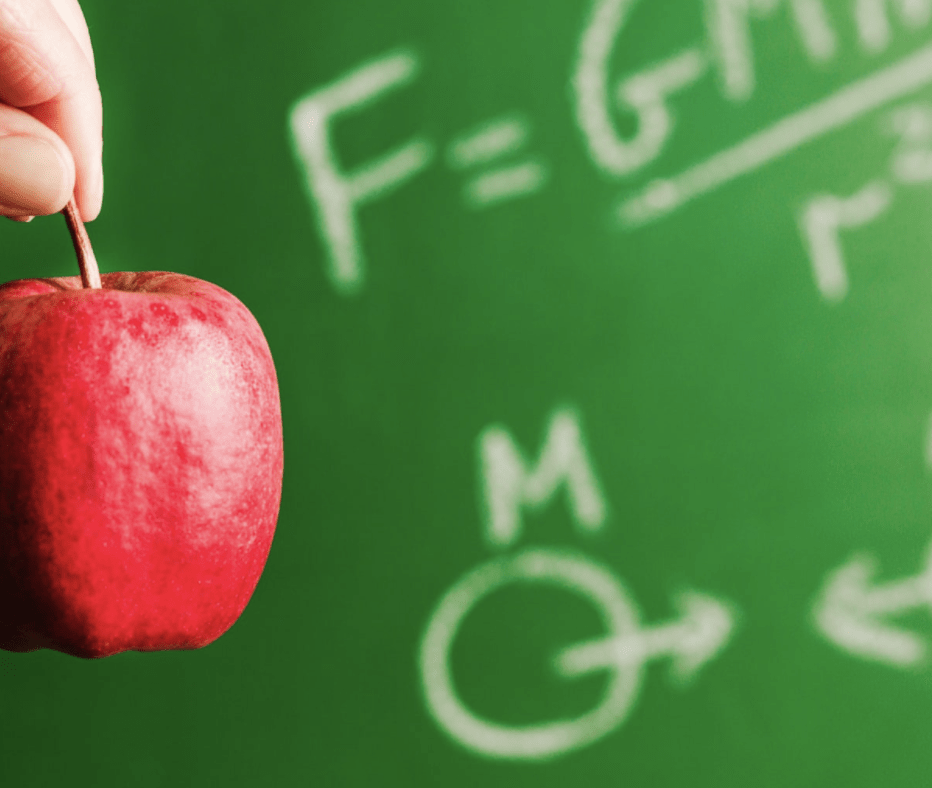
And then there is something else – the story with the apple …, well, not Isaac’s apple

,the other.

Keeping up with the news from the fruitshop, I checked the website: what is the new standard in the computer world?

Nothing, really:

  • first we are driven through and by design — sure, makes a difference but computers are for most of us utilities: things we have to or want to use: work, info, communication, games – only all the fuzz on design makes makes reputation and showing off an additional utility
  • second, the website – yes, amazing the design, yes akward the ease of accessing relevant info – is so overburdended with nicesities (is there a term like uselessities) that all the potential speed is absorbed — the other side of Moore’s law: though the chips are getting cheaper and faster the ammount of waste they have to carry and process is multiplying ….

Perhaps it would be a valuable contribution by ex-computer manufacturers to think about such issues, instead of retiring, becoming professional philantropists and writing books on how to save the planet. It would save them from flying in their bio-fueld aircrafts to summits, preaching for a better world …