Strategies

Earlier I typed strategy – and a tiny typo in collaboration with the auto-correction made it to “static”. Recent blogs topic, right?
Anyway, the following is actually about dynamics – a very dynamic presentation at the School of Applied Social Studies of University College of Cork. A “Director of Planning & Institutional Research” giving an

Overview of UCC’s Strategic Plan

Now, aren’t we in politics always asked to begin by highlighting the positive aspects? That is what I learned while working in lobbying in Brussels. So, be it then: the outline of the so-called strategic plan (I try since a couple of days to access the website – but it seems to be a strategy that this site remains until the time of writing inaccessible, although I lodged the technical flaw at the mail address of the webmaster) is very simple and open – mind, I’m not writing using “a simplified approach to a complex issue”. And being aware of the fact that I cannot delve into all the valuable aspects and details issued in both, the plan and presentation, I want to continue with another positive moment.

I.

The presentation had been highlighting the importance of strengthening

research, innovation and job creation.

There are frequent debates on the sequence of such features and here we can praise that the strategy is first about research – as it should obviously be the objective for an academic institution. Job creation, without doubt important, is not the ultimate and primary goal … .

But a little hesitation emerges if we think about another aspect of the presentation, the emphasis of financial sustainability. Not that I suggest neglecting the importance of this matter. Still, there are two points that are worthwhile to look at:

  1. Social science is currently discussing the question of sustainability in a more serious and generic way, highlighting that any debate on sustainability has to go beyond “single issue orientations”. There is no environmental and financial and economic and social … sustainability – there is only one complex, genuinely integrated and genuinely relational sustainability or there is no sustainability at all. Having said that there is a wide debate on this does not mean that there is an overall consensus on what this means – I elaborated on some of the issues In a recent article published in the International Journal of Social Quality under the title “Economic Performance, Social Progress and Social Quality”. At this stage it isd important to emphasise that there is some readiness to ask questions and work on elaborating answers.
  2. The  point that is crucially implied is less about theorising this issue. Two points are hugely important when it comes to the “pragmatics” of policy making though.
  • A sustainability strategy of a university has to be oriented on the requirements set by academia – and although this is surely nothing that should be trimmed and protected in an ivory tower, it is equally sure that this is not about any kind of fulfilling needs of a capitalist growth economy.
  • This brings us actually to the second point: of course, any university strategy has to be part of a national plan – actually another point that has to be positively highlighted in the presentation. It clearly an unquestionably emphasises this need. But … – but this makes only sense if the national plan is worthwhile and can be seen as being positively concerned with sustainability – btw, we speak in our work of the social quality network increasingly about social sustainability, an issue which will obviously employ quite a lot of our strategic thinking in the Observatory on Social Quality, now being established at EURISPES in Rome.

II.

In any case, the national plan – be it concerned with general questions of development or with the area of third level education and research is rather questionable. Only few points will suffice to issue the problematique – and they are all immediately also linked to the presentation.

We find the topic of internationalisation – in this section we hear about recruiting international students but we hear little to nothing about how we aim and put into practice the recruitment of students from financially weak backgrounds: people with working class background from “rich countries” and people from countries of so-called developing countries or “the global south” as it is called today [and actually should (if we take the equator as reference) include parts of the east and west, equally poor]. It is worth a side remark: I remember a student from the “global west”: coming from be USNA, arriving with a generous Lions or Rotary grant – and being a total failure. The only reason that he actually did not fail literally …: he had been “too rich to fail” – if anybody thinks about large banks now …, well this is your thought then. My thought at the time had been: it is strange that this student had been “taken out of my custody”, actually he had been “transferred” to another course, passed successfully and this is surely very different to another student who never made it into my course as he could not afford paying the approximately 16,000 euro fee at the time (the European rate had been approximately 3,000 euro in those years). Sure, this student from an African country nearly got the place: the charity which had been ready to pay his fees announced the decision too late. The “right of the rich” and the “charity for the poor” as national strategy then? A meaningful shift in thinking is required, pursuing the right of everybody to avail of valuable, emancipative education, different to skills training for the upper and middle classes only (and a true knowledge space for a small elite). Every first-year student I am bringing her to legal studies learns that law is not about straight application of legislation but it is still about the Kantian challenge, given with the definition he provided, namely saying that

[r]ight is therefore the sum of the conditions under which the choice of one can be united with the choice of another in accordance with universal law.

(Kant, Immanuel, 1797: The Metaphysics of Morals. Translated and edited by Mary Gregor. With an Introduction by Roger J. Sullivan; Cambridge: Cambridge University Press, 1996: 24 [In the German original slightly different in its emphasis ‘Recht ist der Inbegriff der Bedingungen, unter denen die Willkür des einen mit der Willkür des anderen nach einem allgemeinen Gesetz der Freiheit vereinigt werden kann’ (Kant, Immanuel, 1797: Die Metaphysik der Sitten in zwey Theilen; in: Kant, Immanuel. Werke in zwoelf Baenden. Hrsg. v. Wilhelm Weischedel; Bd. VIII; Frankfurt/M.: Suhrkamp, 1982: 337)]

III.

And we findin the presentation of the strategic plan under the heading of internationalisation the orientation on FDI, yes indeed: foreign direct investment. Every first-year student I teach economics learns that – in particular but not only today under conditions of globalisation – two things are not feasible, not sustainable: a strategy that is based on FDI and/or export as sole and main pillar; and a strategy that understands indigenous development inter light of a parochial mindset.

It is actually frightening that the presenter, holding an MBA from Henley Management College, celebrated on one of the university’s websites as somebody who

has over 20 years experience in consultancy, operations, engineering, supply chain management and higher education roles

apparently missed this point too: it had been the orientation on such a wrong strategy that brought (not only) the Irish economy into severe trouble. It is a strategy of statics, degrading a country and its people to supernumeraries on the global scale, actually making a large number of the population to global players by forcing them to emigrate. – sure, individual examples of successful FDI can be found. But to tell us that we should jump out of the window, because some individuals actually survived can only come from a presenter who gets paid for showing off with the lack competence.

– You don’t believe that you can make money from incompetence, even stupidity? I heard the other day for a guy who cut off a branch from a tree. He got 20 grand for it. The reason: he had been sitting on the branch, on that part he cut off. The case went to court and the judge granted compensation mentioned before.

So what is then the contribution of Irish universities to internationalisation. I saw recently a poster from UCC, a good example for expressing visually how such a contribution is u understood: missionaries under the academic and secular instead of the christian gown. – Sure, the hope remains: Christian missions brought us liberation theology, secular mission may then truly liberate liberal economics by establishing a new mode of production, based i collective and social liberties.

IV.


And indeed there seems to be a very limit understanding when it comes to “contributing to the community”. First it’s about commercialisation, the creation of jobs and all this … and then it is about actually “contributing to the community”. The balance act between the bourgeois: the free marketer, and the liberal citoyen. It is frightening to learn another time that people are allowed to ruin societies by simply not understanding and admitting that even after Alfred Marshall economy is still political economy. Any attempt to maintain the Marshallian separation of the economy for the political sphere is meant to fail like any strategy of sustainability is doomed to fail as long as it is understood as technical challenge. Sure, we “need jobs in the communities” and we need highly qualified people in the communities. But we won’t get them there by introducing new PhD courses; and we won’t get there even by simply opening the doors of academic institutions. All this is about understanding with an open mind academia as social force, responsible for emancipation of the majority of the people in their own personal and social growth – the economy and the development of the mode of production have to follow this power-requirement and nothing else. And it is definitely not a matter of the interest of the “corporate universitarian interest”.

V.

The vision:

To be a world-class university connecting our region to the globe.

As said earlier: moving on the stage of politics is supposedly about being fair, highlighting also the positive aspects of the position that one critically investigates. The positive point here is that such statement is so shallow, so empty that it cannot even fail. The strategic goal of Lisbon 2000 claimed to

make Europe, by 2010, the most competitive and the most dynamic knowledge-based economy in the world.

The Lisbon strategy, with this vision, failed – and for many the failure had been visible from the outset. UCC’s strategic plan is not really facing such danger: too many empty words, to much glossy paper to be really relevant – it can only leave us with shaking heads, though some will fall in the meantime and others will fall in the future. And some will remain – those of people who are able to maintain meaningful reputation over time, paradoxically engaged in the fundamental questions of their own era and exactly due to this engagement remaining highly relevant beyond their particular day. Many may remember him: Max Horkheimer; and surely few will oppose what he claimed and what he lived for, a university

that is characterised by the passionate orientation on the complex whole, less occupied than elsewhere by illusions, but especially by the fact that its members – professors and lecturers, students – are in spite of all the differences of their views engaged together in the common belief that against all the odds there is a future, that human beings are able to control the destructive external and internal/personal forces and establish a humane universe.

(Horkheimer, Max, 1952: Akademisches Studium. Immatrikulationen-Rede. Sommersemester 1952; in: Max Horkheimer, 1953: Akademisches Studium. Begriff der Bildung. Fragen des Hochschulunterrichts; Frankfurt/M.: Vittorio Klostermann: 5)

And instead of following the fashionable trend to professionalisation and “presentability” we should acknowledge the deep truth of his reflection:

disappointment and perplexity [are not simply emerging] because students are too weak to learn the technical aspects the instruments of the subject; it emerges because they do not see the bridge between the ‘professional’ and those matters that deserve thge name of truth and that had been the motivation that brought them to the university.

(ibid.: 7)

Indeed, not all bad; especially as I received the other day an e-mail … – yes, from Cork – signed by http://www.attackthetax.com/ and the Common Law Society, talking about FEAR.

it stands for “FALSE EDUCATION APPLIED REPEATEDLY”

Which means, that if you fill a Man or Woman full of rubbish for long enough, constantly REPEATING the same mundane shallow drivvvvvel,,, eventually although in their hearts they know that it is wrong … they will enivatebly start to beleve what they are being told, despite all the evidence to the contrary.

The Greatest threat to the State is not groups, crowds, organisations, political parties, movements or collectives … it is the Man or Woman that can think Critically.

That is the Man or Woman that cannot be enslaved … and they will teach others.

May be this is something to think about when it comes to strategic development of strategy development. But then, can we expect this from people who are victims of previous FEAR, now fearing more to loose their well paid jobs rather than loosing the little bit of sense they may have left?

Yes indeed, a lot done – much to be revised …

Variations*: Omne ens habet aliquod esse proprium

– every entity has a singular essence(Johannes Duns Scotus, Opera Omina [1266 à Duns 1308] quoted in: Suarez-Nani, Tiziana: Pietro Pomponazzi et Jenas Duns Scot critiques de Thomas d’Aquin; in: Biard, Joel/Gontier, Thierry (dir.): Pietro Pomponazzi entre traditions et innovations; Amsterdam/Philadelphia: B.R. Gruener Publishing, 2009: 29-67; here:  33)

or: About Academic Responsibility between Dynamics and Statics.
*****

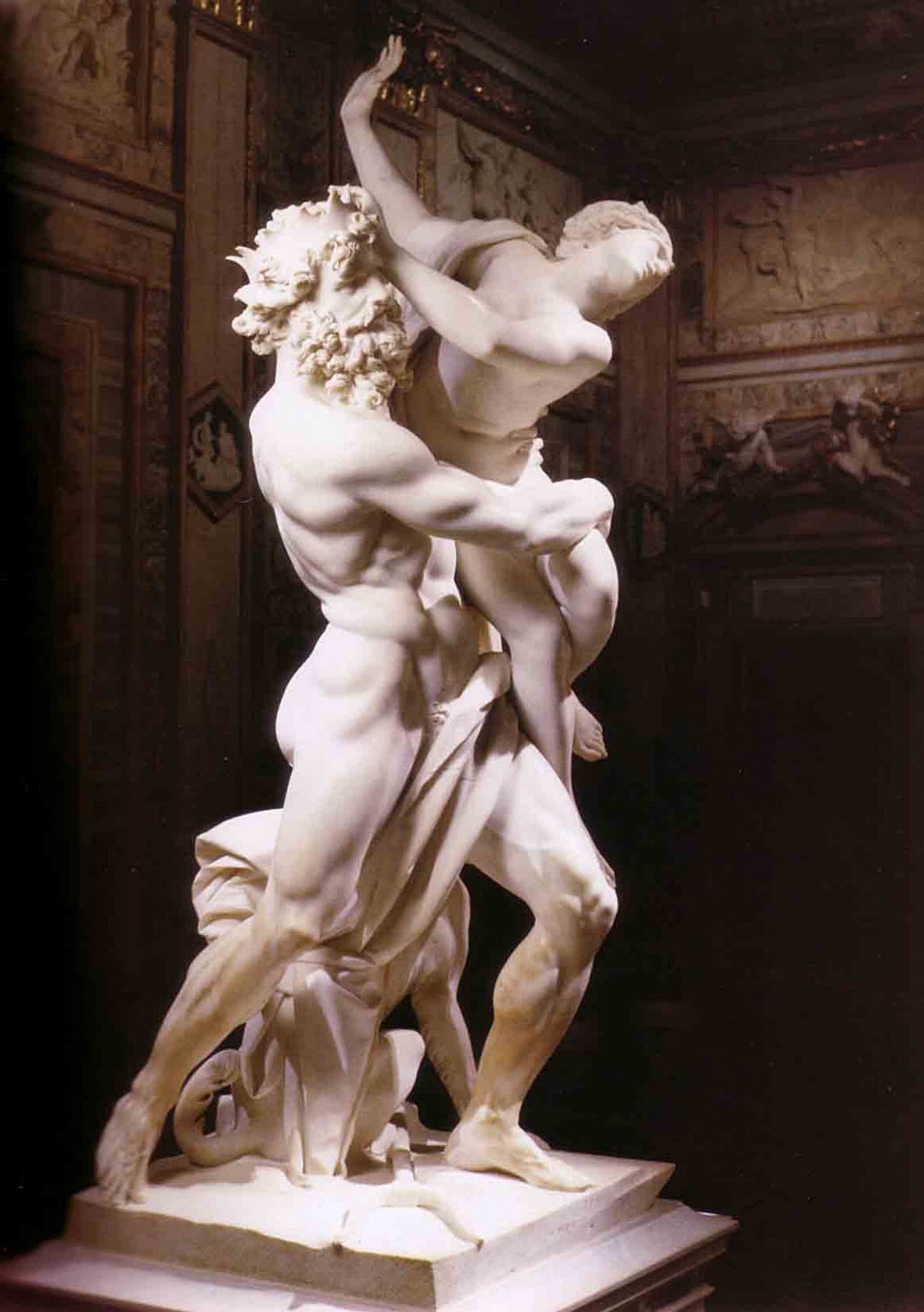
Recently I had to go to Rome – and if ever possible I take it as opportunity at least for a short visit to the Villa Borghese. It is actually not really about visiting the palace and the multitude of exhibits, most of them surely admirable objects in their own right. My visit there is usually solely dedicated to Gian Lorenzo Bernini’s statue Ratto di Proserpina – the rape of Proserpina.[1]

It surly is the most dynamic statue I ever saw. For me it is actually not about rape or abduction. Instead, I see it as visualisation of abhorrence of power: the questioning of power and apparent superiority. A woman challenging the given reality by facing it and at the same time refusing to accept it – she turns away from it. Of course, it is easy to see the historical newness – in sculpting and also in societal realities. Bernini’s work is the dialectical repeal of earlier sculptures as for instance Michelangelo di Ludovico Buonarroti Simoni’s masterpiece David.

Supposedly David had been the first free-standing sculpture: firm, independent, disjointed from the environment …. – the beauty and arrogance of the claim of the emerging new era:

Omne ens habet aliquod esse proprium

– every entity has a singular essence

However, paradoxically it had been this new era – the Renaissance and later also the enlightenment – that needed something completely new and even opposing, the upcoming era needed a Proserpina: aware of the abduction, ready to confront herself with this fact because only this allowed to resist. It had been not really about a new moral, about taking a different position. What – in my opinion – Bernini actually expressed is about the opposite: dynamics, allowing the emergence of traction, pulling forces, attraction and surely also the acceptance of possible failure.

In other words the singular essence of every entity is only emerging – and this is the apparent paradox – from the very relationship in which this entity is located and locates itself. And in this light every singular essence is about the dynamic and/or static the entity engages in.

NB: Mentioning dynamics here, I am speaking of statues – not of installations as they are now dominating the arts world. I know that I stand somewhat as a loner in the world of critics, seeing the latter very much as frantic attempt to dynamise the static – frantic like the attempt to use administration as substantial tool. Frantic like using grades and degrees and computerised quotation indices as means of assessing qualification.

*****

Now, something apparently completely different. Recently the German minister for education had been asked to resign – and she even dared to refuse (though finally she had to step back). The background is apparently simple: plagiarism.

But Ulrike Baureithel on the 6th of February in Der Freitag points on a much wider and deeper meaning of the entire debate on an increasing number of leading politicians being caught in comparable scandals – her article is titled Core of the Spectacle. She notes that doctoral dissertations had been for long times already subject to critical disputes. However, in earlier times these disputes had been about substantial matters, highlighting (or searching) political positions that are contestable in terms of political correctness. Baureithel states:

Today politicians do not have to fear to be criticised because of questionable politicial statements they made in works that are already forgotten for long time. Instead, they have to fear the detection of the fact that their statements are not traced back to the original author. This is in an era in which copyrigth is increasingly under pressure and in which blithe transfer of knowledge is advancing to a political flagship rather remarkable.

[Heute müssen sich Politiker nicht mehr vor verdächtigen Inhalten einer längst vergessenen akademischen Arbeit fürchten, sondern davor, den Inhalt nicht auf ihren Urheber zurückgeführt zu haben. Das ist in einer Ära, in der das Urheberrecht wie nie zuvor zur Disposition steht und der unbekümmerte Wissenstransfer zum politischen Aushängeschild avanciert ist, doch immerhin bemerkenswert.]

And indeed it highlights a shift of academic consciousness that marks the fundamental reference of work: it is not about daring ideas, bringing thinking forward, developing original ideas – rather it is about forms. Following this line we easily end in at most positivist research … at most … .

Thus we come now back to the earlier statement:

In other words the singular essence of every entity is only emerging – and this is the apparent paradox – from the very relationship in which this entity is located and locates itself. And in this light every singular essence is about the dynamic and/or static the entity engages in.

And it is exactly here where we find in current academia a new self-localisation. At surface level it is of course about commonly known and accepted matters: the overwhelming influence of management, the financial dependencies and obligations, the constraints within research projects emerging from the conditions for obtaining grants etc.

All this is surely true. But all this is at the end very much about blaming “the other” – a kind of trading indulgences, fading out important parts of our own responsibility as academics – and on this occasion I do not refer primarily to our positioning but to our thinking.

*****

Few of you know me well enough, are aware of the very fact that I am easily getting lost in time, in figures – in general such “hard data” are somewhat meaningless for me. Academically this in some respect of course wanton – isn’t science something “positive”, something that deals with facts as they can be expressed in figures? Sine ira … as Weber said. Still, this “getting lost” has also something that I want to defend – it allows abstractions, something that

separates things out, isolating them from our concerns as social beings immersed in particular cultural practices. As Locke once put it: “Words become general by being made the signs of general ideas: and ideas become general, by separating from them the circumstances of time and place, and any other ideas that may determine them to this or that particular existence.” The problem, however, is that we tend to be interested in things as they exist in a context with others. Indeed, the very word “interest” comes from the Latin inter-esse, which means “to be between,” while the Oxford English Dictionary tells us that the root of “abstraction” denotes a “drawing away from” and that the root of its opposite, “contextual,” means “woven together”.

(Blattberg, Charles, 2009: Patriotic Elaborations: Essays in Practical Philosophy; Montreal/Kingston: McGill-Queen’s University Press: 45; with reference to John Locke, An Essay Concerning Human Understanding, ed. Peter H. Nidditch [Oxford: Oxford University Press, 1979], bk 3, ch. 3, sec. 6)

Very much the same is stated in the comments of an exhibition, I recently visited in Copenhagen:

On the one hand, details cannot be ignored if one wishes to depict reality in a convincing manner. On the other hand, however, focusing on a detail threatens to impede our understanding of how it fits into the overall whole.

(from one of the explanations on the wall of the exhibition ‘detaljer’ in the Statens Museum for Kunst)

All this allows us bringing things together – matchmaking if you want; matchmaking even if the matches are extremely distant. Distant as the German ex-minister is from the Kunsthistorische Museum Wien. Distant in time as my visit there – and distant as the time with which I had been confronted when entering a special exhibition: I had to walk up onto a scaffold close to the wall pantings which had been presented by one of the most contested artists of the early 20th century: Gustav Klimt. To cut a long story short: I stepped up, the leverage of the scaffold covered by a black cloth. Arriving on the platform of the exhibition “face to face”, I had been forced to turn around – a crossroads of which I took the option to rue to the right. Now, not concentrating on stepping up the stairs, I could also lift my head. I experienced a kind of numbing, looking into the eyes of the work of this artist: a goddess, not despising, not inflicting but sending a chill down my spine. Only once before I experienced the very same awe, standing just on my own in front of Picasso’s Guernica (At the time of my visit even the security guards keeping in the background.)

I said before “to cut a long story short” – and I know that this is a frequent mistake: we cut long stories short, we squeeze complex issues into power point presentations. And as much as we are in danger to loose the ability to read handwriting as we a dominated by computer scripts, we are in danger to loose the ability to listen, to look – be it at others or at ourselves. And we loose the ability to bear somebody looking at us. Somebody as the history of Guernica! Somebody as Pallas Athena.

Of course it is challenging – not so much to understand but to accept that understanding actually means that we are permanently questioning ourselves, our practice. And we have to do this not as academic exercise but as matter of questioning what we are doing, how we are acting. Things and people come back, even if they leave us. I read recently, in connection with the death of one of the examiners of my doctoral thesis, Hans Heinz Holz, a statement, contending that the important question is not

… ob man prinzipiell damit einverstanden ist, dass nicht in erster Linie Ideen den Lauf der Dinge bestimmen, Kopfgeburten, sondern die ökonomischen Bedingungen –

… if one is in general agreement that not ideas determine history, …, but the economic conditions –

Important is

ob man auch bereit ist, im Sinne von Gleichheit und Gerechtigkeit Schlüsse daraus zu ziehen

if one is ready to accept practical consequences in the sense of equality and justice

– I write this as something that employed my thinking very much over the last years, a matter that I saw and see as permanent challenge. It is the challenge to develop a truly historical perspective. It is about capturing presence not as such but in a light of history – past, present, future – but as matter of exploring history in the light of the presence and future. It had been exactly this responsibility that I felt while standing in front of Picasso’s Guernica and Klimt’s Pallas Athena. The … – yes, it has been a kind of trauma – this trauma did not come from an explicit or implicit accusation. Instead, it emerged from the implicitly asked question:

What do you do? Are you able to relate or are you only following the relations that are put in front of you? Is your strength about the resisting static self-positioning within a hostile dynamic of the environment or is it about the dynamic movement against a more or less static block as it is characterised by Antonio Gramsci. Stephen Gill, in his work on Power and Resistance in the New World Order (Palgrave, Macmillan – 2002, p. 58) captures it, saying

An historical bloc refers to an historical congruence between material forces, institutions and ideologies, or broadly, an alliance of different class forces politically organized around a set of hegemonic ideas that gave strategic direction and coherence to its constituent elements. Moreover, for a new historical bloc to emerge, its leaders must engage in conscious planned struggle. Any new historical bloc must have not only power within the civil society and economy, it also needs persuasive ideas, arguments and initiatives that build on, catalyze and develop its political networks and organization – not political parties such.

Or, coming back to Hans Heinz Holz: the question of not being

ready to accept practical consequences in the sense of equality and justice

And this surely means to look for new Berninis – for new dynamics that are transcending the given system by openly facing the challenges from within by positi0ning ourselves in a fundamentally critical position – fundamentally critical also meaning: taking positions that may fail but that are open to contest.

*****

Well, nobody said it is easy – and I leave it to you, better: invite you to think about the connection and disconnection between the steady David, supposedly the first statue standing on its own and the dynamics of the Bernini’s Ratto di Proserpina – the woman courageously facing the situation in order to draw away not by way of abstraction but by its opposite: inter-esse, drawing things together by tearing them apart.

Still, I do not want to conclude without some reflection on the issue by myself, directing this matter in particular to an academic audience I may conclude by the following – drawing a very broad line. When I studied we had been captured by the idea of a scientific community. Although we had been – part of and inspired by the revolutionary movements of the late 1960s – critical about such elitist community, we maintained the fundamental notion. And we joined in this critical spirit the various movements that engaged for democratic progress. Moreover we joined in this critical spirit the trade unions and the working class. Sure, this had been an imagined community, and it had been a community that had been full of contradictions. But looking back I think it is fair to say that it had been a community that had been by and large a disputatious community. Personally I remember these contests with and against Luhmann, Offe, Kaufmann, …, to name but a few, people that many of you will also know at least by name. Actually it had been an interesting development at the time: a new science developing and claiming to be acknowledged. Though heated debates took place with conservative colleagues, it had been very much about claims against them – the ongoing quest against the  “mustiness of 1,000 years covered by the gowns of academics” (Unter den Talaren – Muff von 1,000 Jahren). Part of this contest had been surely successful: positions taken, contests taken into the system and finding a stable foundation. However, the crux of history, like Hegel’s ‘cunning of reason’ emerged, cutting the dialectical of enlightenment short of the emancipative side.

So, academia replicated the development of modern society: structures, in the beginning surely necessary, became an “independent force”: a structure, obedient to its own rules, having lost out of sight that it can only then be justified if it maintains practice.

Sure, this is the same as a society that maintains a structuralist take on citizenship, perverting it to such an extent that citizens, the original sovereign of the modern state, are incapable to act. And it is even defined by its structural position, any consideration on practice being pushed aside (see in this context for instance Lister, Ruth, 1997: Citizenship. Feminist Perspectives; Palgrave Macmillan; Houndsmills, 20032: 42; cf. Oldfield, Adrian, 1990: Citizenship and Community. Civic Republicanism and the Modern World; London: Routledge).

Coming back to the two paintings – Athena/Atlas and Guernica: facing history as actual reality, as genuine presence, can hurt – it can severely hurt. Still, it is probably easier to deal with such injuries than to deal with the permanent intoxication, causing a slow death, still leading first to the suicide of social science, then to the suicide of people.

I do not mean this literally. I speak of the danger of accepting to be buried in structures, being battered to death by what had been once necessary, that could claim legitimacy: a steadfast claim of liberty now perverted into an iron cage of commodification ….: dispute seemingly only possible by taking the form of war. That is the dimension of suicide Carin Holmquist and Elisabeth Sundin do not mention, it can be grasped as discerping the quadriga of social science

  • self-critique,
  • critique of the other,
  • critique of processes and
  • critique of structures.

In any case we can see a wide bracket: academic performance – and the lack of it – is measured in PhD-cases and the de-recognition of the degree on grounds of formal rules: originality is only a matter of sufficiently and clearly making reference; impact is measured in computerised citation indices rather than in actual debates; and publication-output is in this narrow-minded attitude only relevant if it is squeezed in the suicidal framework of peer reviewed articles. Books don’t count and subsequently contributions to books do not count – and …

… and the murderers a still free, in well-paid positions in academia and parts of the publishing world with its vested interests …

… and fortunately some woke up, repeal their admiration of the form. It is so to say the move from David to Proserpina, the move from a rigid position to the readiness to move again. Many universities are turning their back against rankings, are looking for innovative publications and are demanding the publication of ‘work in progress’, fostering open source software etc. Those stubborn David’s – having concrete blocks where there should be a creative brain, will at some stage have to face the fact that their static version of enlightenment only pretends vision. However, in reality, at the end of a single-line tunnel the light at the end of it turns out to be the light of the train driving towards us.

It should not be a surprise that under these conditions live becomes deception – we find a line from

  • disavow of historicity to
  • personal self-deception to
  • subordination under form to plagiarism to
  • the loss of responsibility.

With the shift of references to different individualities, thus the loss of social references we loose of course responsibility – not as moral decay but as absurdity of today’s realities. A lengthy statment from Theodor W. Adorno’s Minima Moralia (published 1945 – here refering to the 1951 edition to which Adorno addded a dedication, and taken from the dedication) regains importance:

What the pilosophers once knew as life has become the sphere of private existence and now of mere consumption, dragged along as an appendage of the process of material production, without autonomy or substance of its own. He who wishes to know the truth about life in its immediacy must scrutinize its estranged form, the objective powers that determine individual existence even in its most hidden recesses. To speak immediately of the immediate is to behave much as those novelists who drape their marionettes in imitated bygone passions like cheap jewellery, and make people who are no more component parts of machinery act as if they still had the capacity as subjects, and as if something depended on their actions. Our perspective of life has passed into an ideology which conceals the fact that there is life no longer.

But the relation between life and production, which in reality debases the former to an ephemeral appearance of the latter, is totally absurd. Means and end are inverted.

(Theodor W. Adorno, 1951: Minima Moralia. Reflexions from Damaged Life; translated from the German;London: Verso, 1978: 15)

[Was einmal den Philosophen Leben hieß, ist zur Sphäre des Privaten und dann bloß noch des Konsums geworden, die als Anhang des materiellen Produktionsprozesses, ohne Autonomie und ohne eigene Substanz, mitgeschleift wird. Wer die Wahrheit übers unmittelbare Leben erfahren will, muß dessen entfremdeter Gestalt nachforschen, den objektiven Mächten, die die individuelle Existenz bis ins Verborgenste bestimmen. Redet man unmittelbar vom Unmittelbaren, so verhält man kaum sich anders als jene Romanschreiber, die ihre Marionetten wie mit billigem Schmuck mit den Imitationen der Leidenschaft von ehedem behängen, und Personen, die nichts mehr sind als Bestandstücke der Maschinerie, handeln lassen, als ob sie überhaupt noch als Subjekte handeln könnten, und als ob von ihrem Handeln etwas abhinge. Der Blick aufs Leben ist übergegangen in die Ideologie, die darüber betrügt, daß es keines mehr gibt.

Aber das Verhältnis von Leben und Produktion, das jenes real herabsetzt zur ephemeren Erscheinung von dieser, ist vollendet widersinnig. Mittel und Zweck werden vertauscht.]

++++++++++++++++++

* This is very much another approch to questions that had been recently issued in another post.


[1]            The translation is not quite clear. It is sometimes also translated as ‘abduction’, not ‘rape’.

REINVENTING THE WHEEL OR SQUARING THE CIRCLE – SUSTAINABLE SOCIAL QUALITY VS SOCIAL POLICY

Notes in Connection with a Presentation on Occasion of Retiring from University College Cork, School of Applied Social Studies

Introduction

Social policy arrives frequently at junctures, being a non-discipline, bordering and combining elements from various other disciplines. The presentation will look at two major challenges:

(1) Academic work frequently overlooks that division of labour, i.e. the establishment of subjects in research and teaching is also about disciplining. But is the notion of Spinoza’s time, suggesting that Omne ens habet aliquod esse proprium – every entity has a singular essence is true? Who and what is setting the references?

(2) Part of the process of (self-)disciplining is about defining points of references. The ongoing challenge is not least about balancing politics and policies. Sustainable Social Quality is an attempt to integrate these dimensions.

(3) To arrive at the trinity, that we have to look for a definite point of reference in societal practice not (only) as matter of analysis but also by way of taking the role of “organic intellectuals” (Gramsci)

It is another attempt – after many predecessors, and competing with other paradigms. So are we then just reinventing the wheel or squaring the circle?

The presentation will, of course, not provide the answers – but it may be able to put forward some questions that need attention and demand us as collective to thoroughly think about.

Language matters – and it is also important to look at from where language actually comes – easily seen by Norbert, being asked for a power point presentation. Well, yes, here it is

In general and for the purpose of this presentation we should not establish too high expectations: take things as they are said – and be aware of the fact that they are stated in a very specific socio-historical context. In order to understand this, the presentation will occasionally make some inspiring detours – hopefully allowing also enjoying some beauties of life that carry historical messages about structure and change – be aware: exploring the beauty of history and the meaning of society takes time, requires patience …

Although we may say that it goes without saying, we are frequently forgetting the deep meaning of exactly this fact: In any scientific work we are dealing with both, structure and process.

*****

We may usefully start from Aristotle’s zoon politicon, the human being seen as social being. This does not simply look at the interaction between human beings – surely an important factor. There are already difficulties as it is not clear in which way the politicon has to be interpreted. There is both, the reference to the state, to politics and to a very general understanding of togetherness, interaction.

Importantly it is clear that with all this we are not least acting beings – only our own action, i.e. societal practice actually defines our very existence. Thus includes the ability not to act. Now, we may think of Friedrich Schiller who sees the highest form of existence, as

man only plays when in the full meaning of the word he is a man, and he is only completely a man when he plays.

(Schiller, letters, XV/9)

Here we surely find a complex understanding dealing with regaining power over the will not only by way of control, i.e. oppression, but by way of developed forms of free play.

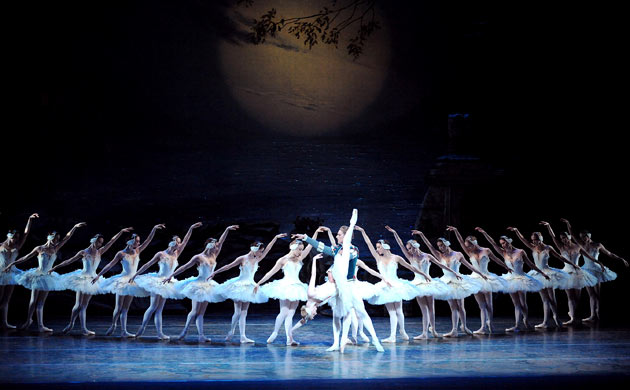
– What do we commonly think when it comes to these terms: play, freedom …? Children, unhindered in their naïveté is in may cases likely the first connotation. And the second connotation may be the artful play of … – for instance the reasonably uncontested beauty of a harmonious dance.

It is the beauty of clarity, order and balance. It seems to be a self-explanatory approach, allowing us to accept without asking, looking at something that has its own order, being independent. Probably this is part of our tendency to perversely celebrate power: the monuments of past and present oppression – yes, I had been in the German Reichstag not only due to business, and part of the study trips I did with the students here from Cork had always been the admiration of some of these ‘monuments’, the last one the most impressive town hall in Paris.

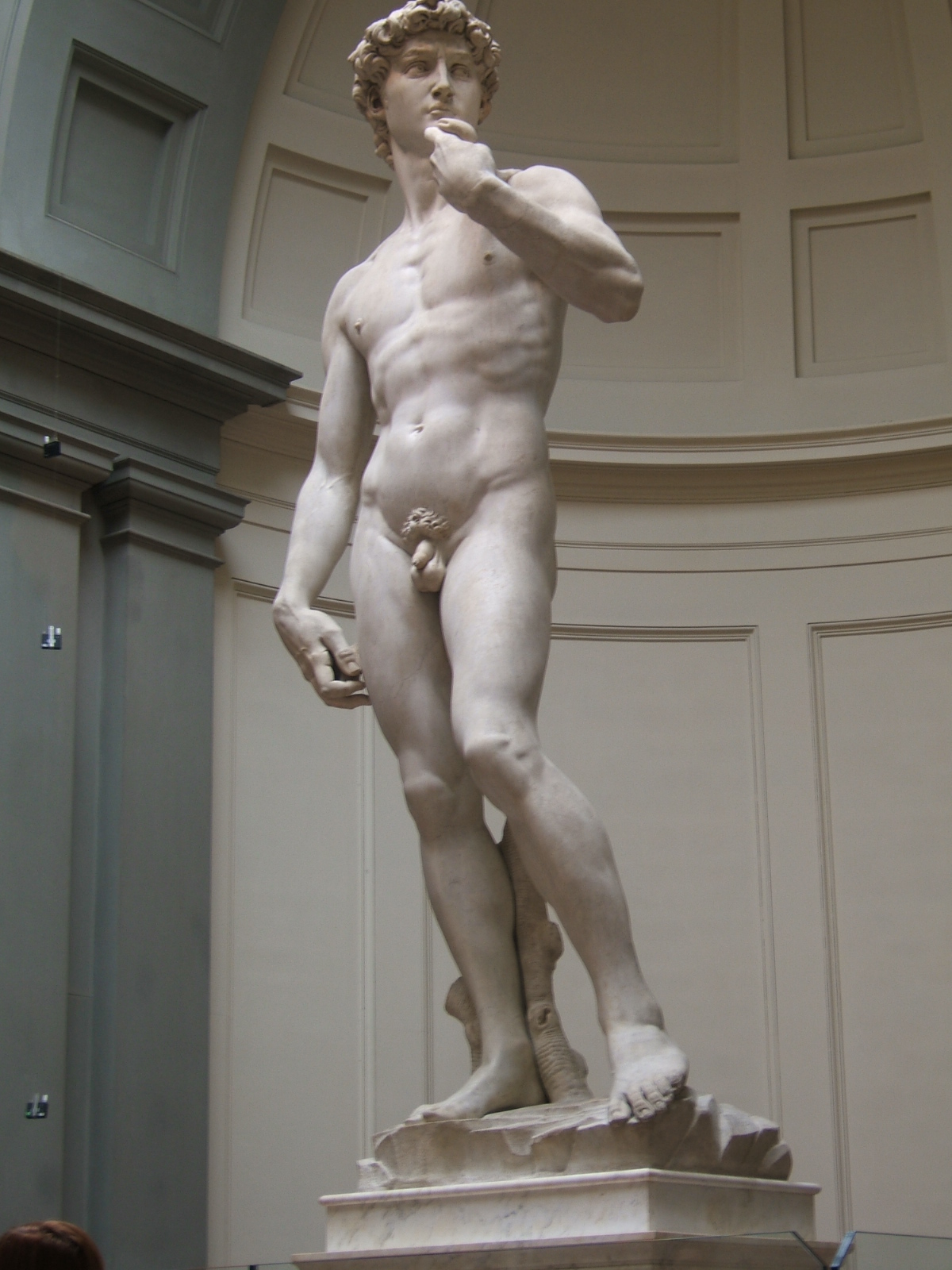
It is the admiration of something able to stand without support. Supposedly in sculpturing Michelangelo’s statue David is a very early example for such order: the first free-standing statue, the young man standing on his own. As such, standing upright, the statue had been sending a strong – and actually hugely contested – message.

As the Florentine chronicler Luca Landucci noted in his diary, stones were thrown at the collossal sculpture even if it was being transported from the Office of Works, so that a guard had to be mounted to protect it.

Importantly

The stone-throwing youth’s came from pro-Medici families for whom the prospect of a figure with republican connotations being installed in front of the seat of the Florentine government must have been thorougly unpalatable.

(Zoellner, Frank/Thoenes, Christoph, 2007: Michelangelo. 1475-1564. Life and Work; Koeln:Taschen, 2007/2010: 46)

Giorgio Vasari chronicled in this context a little story that has some metaphorical meaning.

It happened at this time that Piero Soderini, having seen it (the statue, P.H.) in place, was well pleased with it, but said to Michelangelo, at a moment when he was retouching it in certain parts, that it seemed to him that the nose of the figure was too thick. Michelangelo noticed that the Gonfalonier was beneath the Giant, and that his point of view prevented him from seeing it properly; but in order to satisfy him he climbed upon the staging, which was against the shoulders, and quickly took up a chisel in his left hand, with a little of the marble-dust that lay upon the planks of the staging, and then, beginning to strike lightly with the chisel, let fall the dust little by little, nor changed the nose a whit from the what it was before. Then, looking down at the Gonfalonier, who stood watching him, he said, ‘Look at it now.’ ‘I like it better,’ said the Gonfalonier, ‘you have given it life.’ And so Michelangelo came down, laughing to himself at having satisfied that lord, for he had compassion on those, who, in order to appear full of knowledge, talk about things of which they know nothing.

(Vasari, Giorgio, 1568: Lives of Painters, sculptors and architects. Vol 2: translated by Gaston du C. de Vere. With an Introduction and Notes by David Ekserdjian; New York et altera: Alfred Knopf, 1996: 654 f.)

From here it takes some steps to the question of the disciplining effects of which I promised to talk. But with a little bit of common sense, putting away the cultural bias it will actually be soon clear.

  • One of the fundamental demands put forward in science is concerned with the discovery of structures that are characterising any given reality. Methodologically this is a complex process – and speaking of methods it seems to be a rather simple matter of the famous bean counting. And with the latter we usually overlook that even the counting of beans isn’t as simple and without presumptions as we like to see it. On the contrary – and I quote Joe Finnerty

one of the most effective applications of indicators is not merely to describe but also to analyse, thereby sometimes changing the definition of a problem.

(Finnerty, Joseph, 2005: Social Indicators: Pitfalls ad Promise; in: Herrmann, Peter (ed.): Utopia between Corrupted Public Responsibility and Contested Modernisation. Globalisation and Social Responsibility; New York: Nova Science Publ.; 61-76; here: 69)

  • With this we arrive at the fact that paradoxically a second and simultaneous fundamental rule of science is construction – though analysing reality, this reality isd also constructed by the process if selection and combination. If we focus on elementarity as core moment of the research process, i.e. if we look for what is elementary, we are always applying a histrocial and social (class) dimension.
  • The story of David and Michelangelo’s presentation captures both, the determination of structure based on some form of de-construction and the construction according to the interest that is standing behind research:
  • * David stands in front of his colossal enemy, finding the small point of his vulnerability: the gap through which he could throw the fatal stone
  • * Michelangelo interpreted this: emphasising David’s beauty, virginity and power: a firm independence. However, this translates into some inability to move. It is correct to speak of structure; and it is equally correct to say that this structure follows in some way a rule that is inherent in the person of the David – later in history this is fully spelled out, the early modernity suggesting

Omne ens habet aliquod esse proprium (every entity has a singular essence)

(Johannes Duns Scotus, Opera Omina [1266 à Duns 1308] quoted in: Suarez-Nani, Tiziana: Pietro Pomponazzi et Jenas Duns Scot critiques de Thomas d’Aquin; in: Biard, Joel/Gontier, Thierry (dir.): Pietro Pomponazzi entre traditions et innovations; Amsterdam/Philadelphia: B.R. Gruener Publishing, 2009: 29-67; here:  33)

  • * And finally, the supposedly neutral viewer – the Gonfalonier – is getting lost in all of this: being deceived by falling dust and taking it for change. It is the lack of ability to understand the rigidity caused by looking at isolated ‘facts’. We may take it as metaphor, seeing it as confirmation of Michael Hardt’s and Antonio Negri’s stance:

The triple imperative of the Empire is incorporate, differentiate, manage.

(Hardt, Michael/Negri, Antonio, 2000: Empire; Cambridge, Mass./London,Engl.: Harvadd University Presee: 201)

Now it is not a major step anymore – David can be seen as anticipated manifestation of modern understanding of Anglo-American social policy as academic discipline: it is a discipline that defines itself by de-contextualising the subject matter; it is a discipline that looks at social administration of the good and the evil, the deserving and the non-deserving … .

  • Of course, it is a long and winded road …, at the end of which structuralism evolves. We may speak of Davidian social science and can easily see the fatal development: ‘methodological individualism’. Social processes are dissolved, deconstructed. And from here this social science – always being applied social science – supports in real history the emergence of something new, namely the modern individual, reflecting only him or herself. As we know from Descartes, it is the individual that comes only with this reflection to its existence. It is this reification of Narcissus that leads then Adam Smith to look for an invisible hand – power and security standing outside, being seen as independent from the dynamic processes.
  • However, as much as we are dealing with ideal figures: imagined independent structures, we should not forget that these constructions are not based on free will. They are reflecting societal and eco-technical circumstances as they are given in the social structures: the productive forces and the mode of production – the pedestal on which Davidian thinking stands.

So much on David and the meaning for social science: established had been a figure that expressed

compassion on those, who, in order to appear full of knowledge, talk about things of which they know nothing.

The Gonfalonier, Michelangelo is facing is manifest in today’s office worker: senior officials and the administrator depending on their instructions, immersed in seemingly neutral rules; rules themselves presenting themselves as technical whereas their essence is substantially about socio-political power: law and administration as presented by Max Weber, speaking of

[s]pecialists without spirit, sensualists without heart; this nullity imagines that it has attained a level of civilization never before achieved.

Max Weber, The Protestant Ethic and the Spirit of Capitalism. 1905,Chapter V, Asceticism and the Spirit of Capitalism

Karl Marx refers to this in the famous statement from the 18th Brumaire.

Men make their own history, but they do not make it just as they please; they do not make it under circumstances chosen by themselves, but under circumstances directly encountered, given and transmitted from the past.

(Marx, Karl, 1852: The 18th Brumaire of Louis Bonaparte; in: Karl Marx/Frederick Engels: Collected Works; Colume 11: Marx and Engels: 1851-53; London: Lawrence&Wishart, 1979: 99-197; here: 103)

The dream of freedom emerges turns into its opposite

The tradition of all dead generations weighs like a nightmare on the brain of the living.

(Marx, Karl, 1852: The 18th Brumaire of Louis Bonaparte; in: Karl Marx/Frederick Engels: Collected Works; Colume 11: Marx and Engels: 1851-53; London: Lawrence&Wishart, 1979: 99-197; here: 103)

And exactly this is Michelangelo’s paradox as much as it is the frequently re-emerging paradox of history: the dwarf, the powerless gaining power and establishing him/herself as giant. I am not talking about the tyrants, emerging for usually brief periods in history. I am talking about the tyrannical systems for which they are only mere backers.

Coming back then to Marx contending that

[m]en make their own history

we have to recognise that this claim stands fundamentally in opposition to structuralism – be it as closed and disciplining scientific methodology or be it as ‘way of life’. It stands against the rigidity of oppression, against the abduction and rape of the freedom of thought.

The most impressive statue I ever came across is Bernini’s Rato di Proserpina.

For me it is an amazing, most powerful expression in sculpturing or even in art expressing the victory of process over structure. Sure, the title still focuses on the old hegemony: abduction and rape. Nevertheless, it also suggests a different focus. At the centre we find Prosperpina: fighting, resisting. Her rejection and aversion is expressing a new beauty: the beauty of action, the beauty of a revolutionary process.

According to Simon Schama in a BBC-feature, this statue, Bernini’s great work, is the first piece in the history of art that dynamises sculpturing in a serious way (Schama: passim). Behind this we find in very broad terms two inventions:

  • the invention of the now ‘civilised individual’, distanced from nature and distanced from the social
  • and the invention of the economic sphere as distinct area – a ‘de-socialised sphere of social action’, organised by stratified-functional segmentation.[4]

Of course, this meant not least that the process had been a matter of dialectical development: clearly positioning structures as independent of each other, the escape of the individual from the oppression of the political power had been simultaneously the establishment of new structures. In methodological terms it is what Karl Marx develops, contending that

proletarian revolutions, like those of the nineteenth century, constantly criticise themselves constantly, interrupt themselves continually in their own course, come back to the apparently accomplished in order to begin afresh, deride with unmerciful thoroughness the inadequacies, weaknesses and paltrinesses of their first attempts …

(Marx, Karl, 1852: The 18th Brumaire of Louis Bonaparte; in: Karl Marx/Frederick Engels: Collected Works; Colume 11: Marx and Engels: 1851-53; London: Lawrence&Wishart, 1979: 99-197; here: 106)

But importantly we find this as a process of a permanent restructuration and reconstruction – this is only possible by way of fundamentally accepting the ‘blurring of boarders’. With this we arrive at a point not only of questioning given border lines, but also as matter of establishing new points of reference. Processes of change are of course again linked to real processes – at stake is not an intellectual exercise of ‘reordering the world’. Instead we are dealing again with the fact that processes and structures alike are reflecting societal and social structures: the productive forces and the mode of production. Proserpina is, in this interpretation, not just expressing her rejection but she is also expressing part of another world, now being possible. And now also being necessary as matter of developing independence.

The actual challenge for (social) science is to find a way that allows the construction of an ongoing structured processualistion – in actual fact a rather harsh process of open battles, reminding me of Pablo Picasso’s masterpiece Guernica.

Such quest may replace at least to some extent the dominant discussion of social science that juxtaposes function and structure. Critical realism – for instance being brought forward by Roy Baskar and Margaret Archer – can be an important inspiration for this process. The social quality approach makes importantly reference to this work. At the same time it emerges from the analysis of concrete policy processes, in particular in the area of EUrope – and looking back to art we come at this stage really back to dance – earlier reference had been made already earlier to its beauty.

At the core this new approach in discussing social policy is about a more radical version of dance, not limited top the disciplined form of an academic subject. Even as somebody who had been not only teaching social policy but who had been working for a quite a while in the lobbying industry for changes of social policy I dare to say that the social quality approach is about rejecting the concept of social policy at least in its mainstream understanding. This is not primarily about a rejection by way of criticising certain measures or policy programs. Nor is it about a rejection due to social policy being annexed to other areas of policy making, in particular economics, captured as social investment, the productive role of social policy, the increasing subordination under managerial, legal and financial requirements and regulations. At the core of the critique stands something else: the conceptual framework that is based in two fundamental flaws – with this I come back to matters that had been mentioned already on more general terms.

  • It is about the definition of social policy as something that is rooted in processes and structures that are seemingly standing outside of society. Although social policy is surely seen as something that deals with issued that ‘emerge from society’, social policy itself is considered to have somewhat different roots: it is about intervention, activities ‘on behalf’ or ‘in the interest’ of certain groups, pursuing certain moral ideas and … – and predominantly at the end society comes into play and social policy strives for a better society.  – In short, the social is by and large something imagined, not something real. It is a ‘distinct state’ in some ways similar to Benedict Anderson’s Imagined Communities.
  • * To put it on its feet, we would need a clear and explicit understanding of what the social actually is – the proposal by the social quality approach is to understand it as

outcome of the interaction between people (constituted as actors) and their constructed and natural environment. Its subject matter refers to people’s interrelated productive and reproductive relationships. In other words, the constitutive interdependency between processes of self-realisation and processes governing the formation of collective identities is a condition for the social and its progress or decline.

(van der Maesen, Laurent J.G./Walker, Alan, 2012: Social Quality and Sustainability; in: van der Maesen, Laurent J.G./Walker, Alan (Eds.): Social quality: From Theory to indicators; Basingstoke: Macmillan: 250-274: 260)

  • * Furthermore, the real ground has to be seen in the production and reproduction of daily lives. David Harvey asserts that

[a]t Marx’s conception of the world lies the notion of an appropriation of nature by human beings in order to satisfy their wants and needs.

(Harvey, David, 2006: Limits to Capital; London/Brooklyn, Verso 5)

This brings us immediately to the point Marx himself emphasises. Point of departure is a simple relationality:

[i]ndividuals producing in a society

(Marx, Karl: Introduction (to the Economic Manuscripts of 1857-1858 [First Version of Capital]); in: Karl Marx. Frederick Engels. Collected Works; volume 28: Karl Marx: 1857-61; London: Lawrence & Wishart, 1986: 17-48; here: 17)

And he ascertains:

The further back we go in history, the more does the individual, and accordingly also the producing individual, appear to be dependent and belonging to a larger whole. At first, he is still in a quite natural manner part of the family, and of the family expanded into the tribe; later he is part of a community, of one of the different forms of community which arise from the conflict and the merging of tribes.

(ibid.: 18)

Now it is important to emphasise that

[a]ll production is appropriation of nature by the individual within and by means of a definite form of society. In this sense it is a tautology to say that property (appropriation) is a condition of production.

(ibid.: 25)

However, social policy in its mainstream thinking – including approaches claiming radical changes – are lacking a proper reference in this respect. Instead, arguments are brought forward from idealist perspectives. A confirmation is that social policy, at least in its mainstream and especially in its Anglo-American perspective, does look at the exclusion and oppression of the working class – but it hardly recognises that it had been the working class and the relevant movements that led to what we see as social policy today.

  • The other reason for rejecting mainstream views on social policy is a variation of the first: although the dominance of economic interests is frequently highlighted and criticised – and although it is even recognised as matter of power relationships – the concept of economy is de-socialised. This could be further elaborated; and it could also be elaborated by way of extending the analytical alienation by showing a similar process of de-socialisation in political thinking. In the same way in which Alfred Marshall deprived political economy from the political dimension it can be said that Hobbes (to name just one) the state from the political. The Leviathan is an anonymous institution, bar of a political dimension, reduced on its instrumental and thus technical character of controlling individuals. – And paradoxically we find in both cases the emergence of superpowers that exist as a kind of cloud-castle.

Society is dissolved into three spheres: market, state and communities – and politicians as well as academics fit easily into the role of secular priests, celebrating the economy as father, confirming the state in the role of the obedient son, and hoping for the community and family as emerging holy spirit.

Of course, law plays a role too – presenting itself as a kind of Holy Scripture: a skeleton, keeping things together by way of a seemingly neutral, formal framework – claiming universalism, pertaining particularistic class interests. On the one hand

[a]n understanding of law’s nature is hard to attain because, on the face of things, law seems to possess characteristics that cannot be combined within a single entity: law is an established social institution, but also a guiding ideal for such institutions; an apparatus of organized force, but also the antithesis of force; a product of authority, but also the source of any such authority. It is in this quality that has some theorists to conclude that traditional ideas of law embody a belief in the ‘incarnation’ of the ideal within the realm of the actual, or a belief that law is ‘brooding omnipresence in the sky’.

(Simmonds, Nigel, 2007: Law as a Moral Idea; Oxford: Oxford University Press: 21)

    On the other hand

[m]en and women create their moral identities and values as by-product of interaction and mutual acknowledgement, just as they create culture, language and the structures of thought. The relationships in which we associate together can embody values that structure our choices and decisions.

(ibid.: 7)

And in a society in which power is not distributed equally, the meaning is clear: it is about the moral identities and values of the ruling classes.

  • And to produce then myself such trinity, I come to the next point of rejecting the stance of mainstream social policy: the externalisation of nature – actually we are still dealing with more or less a variation or even the accumulation of the first point, namely the dissociation and idealisation of individual action. From here anthropocentrism is nearly unavoidable

Leaving detailed discussion aside, we find human beings loosing the ability to act – or more precise: they are able to act but there is no space left for developing practice.

For social policy it means that it is fundamentally characterised by especially two flaws:

α) It is highly individualistic, even to such an extent that so-called social rights are only conceptualised as rights of individuals;

β) furthermore social policy is systematically limited by being detached from the socio-ecological causal and contextual foundation, i.e. the (re-)productive existence.

Consequently – and wrongly – social policy as theory and practice – avoids economy (and economics) like the plague. The celebration of noble ambitions, the striving for values that are proclaimed as universal is not simply a quirk of academic thinking – it is in actual fact a dangerous des-empowerment.

– It may be worth a nota bene that it is also undermining academic work: values are stated, remain unquestionable and opposing them is similar to opposing god. A new Alighieri may tell us if Benedict has to go through similar pain, as we know from Pope St. Celestine V, left to ‘gran rifiuto’ – the great refusal (see Alighieri, Dante, 1308-21: La Divina Commedia. Inferno; illustrata da Gustavo Doré, con commenti di Eugenio Camerini; Roma: Fratelli Spada Editori, without date: 36). And furthermore somebody else may show us how this kind of academic dislocation will be end in vein – if we won’t see it already with our own eyes.

I do not want to delve into details of social quality as alternative approach. Shortly, however, one point. I had been asked last week during a debate in Rome as seemingly question: Why don’t you call it socialism?

  • The initial answer had been straightforward: Personally I call it a socialist strategy.
  • Nevertheless, there is a more complex answer: we have to look for ways to adapt socialism and the search for socialist policies to the changed conditions. I.e. we have to find sound answers to the questions of the development of the productive forces, the meaning of such development also in a global, not only a national or regional perspective. Only from here we can understand the meaning of these changes for needs and also for governance. Though this surely means claiming socialist orientation it goes also further. It is a matter of analysing contemporary conditions, it is a matter of social practice in a conscious way. Taking the Marxist tradition, it means to use a permanently critical approach.

Critique is the practice of exposing the social basis underlying an argument. Marxist critique is generally immanent critique, that is, critique springing from inside. …

… critique implicitly recognises that the argument it opposes is right, but right in the context of a specific form of social practice which may not be declared.

(Marxists Internet Archive: Encyclopedia. Critique;)

– Another nota bene: It is exactly this approach that is applied in some work by the Centro de Investigaciones de Política Internatioal (CIPI) in Cuba in which I am involved. It is also something that has important repercussions in countries like Bolivia, Venezuela etc. I make this remark as it highlights that we can expect in particular from peripheral countries and regions inspiring theoretical challenges in this context.

Furthermore, the approach of Social Quality Policies instead of social policy is also not simply socialist as it is an approach that still ask for small measures, traditional policies and reforms that may be departure for further and more radical developments.

  • But having said this, at the end of the day it is a socialist approach to the extent to which it focuses on the social as complex structure of power-based interactions. Here we can briefly look at Antonio Gramsci’s discussion of hegemony and the role of the organic intellectual. Important is to recognise first of all that the core of Gramsci’s work is concerned with the structural conflict in society and the need for addressing it as question of clashing class interests – for those who don’t like the term: just refer to fundamental and antagonist conflicts between different interests. Second, Antonio Gramsci speaks of different forms of power – much later Michel Foucault comes up with this as well, transposing it from the Gramscian view on class struggles into a more generic context of different forms of power imbalances on the one side, power struggles on the other side – culminating in the view on the indivisible relationship between power and knowledge. The important point is that for Gramsci power is only real when it is intermingled with knowledge – deep knowledge leading to organic power reflected in and by the organic intellectuals. Briefly quoting the Quaderni

The criterion on which we should base our analysis is this: that the supremacy of a social group manifests itself in two ways, as ‘domination’  and as ‘intellectual and moral leadership’. A societal group is dominant over opposing groups which it tends to ‘liquidate’ or which it even aims to subdue by armed force and it is leading the allied groups and immediate allies.[7]

With this I am coming to the end by highlighting four points that are in my opinion central for the development for taking responsibility in teaching sustainable social quality.

First, I said in the beginning language matters. It does so in a twofold way: it is about clarity of language and at the very same time about use of language to substantially engage with what is going on around us. Engagement may be about going with the stream of beauty; and it may also require taking up fundamental challenges of disputes.

Second, it is also about the clarity of analysis: only posing an exact question will allow us to find exactly the causalities – and of course the casualities of wrong politics and policies. This is conditio sine qua non for finding therapies: answers to the burning questions.

Third, it requires looking at the realities – not as they appear but as they are. If we then say social policy – to use this term, though not the concept – is predominantly about Social Justice (Equity), Solidarity, Equal Valuation, Human Dignity (the four normative factors elaborated by the Social Quality Theory) and if we see that these values are decomposing, it is because the reality that had been behind them is decomposing. And without falling into relativism, we should not forget that our understanding of Social Justice (Equity), Solidarity, Equal Valuation, Human Dignity is always a historical one. Without this recognition – and without taking firm responsibility for a clear analysis and open dispute, we arrive indeed at reinventing the wheel or squaring the circle.

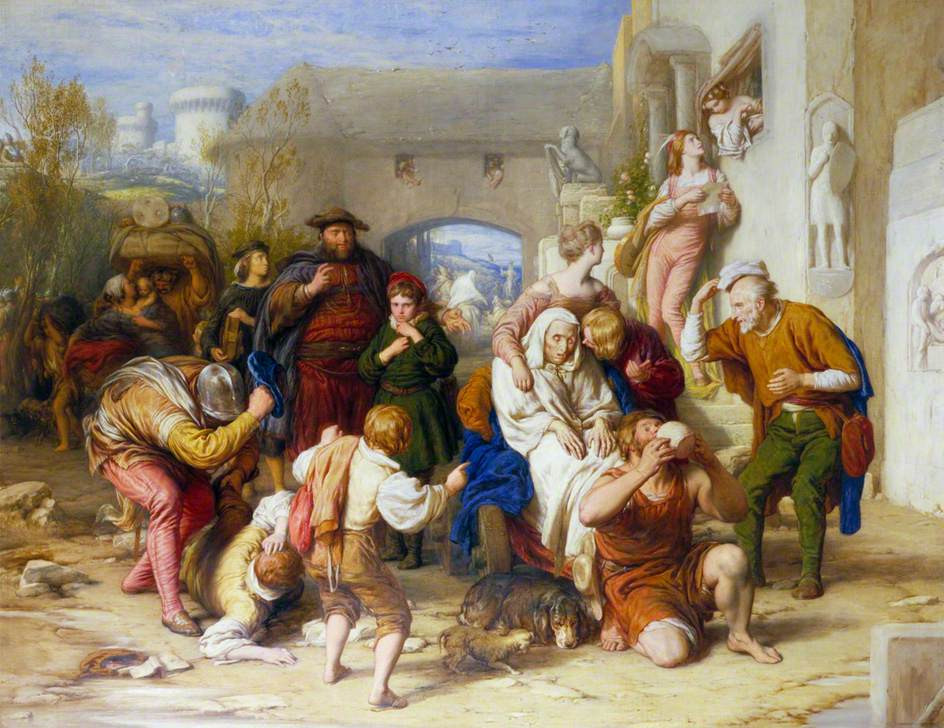
– Of course fourth: Have  look, the little boy, stepping out.

If you ant, this kind of enlightenment is then leading to paradise – referring to another time to Dante, now the third volume, tha Paradiso

Like sudden lightning scattering the spirits
of sight so that the eye is then too weak
to act on other things it would perceive,


such was the living light encircling me,
leaving me so enveloped by its veil
of radiance that I could see no thing.


The Love that calms this heaven always welcomes
into Itself with such a salutation,
to make the candle ready for its flame.[9]


[4]            We can leave the further consideration aside, including the fact that actually globalisation is to a large extent a kind of replication of stratificatory differentiation; see in this context already Herrmann,Peter, 1994: Die Organisation. Eine Analyse der modernen Gesellschaft; Rheinfelden/Berlin: Schäuble

[6]            http://www.birdnest.org/edensk2/dance4.jpg – 27/02/2013

[7]            Il criterio su cui occorre fondare il proprio esame è questo: che la supremazia di un gruppo sociale si manifesta in due modi, come ‘domino’ e come ‘direzione intellettuale e morale’. Un gruppo sociale è dominante dei gruppi avversari che tende a ‘liquidare’ o a sottomettere anche con la forza armata ed è dirigente dei gruppi affini e alleati.

Gramsci, Antonio, 1934-35: Quaderni del Carcere. Vol 3: Quaderni 12-29; Edizione Critica dell’Istituto Gramsci. A Cura di Valentino Gerratana; Torino: Giulio Einaudi editore, 1977: 2010

[8]            “Seven Ages of Man” William Mulready, 1838 – http://upload.wikimedia.org/wikipedia/commons/9/9e/Seven_ages_of_man.jpg. 27/02/2013

[9]            Dante Alighieri: Paradiso, Canto XXX, lines 46–54, Mandelbaum translation. http://www.worldofdante.org/comedy/dante/paradise.xml/3.30 – 27/02/2013

Higher Education – Academic Whistle-Blowing

Administrative and Legal Questions of Educational Institutions in the Context of Modernising Education and Social Relations – The Socio-Cultural Perspectives

Notes for a presentation on the occasion of the conference ‘Deviation within the context of transformation of social relations and education.

Moscow, February 21st, 2013

Thank you very much for giving me the opportunity to address this important event. Thanks to Andrey Lymar my contribution during thesxe conferences can claim already some tradition.

In some sense it is difficult to contribute – I am contributing as outsider to a debate on topics that are very much questions that fully develop their meaning n national or even local contexts. This is true for both: education on the one hand and administration and law on the other hand.

However, there are also general questions and they are surely general in two respects:

  • law and administration are obviously relevant for everything we do
  • and at the same time we see an increasing relevance: law and administration taking over, reaching into all pores of life and determining the professional space and our professional activities – it does not really matter much that this is a complain that we can find already formulated for instance by Aristotle and Socrates.

We take it frequently as matter of heteronomy – an external power and rationality taking over.

My thesis will be: Talking about increasing meaning of judification and administration is an expression of the very same rationality that we claim as genuinely our own ‘academic’ mission of Western enlightenment.

This may sound to some a provocative argument – and it will take some effort to develop it in detail. However, in the following some indications will give you an idea from where I am coming. It is at the end a fundamental critique of the path Western modernisation took.

First, this Western enlightenment ideology is very much guided by the idea that progress equals ‘distancing from nature’. This went hand in hand with the development of anthropocentric interpretations of the world. And it went – to some extent paradoxically – hand in hand with a process of de-socialisation. This culminated in the absolutist state and later even in the absolute state.

Second, rather than developing an integrated rationality, we saw with the Renaissance the emergence of understanding rationality as something that is inherent to and in everything:

Omne ens habet aliquod esse proprium

– every entity has a singular essence

This doesn’t mean anything else that we are creating externalities: rationality is not genuinely about action but about detecting the rationality and following its requirements. – Actually it is the very consequent conclusion of Christianity.

Third, this way we created not least the methodological individualism – the core of Western social science. At its heart we find the ‘survival instinct’: excessive individualism that is guided by excessive hording of goods and money and that is finally steered by equally excessive means of control.

Fourth, and finally, this is fertile ground for administration and legal systems, taking over according to their own rules. And they do it to such an extent that they even strangulate themselves.

Fifth, in order to end on a more positive note, looking for a re-orientation I see in particular the following four points

  • the need to re-introduce the social – not as normative concept but as responsible reflection of the means and mode of production in the light of a socio-ecologically sustainable way;
  • fully acknowledging the public character of educational systems and processes
  • accepting that education is more and different to transferring knowledge and skills training
  • not least the orientation on education as process of actively engaging in public spaces and on public issues

Law and administration can then actually play an important positive role – and from various contacts, that to Andrey being an important one here too I know that there is futile ground here in Russia to acknowledge also this direction of thinking.

Thank you for your kind attention.

It all starts with a form – and a remark by Albert Einstein

In fact continuing an earlier post)

Well, at least all this shows that things can apparently still be taken with humour – as written in one of the mails

The last time I saw a person from Buildings and Estates in Carrigbawn he told me that the internal building was laughable, it was so poor. That was nearly two years ago.

Sure, never forget to approach things in a humorous way – though some people go even with a smile to the gallows. Of course, the question is then why do in this case the victims go to the gallows – and not the perpetrators? The definition of gallows says that it is

for the hanging of criminals.

The only reason I can imagine for feeling criminal is bringing me back to Plato who said

One of the penalties for refusing to participate in politics, is that you end up being governed by your inferiors.

May be that ‘being governed’ by administrators who need to fill in a form to switch on the heating is a gallows-like penalty.

Or it is the good laugh we may get out of it: at least taken from the one mail the state of some buildings seems to be a joke – herfe it is quoted again

The last time I saw a person from Buildings and Estates in Carrigbawn he told me that the internal condition of the building was laughable, it was so poor. That was nearly two years ago.’

– Though I can understand the colleague from buildings I am not entirely sure if the laugh is so good that one comes near to suffocation, thus having another form of gallows … .

There is another thing: all this had been and is an excellent example: My entire social policy teaching yesterday had been based on this little incidence. In class we talk currently about rights and law – you may refer to this concise definition by Kant, stating:

Right is therefore the sum of the conditions under which the choice of one can be united with the choice of another in accordance with universal law.

(Kant, Immanuel, 1797_E: The Metaphysics of Morals. Translated and edited by Mary Gregor. With an Introduction by Roger J. Sullivan; Cambridge: Cambridge University Press, 1996: 24)

And of course, the problem is the reflexive (or we may say tautological) character, typical for ‘modern societies’ and in very simple terms already criticised by Einstein, saying

we cannot solve our problems with the same thinking we used when we created them.

The challenge then is to overcome the permanent tension, immanent in law of the modern capitalist society, a political system that is characterised by liberality of economic activity based on private property executed by individuals within the framework of the nation state …

Of course, the limitation is already visible in the claim of general moral and intellectual virtues as spelled out by Aristotle in the Nicomachean Ethics:

  • prudence, justice, fortitude, courage, liberality, magnificence, magnanimity, temperance
  • justice, perseverance, empathy, integrity, intellectual courage, confidence in reason, autonomy.

One of the very fundamental flaws with it can be grasped by the inherent naive individualism and protectionism which then later could serve as fertile ground for individualism – and as such it is about a paralysing effect of a normative system that claims to inform individual, however is reduced to permanently reproducing itself within this idealist gist without being able to emerge as actual social force.

What remains in this perspective as solution is limited: the self-construction of individuals, the justification of the Leviathan as personification of the social and evidencing its individualist stance: the superpower, allowed to do everything, by Weber (in his Politics as Vocation) said to have the

monopoly of the legitimate use of violence

and with all this lacking the fundamental force of genuine relational sociability. The state based on righteousness emerging as state based on law. The state as ré-total instead of being a ré-publique – already outlined in much earlier writing by Emanuel Joseph Sieyes.

And the only legitimate power can then even come along and deny the rights: class education, institutional racism, gender inequality. Of course, it is the social science that occupies the part of the five-start-university’s infrastructure that are in the worst conditions; of course it is the working class that is still hugely underrepresented in third-level education; of course it is gender that plays a role when it comes to the choice of subjects and of positions in the hierarchy of academic positions; of course it is the working class that is still largely left outside of the equation when it comes to reflecting on social policy which limits itself on administration, good-doing and injustice rather than talking about class conflict – and of course we decry the discrimination of individual students on ground of ‘race’ without however honestly contesting the fundamental parochialism of our Western societies that allow capital to move freely within a globalised economy (that is still hugely structured by centre-periphery inequalities), a parochialism that consoles ‘ordinary people’: as long as they adopt the culture of wingless consumers: chicken nuggets, wrapped in tight seats of low-fare airlines, allowing the illusion of also living in the global village. Sure, those who do not adopt the rules have to adapt to other rules: detention, deportation and/or permanent control and oppression … – all part of the of picture which the German writer Bert Brecht once characterised by the words: ‘The lap is still fertile that allowed this to grow …’ (Brecht had been reflecting on fascism – at a time what it had been overcome, but its roots had still been in place). And just while writing these lines I receive the news that some German parliamentarians lost their immunity because they participated in a protest action against a gathering of fascists in Dresden.

All these ‘injustices’ and ‘social imbalances’ remain within the outlined system – legitimate as long as they are geared towards spaces for this self-construction. Surely a painful process – even if self-construction is about self-deconstruction of those victims who are blamed to be responsible for their situation: suicide, addiction, consumerism, criminality, the victims made to those ‘perpetrators’ that become ‘clients’ of social professions. And it is a painful process even if it is only the pain of a cold office, or the pain of

‘part of the roof of Carrigbawn (the decorative wooden bit, complete with nails sticking out) which fell off during last night’s storm’

and which had been picked up by Angela and luckily did not hurt anybody.

Dyl Ulenspegel clould not beat it

You know, I can gain some pleasure from some foolish acts – and I also think that much of what we are teaching, be it on rights, politics and policies etc. can be literally found in any day-to-day situation within institutions like for instance any university. Finally I still think there is some meaning in making such follies of public services public (you think it is a play with words? – Not really!) [well, all this shows there had been something I learned from one of my teachers, Rudolph Bauer – and I am still grateful for his teaching many years back and his ongoing friendship over the years].

So, here another little story.

***********

I sent a mail to “buildings office” – after suffering in a lecture room and after seeing the students suffering even more (at least I could move a bit around while lecturing). So here is the text of the mail sent on the 24th:

Dear …, I had been teaching today from 11 to 1 in the Distillery, room G01. The students complained about the lack of heating – and I only made the session myself as I had been able to stand and move at least a little bit – not keeping warm but at least maintaining a temperature that allowed me teaching. However, students said as well that they had been over long phases not in a position to concentrate.

Be it as matter of citizens rights to education provided by the Irish state or by way of customers of UCC as service provider, this is an unbearable and unacceptable condition. I am writing not least as this is not the first time it happened, though it had been previously in different venue.

I hope that this issue will be investigated in a sincere way and the issue will be corrected.

Thank you very much,

Peter

I then received on the 28th of January an answer by the Buildings Office Helpdesk – yes, I received one.

Just an attachment – a form

WORK REQUEST/ORDER

NO: 62025

Requested by: Herrmann, Peter

Dept.: … Location: ….

Description of work request:            turn on heating in G.01

One page (A4) with different sections:

To be completed by Supervisor

To be completed by Assignee

For Office Use

Mind, especially the stuff noted under Safety Notice:

All works is to be undertaken by suitably qualified and competent persons, and in compliance with the Buildings and Estates Office Safety Statement and College Safety Procedures.

Work should be supervised as appropriate by the relevant foreman.

What is said in respect of qualification and competence may be questioned when it comes to the folks that is engaged with defining the admin side of a simple act: switch the heating on before teaching commences.

**************

May be … – if Kafka would be still around, he surely would write another of his famous stories based on this. And this story could surely be sufficient for Erving Goffman, Norbert Elias and the like to get them an hour and more exploring phenomenology of institutions and the Sociogenetic and Psychogenetic Investigations of the Process of Civilisation … .

One point may be added: Norbert had been strong believer in the process of civilisation – and although he had been (as Jew) forced by fascism to leave Germany, he had been until the end of his life convinced of such civilisational progress, rejecting any proposals to talk about de-civilisation and even remerging barbarism. Later, such discussions emerged by people who based their arguments on his work. Though I assume he would not have agreed. He had been just too gentle to think that we can step back. And with all conviction I still try to maintain such gentleness that I have had the honour to experience during our meetings, not possibly getting seriously damaged by being forced into such an iron cage (as Weber would have had it).

You see? Such a little story, and so much in it … – Occasionally I feel myself being seen as a very abstract thinker – but there is something I learned from somebody else who had been teacher and somewhat mentor: Niklas Luhmann, showing me that these apparently very abstract terms, categories and relationalities are just in front of us in tiny pieces – and it is up to us to leave it there on the ground: scattered and dangerous with the sharp edges of the heap of shards; or if we draw attention: allowing us to detect the essence of what all this is actually about: simplicity of oppressive hegemonic of which we are all part.

There could be an endless chain of examples we may add:

  • Grants for conference participation given to full time staff – maintaining establishment – rather than promoting with the meager means colleagues who may be in precarious situations, just starting careers … – sorry, didn’t older colleagues have enough time to establish themselves to be invited and get the conference fees covered by the organizers?
  • Issues of teaching and learning decided by administrative rules (or administrators as rulers?) rather being assessed in the light of needs of students – and staff that are preparing relevant material, sessions and excursions
  • publications rated on grounds of quantity and of ‘reviewed’ quality instead of quality and quality emerging from collective disputes

Well, we may leave it with the trinity – sure, in this light we come to the conclusion – taken from Marx’ ‘Grundrisse‘ – that

[t]he concrete is concrete because it is the concentration of many determinations, hence unity of the diverse. It appears in the process of thinking, therefore, as a process of concentration, as a result, not as a point of departure, even though it is the point of departure in reality and hence also the point of departure for observation [Anschauung] and conception.

PS: in this context perhaps of interest my publication

More recent and relevant:

And finally:

  • Research on demand. Academics between self-consciousness and self-chastisement; forthcoming in the documentation of the ÖFEB-annual meeting)

Class

Göran Therborn published an article in the New Left Review 78 which is a hugely important reminder. Not least he highlights the ongoing meaning of the class question for social policy which had been – and still is – largely neglected within the British tradition of social policy and its foundation in social administration.

I think Göran’s contribution is a hugely interesting reading especially today while for another time the current crisis is not discussed with a proper reference to class issues. The debate on the crisis still remains caught within a framework of a supposed general interest, which had been and is always the interest of a minority. This is well known not only from Karl Marx’ work but also getting obvious from a thorough study of the two main works elaborated by Adam Smith (“Wealth of Nations” and “Moral Sentiments”).

I may add a brief comment, putting the perspective on social policy in perspective. Looking at economics, it’s original sin is linked to Marshall, stripping off the political from the economy: whereas all thinking in this area – be it by Xenophon, Ricardo, Smith or Marx to name but a few – had been hitherto seen as essentially political economy, we find now this fundamental shift of an alleged separation. NB: The mathematisation is not as such a problem although it is this that frightens frequently social scientists entering the debate on economic questions. Not least with this lapse we find the birth of social policy in its modern form: separated, entering a hopeless competition, searching its foundation in a claimed “pure reason of values” and prone to be swallowed by administration. The most extreme pattern surely developed in and from the Anglo-American tradition which founds social policy in social administration. Rather than referring to recent debates and examples (see for instance  my own writing: Person oriented services and social service providers in comparative and European perspective. Current debates on changes by liberalisation in a perspective of a theory of modernisation; New York: Nova, 2006, and more recent and relevant: The End of Social Services? Economisation and Managerialism; Bremen: Europaeischer Hochschulverlag, 2012)

I want to draw attention to the work of Karl Polanyi (surely beyond any suspicion of being Marxist): The Great Trsansformation. In his analysis of pauperism, Speenhamland legislation and its ‘antecedents and consequences’ (see part two: The Rise and Fall of the Market Economy; I. Satanic Mill) he clearly shows that this legislation had been genuinely part of the political economy of the time, not a matter of ‘distinct social policy’. And as such it had been established, taken back and re-established in new forms. A quote may show this:

The market pattern, on the other hand, being related to a peculiar motive of its own, the motive of truck or barter, is capable of creating a specific institution, namely, the market. Ultimately, that is why the control of the economic system by the market is of overwhelming consequence to the whole organization of society: it means no less than the running of society as an adjunct to the market. Instead of economy being embedded in social relations, social relations are embedded in the economic system. The vital importance of the economic factor to the existence of society precludes any other result. For once the economic system is organized in separate institutions, based on specific motives and conferring a special status, society must be shaped in such a manner as to allow that system to function according to its own laws.

It is interesting to read then the analysis of the development of the social policy legislation which had been mentioned: the class question always being on the agenda, the bourgeoisie always well aware of acting as class – in a way we may apply the notion brought forward by Marxism when looking at the proletariat, here applied to the ruling class: a class being characterised by the consciousness of being a class for itself rather than being only an objective entity without a consciousness of its existence (cf e.g. Marx,Karl: The Poverty of Philosophy; ; Chapter 2: The Metaphysics … . Strikes and Combinations of Workers). It is also interesting to see that in current debates the bourgeoisie is again (or we may better say: still) well aware of this close intricate link. On the other hand, we find on the (in a political sense) liberal and left spectrum a reluctance to enter the debate of class issues to see social policy as genuinely economic question and vice versa, in other words: to return to a genuine understanding of political economy. Pseudo-radical reference to a Ship of Fools or greed as phenomenon of general deterioration are only apt to distract from the essential question of class. – Sober analysis shows that the fools are actually sitting on board of a social science vessel that understands the social as add-on, aiming on strengthening its meaning rather instead of rooting its meaning in societal objectivity. In a proper understanding the social, then is the

outcome of the interaction between people (constituted as actors) and their constructed and natural environment. Its subject matter refers to people’s interrelated productive and reproductive relationships. In other words, the constitutive interdependency between processes of self-realisation and processes governing the formation of collective identities is a condition for the social and its progress or decline.

(van der Maesen, Laurent J.G./Walker, Alan, 2012: Social Quality and Sustainability; in: van der Maesen, Laurent J.G./Walker, Alan [Eds.]: Social quality: From Theory to Indicators; Basingstoke: Macmillan: 250-274, here: 260)

So, in this light a left understanding of social policy has to make a “step back”, returning to the roots if it doesn’t want to allow to be continuously pushed aside by the quest for economic miracles of economic growth of and within marketised societies. To quote another time Polanyi:

The ecomomic system is, in effect, a mere function of social organization.

And social organisaiton and social policy, in one way or another, is a mere expression of class relationships. As such it is a matter of capitalist formations, defined not only by economic interests but by economic power: the control of the means of production and the control of their development and “use”.

China and Asia – A New Capitalist Centre or A New Capitalism?

The following are notes only, giving some kind of direction to a presentation in La Habana, Cuba, not the presentation as such.

Western societies under serious threat

The future will not be ‘capitalism as we know it’ – and it may be added that we probably even fail when utilising the traditional ‘concepts’ and categories as neo-liberalism, nation state and the like as analytical tools;

The future faces the challenges of a new and fundamental threat from the side of environmental hazards

With this we have to challenge and overcome following the roots of today’s capitalism, namely the individualism as a major source of mal-development.

NB: In this light socialism has to think also about what today’s challenges are. Industrialisation is now a matter that is intrinsically interwoven with processes of globalisation and going much beyond the traditional patterns. The understanding of what is ‘industry’ changed – they are very much beyond the development of the means of production. It is also about the means of consumption. And it is also about the changed meaning of production: services, transactions etc. play an increasing and seemingly independent role. We can see this from the meaning of the financial sector in the capitalist world and globally. And we can see this by the fact that already in 1994, Douglass C. North, with reference to John J. Wallis and North from 1986 makes us known of

an empirical study that 45 percent of U.S. GNP was devoted to the transaction sector in 1970

(North, Douglass C., 1994: Economic Performance Through Time; in: The American Economic Review. Vol 84.3: 359-368; here: 360)

Second, globalisation is not so much and not primarily about the power of multinationals. Rather, it is about a structure of complex interdependencies. This means not least that any strategy of economic success has to focus increasingly on issues of quality. And as such it has to deal with complex issues of a highly integrated systems of “work” and “life”.

It is about what is produced and in which way it is produced and finally about the way production and reproduction is immediately integrated in the overall life span.

China as part of Asia as new Centre?

All this is traditionally also a challenge for capitalist societies and all this found already answers in traditional patterns of globalisation, namely the global division of labour. We find fundamentally the three “sites”:

  • The socialist countries
  • The countries of the capitalist centre
  • The countries of the capitalist periphery

Looking at China and other Asian countries the situation is a bit tricky: independent of how we assess “socialism in China”, we can say that all the countries, including the PRC had been peripheral in two ways: peripheral to the capitalist formation in terms of the character of their formation, and peripheral in terms of the development of their industrial stage.

Today, the situation is again different in the relevant countries; but globally they can nevertheless be seen as one group in several respects. Their industrialisation is very much based on traditional systems of social integration; and this means that this industrialisation is also very much linked to the traditional concept of industrialisation: it is about the central role of mass production especially of means of production; however, it is at the same time about a promoting role that this production plays: we can see this very much as matter of ancillary industries. Taken together, it is as matter of a certain social structuration, or a specific way of “social integrity”: it is best accounted for by the reference to “social harmony”. Rather than being based on individualism it is the idea of a specific kind of collectivity. The traditional principles still have some meaning.

The principal tension is between only two poles – the good and the evil – and the ideal is actually not something that is principally outside of this tension but it is the solution of the tension. It is the dialectical Aufhebung in the form supersession and sublation. 石頭希遷 (Ts’an-t’ung-ch’i) expresses this pronouncedly in the Zen Buddhist tradition in the poem Harmony of Difference and Sameness, writing for instance:

In the light there is darkness,
but don’t take it as darkness;
In the dark there is light,
but don’t see it as light.
Light and dark oppose one another
like the front and back foot in walking.
Each of the myriad things has its merit,
expressed according to function and place.

(Ts’an-t’ung-ch’i: Harmony of Difference and Sameness; http://www.sacred-texts.com/bud/zen/sandokai.htm – 15/07/2009 8:13 p.m.)

It is not least a foundation for the role-definitions as we find them in the words of Mencius:

[l]ove between father and son, duty between ruler and subject,
distinction between husband and wife, precedence of the old over
the young, and faith between friends. Fang Hsü said.!
Encourage them in their toil,
Put them on the right path,
Aid them and help them,
Make them happy in their station,
And by bountiful acts further relieve them of hardship.

(Mencius, 300 BC [appr,]: 60 – Mencius. Translated with an Introduction and Notes by D.C. Lau: London et altera: 2003)

One point of special interest is the fact that we find even up to now a strong orientation of Asian cultures along these lines – be it in Buddhism, Hinduism, Daoism or other strands of development. This is important to note as it opens the way towards another interpretation of the differences between the Eastern and the Western understanding of the welfare systems. Whereas in Western societies there is barely any doubt about the welfare state serving as point of reference, this is different in Asian societies where the concept of harmonious welfare society is central.

According to Confucius, social harmony, that is a state of cooperation and the absence of social conflict, can be theoretically achieved primarily by two methods. First, it is the self-cultivation of individual moral character; the second is that both leaders and subject behave with propriety and conduct their relationships in conformity with the social rules without coercion (King & Bond, 1985, pp.30-32; Sung & Hahn, 1985, pp.22-23). In other words, the traditional state of social harmony for good governance is the reliance on people, both leader and subject, in the self-realisation of the best of their moral character and in the exercise of propriety in role performance, even in a hierarchical social and economic order. In practice, as reminded by a Western Chinese expert on the current official discourse of social harmony, that in Imperial China, the “self-serving dynastic rulers adopted social harmony as their official ideologie d´etat, using it to impose a paternalistic, ritualistic ethos of political consensus and conformity upon a voiceless, powerless peasantry” (Bauum, 2005).

(Wong, Chack-Kie: Comparing Social Quality and Social Harmony by a Governance Perspective; Paper presented during the International Conference ‘Social Quality in Asia and Europe: Searching for the Ways to Promote Social Cohesion and Social Empowerment’. University of Nanjing, 24-26 October 2008: 3)

This is hugely important as it

includes a rectification of the earlier development bias towards economic development by the global concept of ‘Five Co-ordinations’ – the coordination of rural and urban development, the coordination of regional development, the coordination of economic development and social development, the coordination of human and nature, and the coordination of internal national development and the need of open door to outside. In other words, the earlier ‘growth-first’ model by the slogan of ‘Get-rich-first’ set by the late Patriarch, Deng Xiaoping, is replaced by the present slogan of ‘Both-rich’ (Central Committee, CPC, 2005).

(ibid.: 7)

Still, as far as we are concerned with an inherent tension of the Asian countries, we have to see the conflictual line: as much as the concept of social harmony is ideologically maintained and modernised, as important is to acknowledge that we face a two-layered structure: the traditional mode of production clashes with the patterns that re typical for the NICs, the Newly Industrialising Countries. It is important to emphasise that we are talking about industrialising rather than industrialised countries. This implies that we are facing a two layered shift of the development.

On the one hand Asia is emerging as a new centre of global capitalism. Sure, it is not about a complete shift – although there are good reasons to see this development as equally serious as the shifts that characterise earlier stages of development – Giovanni Arrighi developed this already in detail: the victory of the Dutch mercantile system over the Northern-Italian city states at the end of the Renaissance; the victory of the new heavy-industrialising England over the mercantile system; later the mass-productive systems of the “New World” of the American Dream, dominating the new global order.

With reference to Bob Jessop (Jessop, Bob, 2000: From the KWNS to the SWPR; in: Gail Lewis/Sharon Gewirtz/John Clarke (eds.): Rethinking Social Policy; London et al.: Sage publications; 2000: 171-184) we can look at this in a different way, at least with view on the “developed national capitalisms”. He provided from a different perspective the following two systematic outlines, each reflecting a different developmental stage of capitalism.

1 Keynesian

=

Full employmentClosed economyDemand management

Infrastructure

2 Welfare

=

Generalized norms of mass consumptionWelfare rights
3 National

=

Relative primacy of national scale
4 State

=

Market and state from mixed economyState corrects ‘market failures’

Keynesian Welfare National State

(from ibid.: 173)

For the latter stage he outlines as follows:

1 Schumpeterian

=

Innovation and competitivenessOpen economySupply-side policies
2 Workfare

=

Subordinates social to economic policyPuts downward pressure on ‘social wage’Attacks welfare rights
3 Post-national

=

Relativization of scale
4 Regime

=

Increased role of governance mechanisms to correct market and state failures

Schumpeterian Workfare Post-National Regime

(from ibid: 175)

There is a good bit of analysis in Jessop’s work which I want to take up and push further, looking at the process of socialisation and its conditions. In other words, it is about exploring the opportunities and needs for a new socio-economic system, thus exploring the potentials of new steps of socialisation.

Taking up Jessop’s references I propose a new perspective as Gates-Jobsian Patchwork Global Spacetime.

1 Gates-Jobsian = Defining Access to “Employment” but also Defining EmploymentOpen EconomyBlurring Demand
2 Patchwork = Individualised Mass ConsumptionIndividual Rights— Opening frm Law to Rights
3 Global = New Belongings and Identities
4 Spacetimes = “Arbitrary” Social Spaces for Individual Self-Realisation

Gates-Jobsian Patchwork Global Spacetime.

On another occasion I stated on the first element that there is some reason for thinking about a Gates-Jobsian shift emerging from the undefined polyphonic post-Fordism? The new computer-technology and with this the era of information-technology as it is frequently attributed to Gates’ Microsoft and Jobs’ Apple emporium has much deeper implications as we usually see: the digitalisation of everything, the increased accessibility of manything and the potential of anything are visible, lurk around every corner. But we do not see immediately the depletion of substance in algebraic formulae, the unattainability of understanding and the reality of the potential as potentiality of factuality, immersing as something that could be but that is not. A new kind of absolute idea – it is not irrationality but a new rationality and perhaps even a new categorical imperative.

This suggests that we actually reached a developmental stage of the productive forces that are now at a stage which are fundamentally reaching into new patterns of life.

On the other hand it is about the power relations within the Asian region. Japan is highly developed in the traditional mass production industries. However, the other countries of the region are more open – not least as they start from a relatively low level of development. The latter can be seen by the fact that their share in international trade decreased enormously for a long time, however massively catching up since recently. Thus we witness the possible emergence of a new centre-periphery structure: China, with its regional satellites as new centre of the global economy; leaving in the long, or even only medium run Europe and the USNA behind. The recent global crisis shows already that global is somewhat reduced: it is primarily about the “global west”, though surely pulling the old satellites in consequence down.

In China the current main challenge is the development of a reasonable own social force. I mean with this, that export orientation can only be a temporary stronghold – allowing some form of economic sustainability only if it manages to develop a sound indigenous economic performance.

Doomed to Fail? The need for a sustainability orientation

However, personally I see the following major difficulties in this respect: Maintaining the concept of a global economy principally based on division of labour fails to see the true challenge of globalisation. It is about emphasising ‘joint existence’ and its sustainability rather than competitive advantage. This accentuates the need to search for a new concept of development that is indeed geared to an understanding of the “we”. For this we may have to learn from each other – and talking about “we” I mean at this moment the work I am involved in as senior advisor to the European Foundation of Social Quality. There is a string collaboration with colleagues in Asian countries. The challenge is to develop an understanding of the social,

conceived as the result of the dialectic (constitutive dependency/c.i.) between processes of self-realization and the formation of collective identities.

(Gaspers, Des et altera, 2013: Connecting ‘Human’ and ‘Social’ Discourses …: 24)

From my personal point of view we have to drive this further. Taking this definition as point of departure we have to look for a way to thoroughly found this definition in its economic meaning, linking it to matters of the development of the productive forces. And we have to found it more serious in terms of a “we” that is not based in traditional values it in real peoples movements.

In particular the latter is, I hope, a point for developing a sound cooperation between colleagues from Cuba and colleagues from other part of the world.

Some Questions: Challenges we Face

It is striking hat we are in many cases dealing with paradigms, concepts and terms that remain unquestioned. This is for instance about the ‘natural character of barter’ (for instance problematised by Karl Poalnyi), the validity of the nation state (even in its modern form) as point of reference, competition as human condition and rational choice as guiding decision making. Issues as reciprocity, altruism, solidarity frequently show up, however remain outside of consideration as constitutive factors. The actual widespread and fundamental meaning of cooperation and the social as

as the result of the dialectic (constitutive dependency/c.i.) between processes of self-realization and the formation of collective identities.

(Gaspers, Des et altera, 2013: Connecting ‘Human’ and ‘Social’ Discourses …: 24)

remain marginalised although they have a prevailing meaning.

It is surely important to discuss the meaning of the accumulation by dispossession. However, we have to look also at developments of accumulation by repossession. Fact is that capitalism inherently destroys its own foundation, competition leading to a process of a ‘clandestine socialisation’.

Development or Change – Today’s Challenges for an Emerging Global Society

The following are notes made in preparation of a presentation in La Habana, Republic of Cuba in December 2012.

++++++++++++++++

The background of this presentation is actually far away – a presentation given by my friend and colleague Laurent J.G. van der Maesen at the 2012 Life & Development Forum in Hangzhou. From there some interest had been established to colleagues here in Cuba. Last year’s forum has to be characterised as

  • global in its very character
  • however, emerging from China and actually even more from the work in Hangzhou and thus marking a specific shift in global development – a shift that can briefly be characterised by emphasising the fact of glocalisation: the recognition of the importance of localities in the part of the global processes. This is not simply a matter of the effects of globalisation on localities but also a matter of recognising the actor perspective of these entities.

Looking at the general agenda of global developments, there are surely many contingencies. However, one may point on at least the following moments as characterising.

  • the future will not be ‘capitalism as we know it’ – and it may be added that we probably even fail when utilising the traditional ‘concepts’ and categories as neo-liberalism, nation state and the like as analytical tools;
  • the future faces the challenges of a new and fundamental threat from the side of environmental hazards
  • with this we have to challenge and overcome following the roots of today’s capitalism, namely the individualism as a major source of mal-development.

NB: In this light socialism had been to some extent caught in the same danger, namely as far as applied the basic principle of capitalist development for an extended time: the focus on the development of the productive forces (with reference to Marx: the development of department I) had been initially surely important; however, it would have been necessary to determine a point from where development is not about development of productive forces, thus implicitly the orientation on quantitative growth of consumption but about development of the quality of goods produced in department II, i.e. the development of means of consumption (in the widest sense) as means of developing social quality.

++++++++++++++++

The thesis is that in order to fully understand today’s challenges we have to look at the roots of capitalism in a more complex way – reaching beyond the economic and subsequent political perspective. In other words it is about fundamentally allowing the return of political economy in its true sense as investigation of the

organic unity of economy and polity

(Perry Andersen).

Such an approach stands against the development of a theory of political economy in a traditional sense of a politico-moral backing of economic processes as we know it for instance from Adam Smith.

Arte. Es la naturaleza creada por el hombre

(José Martí)

A major and fundamental flaws of capitalist development can be seen on the following moments:

  • the emergence of the bourgeois individual
  • based on the – apparent – loss of ‘ontological relationality’ (Slife)
  • leading to the redefinition of social activities as contractual relationships
  • undermining space for social action, while – though only for some – increasing this space on the individual level.

However, seeing this pattern as societal phenomenon we may summarise it as – for capitalist societies secular – process which Niklas Luhmann famously expressed by saying

All could be different but I nearly cannot change anything.

Paradoxically this goes hand in hand with the fact that the individual is made responsible for everything, being seen as rational actor with unlimited capacities to shape his/her life.

++++++++++++++++

I do not want to discuss in detail any question of human rights and relevant questions of legal philosophy (see Herrmann: God, Rights, Law and a Good Society; Bremen/Oxford: EHV Academicpress, 2012; Rights – Developing Ownership by Linking Control over Space and Time; Bremen/Oxford: EHV Academicpress, 2012). However, one point is of crucial importance, namely the fact that the Universal Declaration argues solely on the basis of the understanding of individualism in the form in which it emerged from the Western enlightenment. Seen in this perspective it is no surprise that it actually emphasises the ‘normality of the capitalist mode of production’ – with the legimitation of employment as actual basis of human existence, thus also providing a ground for defining ‘citizenship’. And furthermore it is from here that human rights are defined as ‘moral obligation’ (see Herrmann: Presentation Narrowing the Gap Between the World’s Richest and Poorest. Contribution for the Deutsche Welle GLOBAL MEDIA FORUM 2011).

For further exploration we may briefly look at a briefing paper Human Rights and Poverty: Is Poverty a Violation of Human Rights? Edited by the Centre of Economic and Social Rights. It

suggest[s] that violations of human rights can be cause, consequence or constitutive element of poverty.

This is surely important – and it has to be acknowledged that the document mentions as one of the consequences also

the destruction or denial of access to productive resources [which] can clearly cause poverty.

However, the overall formulation of the three points suggests that rights are a matter of provision rather than a matter of constituting and maintaining ‘active citizenship’. Talking then of the three dimensions of

respect, protect and fulfil

is more about a top-down approach than allowing the development of a bottom-up-approach towards rights. And indeed, this supports the thesis that HR are fundamentally an add-on, established to secure a capitalist world order. As any law, human rights law is also just a means – in the words of Iredell Jenkins:

Positive law assumes an ordered social context that exhibits certain deficiencies: it envisages more desirable – an ideal – ordering of the context; it prescribes the steps to be taken in order to move the actual towards the ideal; and it orders that these measures be instituted. That is, positive law is at once expository, normative prescriptive, advisory, and imperative. But it is positive law as a means to an end …

(Jenkins, Iredell: Social Order and the Limits of Law. A Theoretical Essay; Princeton: Princeton University Press 1980: ibid. 75)

Based on such an approach we face the following fundamental limitations in the relevant HR-debates:

  • they are very much based on supposedly eternal and socio-independent moral standards (it would actually not be far from here to speak of a-social standards)
  • the ‘we’, the collective identity, is reduced on aggregates of individuals, even defining ‘collective actors’ as the state, organisations, corporations etc. as ‘legal personalities’
  • finally not allowing to understand global structures and processes as other than the conglomeration of national actors, thus remaining in the limits of international relationships, not seeing the global order as genuine identity in its own right.[1]

Though it is at this stage only a short point, I think it is important to point out that many of contemporary debates focus too much on ‘technical’ and ‘individual solutions’, particularistic in character, to current challenges. These remain very much in the framework of individualised strategies. Though surely an important contribution to overall debates, we can point on the important limitation of the work by Mahbub ul Haq and Amartya Sen. In short their orientation is about development of humans and not about human development, let alone about development of human relationality. This means not least that an important perspective remains faded out, namely the perspective of socio-human existence as part of a complex socio-natural setting. Thus we may also say that the major and fundamental problem of the dominant conceptualisation of human rights remains founded in the dissolution of the individual from its genuine social context. With this we find the reduction of the social as matter of relationships of individuals.

++++++++++++++++

Obviously, this falls short in providing a fundamentally valid perspective on today’s structures. Early capitalist societies had been moving to a systematic de-socialisation of personalities and the undermining of genuine social processes. This could be seen in the difficulties Adam Smith faced in maintaining moral standards within the taken economic perspective – finally resulting in the tendency to separate the question of wealth of a nation from moral sentiments. And equally we can see these difficulties when it comes to German philosophy as for instance expressed in the tension of different reasons in the works by Immanuel Kant.

The Social Quality Approach redresses this flaw by focussing on the social, understood as noun. It

may be conceived as the result of the dialectic (constitutive dependency/c.i.) between processes of self-realization and the formation of collective identities.

(Gaspers, Des et altera, 2013: Connecting ‘Human’ and ‘Social’ Discourses …: 24)

++++++++++++++++

For the further discussion I want to refer to more recent debates, not least stimulated by developments in Latin-American countries, in particular Bolivia, Ecuador and in the meantime Venezuela. The main point of reference is the constitutional principle of buen vivir or vivir biene. Important is that the standard of defining rights and for the definition of the social is not the individual and his/her well-being. Nor is it about the human existence as such. Instead,

  • understanding the individual as principally relational
  • considering the human existence as part of the overall natural existence
  • emphasising the relation between social and nature as fundamentally constitutive
  • and finally seeing social existence not least as matter of ability to accept collective responsibilities.

The emphasis is on ‘joint existence’ and its sustainability.

++++++++++++++++

With this in mind, the following issues are of utmost importance – here posed as questions that have to be elaborated and on which the answer has to be searched.

  • the what of production has to be asked anew. Point of departure is Engels’ formulation of the ‘determining factor in history’ according to the ‘materialistic conception’ (see Engels, Frederick, 1884: Origins of the Family, Private Property, and the State. Preface to the First Edition). Whereas in the first instance this had been very much about the development of the means of production, and in particular the development of the productive forces, we are now facing a different situation. In one respect we have to reconsider the meaning of the production of the second department, namely the means of consumption. Though we are apparently living in times of overconsumption, this is not completely true: in actual fact we can see overconsumption in parts of world society going hand in hand with the lack even of the basic means of sustenance in other parts (see in this context for instance Milanovic, Branko, 2011: Global Inequality. From Class to Location, from Proletarians to Migrants; The World Bank Development Research Group. Poverty and Inequality Team; September 201; Working Paper 5820). Another important factor can be seen in the fact that a large part of ‘production’ is actually concerned with processes of transaction. Already in 1994, Douglass C. North, with reference to John J. Wallis and North from 1986 makes us known of

an empirical study that 45 percent of U.S. GNP was devoted to the transaction sector in 1970

(North, Douglass C., 1994: Economic Performance Through Time; in: The American Economic Review. Vol 84.3: 359-368; here: 360)

These are issues that need to be investigated more thoroughly not least in a global perspective.

  • This leads immediately to the second point, namely the question of the relationship between the different departments, in particular department I (production of the means of production) and department II (production of means of consumption); and it means also to investigate the existence of a department III (production of ‘financial services’) and a department IV (production of services)
  • Both, production in department III and IV point into the direction of a new kind of commons. If treated circumspectly we can see development in a new perspective. The development of department I, reaching a certain qualitative point, serves as point of departure for the development of department II as going beyond satisfying immediate needs, allowing qualitative developments. We find with this development a potential release of additional forces, but also of additional ‘needs’ of a higher order: the mentioned processes of transaction and also the growth of services are pointing into the direction of huge potentials of socialisation – and saying potentials means that the technological conditions, under private ownership and control, are in actual fact developing in a counter-socialising way. However, taking the potentials as point of reference we may speak of a development from the production of commons towards the production within commons, or using a different wording: the development of common production.

NB: Stating this does not mean that the development actually follows this path. In actual fact we find right now an extremely problematic development in a global perspective. It is still very much about continuing the old pattern of industrialisation on the one hand – now shifting anew to the NICs and also to new centres (as not least Japan and China); and this going hand in hand with a qualitative orientation of consumer goods in the ‘traditional centres’ (as in especially US and [in particular the old] EU). However, as much as this development is not about a simple ‘shift’ by way of replacement, it is obvious that this development cannot be socially sustainable (let alone sustainable in terms of a simple environmental understanding).

++++++++++++++++

Let me briefly return to the question of rights in general and in particular human rights. Commonly the Western understanding of rights – this had been outlined earlier – is structurally based n individualism. It may even be said that the very concept of rights depends in its ‘modern’ form on the existence of the bourgeois-citoyen individual. The citoyen – addressed as such during the revolutionary times of – had been understood as individual, socialised at most by reference to the categorical imperative as laid down in 1788 in Immanuel Kant’s Critique of the Practical Reason:

Act so that the maxim of thy will can always at the same time hold good as a principle of universal legislation.

This is based on the assumption of the independent, self-referential though rational individual actor. The understanding of rights developing against such a background can only be protectionist in its very character: it is the protection of individuals against possible infringements by others or the protection of individuals against violation by the state (to some extent an exception in this context is the notion put forward by T. Hobbes). To the extent to which we see the development of ‘modern commons’ – in various ways reflected since a long time, for instance by the common goods, general interest, volonté génerale or volonté du tout …) – and to the extent to which collective actors are emerging as truly relevant (see e.g. Meyer, John W., 2010: World Society, Institutional Theories, and the Actor; in: Annual Review of Sociology, 2010: 36: 1-20), we are asked to develop a new understanding of rights. This may be characterised in short by pointing on two moments:

  • They have to be understood as truly social rights. I come back to the definition given earlier, proposing that the social

may be conceived as the result of the dialectic (constitutive dependency/c.i.) between processes of self-realization and the formation of collective identities.

(Gaspers, Des et altera, 2013: Connecting ‘Human’ and ‘Social’ Discourses …: 24)

  • It has to be added that it is not only about the formation but also about the maintenance of the social. Rights are now emerging not as protection of individuals against individuals but as protection of collectivities against individuals (for a very good example in this context Burghardt, Peter, 18.6.2008: Ecuador. Im Dshungel der schwarzen Pest; in: Sueddeutsche.de. Wissen – it has to be mentioned that this is not [only] about corporations but also about interests of individual states in their ‘modern’ performance as legal personalities).
  • Importantly, these rights are not emerging from any moral and normative standards but their definition has to reflect the objective development of the productive forces as it had been outlined before when reference had been made to the development of the different departments of production and their relationship to each other.

[1]            This is even more needed as long as we do not have a global actor in the traditional sense (as e.g. a ‘global state’)

Aristotle and the Christmas Dinner

I am glad that I can inform you about the publication of the proceedings of the

2011 ICA Global Research Conference

edited by

Johanna Heiskanen, Pekka Hytinkoski, Tapani Köppä and Hagen Henrÿ.

The proceedings are now electronically and also as hardcopy available.

The contributions – with their various orientations – show one of the fundamental tensions of what is called “social policy” – and the volume shows especially the problematique of a solely value-based approach, treating economy as a distinct area rather than seeing economic processes as fundamentally social.

Of course, first and foremost values play a role in social policy – and this is not about a peripheral role but they stand very much at the centre. Moreover, actually social policy and economic policy can be seen as two elements (i.e. elementary forms) of the social and societal living together. But this perspective means at the very same time that it is a major shortcoming of  simply transferring Aristotelean thinking into modern societies. Even at his time, Aristotle’s thinking had been obviously hugely burdened by an inherent trap: Talking about a strictly closed economy (as it will be well known, Aristotle had been as much ‘economist’ as he had been philosopher, and as such he had been talking abut the economy of a household) allowed him to base his entire social understanding on two perspectives:

  • the management of closed systems which had been more or less autarkic (the oikos)
  • the good-doing, based on moral standards of the rich – and now doubts: as sure as it is that a well treated slave is in a much better position than a slave that is condemned to suffer from maltreatment as sure is, that both are slaves.

Initially I felt tempted to write

condemned to suffer from injustices

but than I had been getting well aware of the fact that this term is extremely limited in expressing something meaningful. Exactly at this point it is getting obvious that such understanding is essentially limited, has only little real meaning.

Imagine today: People in academic positions (and actually in nominally high positions) being paid an annual income of about 15,000.00 Euro, people doing “good jobs” being left in the loop of insecure contracts, “possibly” prolonged, the conditionality not so much the availability of money but the good-will of an Aristotelian head of an institution that is trapped in managerialist assessment, self- censured, loosing the ability to think by way of opening boxes …, like a wounded fox in the grip of the strangulating clutch.

Today academic departments are frequently called schools – and even to imagine that such Aristotelean-idealist approach to society, (surely involuntarily, unwanted) levelling the way for a new slavery, makes school-making of this kind a horrifying path. Such schools being a disgrace, well going hand in hand with those political stances for which it claims offering redress. I discussed several of related issues already in the three volumes.

As said, values play a role – but we have to localise them in a concise way. And Aristotle as reference can surely be meaningfully rethought. Though we do not agree with each other, I appreciate Amartya Sen’s position as surely considerable contribution to such a debate. What he actually does – in my reading – is exactly this: aiming on rethinking issues in such a way that allows working on a “new economy”. Going further in this argument, we may also say (alluding to Polanyi’s Great Transformation): he tries to think a market economy (his Smithian reference) without a market society (his humanitarian ambition). It is surely a huge difference between such a position and the position of Fred Powell – who may just stand as one of many examples of today’s limited approaches towards social policy: striving with reference to Aristotelean thinking for a smart society, thus allowing the continuation of a devastating capitalist society and shaking the head over the prevailing neoliberalism – precarity.

But sure, we have to be good to the slaves: the slaves of the old regimes and those living and working in precarity today. What had been “animalisation” and complete “objectification” of the slaves in ancient, is today the privatisation and charitybilisation – and it does not make much of a difference if it comes along under the papal gown of catholicism (or any other religious colour ) or the gown of leftist academics that hide the lack of readiness to engage with analytical complexities.

– Well, you may say an annual Christmas dinner may give all of us the feeling of being just a citizen of a smart society, all being good to each other, preparing for celebrating the feast of peace (leaving those pieces of society outside who cannot pay for joining the gathering of joy).

Coming back than to the proceedings, in all their variety that provide surely valuable thinking, issues for further debate and contestation – not streamlined for BBC-broadcasts, not worth being quoted by a president, but surely valuable for research that wants to go beyond tagging of the current crisis (e.g. neoliberslism, austerity …) and surely valuable in looking at possible perspectives.